TAITO Sushi Orlando Food Truck
Lake Terrace
Bar in Lake Terrace, United States
 Book with Pearl
Why go
TAITO Sushi Orlando Food Truck is a practical Lake Terrace pick when the goal is casual sushi without committing to a full sit-down night. It is strongest as an easy early dinner or later Friday/Saturday stop, and weaker for ambiance-heavy dates, cocktails, or lingering service.
About TAITO Sushi Orlando Food Truck
Consider TAITO Sushi Orlando Food Truck when the Lake Terrace plan calls for a casual, low-commitment stop. It is listed in Lake Terrace, the dress code is casual, and the posted hours run daily from 11:30 AM, with later closing on Friday and Saturday.
The main decision is timing. The schedule makes it useful for a simple daytime, early-evening, or later stop, especially when plans need to stay flexible. If the night needs a more structured restaurant or bar experience, compare other nearby options rather than building the whole plan around this stop alone.
Use it for a casual Lake Terrace stop
The appeal here is practicality. TAITO Sushi Orlando Food Truck is open Monday through Thursday from 11:30 AM to 9 PM, Friday and Saturday from 11:30 AM to 10 PM, and Sunday from 11:30 AM to 9 PM. That broad weekly schedule makes it easier to fit into a casual plan than venues with narrower hours.
Beyond the hours and casual dress code, there are no details here for a specific menu format, seating setup, drink program, pricing, or special deals. Set expectations accordingly: use the listing for timing and a casual Lake Terrace plan, then check the venue's own channels for current operational details before going.
Later hours are the clearest planning advantage
Friday and Saturday are the strongest nights for later timing because TAITO Sushi Orlando Food Truck is listed as open until 10 PM. On the other days, the posted closing time is 9 PM. That makes it a practical option when the goal is a casual stop with predictable hours rather than a heavily planned night out.
For a fuller evening, compare it with The Wellborn Restaurant & Bar or Otto's High Dive. Sideward Brewing Co. W XYZ Bar, and Eola Wine Company are other options to consider.
Planning details
- Location
- 2207 E Michigan St, Orlando, FL 32806
- Website
- linktr.ee/taitosushi?ltsid=1b5c7d30-13e4-47ef-a74d-c438a42e457d
- Phone
- +1 352 272 2840
The take
The Take
The Vibe
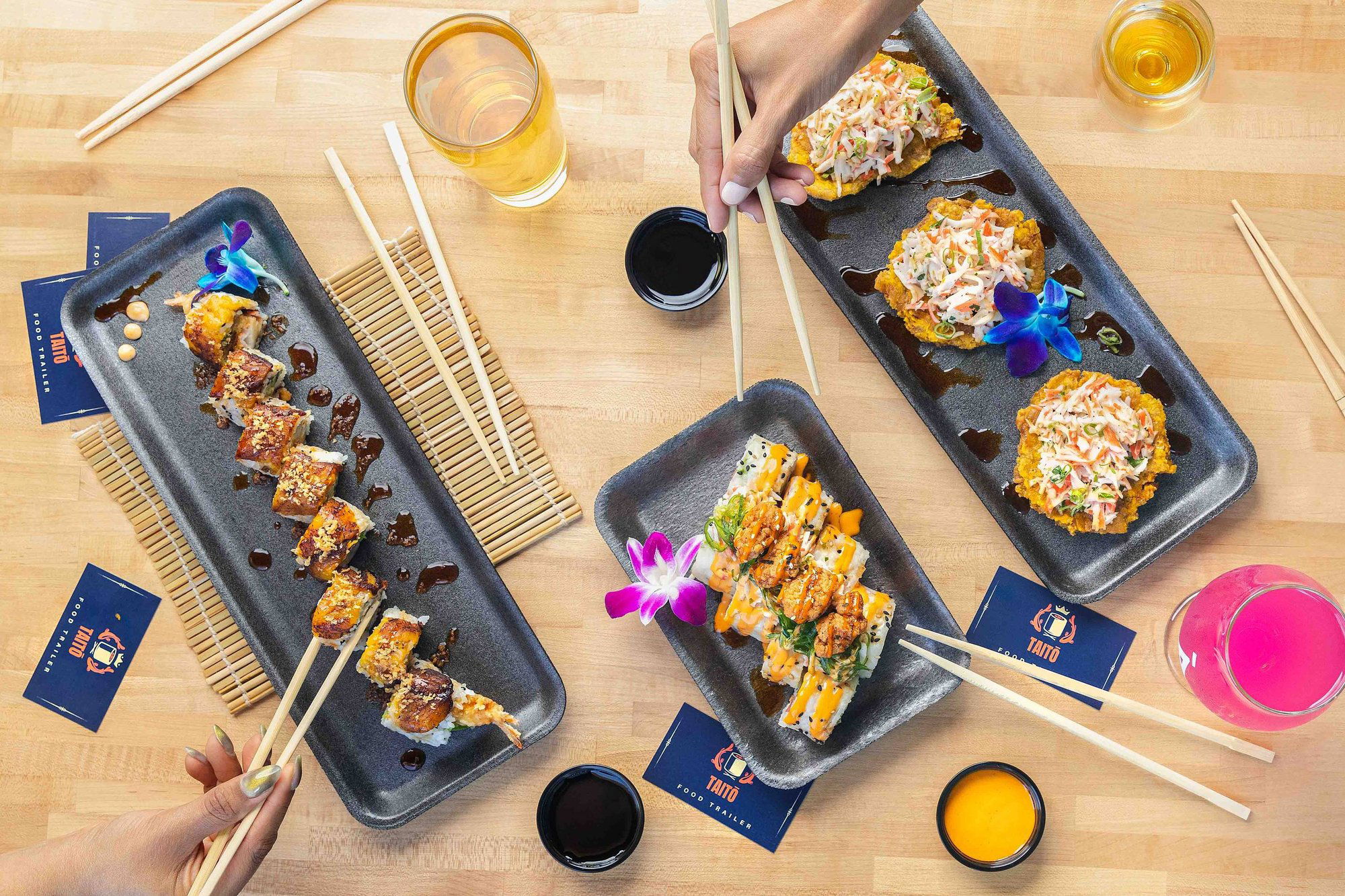
TAITO Sushi Orlando Food Truck reads as an unpretentious, street-level spot where sushi is delivered without ritual and with local familiarity. The truck sits among a cluster of mobile operators on East Michigan Street, drawing a neighbourhood crowd rather than tourists, and the mobile format intentionally strips away ceremony in favor of quicker interactions. Expect a relaxed, informal energy: sushi that’s presented for convenience and speed rather than a formal omakase experience. The tone is local and everyday, a casual stop for good sushi executed within the constraints of a mobile kitchen.
Best For
This truck suits people looking for a quick, informal meal in a neighbourhood setting: particularly the lunch crowd and local diners. The write-up frames food-truck sushi as occupying a tier between fast-casual and sit-down restaurants, so it’s a fit for shoppers, workers on a break, or residents wanting hand-held, speedy sushi rather than a lengthy, plated service. It’s best when you want something immediate and good-quality without ceremony: a dependable option for low-fuss, neighborhood dining.
Ordering Tips
Expect window-based, counter-style ordering, with execution varying by visit. Food-truck sushi typically follows one of two modes (high-volume maki rolls for a lunch rush or a tighter, quality-focused menu) so glance at the menu or ask the server which approach they’re running that day. Timing matters: peak lunch periods may favor the high-volume rolls, while off-peak visits may reveal a more focused selection. Plan for a quick transaction at the window.
Venue details
Ambiance
Casual outdoor food truck atmosphere.
Tags
Best For
Experience
Format
At the Bar
- Late Night
- Closes by Midnight
Know before you go
Know Before You Go
- Getting there
- 2207 E Michigan St, Orlando, FL 32806
Planning details
Location
2207 E Michigan St, Orlando, FL 32806 · Directions
linktr.ee/taitosushi?ltsid=1b5c7d30-13e4-47ef-a74d-c438a42e457d
Also consider
Also Consider
- The Wellborn Restaurant & Bar, Notable alternative
- W XYZ Bar, Notable alternative
- Sideward Brewing Co., Notable alternative
- Otto's High Dive, Notable alternative
- Eola Wine Company, Notable alternative
Bar context
How it compares with nearby alternatives
Choose TAITO Sushi Orlando Food Truck when ease matters more than ambiance. Against The Wellborn Restaurant & Bar and Otto's High Dive, it is the lower-commitment move: better for a quick food stop, weaker for a full evening with a room, drinks, and a paced meal.
For drinks-first plans, Sideward Brewing Co. and W XYZ Bar make more sense because the experience is built around staying awhile. TAITO is easier when the night is food-led and casual, but it is not the substitute for a bar hangout.
If the decision is date-night comfort, Eola Wine Company is the safer pick for conversation and a more settled setting. TAITO is the practical fallback when booking difficulty and formality are the problems, not when the night needs atmosphere.
Explore Lake Terrace
Around this place
Discover more on Pearl
Unlock the full TAITO Sushi Orlando Food Truck guide in Pearl, including awards, comparisons, FAQs, planning details, and nearby places.
Compare TAITO Sushi Orlando Food Truck
| Venue | Location | Awards |
|---|---|---|
| TAITO Sushi Orlando Food Truck | Lake Terrace | No published awards |
| The Wellborn Restaurant & Bar | Orlando | No published awards |
| W XYZ Bar | Orlando | No published awards |
| Sideward Brewing Co. | Orlando | No published awards |
| Otto’s High Dive | Orlando | No published awards |
| Eola Wine Company | Orlando | No published awards |
How TAITO Sushi Orlando Food Truck compares with similar nearby venues.
FAQ
Frequently Asked Questions
Is TAITO Sushi Orlando Food Truck good for a date?
It can fit a casual, low-pressure plan. The dress code is casual, and the Lake Terrace hours run to 9 PM most days and 10 PM on Friday and Saturday.
Does TAITO Sushi Orlando Food Truck have outdoor seating?
There are no seating details for TAITO Sushi Orlando Food Truck. Plan around the Lake Terrace listing, the casual dress code, and the posted hours, and check the venue's own channels for current setup details.
Is TAITO Sushi Orlando Food Truck open late?
It is open later on Friday and Saturday, when the posted hours run until 10 PM. Monday through Thursday and Sunday, the posted closing time is 9 PM.
What's the best time to go to TAITO Sushi Orlando Food Truck?
Go earlier in the day or early evening if you want the simplest timing. Friday and Saturday offer the latest posted hours, with closing at 10 PM; the rest of the week closes at 9 PM.