.png?width=1200&quality=80)
Ottoman Taverna
Turkish · Mount Vernon Triangle, Washington DC
Restaurant in Washington DC, United States
 Book with Pearl
The Read
Istanbul-Rooted Meze Counter
Price
$30–50per person
Dress
Smart Casual
Why go
Ottoman Taverna earns its 2024 Michelin Plate at a $$ price point that most recognized D.C. restaurants can't match. The interior — honeycomb walls, deep-blue pendants, a Hagia Sophia mural — is as deliberate as the Turkish menu. Book for meze and adana kebab; return to work through the full menu across two or three visits.
About Ottoman Taverna
Verdict: Ottoman Taverna Is D.C.'s Most Convincing Case for Turkish Cuisine
The common assumption about Ottoman Taverna is that it's a novelty — a pretty room with middling food, trading on atmosphere. That assumption is wrong. The Michelin Plate recognition it earned in 2024 signals that the kitchen is doing something worth eating, not just something worth photographing. At a $$ price point, it sits well below most Michelin-recognized dining in Washington, D.C. making it one of the more defensible bookings in the city if you want a meal that delivers on both design and plate.
Booking is easy. Ottoman Taverna doesn't require the weeks-out planning of Jônt or minibar. For most evenings you can secure a table within a few days. That accessibility makes it a reliable anchor for visitors who want a serious meal without a reservation strategy.
The Space: A Deliberate Istanbul Reference, Not Decoration for Its Own Sake
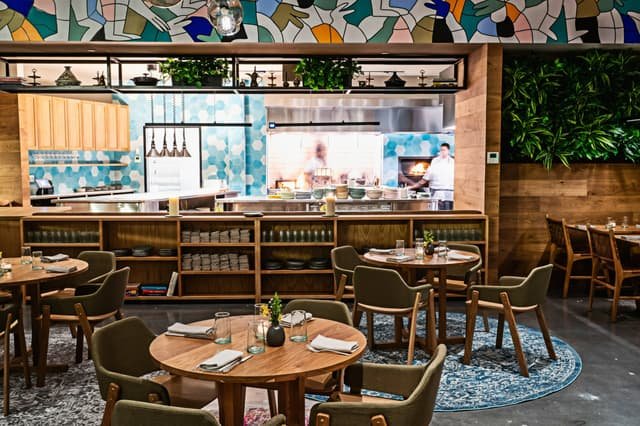
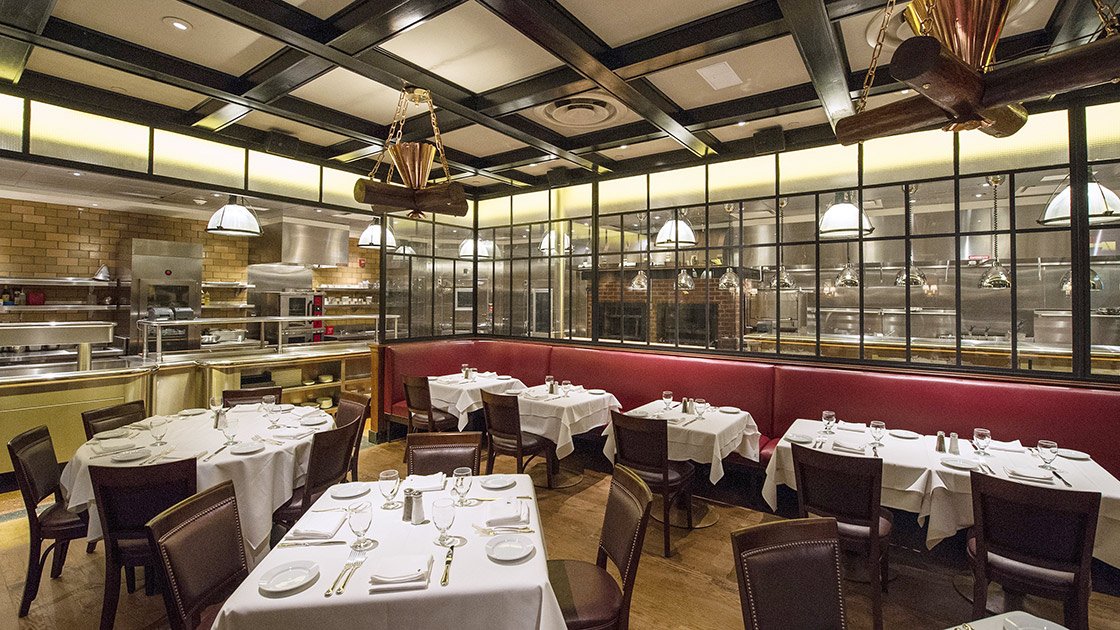
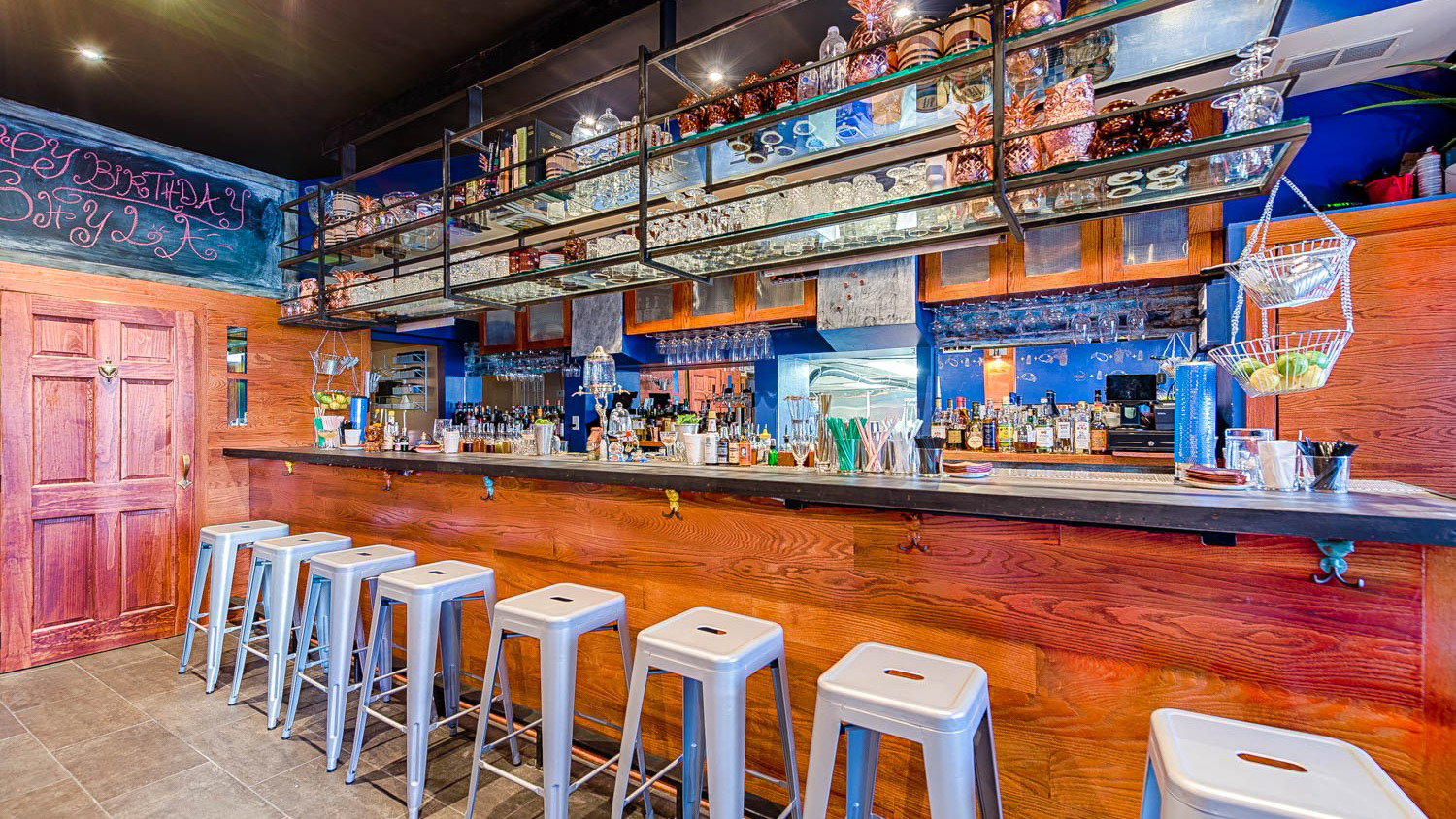
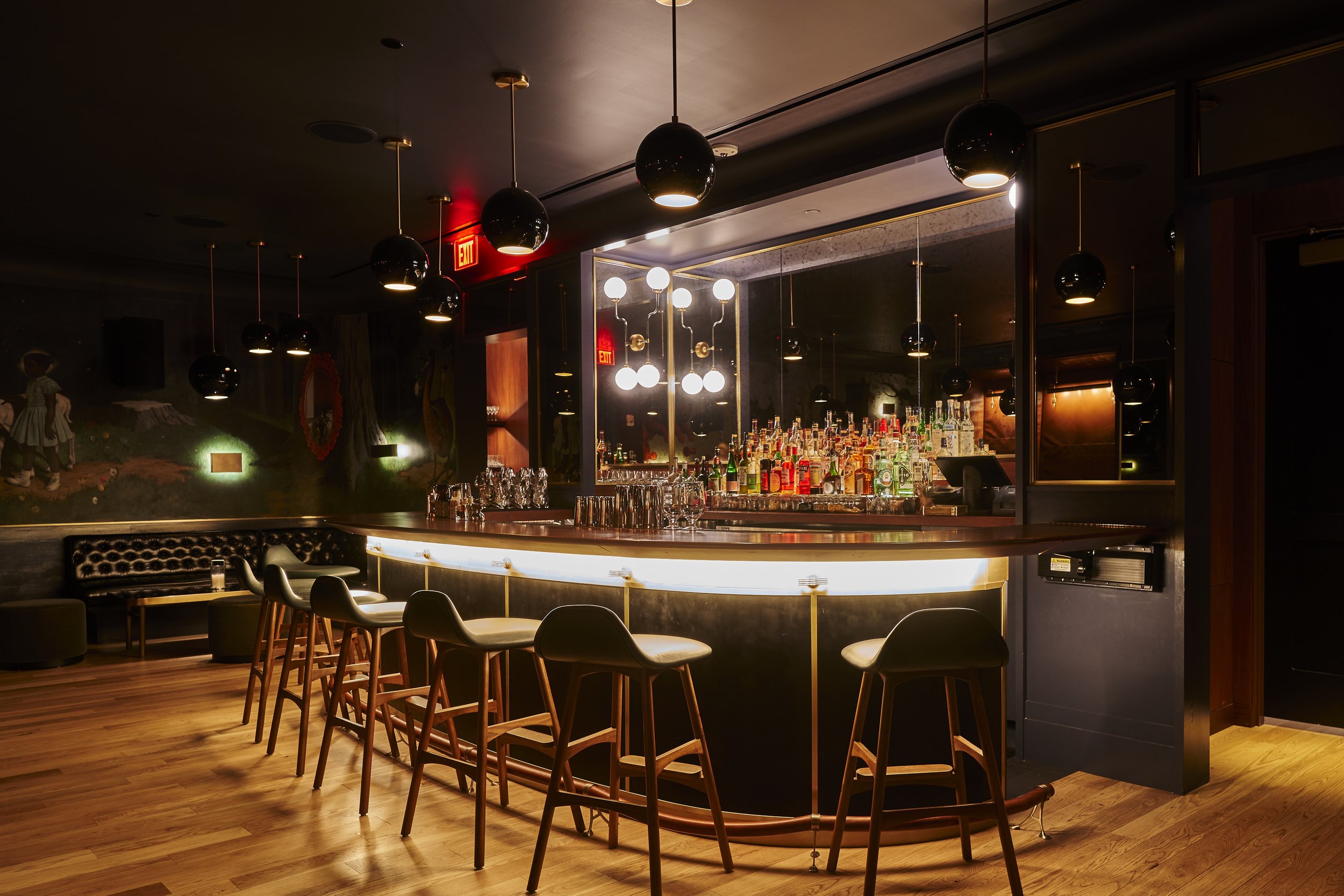
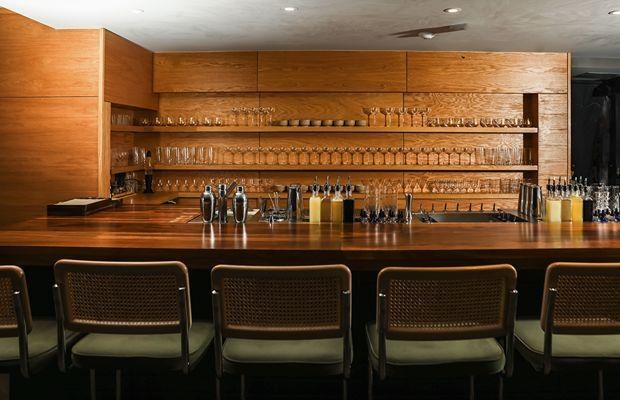
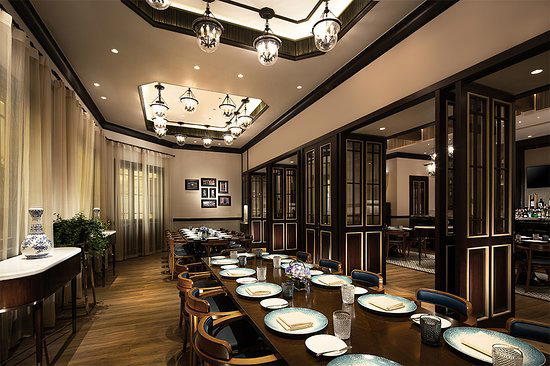
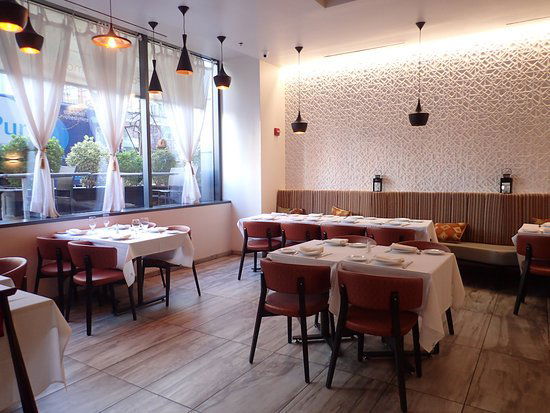
Walk in expecting a Turkish restaurant and you'll still be surprised by the commitment of the interior. The room draws directly from Ottoman visual vocabulary: honeycomb wall patterns, a large mural of the Hagia Sophia, whitewashed walls, and deep-blue pendant lights that shift the light into something warm and specific. It doesn't feel like a theme has been applied — it feels like a point of view has been executed. For a sit-down meal, the spatial experience reinforces the food rather than competing with it. If you're choosing between a window seat and the interior of the room, take the interior; the pendant lighting and mural land better from the middle of the space.
The atmosphere reads well for dates and small-group dinners. The design gives the room enough visual interest that conversation pauses feel comfortable rather than awkward. It works for occasions that need some visual weight without the formality of a tasting-menu room.
Multi-Visit Strategy: How to Work Through the Menu Across Two or Three Visits
If you've been once and ordered defensively, a kebab, maybe one meze, you've seen a fraction of what Ottoman Taverna does. The menu rewards return visits because the meze section, both hot and cold, is where the kitchen shows the most range. On a first return, commit the opening course entirely to meze. The cold options include haydari, a herb-flavored labneh that functions as a reference point for the kitchen's approach: restrained, clean, not over-seasoned. The falafel comes with yogurt sauce and represents the modern inflection the kitchen applies to what could easily become a rote category. Ordering four or five meze between two people and treating them as the meal, rather than a prelude, is a legitimate and satisfying approach.
A second return is the right moment for the kebab section. The adana kebab, seasoned with red pepper and herbs, served with bulgar pilav, is the most direct expression of the Turkish grill tradition on the menu. It's a dish that benefits from being ordered when you're not already full from meze, which is an argument for pacing your first visit differently. Plan visit two around the kebabs as the centerpiece and pull back on the meze order.
A third visit, or for anyone who has covered the savory ground, should end with dessert given proper attention. The in-house baklava and the rice pudding sutlac are both made on-site, and the kitchen's apple-rose tea is the specific pairing that works with both. Turkish coffee is the alternative. Neither is an afterthought, the dessert course here is worth the room at the end of a meal rather than a hurried finish.
Timing matters across all visits. Weekday evenings tend to be quieter, which gives the room space to breathe and makes the conversation-friendly atmosphere easier to access. Weekend dinner service fills earlier and runs louder, still manageable, but a different experience. If your priority is absorbing the interior design and having a relaxed meal, aim for a Tuesday or Wednesday booking in the early evening.
Value and Positioning
At $$, Ottoman Taverna is priced well below comparable Michelin-recognized dining in D.C. Albi, which covers adjacent Middle Eastern territory at $$$$, is a more ambitious kitchen but a significantly higher spend. Ottoman Taverna is the better call when you want a well-executed, design-forward meal without committing to a splurge-tier evening. For Turkish food specifically in the region, it's worth comparing against dede in Baltimore, which takes a different approach to the cuisine. Ottoman Taverna wins on ambiance and accessibility; dede wins on a more intimate, chef-driven format.
That kind of volume with that score indicates the experience is repeatable, which matters when you're recommending it to someone else or planning a return.
For anyone building a Washington, D.C. dining itinerary, Ottoman Taverna fits as a strong mid-week dinner anchor. See our full Washington, D.C. restaurants guide for how it fits alongside the rest of the city's options, and consult our D.C. bars guide if you're planning drinks before or after in the Mt. Vernon Triangle area.
The Bottom Line
Book Ottoman Taverna if you want Michelin-recognized Turkish food at a price that doesn't require a special occasion to justify. Return for the meze on visit two, the kebabs on visit three, and give the dessert course the time it deserves at least once. It earns its recognition, and at $$, it overdelivers on what the price tag suggests.
Planning details
- Location
- 906 4th St NW, Washington, DC 20001
- Reservations
- Book on OpenTable
- Website
- ottomantaverna.com
- Phone
- (202) 847-0389
The take
The Take
The Vibe
Ottoman Taverna presents a carefully composed interior that foregrounds Turkish architectural motifs in a contemporary frame. Honeycomb geometric patterns and a large mural of the Hagia Sophia anchor the room, while whitewashed surfaces and deep-blue pendant fixtures shape a light, attentive atmosphere. The design reads as a conversation between Ottoman imperial references and a modern Istanbul meyhane translated for Washington D.C., so diners feel both culturally oriented and comfortably contained. The visual program is dense and deliberate, encouraging slow appreciation of both the space and the food over the course of a meal.
Best For
This is a place built for shared dining and considered evenings. The menu follows the meze tradition—small, shareable plates that accumulate toward larger proteins—so groups and pairs alike find a natural rhythm here. It suits date nights where the setting is part of the experience and group dinners that favor communal plates. The Mt. Vernon Triangle location positions the restaurant within D.C.'s evolving dining landscape, making it a fitting stop for diners who prioritize both design-forward interiors and traditional Turkish dining structure.
Ordering Tips
Approach the menu as a sequence: begin with cold meze to set the tone—haydari and hummus are highlighted—and add a selection of small plates to share. The write-up specifically notes haydari and hummus, and falafel appears among the cold plates; these are reliable openings. After building a spread of meze, move on to a larger protein such as the Adana kebap, which functions as the meal’s centerpiece. The format rewards sharing and pacing, so order several mezze for the table and then pick one or two kebaps to divide.
Venue details
Ambiance
Drop-dead gorgeous interior with glimmering deep-blue pendants, whitewashed walls, honeycomb patterns, and sumptuous, romantic setting fit for royalty.
Tags
Vibe
Best For
Experience
At the Table
- Dress Code
- Smart Casual
- Noise Level
- Conversational
- Service Style
- Upscale Casual
- Meal Pacing
- Standard
- Capacity
- Large
- Kitchen
- Traditional
- Menu Format
- Small plates, A la carte
- Wine Program
- Curated
- Dietary
- Vegetarian friendly
- Private Dining
- Available
- Outdoor Seating
- Yes
Signature Dishes
- Adana Kebap
- Hummus
- Haydari
Know before you go
Know Before You Go
- Getting there
- 906 4th St NW, Washington, DC 20001
Planning details
Location
Recognition and awards
Also consider
Also Consider
- Oyster Oyster, New American, Vegetarian, Vegetarian (Sustainable), $$$
- Albi, United States, Middle Eastern, $$$$
- Causa, Peruvian, $$$$
- Rooster & Owl, Contemporary, $$$
- Rose’s Luxury, New American, Contemporary, $$$$
Restaurant context
How Ottoman Taverna Compares in Washington, D.C.
Ottoman Taverna sits in a different category from most of its D.C. peers by price alone. At $$, it's the most accessible Michelin-recognized option in this comparison set. Albi at $$$$ is the natural comparison for Middle Eastern and Eastern Mediterranean cooking, it's a more ambitious, chef-driven kitchen, but you'll spend significantly more and need to plan further ahead. If your priority is regional cuisine with serious kitchen credentials at a lower spend, Ottoman Taverna is the practical choice. If you want a deeper, more considered dining experience and the budget supports it, Albi earns the upgrade.
Rooster & Owl at $$$ and Oyster Oyster at $$$ both occupy the middle tier between Ottoman Taverna's accessible price point and the top-end options. Rooster & Owl is a better fit for diners who want a contemporary American format with a prix-fixe structure; Oyster Oyster is the call for vegetable-forward cooking with a sustainability focus. Neither competes with Ottoman Taverna on design or Turkish-specific execution. Rose's Luxury and Causa at $$$$ are in a higher spend tier and serve a different purpose, splurge evenings rather than reliable mid-week dinners.
For diners deciding between these options: choose Ottoman Taverna when you want a visually striking, Michelin-recognized meal at $$ without the planning overhead of a tasting-menu booking. Choose Albi when you want the most serious kitchen in the Middle Eastern category and the budget supports $$$$. If you're building a multi-night D.C. itinerary, Ottoman Taverna and Albi together cover the regional cuisine category at two very different price points, see our full Washington, D.C. restaurants guide and our D.C. hotels guide for the full picture.
Explore Washington DC
Around this place
Discover more on Pearl
Unlock the full Ottoman Taverna guide in Pearl, including awards, comparisons, FAQs, planning details, and nearby places.
Compare Ottoman Taverna
| Venue | Cuisine | Price | Booking Difficulty | Awards |
|---|---|---|---|---|
| Ottoman Taverna | Turkish | $$ | Easy | 2025 Michelin Plate2024 Michelin Plate |
| Oyster Oyster | New American, Vegetarian, Vegetarian (Sustainable) | $$$ | Unknown | Washingtonian 100 Very Best Restaurants 2026 · #622026 OAD Top Restaurants in North America Highly Recommended2025 Food & Wine Global Tastemakers Top Restaurants · #152025 OAD Top Restaurants in North America Ranked · #251We're Smart World Top Restaurants 20252025 Wine Spectator Award of Excellence2025 The Best Chef One Knife2025 Michelin 1 Star2024 OAD Top Restaurants in North America Ranked · #203 |
| Albi | United States, Middle Eastern | $$$$ | Unknown | Washingtonian 100 Very Best Restaurants 2026 · #12026 North America's 50 Best Restaurants · #6RAMMYS 2026 Winners - Formal Fine Dining Restaurant of the Year2025 World's 50 North America's Best Restaurants · #342025 Robb Report 100 Greatest American Restaurants of the 21st Century · #892025 OAD Casual in North America Ranked · #1302025 Michelin 1 Star2024 James Beard Awards · #12024 OAD Casual in North America Ranked · #109 |
| Causa | Peruvian | $$$$ | Unknown | Washingtonian 100 Very Best Restaurants 2026 · #162025 OAD Top Restaurants in North America Ranked · #2752025 James Beard Awards2025 Michelin 1 Star2024 OAD Top Restaurants in North America Ranked · #2252024 Michelin 1 Star |
| Rooster & Owl | Contemporary | $$$ | Unknown | Washingtonian 100 Very Best Restaurants 2026 · #652026 OAD Casual in North America Recommended2025 OAD Casual in North America Ranked · #7532025 Michelin 1 Star2024 Michelin 1 Star |
| Rose’s Luxury | New American, Contemporary | $$$$ | Unknown | Washingtonian 100 Very Best Restaurants 2026 · #232026 OAD Top Restaurants in North America Ranked · #682025 OAD Top Restaurants in North America Ranked · #572025 Michelin 1 Star2024 OAD Top Restaurants in North America Ranked · #562024 Michelin 1 Star2023 OAD Gourmet Casual Dining in North America Ranked · #12023 OAD Top Restaurants in North America Ranked · #74Pearl Recommended Restaurants |












What to weigh when choosing between Ottoman Taverna and alternatives.
FAQ
Frequently Asked Questions
Is the tasting menu worth it at Ottoman Taverna?
Ottoman Taverna's format is built around meze and à la carte ordering rather than a fixed tasting menu, which is actually an advantage at this price point. You get more control over the meal and can cover more ground — hot and cold meze, a kebab, and baklava or rice pudding — for well under what a comparable set menu in D.C. would cost. For structured tasting experiences in the city, Rooster & Owl is the better address.
What should I order at Ottoman Taverna?
Start with both hot and cold meze — the haydari with herb-flavored labneh and falafel with yogurt sauce are documented menu anchors. Follow with the adana kebab, seasoned with red pepper and herbs and served with bulgur pilav. Finish with in-house baklava or rice pudding sutlac alongside Turkish coffee. First-timers who stick to just one meze and a main are underusing the menu.
What should I wear to Ottoman Taverna?
Ottoman Taverna carries a Michelin Plate (2024) and has a striking, design-forward interior, but it prices at $$ and sits in the Mt. Vernon Triangle rather than a high-formality dining corridor. Neat casual is appropriate — you won't feel out of place in jeans, but the room rewards dressing slightly above your average weeknight.
What are alternatives to Ottoman Taverna in Washington, D.C.?
For adjacent Middle Eastern territory at a higher price point, Albi ($$$-$$$$) is the direct comparison and covers similar ground with more formal intent. Rose's Luxury offers a different cuisine but a comparable neighborhood-restaurant warmth at a similar price tier. If you want Michelin-recognized cooking without the Turkish focus, Oyster Oyster and Causa cover very different cuisines but hit the same value-conscious Michelin audience.
Is Ottoman Taverna good for a special occasion?
Yes, with the right expectations. The interior — honeycomb wall patterns, a large Hagia Sophia mural, deep-blue pendants — gives the room real occasion energy without requiring a $300-per-head commitment. At $$, it works well for birthdays or date nights where atmosphere matters but the bill shouldn't require advance budgeting. For a milestone where the food itself needs to be the centerpiece, Albi or Rooster & Owl would be stronger choices.
Is Ottoman Taverna worth the price?
At $$, Ottoman Taverna with a Michelin Plate (2024) is straightforwardly good value by D.C. standards. You're getting recognized Turkish cooking in a room that looks like it should cost significantly more, in a city where Michelin-acknowledged dining typically runs $$$-$$$$. The comparison that matters: Albi covers adjacent territory and is excellent, but costs roughly twice as much. Ottoman Taverna is the call when you want the quality signal without the bill.