
Restaurant in Tokyo, Japan
Tsurutokame
290ptsCeremonial Japanese dining for special occasions.

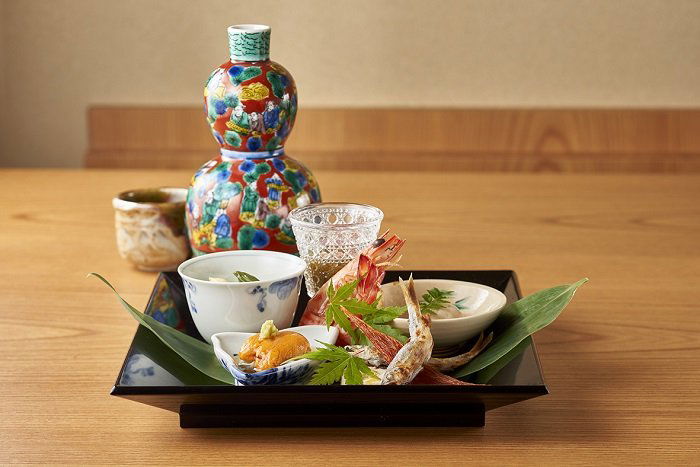
About Tsurutokame
A Ginza basement dining room built for celebration, Tsurutokame earns its Michelin Plate recognition (2024 and 2025) through gracious service and a format rooted in Japanese ceremonial tradition. At ¥¥¥, it sits below the starred tier in cost but above most venues in cultural intentionality. Book for birthdays, anniversaries, or any occasion where the meal itself should feel like a considered ritual.
Who Should Book Tsurutokame — and When
Tsurutokame is the right call for a special-occasion dinner in Ginza when you want something that feels distinctly, ceremonially Japanese rather than contemporary or fusion-leaning. The name — meaning "crane and turtle," drawn from a folktale about a wide-travelling crane befriending a pond-dwelling turtle , is not decorative branding. It signals the restaurant's governing idea: guests bring the world, the kitchen provides the tradition. If you are planning a birthday, an anniversary, or any occasion where the meal itself should feel like a considered ritual, this is a strong option at the ¥¥¥ price tier. Explorers who want depth and cultural grounding in their dining, not just technical cooking, will find the most here.
The Experience: Atmosphere and Approach
Tsurutokame occupies a basement floor (B1F) of a building on Ginza's 6-chome , a quiet remove from the street-level energy of one of Tokyo's most polished commercial districts. Below ground, the room reads as intimate rather than grand, which shapes the mood considerably. The atmosphere is calm and considered; this is not a loud room or a high-energy counter. For a conversation-first dinner or an occasion that benefits from a lower ambient register, that works in its favour. If you are coming from a long day and want energy and buzz, look elsewhere , Ginza Fukuju nearby offers a different register in the same neighbourhood.
The service posture is explicitly gracious. The restaurant's own framing describes the experience as one designed to put guests immediately at ease, and the format , with appetiser platters arranged to reflect traditional Japanese event decoration , gives each visit a ceremonial structure. This is not the place for a quick, efficient meal. Budget time accordingly.
Lunch vs Dinner: How the Two Experiences Compare
With hours not publicly confirmed in available data, the question of whether to come for lunch or dinner requires a practical note: verify current service times directly before booking, as many Ginza kaiseki-adjacent restaurants operate dinner-only or limit lunch to certain days. That caveat stated, the broader pattern for Japanese restaurants of this style and price point in Ginza is worth knowing. At ¥¥¥, a lunch service , if offered , will typically run at a meaningfully lower price point than dinner, with a shorter or simplified version of the kitchen's format. For a first visit, or for travellers who prefer to explore fine dining at lunch and keep evenings flexible, that is worth investigating. Dinner at this level in Ginza tends to deliver the full ceremonial arc: longer, more courses, more service detail. The occasion-match logic of Tsurutokame , birthday dinners, celebrations where happiness is "sure to descend on your table," per the venue's own framing , points more naturally toward an evening booking. The cultural and decorative layering of the appetiser presentations likely reads with more weight in a dinner context.
For comparison: at Kagurazaka Ishikawa, the lunch-dinner value gap is significant and lunch is one of the better-value kaiseki propositions in Tokyo. If value-per-course is your priority metric, Ishikawa's lunch is hard to argue against. Tsurutokame's strength is something different: the cultural storytelling woven into the service, which is less about maximising dishes-per-yen and more about the quality of the occasion itself.
Booking and Timing
Tsurutokame holds a Michelin Plate recognition for both 2024 and 2025, and carries a 4.6 Google rating across 171 reviews , a solid and consistent signal at a venue of this size. The Michelin Plate designation (distinct from starred restaurants) indicates quality at a level the guide considers worth flagging without reaching the starred tier. That positioning is relevant for booking difficulty: Michelin-starred kaiseki restaurants in Ginza can require months of lead time, but a Plate-level venue at ¥¥¥ is generally more accessible. Booking difficulty for Tsurutokame is rated Easy by Pearl, which means you are unlikely to need to plan more than a few weeks ahead for most dates. For a specific occasion date , a birthday, an anniversary , book at least three to four weeks out to avoid disappointment, particularly for weekend evenings.
No phone number or website is confirmed in available data. Reservations are most reliably secured through a concierge, a hotel desk familiar with Ginza restaurants, or a third-party booking platform that covers Tokyo's Japanese restaurant circuit. If you are staying at a property covered in our full Tokyo hotels guide, ask the concierge to assist , Japanese-language reservation support makes a material difference at smaller venues of this kind.
Know Before You Go
- Location: Ginza 6-chome, Chuo City, Tokyo , basement level (B1F), 第二 岩月ビル
- Price tier: ¥¥¥ , mid-to-upper range for Tokyo Japanese dining; confirm current menu pricing directly
- Awards: Michelin Plate 2024 and 2025
- Google rating: 4.6 out of 5 (171 reviews)
- Booking difficulty: Easy , but book 3–4 weeks ahead for occasion dates
- Booking method: Via concierge, hotel desk, or third-party platform; no confirmed direct website
- Atmosphere: Quiet, intimate, basement-level room , low ambient noise, conversation-friendly
- Occasion fit: Birthdays, anniversaries, celebratory dinners , the format is built for it
- Hours: Not confirmed , verify before booking
How It Compares
See the comparison section below for how Tsurutokame sits against Tokyo's broader fine-dining field.
Explore More in Tokyo and Beyond
For more Japanese dining at a similar cultural register, Myojaku and Azabu Kadowaki are worth comparing in Tokyo. Jingumae Higuchi offers a different neighbourhood setting for a similar occasion-driven format. Further afield, Gion Sasaki in Kyoto and Isshisoden Nakamura in Kyoto are benchmarks for traditional Japanese cooking at a high level, as is Kashiwaya Osaka Senriyama in Osaka. For a broader view of what Tokyo has to offer, our full Tokyo restaurants guide covers the field, with companion guides for bars, hotels, wineries, and experiences. If your Japan trip extends beyond Tokyo, see also HAJIME in Osaka, akordu in Nara, Goh in Fukuoka, 1000 in Yokohama, and 6 in Okinawa.
Frequently Asked Questions
- Is Tsurutokame worth the price? At ¥¥¥, it sits below the top tier of Ginza fine dining , and yes, it delivers genuine value for what it is. The Michelin Plate recognition and a 4.6 Google score across 171 reviews suggest consistent quality. It is not the destination for those chasing starred technical precision; it is worth it for diners who want cultural depth and gracious service over sheer culinary ambition. For higher technical ambition at higher cost, RyuGin or Kagurazaka Ishikawa are the comparisons to consider.
- Is the tasting menu worth it at Tsurutokame? The format here is built around a curated, multi-course structure with ceremonial presentation , appetiser platters arranged around traditional Japanese event themes. That format rewards guests who want the full arc of the experience, not those who want flexibility or a la carte choice. If you are committed to the occasion and the ritual, yes. Specific current menu composition and pricing should be confirmed directly before booking.
- Can I eat at the bar at Tsurutokame? Seating configuration is not confirmed in available data. Given the intimate, occasion-focused format and basement-level footprint, this is unlikely to be a drop-in bar-seat venue in the way a sushi counter might be. Contact via concierge or booking platform to confirm seating options before visiting.
- Can Tsurutokame accommodate groups? Seat count is not confirmed, but the intimate atmosphere and occasion-driven format suggest the venue can handle small group celebrations , birthdays in particular are explicitly part of the restaurant's own framing. For larger groups, confirm capacity in advance. Tokyo venues of this style typically manage private or semi-private dining for groups of 6–10 more readily than larger parties.
- Is Tsurutokame good for a special occasion? This is one of its clearest strengths. The name, the service philosophy, and the decorative plating format are all explicitly designed around celebration. Birthday dinners are a natural fit. The calm room, gracious service, and ceremonial structure make it a better occasion choice than higher-energy, counter-focused venues. Book for evenings when the full experience is available.
- What should I order at Tsurutokame? Specific current menu items cannot be confirmed from available data , do not arrive with a fixed dish in mind. The kitchen's approach centres on traditional Japanese cuisine with seasonal and ceremonial inflection. Ask at booking or on arrival what the current format covers. The appetiser presentation is the kitchen's signature structural moment and worth paying attention to.
- What are alternatives to Tsurutokame in Tokyo? For a similar cultural register at ¥¥¥, Ginza Fukuju is a near-neighbour worth comparing. For kaiseki with more technical ambition at ¥¥¥¥, RyuGin and Kagurazaka Ishikawa are the benchmarks. For sushi at the leading of the market, Harutaka operates at ¥¥¥¥ and is significantly harder to book. If French cuisine is also on your list, Florilège at ¥¥¥ is the closest price-tier comparison across cuisine styles.
Compare Tsurutokame
| Venue | Cuisine | Awards | Booking Difficulty | Value |
|---|---|---|---|---|
| Tsurutokame | Japanese | The name means ‘crane and turtle’ and derives from a Japanese folktale in which a crane from the wider world (the guest) befriends a turtle in a pond (the chefs). It reflects the ladies’ desire to spread Japanese culture through Japanese cuisine, so appetiser platters are arranged like the decorations of traditional events. The gracious service puts you immediately at ease. The crane and turtle are a symbol of good fortune. At birthday parties, happiness is sure to descend on your table.; Michelin Plate (2025); Michelin Plate (2024) | Easy | — |
| Harutaka | Sushi | Michelin 3 Star, World's 50 Best | Unknown | — |
| RyuGin | Kaiseki, Japanese | Michelin 3 Star, World's 50 Best | Unknown | — |
| L'Effervescence | French | Michelin 3 Star, World's 50 Best | Unknown | — |
| HOMMAGE | Innovtive French, French | Michelin 2 Star, World's 50 Best | Unknown | — |
| Florilège | French | Michelin 2 Star, World's 50 Best | Unknown | — |
Side-by-side comparison to help you decide where to book.
Frequently Asked Questions
Is Tsurutokame worth the price?
At ¥¥¥ pricing with two consecutive Michelin Plate recognitions (2024 and 2025) and a 4.6 Google rating across 171 reviews, Tsurutokame delivers consistent quality for the spend. The value case is strongest if you want a meal that feels ceremonially Japanese — the appetiser platters are arranged around traditional Japanese event aesthetics, which is something you won't find at a comparable Ginza price point doing Western-influenced menus like L'Effervescence or Florilège.
Is the tasting menu worth it at Tsurutokame?
Yes, if traditional Japanese cuisine and cultural storytelling are what you're after. The philosophy behind the menu — spreading Japanese culture through food, with dishes referencing Japanese folktale imagery — means the tasting format carries more conceptual cohesion than a standard kaiseki set. If you're looking for boundary-pushing contemporary Japanese, RyuGin is a stronger call at a higher price point.
Can I eat at the bar at Tsurutokame?
Seating configuration at Tsurutokame is not confirmed in available data, so check the venue's official channels before assuming bar seating is an option. Given the basement setting (B1F, Ginza 6-chome) and the emphasis on gracious, occasion-oriented service, it reads as a table-focused operation rather than a counter format.
Can Tsurutokame accommodate groups?
Group suitability is not confirmed in available data, but the special-occasion positioning and the emphasis on ceremonial service suggest it can handle celebrations rather than casual large-party dining. For groups, verify capacity and any private room options directly with the venue before booking — Ginza basement restaurants at this price tier frequently have limited total covers.
Is Tsurutokame good for a special occasion?
It's a strong choice for birthdays and milestone dinners specifically. The venue's own framing notes that happiness is intended to 'descend on your table' at birthday celebrations, and the crane-and-turtle symbolism of good fortune is built into the experience. For a special occasion that needs to feel distinctly and ceremonially Japanese rather than just upscale, Tsurutokame has a clearer identity than HOMMAGE or Harutaka for that brief.
What should I order at Tsurutokame?
Specific menu items are not confirmed in available data, so ordering recommendations would be speculative. What is documented is that appetiser platters are arranged to mirror the decorations of traditional Japanese events — so the early courses carry particular visual and cultural intention and are worth paying attention to rather than treating as preamble.
What are alternatives to Tsurutokame in Tokyo?
For traditional Japanese cuisine at a similar cultural register, Myojaku and Azabu Kadowaki are the closest comparisons in Tokyo. For higher-end contemporary Japanese, RyuGin operates at a more technical level and carries stronger international recognition. If you want French-influenced fine dining in Tokyo instead, L'Effervescence and Florilège are the benchmark options, though they serve a different purpose entirely.
Recognized By

More restaurants in Tokyo
- SézanneOccupying the seventh floor of the Four Seasons Hotel Tokyo at Marunouchi, Sézanne earned its first Michelin star within months of opening in July 2021 and now holds three. British chef Daniel Calvert applies French technique to Japanese ingredients, producing a prix-fixe format that Tabelog has recognised with Silver awards every year from 2023 through 2026. It ranked 4th in Asia's 50 Best Restaurants in 2025 and 15th globally in 2024.
- SazenkaSazenka is the address for Chinese cuisine in Tokyo at its most technically demanding. Chef Tomoya Kawada's wakon-kansai approach — Japanese seasonal ingredients applied through Chinese culinary technique — has earned consecutive Tabelog Gold Awards from 2019 to 2026, a #71 ranking on the World's 50 Best 2025, and 99 points from La Liste 2026. At JPY 50,000–59,999 per head, it is one of the hardest tables in the city to book and worth the effort.
- NarisawaNarisawa is Tokyo's most credentialled innovative tasting menu restaurant — two Michelin stars, Asia's 50 Best number 12, and a Tabelog Silver award — running at JPY 80,000–99,999 per head. Book for a milestone occasion, confirm vegetarian or vegan needs in advance, and reserve at least two to three months out. With 15 seats and reservation-only access, this is one of Tokyo's hardest tables to secure.
- FlorilègeFlorilège delivers two Michelin stars and an Asia's 50 Best #17 ranking at a dinner price of ¥22,000 — competitive for Tokyo at this level. Chef Hiroyasu Kawate's plant-forward tasting menus around an open-kitchen counter at Azabudai Hills make this the strongest choice for contemporary French dining in Tokyo if theatrical, produce-led cooking is what you want. Book well in advance; availability is near-impossible at short notice.
- DenDen holds two Michelin stars, a World's 50 Best top-25 Asia ranking, and a Tabelog Silver Award running back to 2017 — and it books out within hours of the two-month reservation window opening. Chef Zaiyu Hasegawa's daily-changing seasonal omakase runs JPY 30,000–39,999 at dinner in a relaxed house-restaurant setting near Gaiemmae. Book by phone only, noon–5 PM JST. Lunch is irregular; plan around dinner.
- MyojakuMyojaku is a 2-Michelin-star, 14-course French-leaning omakase in Nishiazabu holding a 4.47 Tabelog score, Tabelog Silver 2025–2026, and Asia's 50 Best #45 (2025). Chef Hidetoshi Nakamura's water-forward, no-dashi approach shifts meaningfully with the seasons — making timing your reservation as important as getting one. Budget JPY 50,000–59,999 per head plus 10% service charge; reservations only, near-impossible to secure.
Similar venues by awards
Related editorial
- Best Fine Dining Restaurants in ParisFrom three-Michelin-star icons to the next generation of Parisian chefs pushing boundaries, these are the restaurants that define fine dining in the world's culinary capital.
- Best Luxury Hotels in RomeFrom rooftop terraces overlooking ancient ruins to Michelin-starred hotel dining, these are the luxury hotels that make Rome unforgettable.
- Best Cocktail Bars in KyotoFrom sleek lounges to hidden speakeasies, Kyoto's cocktail scene blends Japanese precision with global influence in ways you won't find anywhere else.
Save or rate Tsurutokame on Pearl
Keep this venue in your Pearl passport, rate it after you visit, and track it alongside every other place you collect.