
.png?width=1200&quality=80)
MIMOSA
Chinese · Minato, Tokyo
Restaurant in Tokyo, Japan
 Book with Pearl
The Read
Wok-Forward Counter Shanghai
Price
$150–200per person
Dress
Smart Casual
Why go
MIMOSA is a Shanghai-cuisine counter restaurant in Minami-Aoyama holding Michelin Plate recognition in both 2024 and 2025. The white counter and live wok cooking make it a strong choice for a date night or celebratory dinner at ¥¥¥: a full price tier below most comparable destination counters in the neighbourhood. Booking is rated easy, which at this level in Tokyo is a genuine advantage.
About MIMOSA
A Shanghai-rooted counter in Minami-Aoyama that earns its Michelin recognition without the ¥¥¥¥ price tag
If you are choosing between MIMOSA and one of Tokyo's many kaiseki rooms for a special occasion dinner in Minami-Aoyama, the decision comes down to format and price tier. MIMOSA operates at ¥¥¥, a full tier below the ¥¥¥¥ spending required at comparable destination restaurants in the neighbourhood, and it delivers a counter-based set menu experience rooted in Shanghai cuisine rather than Japanese tradition. For a date night or celebratory dinner where you want theatrical cooking, direct chef interaction, and a composed multi-course structure without committing to the upper end of Tokyo dining budgets, MIMOSA is worth serious consideration.
The Room and the Experience
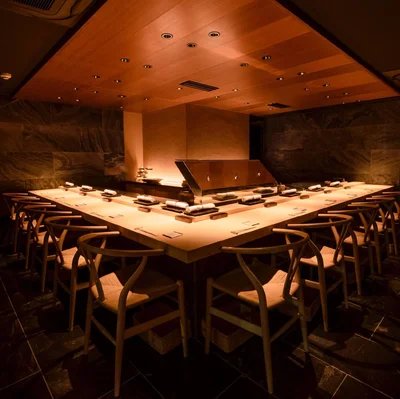
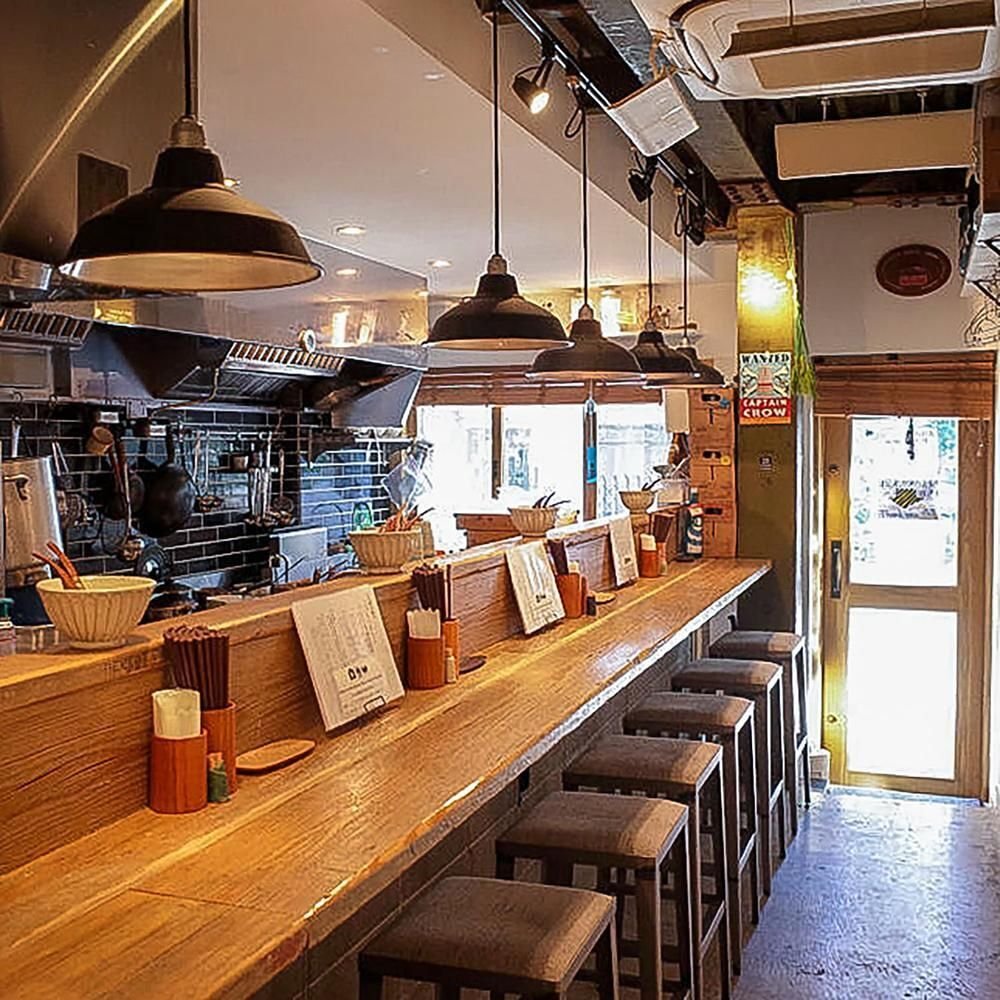
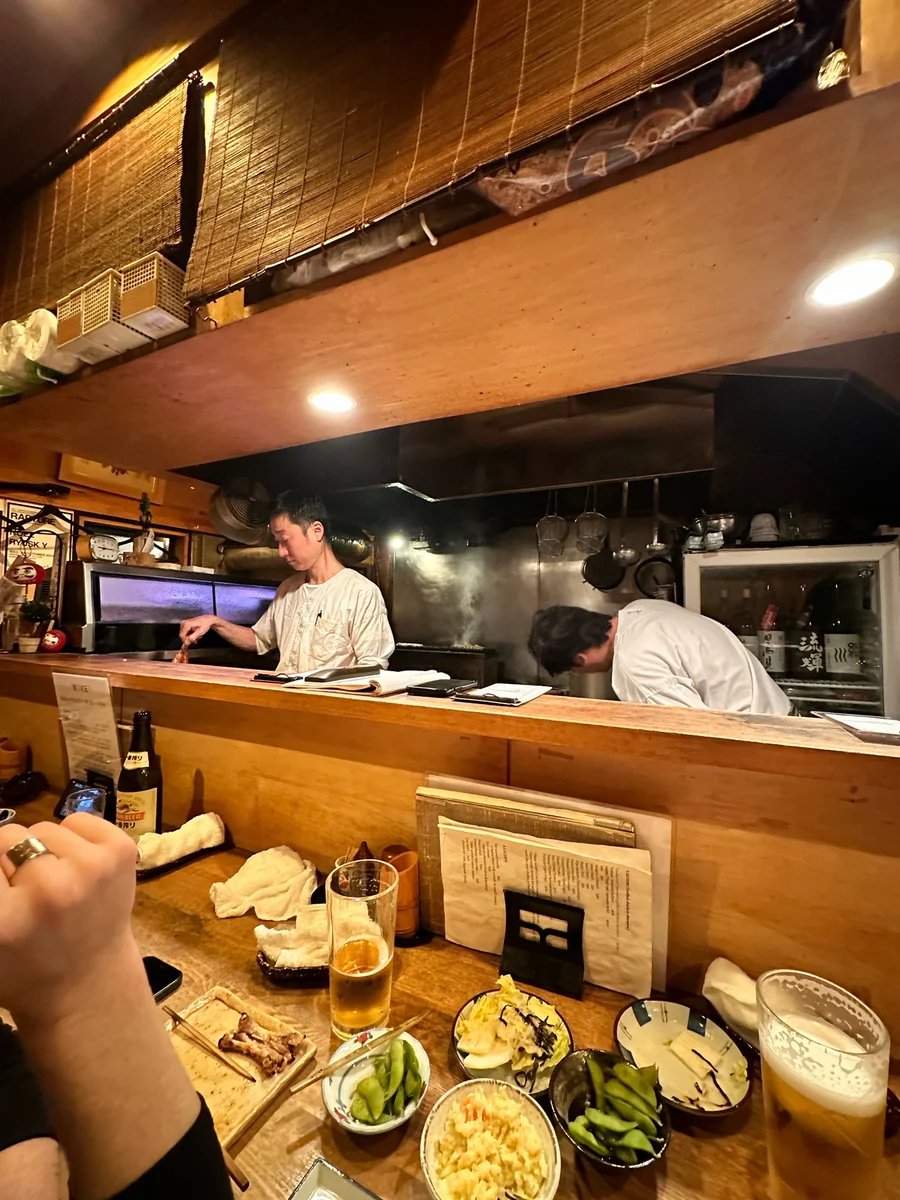
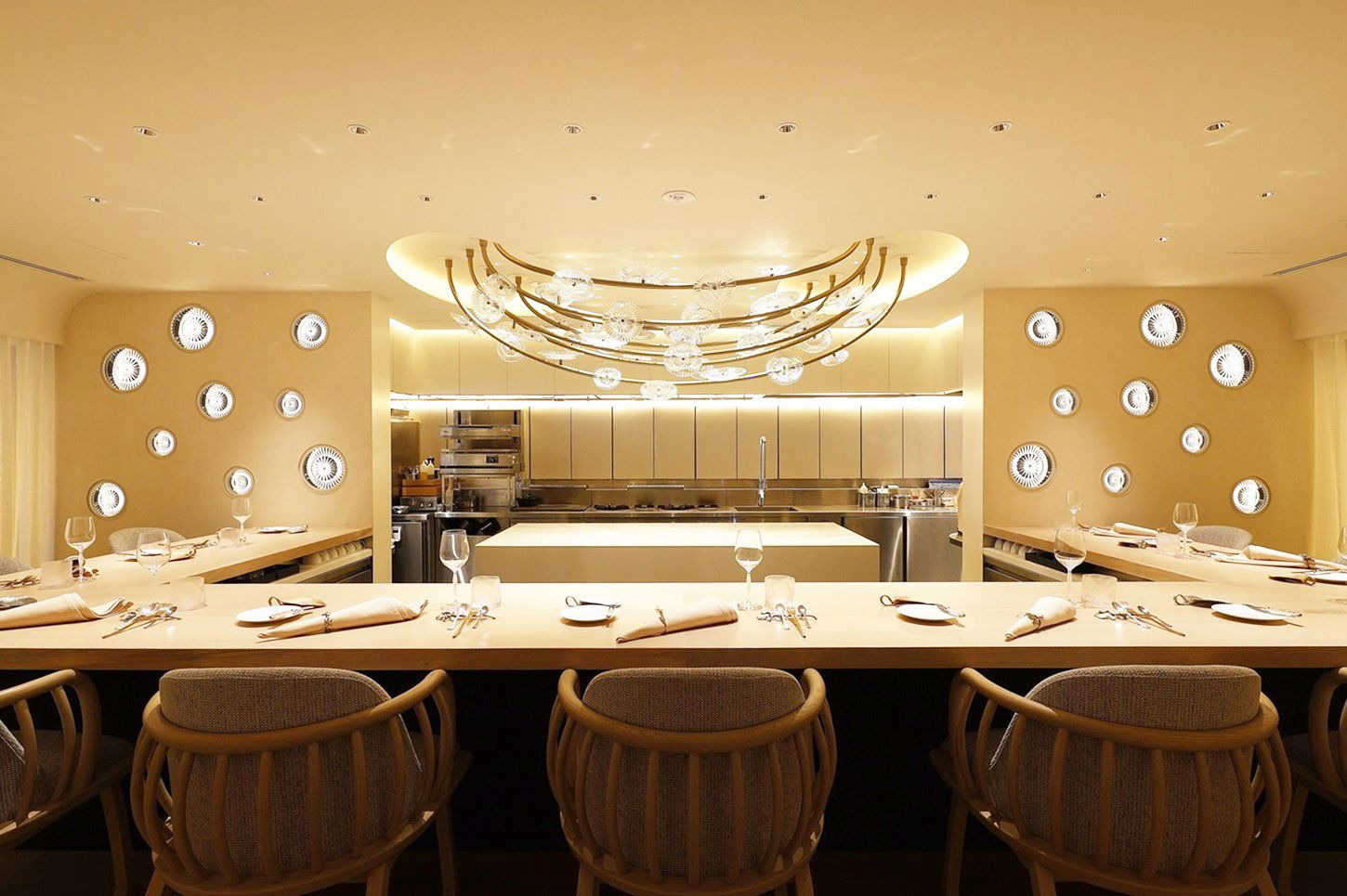
The counter at MIMOSA is uniformly white, which creates an immediate visual clarity the moment you sit down. There is no decorative noise to process: the room directs your attention toward the cooking itself, which unfolds directly in front of you. The sight of wok work at close range, with the sound and aroma of high-heat stir-frying as an active presence, gives the meal a performative quality that many formal tasting menus in Tokyo deliberately suppress in favour of hushed minimalism. Here, the energy is part of the offer.
The chef engages with guests during service, sometimes speaking while plating, which softens the counter format into something more personal than theatrical. For a special occasion dinner where atmosphere and engagement matter as much as the food itself, this dynamic works well. It is a better format for a couple or a small group than a long kaiseki silence, and meaningfully different from the composed, distant service style you encounter at ¥¥¥¥ French restaurants in the same part of the city.
Minami-Aoyama, where MIMOSA operates from the second floor of the Fiora Minami Aoyama building on 3-chome, is one of Tokyo's more design-conscious neighbourhoods. The streets around Omotesando and Aoyama attract galleries, independent fashion, and a dining crowd that expects environments with considered aesthetics. MIMOSA's white counter and focused cooking theatre fit that context: this is not a neighbourhood restaurant in the informal sense, but it does not perform luxury for its own sake either. It occupies a specific position: serious food, accessible price point, credible Michelin recognition, and a location that makes it a natural choice for anyone already spending an evening in this part of the city.
Shanghai Cuisine in Tokyo
MIMOSA's foundation is Shanghai cuisine, which in this context means a set menu structured around numerous courses, each dish served immediately after cooking. The arrangements are simple, the presentation does not chase visual complexity, and fresh ingredients express seasonal shifts through a Chinese culinary lens. This is a different offer from the Cantonese-oriented Chinese fine dining more commonly found at the top of Tokyo's restaurant hierarchy. If your frame of reference for high-end Chinese dining in Japan is drawn from Cantonese banquet traditions, MIMOSA will feel deliberately spare by comparison, and that sparseness is the point.
The Michelin Plate recognition in both 2024 and 2025 confirms the cooking meets a standard Michelin inspectors consider worth noting, short of star level but above the general field.
For comparison, Chinese restaurants operating at a similar or higher register in Tokyo include Chugoku Hanten Fureika and Chugoku Hanten Kohakukyu (Amber Palace), both of which carry stronger award credentials and operate at higher price points. Ippei Hanten and itsuka represent other reference points in Tokyo's Chinese dining tier, while Koshikiryori Koki offers a different formal dining mode in the city. Beyond Tokyo, HAJIME in Osaka and Gion Sasaki in Kyoto show how Japan's broader fine dining scene calibrates at the leading end. Internationally, Restaurant Tim Raue in Berlin and Mister Jiu's in San Francisco offer points of comparison for Chinese-influenced fine dining in Western markets.
Who Should Book
MIMOSA suits couples or small parties who want a counter-format tasting experience with direct chef engagement, Shanghai cuisine as the culinary frame, and a price point that does not require the full commitment of Tokyo's top-tier restaurants. The setting and format work well for a date night or a celebratory dinner where the theatre of live cooking matters. It is less suited to large groups or anyone looking for the deep formality of a kaiseki service.
If you are planning a broader evening in Minami-Aoyama, the neighbourhood offers substantial options beyond dinner. See our full Tokyo restaurants guide, our full Tokyo hotels guide, our full Tokyo bars guide, our full Tokyo wineries guide, and our full Tokyo experiences guide for context on the city's broader offer. For those travelling further afield, akordu in Nara, Goh in Fukuoka, 1000 in Yokohama, and 6 in Okinawa represent quality reference points across Japan.
Booking and Practical Notes
Booking difficulty is rated easy, which at a Michelin-recognised counter in Minami-Aoyama is a genuine advantage. You do not need to plan weeks in advance the way you would for Tokyo's most in-demand tasting menus. The format is counter-only, the price range is ¥¥¥, and the set menu structure means arriving with a clear expectation of how the evening will run.
Quick reference:
FAQ
What should I wear to MIMOSA?
- Given the ¥¥¥ price point and Michelin Plate recognition in Minami-Aoyama, one of Tokyo's more design-conscious neighbourhoods, smart casual is a safe default. You will be seated at a counter and the environment is refined without being formal, so you do not need to dress to the level you would for a starred kaiseki room.
What should I order at MIMOSA?
- MIMOSA operates a set menu format, so ordering is not a decision you need to make. Dishes are served as soon as they are cooked, structured across numerous courses rooted in Shanghai cuisine. The menu uses fresh, seasonal ingredients.
How far ahead should I book MIMOSA?
- Booking difficulty is rated easy, which is notable for a Michelin-recognised counter restaurant in Minami-Aoyama. You are unlikely to need weeks of lead time, though for a specific date, particularly weekend evenings or celebratory occasions, booking a week or two out is still sensible. Same-week availability is plausible based on current difficulty ratings.
What are alternatives to MIMOSA in Tokyo?
- For Chinese fine dining in Tokyo at a higher price tier, Chugoku Hanten Fureika and Chugoku Hanten Kohakukyu carry stronger award credentials. Ippei Hanten is another option at a similar register. If you want to shift cuisine entirely, Florilège operates at ¥¥¥ in the French category and offers a comparable price commitment with a very different culinary identity.
Is the tasting menu worth it at MIMOSA?
- At ¥¥¥, the set menu format at MIMOSA offers Michelin Plate-recognised Shanghai cuisine with counter theatre and chef engagement. That is a reasonable value proposition compared to ¥¥¥¥ tasting menus elsewhere in the neighbourhood. The format suits diners who want structure and performance over a casual dinner, and the multiple-course approach means you are getting genuine range rather than a short menu at an inflated price point.
Is MIMOSA worth the price?
- At ¥¥¥, MIMOSA sits a tier below the majority of Tokyo's destination counter restaurants. If you are calibrating against a ¥¥¥¥ kaiseki room or a top-end sushi counter, MIMOSA will feel accessible. Against a casual Chinese dinner, it is a clear step up in both format and price.
Is MIMOSA good for a special occasion?
- Yes, the format plays well for a celebration or date night. The white counter creates a focused, considered environment; the live wok cooking provides theatrical energy; and the chef interaction adds a personal dimension that many comparably priced restaurants in Tokyo do not offer. It is not the right choice if you need a private room or a large table, but for two to four people marking an occasion, the counter experience is well-suited.
Can MIMOSA accommodate groups?
- Counter seating at MIMOSA means the restaurant is better suited to small parties. For larger groups, the format may not work logistically, contact the venue directly to confirm capacity and whether group reservations are possible.
Planning details
- Hours
- Monday: Closed · Tuesday: 5–10 PM
- Location
- Japan, 〒107-0062 Tokyo, Minato City, Minamiaoyama, 3 Chome−10−40 フィオラMINAMI AOYAMA Building2F
- Reservations
- Book on Omakase
- Website
- mimosa-aoyama.com
- Phone
- +81 3-6804-6885
The take
The Take
The Vibe
MIMOSA presents Shanghai cooking in a compact, counter-focused setting where the wok literally takes center stage. The room is built around a white counter that doubles as both dining surface and front-row seat to high-heat technique: the crack of ingredients, the roar of the flame, and the immediate transfer from pan to plate. Located in Minami-Aoyama, the place is tuned to design-conscious, food-literate diners rather than banquet-style crowds, and it reads as a contemporary, focused expression of Shanghai flavors performed with directness and precision.
Best For
This is a place for diners who want an immersive, close-up experience of Shanghai cookery rather than a ceremonial banquet. The counter format and immediate service make it well suited to intimate evenings where watching technique is part of the appeal; seasoned food lovers who appreciate seasonal ingredients and vinegar-forward Shanghai grammar will find it especially rewarding. It sits comfortably as a date-night or special-occasion destination for guests seeking vivid, wok-driven flavors served with immediacy and attention to detail.
Ordering Tips
Sit at the counter to take in the full sensory sequence: sound, aroma and the flash of high-heat cooking are central to the experience. The kitchen’s strengths are highlighted in signature items; consider ordering the shrimp egg fried rice and the mustard greens, and look for Shanghai crab when it’s in season. Expect dishes that emphasize wok hei and seasonal produce; pace your ordering so you can appreciate the succession of hot, quickly executed plates as they arrive from the line.
Venue details
Ambiance
Stylish open kitchen with uniform white L-shaped counter seats, reassuring sight of wok cooking, amid sounds and aromas of stir-frying.
Tags
Vibe
Best For
Experience
At the Table
- Dress Code
- Smart Casual
- Noise Level
- Conversational
- Service Style
- Upscale Casual
- Meal Pacing
- Leisurely
- Capacity
- Intimate
- Kitchen
- Modern
- Menu Format
- Set menu
Signature Dishes
- shrimp egg fried rice
- mustard greens
- Shanghai crab
Know before you go
Know Before You Go
- Getting there
- Japan, 〒107-0062 Tokyo, Minato City, Minamiaoyama, 3 Chome−10−40 フィオラMINAMI AOYAMA Building2F
Planning details
Hours
- Monday
- Closed
- Tuesday
- 5–10 PM
- Wednesday
- 5–10 PM
- Thursday
- 5–10 PM
- Friday
- 5–10 PM
- Saturday
- 5–10 PM
- Sunday
- Closed
Location
Japan, 〒107-0062 Tokyo, Minato City, Minamiaoyama, 3 Chome−10−40 フィオラMINAMI AOYAMA Building2F · Directions
Recognition and awards
Also consider
Also Consider
- Harutaka: Sushi, ¥¥¥¥
- RyuGin: Kaiseki, Japanese, ¥¥¥¥
- L'Effervescence: French, ¥¥¥¥
- HOMMAGE: Innovtive French, French, ¥¥¥¥
- Florilège: French, ¥¥¥
Restaurant context
Comparing MIMOSA against Tokyo's broader fine dining field highlights how deliberately it occupies the ¥¥¥ tier. The most obvious contrast is price: Harutaka and RyuGin both operate at ¥¥¥¥ and carry heavier Michelin credentials: RyuGin in particular is a kaiseki reference point at the top of the Tokyo hierarchy. If your occasion demands the most formally credentialled room available and budget is not a constraint, neither MIMOSA nor the other ¥¥¥ options in this set are the right comparison. But if the question is whether MIMOSA delivers a composed, multi-course counter experience at a fair price, the answer is yes.
Among the French options in this peer group, Florilège is the closest price match at ¥¥¥, and it is worth considering if contemporary French is your preferred format. L'Effervescence and HOMMAGE both step up to ¥¥¥¥ and offer the deeper formality of Michelin-starred French service. Neither is a direct competitor to MIMOSA's Shanghai counter format, but both are relevant if you are deciding where to spend a special occasion evening in Tokyo and have not yet committed to a cuisine.
The clearest recommendation split: book MIMOSA if you want Shanghai cuisine, counter theatre, live cooking, and a lower spend with easy booking. Book RyuGin or Harutaka if the occasion demands the highest available credential and you are prepared to pay for it and plan further ahead. Book Florilège if French is your preference at the same budget level. MIMOSA's advantage is specificity: it does something the ¥¥¥¥ French and Japanese rooms do not, and it does it at a price point that makes a spontaneous booking realistic.
Explore Tokyo
Around this place
Discover more on Pearl
Unlock the full MIMOSA guide in Pearl, including awards, comparisons, FAQs, planning details, and nearby places.
Compare MIMOSA
| Venue | Price | Awards |
|---|---|---|
| MIMOSA | ¥¥¥ | Tabelog 100 - Chinese cuisine - TOKYO - 2026 · #472026 Michelin Plate2025 Michelin Plate2024 Michelin Plate |
| Harutaka | ¥¥¥¥ | 2026 Tabelog Silver · #312026 OAD Top Restaurants in Japan Ranked · #1282026 Michelin 3 Stars2026 La Liste Top RestaurantsTabelog 100 - Sushi - TOKYO - 2025 · #372025 Asia's 50 Best Restaurants · #762025 OAD Top Restaurants in Japan Ranked · #1172025 La Liste Top Restaurants2025 Tabelog Bronze |
| RyuGin | ¥¥¥¥ | 2026 OAD Top Restaurants in Japan Ranked · #802026 Tabelog Bronze · #3772026 Michelin 3 Stars2026 La Liste Top RestaurantsTabelog 100 - Japanese cuisine - TOKYO - 2025 · #212025 OAD Top Restaurants in Japan Ranked · #542025 Michelin 3 Stars2025 La Liste Top Restaurants2025 The Best Chef Three Knives |
| L'Effervescence | ¥¥¥¥ | 2026 Tabelog Silver · #682026 OAD Top Restaurants in Japan Ranked · #103Star Wine Lists 20262026 Black Pearl 2 Diamond2026 Relais Chateaux Restaurants2026 La Liste Top Restaurants2026 Michelin 3 Stars2025 Asia's 50 Best Restaurants · #692025 OAD Top Restaurants in Japan Ranked · #92 |
| HOMMAGE | ¥¥¥¥ | 2026 Tabelog Bronze · #1232026 OAD Top Restaurants in Japan Highly Recommended2026 Michelin 2 StarsTabelog 100 - French - TOKYO - 2025 · #762025 Asia's 50 Best Restaurants · #782025 OAD Top Restaurants in Japan Ranked · #1752025 Michelin 2 Stars2025 The Best Chef One Knife2025 La Liste Top Restaurants |
| Florilège | ¥¥¥ | 2026 Asia's 50 Best Restaurants · #312026 Tabelog Bronze · #712026 OAD Top Restaurants in Japan Ranked · #1242026 Black Pearl 1 Diamond2026 Michelin 2 Stars2026 La Liste Top RestaurantsJapan's Best Restaurant 20262025 Asia's 50 Best Restaurants · #172025 World's 50 Best Restaurants · #36 |













What to weigh when choosing between MIMOSA and alternatives.
FAQ
Frequently Asked Questions
What should I wear to MIMOSA?
The white counter setting and Michelin Plate recognition put MIMOSA in business-casual territory. Tokyo counter dining at this price range (¥¥¥) generally rewards guests who dress neatly without requiring formal attire. Avoid overpowering fragrances: at a compact counter where chef interaction is part of the format, it matters more than it would in a larger room.
What should I order at MIMOSA?
MIMOSA runs a set menu, so ordering is not your decision: the kitchen sets the course count and sequence. The format is rooted in Shanghai cuisine, with dishes served immediately after cooking. Arrive hungry: the menu features numerous courses, and the point is the progression from the wok to the counter in front of you.
How far ahead should I book MIMOSA?
Booking difficulty at MIMOSA is rated easy, which is a genuine advantage for a Michelin-recognised counter in Minami-Aoyama. You are unlikely to need weeks of lead time, unlike comparable counter experiences in Tokyo. That said, weekend evenings at a small counter fill faster than weeknights, so a few days' notice is sensible.
What are alternatives to MIMOSA in Tokyo?
If you want Shanghai-rooted Chinese cuisine at a counter, MIMOSA has few direct competitors in Tokyo at the ¥¥¥ tier. For a French tasting counter in the same neighbourhood bracket, L'Effervescence and Florilège are the more prominent comparisons, though both skew more formal. If the counter format appeals but you want Japanese cuisine, kaiseki rooms in Minami-Aoyama will cost more and require earlier booking.
Is the tasting menu worth it at MIMOSA?
At ¥¥¥, MIMOSA is a Michelin Plate counter in central Tokyo with multiple courses served wok-to-plate and solid value. The format, seasonal ingredients, Shanghai technique, direct chef engagement, gives the meal a coherent logic. If you want à la carte flexibility or prefer not to commit to a full set menu, this is not the right venue.
Is MIMOSA worth the price?
Yes, at ¥¥¥ with two consecutive Michelin Plates (2024 and 2025) and a counter format that delivers active chef interaction, MIMOSA sits in a reasonable value position for Tokyo fine dining. It does not carry the ¥¥¥¥ premium of the city's top kaiseki or French tasting counters, which makes it a more accessible entry point for a special-format dinner.
Is MIMOSA good for a special occasion?
Yes, particularly for couples or small parties who want an interactive counter experience rather than a traditional table dinner. The white counter, wok-side cooking, and multi-course Shanghai set menu give the meal clear occasion weight. It is less suited to milestone events requiring private rooms or large group seating.