.png?width=1200&quality=80)
LUGDUNUM Bouchon Lyonnais
French · Shinjuku, Tokyo
Restaurant in Tokyo, Japan
 Book with Pearl
The Read
Lyon Bouchon Tradition
Price
$50–100per person
Dress
Smart Casual
Why go
LUGDUNUM Bouchon Lyonnais is the most focused Lyonnais kitchen in Tokyo: a 2025 Michelin Plate recipient in Kagurazaka's French quarter, serving regional French bouchon cooking at ¥¥ pricing. Chef Christophe Paucod's quenelle doria and homemade sausages are technically grounded and fairly priced. Easy to book, and worth it for a second visit as much as a first.
About LUGDUNUM Bouchon Lyonnais
Verdict: Book It — Kagurazaka's Most Focused French Regional Kitchen
Getting a table at LUGDUNUM Bouchon Lyonnais is easier than you might expect for a Michelin-recognised restaurant in Tokyo. Booking difficulty is low relative to the French dining tier in this city, which makes it a rare opportunity: a 2025 Michelin Plate recipient operating at ¥¥ pricing, in one of Tokyo's most walkable and food-dense neighbourhoods. If you've already been once and are deciding whether to return, the answer is yes — specifically to work through the Lyonnais menu more deliberately than a first visit allows. The kitchen is doing something technically specific here that rewards a second sitting.
What LUGDUNUM Bouchon Lyonnais Is
This is a bouchon, the Lyonnais term for a particular style of unpretentious, deeply regional French bistro that exists almost nowhere outside Lyon itself. Chef Christophe Paucod is cooking the food he grew up, and the menu reflects that with a precision that's unusual even within Tokyo's well-developed French dining scene. The signature quenelle, a Lyon staple traditionally served with a Nantua sauce, appears here paired with buttered rice in the style of a doria, a Japanese-French crossover technique that works because Paucod understands both reference points well enough to combine them without losing either. Homemade sausages appear in miniature hamburger form: a playful translation of charcuterie culture that reads as technically grounded, not gimmicky.
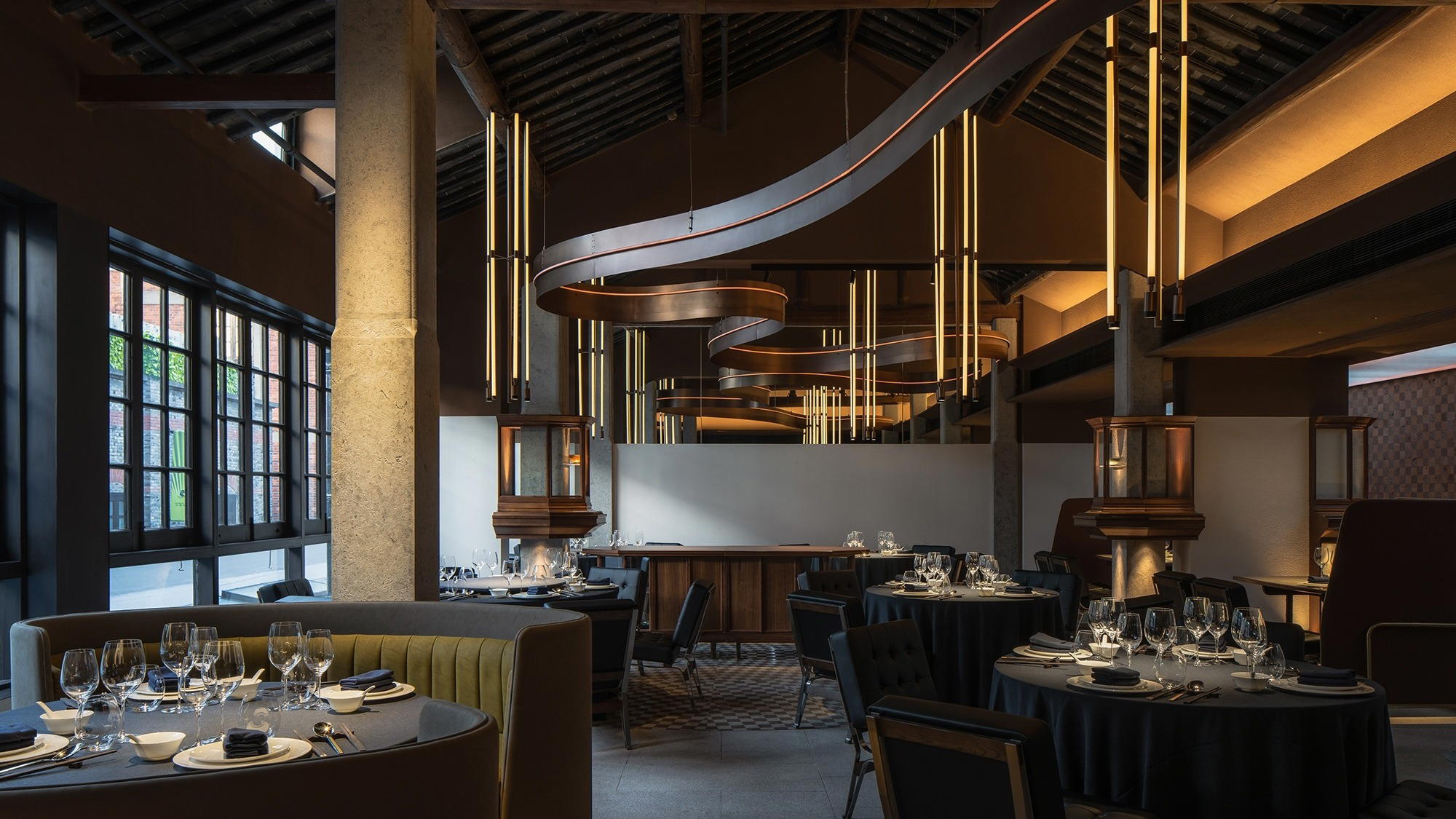
The interior replicates a Lyonnais bouchon closely enough that repeat visitors report a genuine sense of geographic displacement, wood panelling, the warm palette, the close-set tables. This is relevant to your booking decision: if you're looking for the austere, high-design French dining room that defines venues like L'Effervescence or ESqUISSE, LUGDUNUM is a different experience entirely. The room is warm and informal, which suits the food.
The Technical Case for Booking
Lyonnais cuisine is one of France's most codified regional traditions, Paul Bocuse spent decades institutionalising it, and it translates poorly when handled generically. The quenelle alone is a technically demanding preparation: the texture requires precise emulsification, the poaching window is narrow, and the accompaniment has to balance richness without overwhelming it. The doria adaptation here (buttered rice underneath, a Japanese baking technique applied to a French dumpling) suggests a kitchen that has thought carefully about how to preserve the original logic of a dish while making it legible in a Tokyo context. For diners who know Lyon's food, this will read as faithful. For those who don't, it's an efficient introduction to what makes bouchon cooking distinct from standard French bistro fare.
At ¥¥ pricing, LUGDUNUM sits well below the French fine-dining tier in Tokyo. Compare it to Florilège at ¥¥¥ or L'Effervescence and Château Restaurant Joël Robuchon at ¥¥¥¥, LUGDUNUM delivers Michelin-recognised cooking at a fraction of those price points. The trade-off is scope: this is a focused, regional menu, not a broad contemporary French tasting experience. That's exactly the point. If you want technical ambition across a wider canvas, Sézanne is the better call. If you want a specific, deeply understood regional French tradition executed with care at a reasonable price, LUGDUNUM is the better choice.
Kagurazaka Context
The restaurant sits down an alley in Kagurazaka, a neighbourhood that has maintained a genuinely French character in Tokyo for decades, French schools, French bakeries, French residents. This is not incidental to the booking decision. LUGDUNUM fits its neighbourhood in a way that adds to the experience: arriving through a Kagurazaka alley at a bouchon that looks transported from Lyon has a coherence that a French restaurant in, say, Roppongi would lack. If you're building a wider Tokyo itinerary, the full Tokyo restaurants guide covers the broader field, and the Tokyo hotels guide and Tokyo bars guide will help with the rest of your trip. For those travelling beyond Tokyo, HAJIME in Osaka, Gion Sasaki in Kyoto, and akordu in Nara offer strong regional alternatives at various price points. Further afield, Goh in Fukuoka, 1000 in Yokohama, and 6 in Okinawa are worth knowing about. For French cooking at a similar regional-focus level in other markets, Les Amis in Singapore and Hotel de Ville Crissier in Crissier are the appropriate reference points.
Practical Details
Reservations: Booking difficulty is rated easy, a week or two of lead time should be sufficient for most nights, though weekend evenings in a small alley restaurant will fill faster. Budget: ¥¥ pricing makes this one of the most accessible Michelin-recognised French kitchens in Tokyo; plan accordingly and don't under-order. Dress: The bouchon format and ¥¥ price point suggest smart casual is appropriate, this is not a white-tablecloth occasion. Location: Kagurazaka, Shinjuku City; the alley setting means GPS navigation is useful for a first visit.
Pearl Ratings
- Value: High, Michelin Plate quality at ¥¥ pricing is a clear positive signal
- Technical focus: High, Lyonnais cuisine executed by a chef cooking from his own regional memory
- Booking ease: Easy, accessible relative to comparable-quality French restaurants in Tokyo
- Room: Warm and informal; set expectations accordingly if you want a formal French dining environment
Planning details
- Location
- Japan, 〒162-0825 Tokyo, Shinjuku City, Kagurazaka, 4 Chome−3−7
- Reservations
- Book on TableCheck
- Website
- lyondelyon.com
- Phone
- +81 3-6426-1201
The take
The Take
The Vibe
LUGDUNUM presents a compact, neighbourhood-first bouchon tucked down a narrow Kagurazaka alley. It leans into the working‑class Lyonnais bistro tradition — offal, pork, quenelles and wine in small ceramic pots — rather than contemporary fine‑dining affectation. The room and menu favour comforting consistency over novelty, which cultivates a quietly cherished, almost hidden‑gem quality. The surrounding streets, shaped by a postwar French community and lined with bakeries and fromageries, amplify the restaurant’s approachable, old‑world charm. Overall it feels relaxed and intimate, a place geared for regulars as much as first‑time visitors seeking authentic Lyonnais flavours.
Best For
This is a spot for people who want earnest French bistro cooking without the ceremony of hotel tasting menus. Its moderate pricing and steady, familiar room make it suitable for low‑key date nights, quietly confident business meals and celebrate‑worthy but unpretentious dinners. Regulars return for the consistency of the food and atmosphere, so it’s equally good for repeat visits or bringing visitors who want a genuine Lyonnais bouchon in Tokyo. Expect hearty, traditional plates rather than experimental courses — the kind of place you visit for dependable flavours and convivial service.
Ordering Tips
Lean into the bouchon specialties: quenelle, homemade sausages, foie gras terrine and blood sausage are all signature items and exemplify the restaurant’s focus on offal and pork. Dishes arrive in straightforward, sharing‑friendly portions and pair naturally with the modestly curated wine list, often served in small ceramic pots as the bouchon tradition dictates. Because the kitchen prizes consistency over trend‑chasing, order a few classic plates to share so you can taste a range of preparations. If you enjoy rustic French comfort food, prioritize the house sausages and quenelle as introductions to the menu.
Venue details
Ambiance
Warm and convivial bistro atmosphere with antiques from Lyon, Art Deco lighting, oak tables, and walls decorated with Lyon landscapes, evoking a faithful French bouchon experience.
Tags
Vibe
Best For
Experience
At the Table
- Dress Code
- Smart Casual
- Noise Level
- Conversational
- Service Style
- Upscale Casual
- Meal Pacing
- Leisurely
- Capacity
- Small
- Kitchen
- Traditional
- Menu Format
- A la carte, Set menu
- Wine Program
- Curated
- Outdoor Seating
- Yes
Signature Dishes
- quenelle
- homemade sausages
- foie gras terrine
- blood sausage
Know before you go
Know Before You Go
- Getting there
- Japan, 〒162-0825 Tokyo, Shinjuku City, Kagurazaka, 4 Chome−3−7
Planning details
Location
Japan, 〒162-0825 Tokyo, Shinjuku City, Kagurazaka, 4 Chome−3−7 · Directions
Recognition and awards
Also consider
Also Consider
- Harutaka, Sushi, ¥¥¥¥
- RyuGin, Kaiseki, Japanese, ¥¥¥¥
- L'Effervescence, French, ¥¥¥¥
- HOMMAGE, Innovtive French, French, ¥¥¥¥
- Florilège, French, ¥¥¥
Restaurant context
How LUGDUNUM Compares
LUGDUNUM sits in a different tier from most of its French peers in Tokyo, and that's a feature, not a flaw. L'Effervescence and HOMMAGE are both ¥¥¥¥ operations with ambitious contemporary French menus and the formal room to match. If technical innovation across a full multi-course progression is what you want, those venues deliver it at a higher price and with more difficulty to book. LUGDUNUM's trade-off is deliberate: narrower menu, warmer room, significantly lower spend, and a specific regional tradition that neither of those restaurants attempts.
Florilège at ¥¥¥ is the closest comparison in terms of French cooking with genuine conviction, but Florilège is a contemporary French kitchen with a seasonal Japanese-produce focus, while LUGDUNUM is a bouchon with a fixed Lyonnais identity. They're solving different problems. If you want the more adventurous and design-forward French experience, Florilège wins. If you want regional French cooking that tastes like someone's actual hometown, LUGDUNUM is the more specific and arguably more useful choice.
Against Tokyo's top-end Japanese options, Harutaka at ¥¥¥¥ for sushi or RyuGin at ¥¥¥¥ for kaiseki, LUGDUNUM competes on none of the same dimensions. It's not trying to. Book LUGDUNUM for the value, the bouchon format, and the regional French specificity. Book Harutaka or RyuGin when the occasion justifies the spend and you want Japanese culinary tradition at its most technically demanding.
Explore Tokyo
Around this place
Discover more on Pearl
Unlock the full LUGDUNUM Bouchon Lyonnais guide in Pearl, including awards, comparisons, FAQs, planning details, and nearby places.
Compare LUGDUNUM Bouchon Lyonnais
| Venue | Cuisine | Price | Booking Difficulty | Awards |
|---|---|---|---|---|
| LUGDUNUM Bouchon Lyonnais | French | ¥¥ | Easy | 2026 Michelin Plate2025 Michelin Plate2024 Michelin Plate |
| Harutaka | Sushi | ¥¥¥¥ | Unknown | 2026 Tabelog Silver · #312026 OAD Top Restaurants in Japan Ranked · #1282026 Michelin 3 Stars2026 La Liste Top RestaurantsTabelog 100 - Sushi - TOKYO - 2025 · #372025 Asia's 50 Best Restaurants · #762025 OAD Top Restaurants in Japan Ranked · #1172025 La Liste Top Restaurants2025 Tabelog Bronze |
| RyuGin | Kaiseki, Japanese | ¥¥¥¥ | Unknown | 2026 OAD Top Restaurants in Japan Ranked · #802026 Tabelog Bronze · #3772026 Michelin 3 Stars2026 La Liste Top RestaurantsTabelog 100 - Japanese cuisine - TOKYO - 2025 · #212025 OAD Top Restaurants in Japan Ranked · #542025 Michelin 3 Stars2025 La Liste Top Restaurants2025 The Best Chef Three Knives |
| L'Effervescence | French | ¥¥¥¥ | Unknown | 2026 Tabelog Silver · #682026 OAD Top Restaurants in Japan Ranked · #103Star Wine Lists 20262026 Black Pearl 2 Diamond2026 Relais Chateaux Restaurants2026 La Liste Top Restaurants2026 Michelin 3 Stars2025 Asia's 50 Best Restaurants · #692025 OAD Top Restaurants in Japan Ranked · #92 |
| HOMMAGE | Innovtive French, French | ¥¥¥¥ | Unknown | 2026 Tabelog Bronze · #1232026 OAD Top Restaurants in Japan Highly Recommended2026 Michelin 2 StarsTabelog 100 - French - TOKYO - 2025 · #762025 Asia's 50 Best Restaurants · #782025 OAD Top Restaurants in Japan Ranked · #1752025 Michelin 2 Stars2025 The Best Chef One Knife2025 La Liste Top Restaurants |
| Florilège | French | ¥¥¥ | Unknown | 2026 Asia's 50 Best Restaurants · #312026 Tabelog Bronze · #712026 OAD Top Restaurants in Japan Ranked · #1242026 Black Pearl 1 Diamond2026 Michelin 2 Stars2026 La Liste Top Restaurants2025 Asia's 50 Best Restaurants · #172025 World's 50 Best Restaurants · #36Tabelog 100 - French - TOKYO - 2025 · #68 |













Side-by-side comparison to help you decide where to book.
FAQ
Frequently Asked Questions
How far ahead should I book LUGDUNUM Bouchon Lyonnais?
One to two weeks is enough for most nights. This is a Michelin Plate restaurant at ¥¥ pricing in a small Kagurazaka alley space, so weekend evenings fill faster than weekday slots — aim for a Thursday or Friday if your schedule allows. Booking difficulty is low compared to the city's starred French restaurants.
Is LUGDUNUM Bouchon Lyonnais good for solo dining?
Yes. Bouchons in Lyon traditionally seat solo diners at the counter or communal tables without fuss, and LUGDUNUM follows that format. At ¥¥ pricing it's a low-stakes solo meal, and the focused regional menu means you're not navigating a long tasting format alone. A better solo fit than a multi-course omakase-style French restaurant like L'Effervescence.
What should I wear to LUGDUNUM Bouchon Lyonnais?
The restaurant is designed as a faithful recreation of a Lyonnais bouchon — an unpretentious, neighbourhood bistro format — so the dress expectation follows that. Clean, neat casual is appropriate; there's no case for formal dress here. Leave the jacket at the hotel.
Is the tasting menu worth it at LUGDUNUM Bouchon Lyonnais?
What the venue is recognised for are dishes rooted in Lyonnais tradition — quenelle prepared doria-style with buttered rice, and homemade sausages — so ordering around those anchors is the practical approach for a first visit.
Is LUGDUNUM Bouchon Lyonnais worth the price?
At ¥¥, this is one of the more accessible Michelin-recognised French restaurants in Tokyo. For Lyonnais regional cooking — a style with almost no equivalent in the city — the value case is strong. If you want grander French technique, L'Effervescence or Florilège charge more and deliver more elaborate cooking; LUGDUNUM's draw is specificity and authenticity, not scale.
What should a first-timer know about LUGDUNUM Bouchon Lyonnais?
This is not a French restaurant in the generic Tokyo sense — it's a bouchon, meaning the menu is deliberately narrow, regional, and centred on Lyonnais tradition as chef Christophe Paucod knows it from his hometown. The Michelin Plate (2025) signals consistent quality without the ceremony of a starred room. Come expecting hearty, codified regional French cooking in a small space down an alley in Kagurazaka, not a contemporary tasting menu.