
.png?width=1200&quality=80)

L'EAU
French · Minato, Tokyo
Restaurant in Tokyo, Japan
 Book with Pearl
The Read
Nature-Document French
Price
¥¥¥
Dress
Smart Casual
Why go
L'EAU is a seasonal French tasting menu in Minami-Aoyama where the kitchen's sourcing logic — built around Japanese mountain and coastal produce — drives a coherent course progression rather than serving as decoration. At ¥¥¥, it is a full price tier below the starred French competition in Tokyo, carries a Michelin Plate for 2024 and 2025, and books easily. The right choice if the food concept matters more than the prestige signal.
About L'EAU
Should You Return to L'EAU?
If you visited L'EAU once and left thinking it was a pleasant French tasting menu in a nicely decorated basement, a second visit is likely to shift that assessment. The restaurant's logic only becomes fully clear when you experience it across seasons. Chef Takamitsu Shimizu's menu rotates around what the kitchen calls the four elements of nature — water, leaf, soil, tree — and the ingredients on your plate in winter are fundamentally different from what arrives in autumn. If your first visit happened to land in a single season, you saw one chapter of an ongoing work. That is the honest case for coming back.
At ¥¥¥, it sits a full price tier below peers like L'Effervescence and Florilège, which makes the decision to return considerably easier to justify.
The Space and the Atmosphere
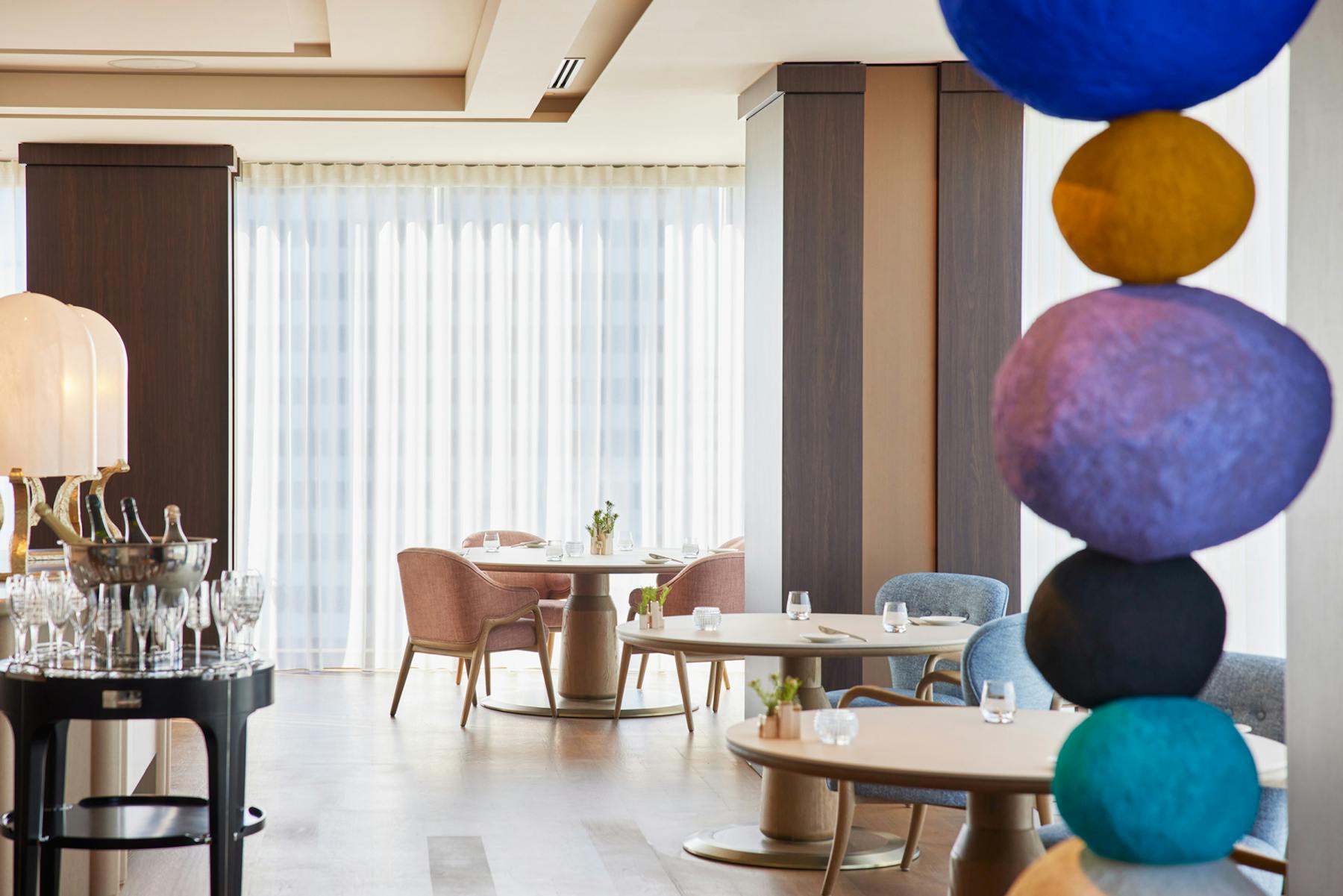
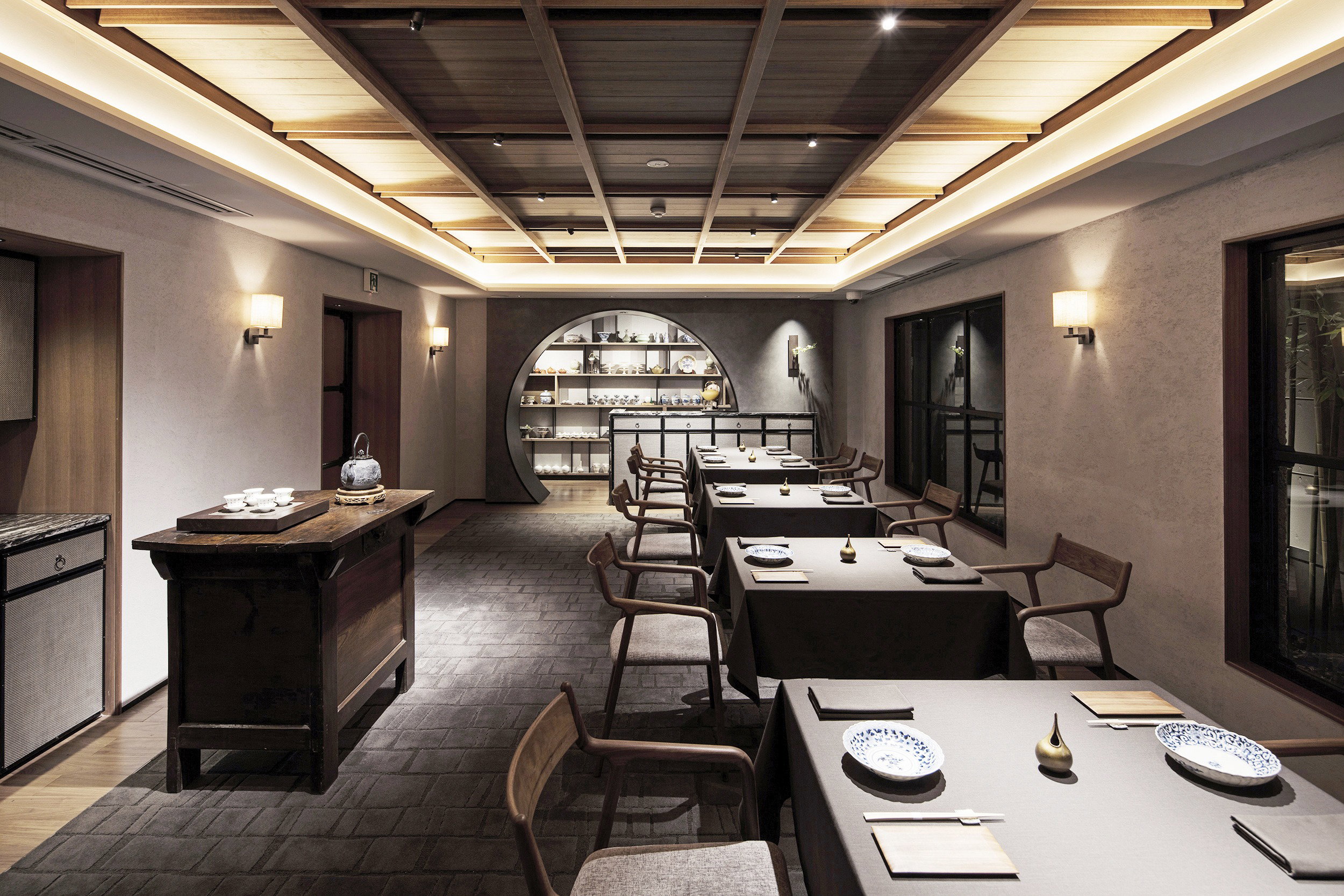
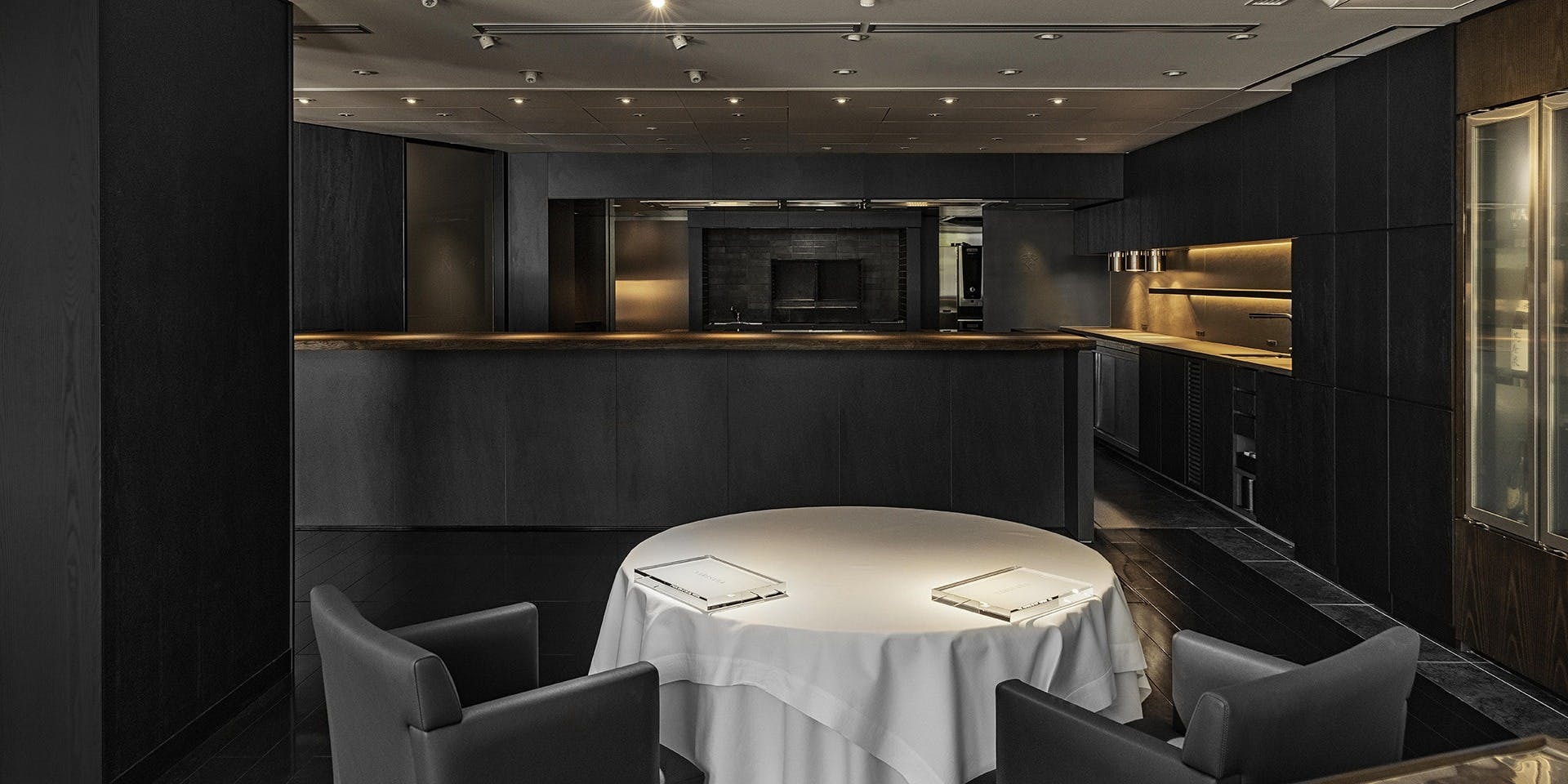
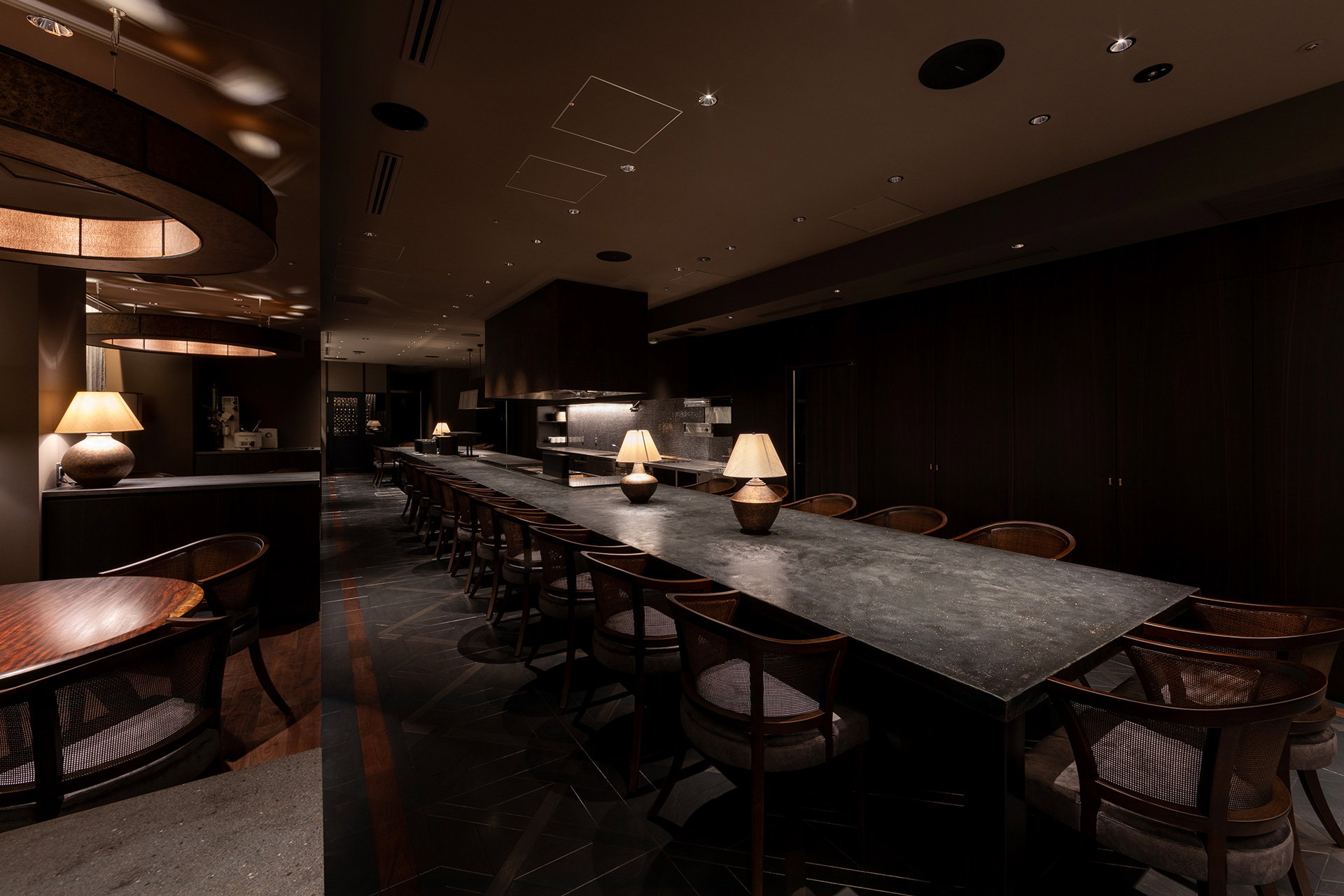
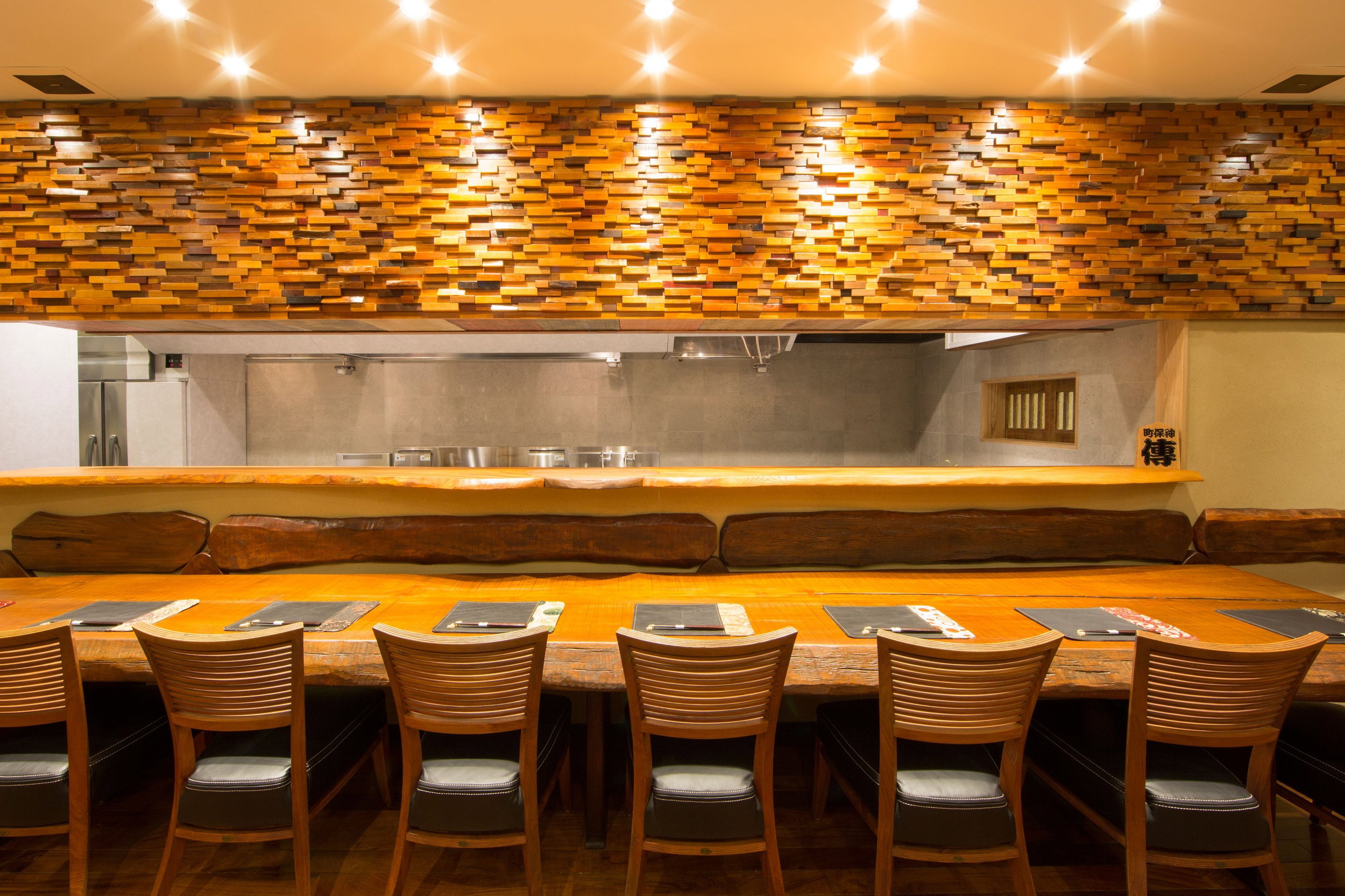
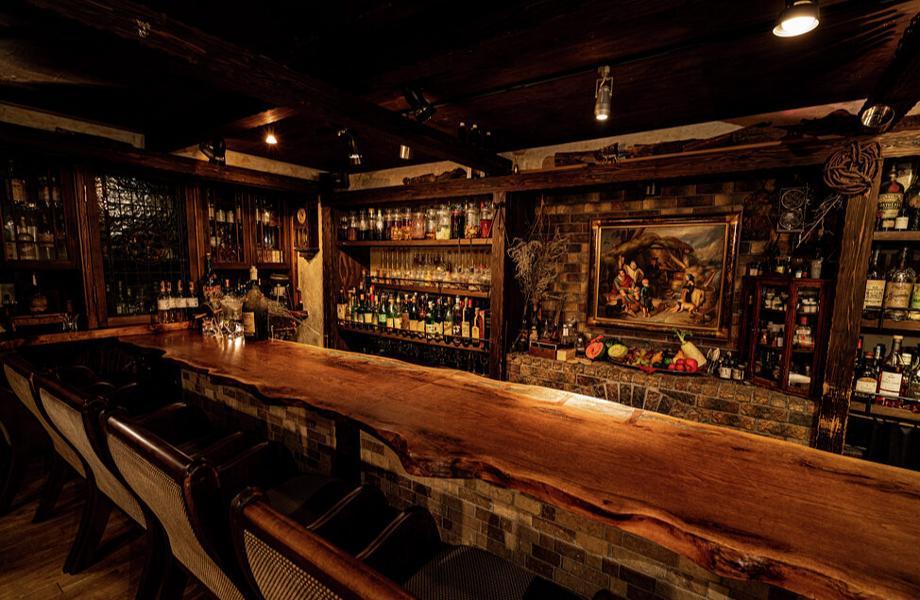
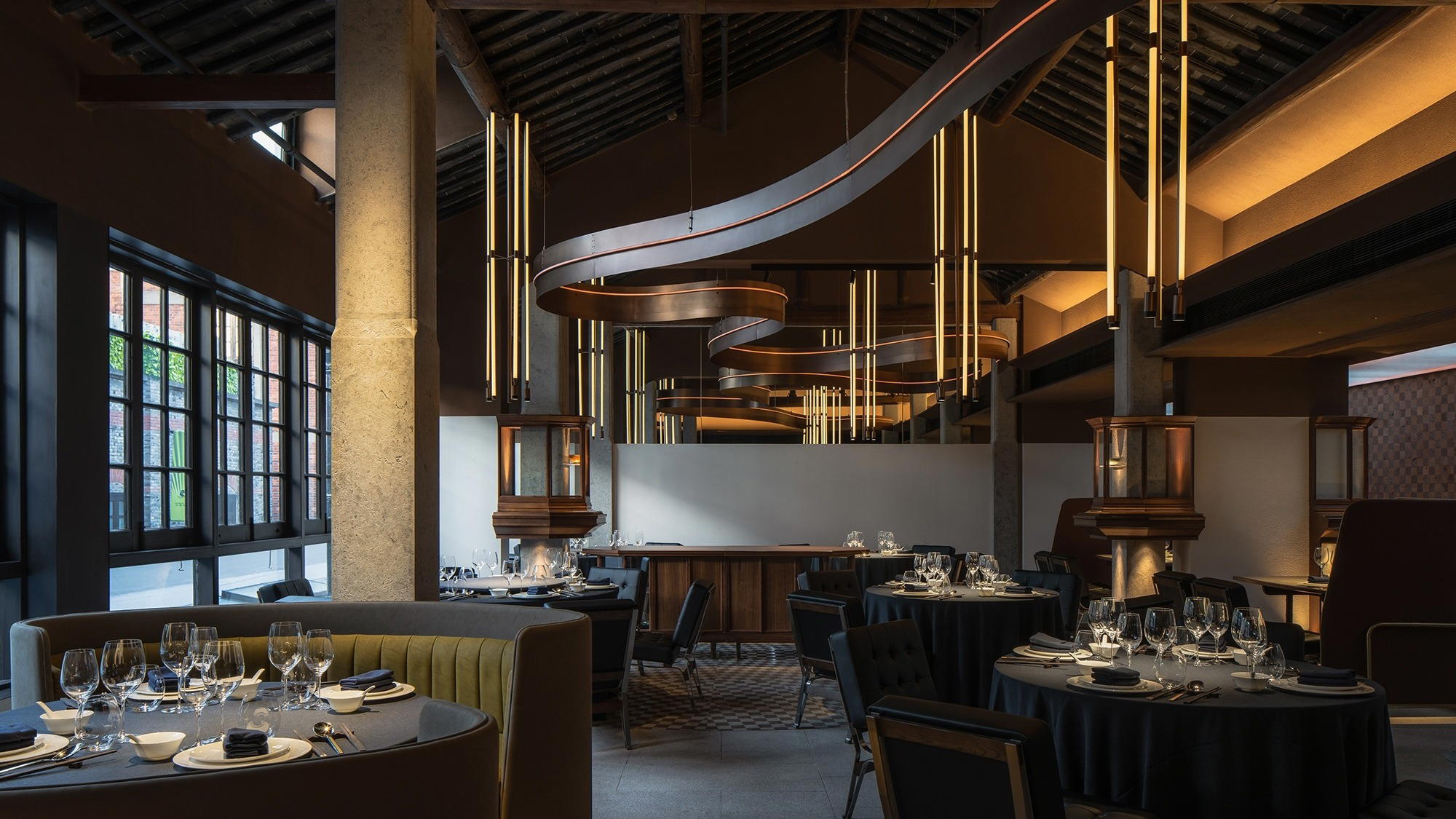
The restaurant is on the basement level of the KFK Building in Minami-Aoyama, and the descent into the room is part of how it frames the experience. The design is deliberate: driftwood, charcoal, stone walls. The room reads quiet and interior-facing, with an atmosphere closer to a private dining space than to the open-kitchen energy of many contemporary French addresses in Tokyo. Sound levels are low enough for conversation at a normal register, which makes it a workable choice for business dinners or occasions where the meal is not supposed to compete with the room. The mood is focused rather than celebratory, which is either an asset or a limitation depending on what you are after.
For a food enthusiast visiting Tokyo specifically to track the relationship between Japanese seasonal produce and European culinary technique, L'EAU is one of the more coherent examples of how that conversation can happen at the plate level rather than as a decorative gesture.
The Tasting Menu: Structure and Progression
The restaurant's concept is not metaphorical. The amuse-bouche titled 'Water, Leaf, Soil, Tree' is a literal statement of intent, and the courses that follow are structured to move through those registers in sequence. Dishes are served in vessels moulded to resemble mosses and plants, reinforcing the progression visually as well as through flavour. The sourcing logic is present: each component is attributed to a specific producing region or producer, and the kitchen's editorial filter, choosing which regions and which producers to amplify, is the through-line that holds the menu together.
This is the kind of tasting menu that rewards attention rather than appetite. The arc is not built around volume or theatrical moments; it is built around accumulation of detail. If you are comparing formats, this is closer to the restrained precision of ESqUISSE than to the maximalist structure of Château Restaurant Joël Robuchon. Readers who want high-production spectacle should know that going in. Readers who want a tightly edited argument made through food will find L'EAU more satisfying than venues that use seasonal produce as a selling point without building a coherent menu around it.
The current winter season, in practical terms, is one of the stronger windows to visit. Japanese mountain and coastal produce in the colder months tends toward intensity and umami depth, which suits the kitchen's preference for grounded, soil- and sea-referenced flavours. If you are planning a trip and have flexibility, this is worth factoring into your timing.
Booking and Practical Details
Booking at L'EAU is rated Easy. The restaurant does not carry a Michelin star, which means it does not attract the same competition for reservations as the starred French addresses in the same arrondissement. You are unlikely to need more than a week or two of lead time on most dates, and the absence of a phone number or website in the public record suggests reservations may be managed through a platform such as TableCheck or Omakase, both common for this tier of Tokyo dining. Confirming the booking channel before you travel is advisable. Reservations: Book via local reservation platforms; lead time of one to two weeks typically sufficient. Budget: ¥¥¥, expect tasting menu pricing in the mid-range for this category in Tokyo. Location: Minami-Aoyama, Minato City, KFK Building B1F, a short walk from Omotesando station. Dress: Smart casual is appropriate given the tone of the room; no formal dress code is confirmed in available data.
Who Should Book
L'EAU is the right call if you want a seasonal French tasting menu in Tokyo that takes its sourcing logic seriously, costs less than the starred competition, and does not require three months of advance planning. It is not the right call if you want the kinetic energy of a full production kitchen or the prestige of a Michelin star to anchor a special occasion. For that, L'Effervescence or Sézanne are the more direct answers. For solo dining, the format and atmosphere are compatible, the room is quiet and the menu is self-contained enough to engage with alone. For groups of four or more, confirm room configuration before booking.
For broader context on where L'EAU sits in Tokyo's dining landscape, see our full Tokyo restaurants guide. If you are extending your trip, the same nature-forward French approach appears in different registers at HAJIME in Osaka and at akordu in Nara, both worth considering as part of a broader Japan itinerary. You can also explore our full Tokyo hotels guide, our full Tokyo bars guide, our full Tokyo wineries guide, and our full Tokyo experiences guide to build out the rest of your visit. For those tracking French cuisine across Japan's regions, Gion Sasaki in Kyoto, Goh in Fukuoka, 1000 in Yokohama, and 6 in Okinawa each offer a distinct regional perspective on the same conversation between European technique and Japanese produce. For reference points beyond Japan, Les Amis in Singapore and Hotel de Ville Crissier in Crissier sit at the other end of the formality and price spectrum in French fine dining.
Planning details
- Location
- Japan, 〒107-0062 Tokyo, Minato City, Minamiaoyama, 2 Chome−14−14 南青山 Kfk Bldg. B1F
- Website
- leau.tokyo
- Phone
- +81 3-5843-0140
The take
The Take
The Vibe
L'EAU reads like a subterranean fragment of the natural world: descending to the B1F, you enter a room of driftwood, charcoal and raw stone where restraint feels intentional rather than sparse. The design is curated to make a single editorial point about nature, so furnishings and finishes serve the cuisine's argument before a dish arrives. The tone is calm and considered, favoring quiet, close conversation over spectacle. The space underscores the kitchen’s project — French technique deployed to document Japanese ingredients — and the overall effect is quietly composed and deeply purposeful.
Best For
This is a restaurant for low-key but memorable evenings. The restrained, intimate basement room suits date nights, special occasions and business dinners where conversation matters as much as the food. It’s not a loud, energetic late-night spot; instead the setting favors small groups and couples seeking a refined, contemplative meal. The design-forward environment and careful culinary framing also make it appropriate for celebratory dinners that prize deliberation over flash, and for anyone who appreciates a quietly sophisticated, nature-inflected dining experience in Minami-Aoyama.
Ordering Tips
The kitchen uses French structure to highlight Japanese ingredients, so choose dishes that show that interplay. The listed signatures — Miso-Glazed Black Cod, Sashimi Platter, Eel with Chrysanthemum and Abalone with Cep Mushroom — are strong bets to experience the restaurant’s approach. Ask the staff how seasonal produce is being treated on the night you visit and order a selection that lets you compare pure, ingredient-led preparations with more technique-forward plates. Given the intimate room, pace your meal to enjoy the thoughtful plating and material-driven atmosphere.
Venue details
Ambiance
Underground elegant space with warm, sophisticated atmosphere; stone walls adorned with driftwood and charcoal; spacious seating with sofa options; calm yet refined setting that feels like stepping into a peaceful forest.
Tags
Vibe
Best For
Experience
Sourcing
At the Table
- Dress Code
- Smart Casual
- Noise Level
- Quiet
- Service Style
- Formal
- Meal Pacing
- Extended Experience
- Capacity
- Intimate
Signature Dishes
- Miso-Glazed Black Cod
- Sashimi Platter
- Eel with Chrysanthemum
- Abalone with Cep Mushroom
Know before you go
Know Before You Go
- Getting there
- Japan, 〒107-0062 Tokyo, Minato City, Minamiaoyama, 2 Chome−14−14 南青山 Kfk Bldg. B1F
Planning details
Location
Japan, 〒107-0062 Tokyo, Minato City, Minamiaoyama, 2 Chome−14−14 南青山 Kfk Bldg. B1F · Directions

Also consider
Also Consider
- Harutaka, Sushi, ¥¥¥¥
- RyuGin, Kaiseki, Japanese, ¥¥¥¥
- L'Effervescence, French, ¥¥¥¥
- HOMMAGE, Innovtive French, French, ¥¥¥¥
- Florilège, French, ¥¥¥
Restaurant context
L'EAU's most direct competitor at the same price tier is Florilège, also ¥¥¥, also French, also grounded in Japanese produce. The difference is format and tone: Florilège is more overtly contemporary and counter-focused, while L'EAU's basement room and nature-as-canvas concept create a more enclosed, contemplative atmosphere. If you want energy and visible kitchen activity, Florilège wins. If you want a quieter room with a more philosophical tasting arc, L'EAU is the stronger choice.
Step up to ¥¥¥¥ and the field shifts significantly. L'Effervescence and HOMMAGE both carry Michelin stars and the booking difficulty that goes with them. For a special occasion where the credential matters, either outranks L'EAU on prestige. But if budget flexibility is a factor and you are primarily there for the food rather than the recognition, L'EAU covers most of the same ground at a meaningfully lower price. L'Effervescence is the clearest step up in ambition and awards; HOMMAGE suits diners who want French technique pushed further toward innovation.
For diners considering Japanese formats as an alternative, RyuGin at ¥¥¥¥ is the kaiseki reference point, technically demanding, seasonally rigorous, and harder to book. Harutaka at ¥¥¥¥ answers a different question entirely (sushi counter, not tasting menu). The honest comparison is this: if you want French fine dining in Tokyo without the booking fight or the ¥¥¥¥ price tag, L'EAU is the most accessible entry point to a serious tasting menu experience in the city.
Explore Tokyo
Around this place
Discover more on Pearl
Unlock the full L'EAU guide in Pearl, including awards, comparisons, FAQs, planning details, and nearby places.
Compare L'EAU
| Venue | Price | Awards |
|---|---|---|
| L'EAU | ¥¥¥ | 2026 OAD Top Restaurants in Japan Recommended2026 Michelin PlateTabelog 100 - French - TOKYO - 2025 · #292025 Michelin Plate2024 Michelin Plate |
| Harutaka | ¥¥¥¥ | 2026 Tabelog Silver · #312026 OAD Top Restaurants in Japan Ranked · #1282026 Michelin 3 Stars2026 La Liste Top RestaurantsTabelog 100 - Sushi - TOKYO - 2025 · #372025 Asia's 50 Best Restaurants · #762025 OAD Top Restaurants in Japan Ranked · #1172025 La Liste Top Restaurants2025 Tabelog Bronze |
| RyuGin | ¥¥¥¥ | 2026 OAD Top Restaurants in Japan Ranked · #802026 Tabelog Bronze · #3772026 Michelin 3 Stars2026 La Liste Top RestaurantsTabelog 100 - Japanese cuisine - TOKYO - 2025 · #212025 OAD Top Restaurants in Japan Ranked · #542025 Michelin 3 Stars2025 La Liste Top Restaurants2025 The Best Chef Three Knives |
| L'Effervescence | ¥¥¥¥ | 2026 Tabelog Silver · #682026 OAD Top Restaurants in Japan Ranked · #103Star Wine Lists 20262026 Black Pearl 2 Diamond2026 Relais Chateaux Restaurants2026 La Liste Top Restaurants2026 Michelin 3 Stars2025 Asia's 50 Best Restaurants · #692025 OAD Top Restaurants in Japan Ranked · #92 |
| HOMMAGE | ¥¥¥¥ | 2026 Tabelog Bronze · #1232026 OAD Top Restaurants in Japan Highly Recommended2026 Michelin 2 StarsTabelog 100 - French - TOKYO - 2025 · #762025 Asia's 50 Best Restaurants · #782025 OAD Top Restaurants in Japan Ranked · #1752025 Michelin 2 Stars2025 The Best Chef One Knife2025 La Liste Top Restaurants |
| Florilège | ¥¥¥ | 2026 Asia's 50 Best Restaurants · #312026 Tabelog Bronze · #712026 OAD Top Restaurants in Japan Ranked · #1242026 Black Pearl 1 Diamond2026 Michelin 2 Stars2026 La Liste Top Restaurants2025 Asia's 50 Best Restaurants · #172025 World's 50 Best Restaurants · #36Tabelog 100 - French - TOKYO - 2025 · #68 |











Comparing your options in Tokyo for this tier.
FAQ
Frequently Asked Questions
Is the tasting menu worth it at L'EAU?
Yes, if a nature-driven concept with serious sourcing logic is what you want. The menu is structured around a clear philosophy — 'Water, Leaf, Soil, Tree' — and the courses follow through on it rather than treating it as decoration. At the ¥¥¥ price point, it sits below Tokyo's Michelin-starred French competition, which makes the value case straightforward for what you're getting.
How far ahead should I book L'EAU?
Booking is rated Easy, and L'EAU does not carry a Michelin star, so it does not face the same reservation pressure as starred venues like Florilège or RyuGin. A week or two in advance is generally sufficient, though for specific weekend dates or special occasions, booking earlier avoids the risk. There is no publicly listed phone or website, so confirm the booking channel before you plan around it.
Is L'EAU good for a special occasion?
It works well for a special occasion if the occasion suits an intimate, concept-driven tasting menu rather than a grand dining room. The basement space in the KFK Building in Minami-Aoyama is atmospheric rather than formal, with stone walls and natural materials setting the tone. For a landmark anniversary or celebratory dinner where setting is the priority, L'Effervescence may be a stronger call.
Is L'EAU good for solo dining?
A tasting menu format in a basement counter setting tends to work well for solo diners, and L'EAU's concept-driven structure gives you something to engage with course by course. The Minami-Aoyama location is easy to reach solo. Booking is rated Easy, so there's no barrier to securing a single seat.
What should I order at L'EAU?
L'EAU operates a tasting menu format, so ordering is not a consideration — the kitchen sets the progression. The amuse-bouche 'Water, Leaf, Soil, Tree' is the clearest expression of the restaurant's concept and signals the sourcing and seasonal logic that runs through the rest of the meal.
Is L'EAU worth the price?
At ¥¥¥, L'EAU is priced below the Michelin-starred French tier in Tokyo, which includes venues like Florilège and L'Effervescence. For a Michelin Plate-level restaurant with a coherent seasonal concept and a considered sourcing philosophy, the price-to-experience ratio is favourable. If you are comparing it specifically to starred French options in the same neighbourhood, L'EAU is the lower-risk, easier-to-book choice.
What are alternatives to L'EAU in Tokyo?
For French tasting menus in Tokyo, Florilège and L'Effervescence are the immediate step up in recognition and formality, both carrying Michelin stars and requiring more advance planning. HOMMAGE offers a French approach with Japanese ingredients at a similar accessibility level. If you want to stay in the seasonal-produce, concept-driven space but broaden to Japanese cuisine, RyuGin is the comparison point — though at a substantially higher price and booking difficulty.