

L'aube
French · Minato, Tokyo
Restaurant in Tokyo, Japan
 Book with Pearl
The Read
Trio-Driven Terroir French
Price
$200–300per person
Dress
Formal
Why go
L'aube held a Michelin star through 2024, making it one of the more convincing cases for starred French dining in Tokyo at ¥¥¥ — a full tier below L'Effervescence or Sézanne. Chef Imahashi and Pastry Chef Hirase run an open kitchen with a producer-sourcing focus. Book four to six weeks ahead minimum; this is not a walk-in restaurant.
About L'aube
A Michelin-starred French table in Roppongi that earns its difficulty to book
It means the experience lands consistently, not just on good nights. L'aube holds a Michelin star (2024), sits inside ARK Hills Sengokuyama Mori Tower in Roppongi, and operates at ¥¥¥ pricing — which, in the context of Tokyo's starred French scene, positions it a full price tier below competitors like L'Effervescence or Sézanne. If you are deciding between starred French restaurants in Tokyo and price is a factor, start here.
What to expect when you arrive
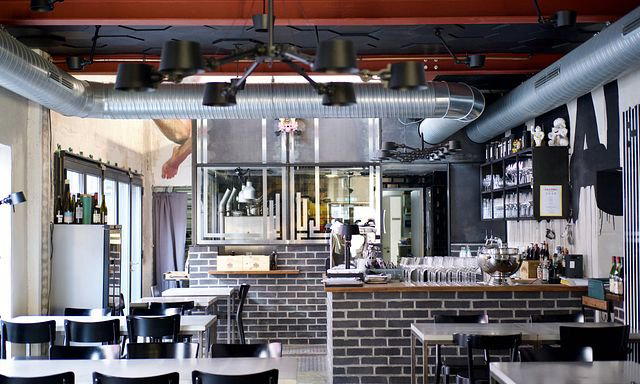
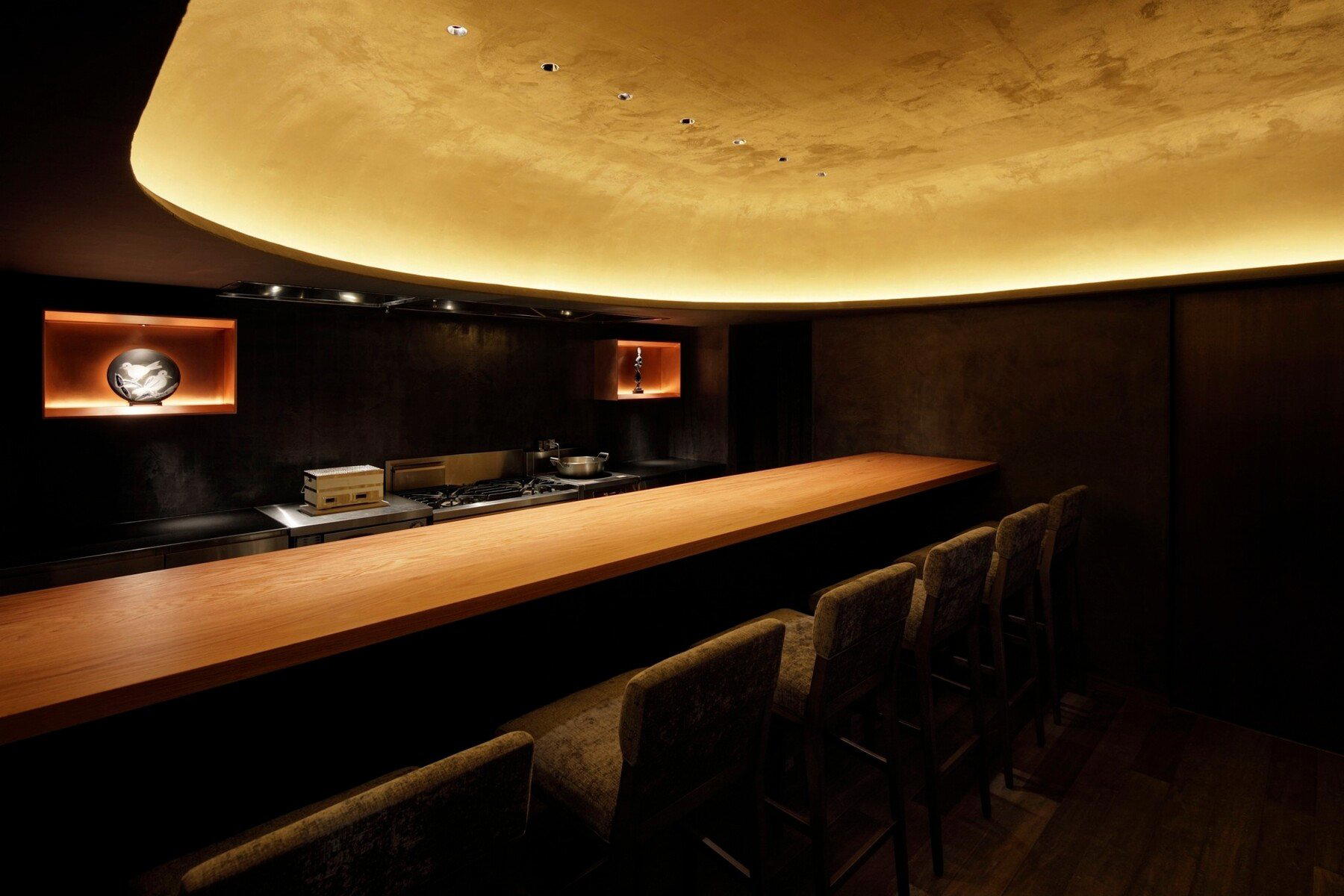
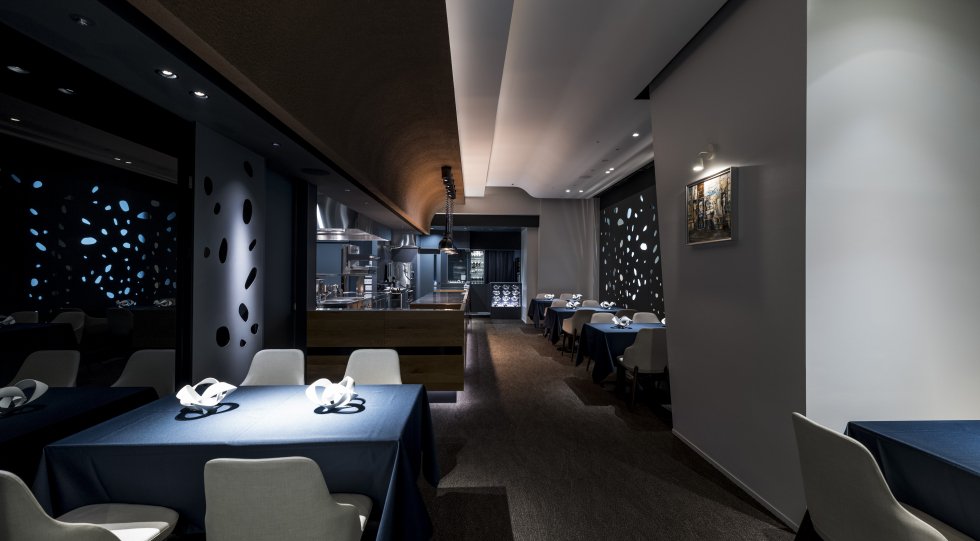
L'aube occupies the ground floor of a Roppongi tower, and the spatial logic matters: the kitchen is open, meaning the room is shaped around visibility rather than separation. For a first-timer, this is worth knowing before you sit down. You are not in a hushed, compartmentalised dining room. The team works in front of you, which creates a specific kind of atmosphere — focused, active, professional, rather than the formal stillness you might find at Château Restaurant Joël Robuchon. Whether that suits you depends on what you want from the evening. If you prefer theatrical service distance and classical French ceremony, this is not that restaurant. If you want to watch a chef and pastry chef coordinate a meal at close range, this format pays off.
The trio behind L'aube, Chef Hideaki Imahashi, Pastry Chef Shoko Hirase, and Sommelier Hiroshi Ishida, built the restaurant around a specific working method: they travel to producing regions, meet farmers, source ingredients from those relationships, and then translate what they find into the menu. The name 'L'aube' means 'daybreak' or 'beginning' in French, and the kitchen operates on the logic that each service starts fresh from that source material. For a first-timer, the practical implication is that the menu changes with seasonal supply, and the pastry component, handled by Hirase, is treated as structurally equal to the savoury course rather than an afterthought. Budget time for dessert accordingly.
The late-dinner question
The Roppongi location is relevant here. Roppongi operates later than most of Tokyo's dining districts, and for visitors considering L'aube as part of an evening that continues afterward, the neighbourhood supports that logic better than, say, a restaurant in Ginza or Minami-Aoyama. Bars, late venues, and onward options are walkable. If you are planning a special-occasion dinner that runs long and moves into drinks after, L'aube's address makes that easier to execute than comparable starred French rooms in quieter parts of the city. Consult our full Tokyo bars guide for what to do after service ends. For broader trip planning, our full Tokyo restaurants guide covers the wider field, and our full Tokyo hotels guide can help if you are still sorting accommodation near Roppongi.
Booking difficulty: Hard
This is not a casual walk-in option. Book as far ahead as your plans allow, four to six weeks minimum is a reasonable working assumption for weekend evenings. If you are travelling to Tokyo specifically to eat here, lock the reservation before you finalise flights. The same discipline applies to other starred French addresses in the city: Florilège and ESqUISSE operate under comparable booking pressure at their respective price points.
If L'aube is fully booked, the French-in-Japan category extends well beyond Tokyo. HAJIME in Osaka operates at the top of the national tier. akordu in Nara offers a quieter, smaller-scale alternative with strong sourcing credentials. For something entirely different in register, Gion Sasaki in Kyoto, Goh in Fukuoka, and 6 in Okinawa represent the regional depth of Japan's serious dining circuit. For global comparisons in the French genre, Hotel de Ville Crissier in Crissier and Les Amis in Singapore are the peer references worth knowing. Also see 1000 in Yokohama if your itinerary extends south of Tokyo. For Tokyo-specific experiences beyond dining, our Tokyo experiences guide and our Tokyo wineries guide are worth a look.
The verdict
Book L'aube if you want a Michelin-starred French meal in Tokyo at a price point that sits below the top tier without a corresponding drop in ambition. The open kitchen, the producer-sourcing philosophy, and the equal weight given to pastry make this a more engaging room than several competitors charging more. It is not the choice if you want formal French ceremony or a hushed dining room. It is the right choice if you want technical skill, seasonal logic, and a meal where the dessert course matters as much as the main. At ¥¥¥, it is one of the more defensible ways to spend a starred-restaurant evening in Tokyo.
Planning details
- Location
- Japan, 〒106-0032 Tokyo, Minato City, Roppongi, 1 Chome−9−10 ARK Hills Sengokuyama Mori Tower, 1F
- Reservations
- Book on TableCheck
- Website
- restaurant-laube.com
- Phone
- +81 3-6441-2682
The take
The Take
The Vibe
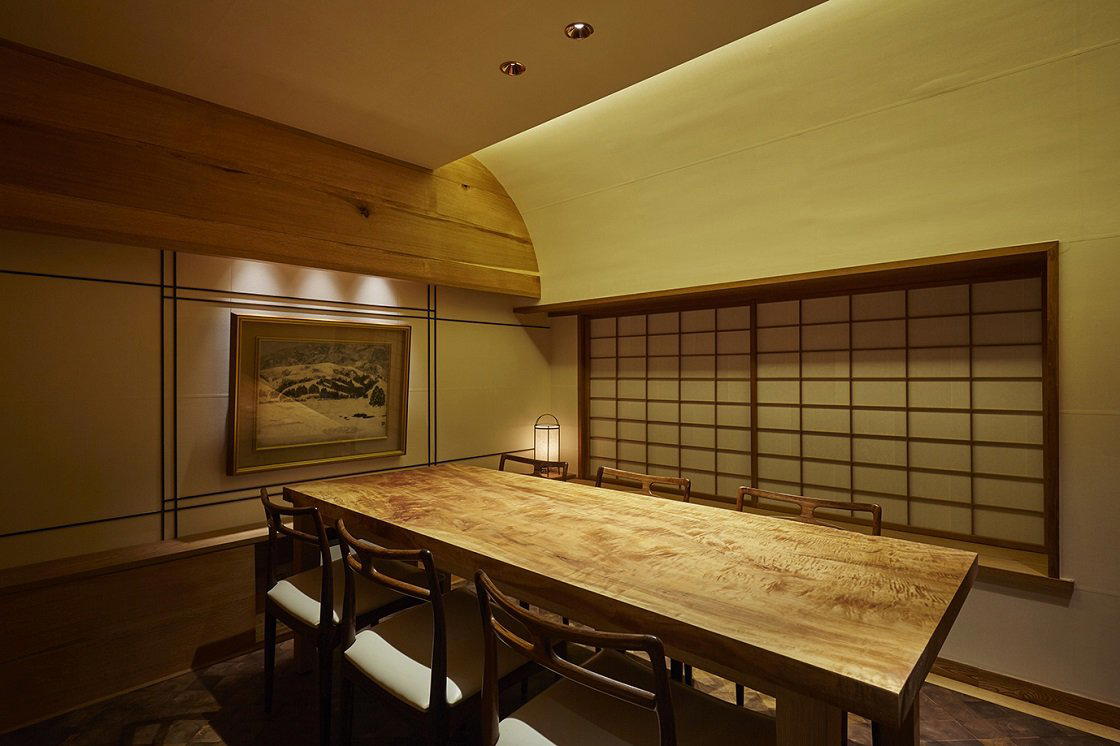
L'aube unfolds discreetly on the first floor of ARK Hills in Higashi-Azabu, offering a modern, elegant and quietly refined setting. The building’s glass and polished-stone approach and the deliberate hush of the complex create an intimate atmosphere that feels considered rather than theatrical. Cooking sits front and centre: an open kitchen places the team at work in view, reinforcing a sophisticated, ingredient-first identity. The kitchen’s practice of traveling to producers across Japan underlines a contemporary, agricultural-minded approach to French cuisine, so the dining room reads as cerebral, polished and quietly exacting rather than loud or ostentatious.
Best For
L'aube is best experienced at dinner for occasions that call for restraint and refinement. Its calm, first-floor setting in ARK Hills and fine-dining orientation make it particularly well suited to date nights, business dinners, special occasions and small celebrations where conversation and careful service matter. The open kitchen presence keeps the evening engaged without intruding, and the ingredient-led menu crafted by a chef–pastry chef–sommelier trio supports multi-course, thoughtfully paced meals rather than casual, quick stops.
Ordering Tips
Menus at L'aube pivot around seasonality and direct producer sourcing, so expect dishes to change with what the kitchen discovers on its visits to farms and suppliers. Look out for the venue’s signature items—Sweetbreads with morels, the Strawberry dessert, Tomato ice cream and house Brioche—as touchstones of the kitchen’s approach. With a defined sommelier on the team, consider pairing suggestions to complement the ingredient-led courses, and lean into the tasting-style progression rather than ordering à la carte if you want the clearest sense of the restaurant’s culinary point of view.
Venue details
Ambiance
Intimate and refined with sky-blue color scheme evoking the evening sky, contemporary interior design with custom tableware, soft lighting, and a sophisticated yet welcoming atmosphere that feels both luxurious and approachable.
Tags
Vibe
Best For
Experience
Sourcing
Accessibility
At the Table
- Dress Code
- Formal
- Noise Level
- Quiet
- Service Style
- Formal
- Meal Pacing
- Extended Experience
- Capacity
- Intimate
- Kitchen
- Modern
- Menu Format
- Prix fixe, Tasting menu
- Wine Program
- Curated
- Drinks Focus
- Wine, Sake
- Dietary
- Allergy accommodating
- Private Dining
- Available
Signature Dishes
- Sweetbreads with morels
- Strawberry dessert
- Tomato ice cream
- Brioche
Know before you go
Know Before You Go
- Getting there
- Japan, 〒106-0032 Tokyo, Minato City, Roppongi, 1 Chome−9−10 ARK Hills Sengokuyama Mori Tower, 1F
Planning details
Location
Japan, 〒106-0032 Tokyo, Minato City, Roppongi, 1 Chome−9−10 ARK Hills Sengokuyama Mori Tower, 1F · Directions
Recognition and awards

Also consider
Also Consider
- Harutaka, Sushi, ¥¥¥¥
- L'Effervescence, French, ¥¥¥¥
- RyuGin, Kaiseki, Japanese, ¥¥¥¥
- HOMMAGE, Innovtive French, French, ¥¥¥¥
- Crony, Innovative, French, ¥¥¥¥
Restaurant context
How L'aube compares to other Tokyo restaurants
The clearest peer comparison is L'Effervescence, which operates at ¥¥¥¥ and holds two Michelin stars. If budget is not the deciding factor and you want the deeper, longer French tasting experience with more elaborate service, L'Effervescence is the step up. L'aube at ¥¥¥ with one star is the stronger choice if you want a serious meal without the full financial commitment of Tokyo's top-tier French rooms. For first-timers choosing between the two, L'aube is the lower-risk entry point: lower spend, still credentialled, and the open kitchen makes the experience feel less intimidating.
HOMMAGE and Crony both operate in the innovative French space at ¥¥¥¥.RyuGin at ¥¥¥¥ is a different category entirely, kaiseki rather than French, and the right choice if you want a deep Japanese culinary expression rather than a French-trained kitchen working with Japanese produce. Harutaka is omakase sushi at ¥¥¥¥ and belongs to a separate decision entirely. The short version: for Michelin-starred French at the best price-to-quality ratio among this peer set, L'aube is the booking to make.
Explore Tokyo
Around this place
Discover more on Pearl
Unlock the full L'aube guide in Pearl, including awards, comparisons, FAQs, planning details, and nearby places.
Compare L'aube
| Venue | Cuisine | Awards | Booking Difficulty |
|---|---|---|---|
| L'aube | French | Star Wine Lists 20262026 Michelin Plate2024 Michelin 1 Star | Hard |
| Harutaka | Sushi | 2026 Tabelog Silver · #312026 OAD Top Restaurants in Japan Ranked · #1282026 Michelin 3 Stars2026 La Liste Top RestaurantsTabelog 100 - Sushi - TOKYO - 2025 · #372025 Asia's 50 Best Restaurants · #762025 OAD Top Restaurants in Japan Ranked · #1172025 La Liste Top Restaurants2025 Tabelog Bronze | Unknown |
| L'Effervescence | French | 2026 Tabelog Silver · #682026 OAD Top Restaurants in Japan Ranked · #103Star Wine Lists 20262026 Black Pearl 2 Diamond2026 Relais Chateaux Restaurants2026 La Liste Top Restaurants2026 Michelin 3 Stars2025 Asia's 50 Best Restaurants · #692025 OAD Top Restaurants in Japan Ranked · #92 | Unknown |
| RyuGin | Kaiseki, Japanese | 2026 OAD Top Restaurants in Japan Ranked · #802026 Tabelog Bronze · #3772026 Michelin 3 Stars2026 La Liste Top RestaurantsTabelog 100 - Japanese cuisine - TOKYO - 2025 · #212025 OAD Top Restaurants in Japan Ranked · #542025 Michelin 3 Stars2025 La Liste Top Restaurants2025 The Best Chef Three Knives | Unknown |
| HOMMAGE | Innovtive French, French | 2026 Tabelog Bronze · #1232026 OAD Top Restaurants in Japan Highly Recommended2026 Michelin 2 StarsTabelog 100 - French - TOKYO - 2025 · #762025 Asia's 50 Best Restaurants · #782025 OAD Top Restaurants in Japan Ranked · #1752025 Michelin 2 Stars2025 The Best Chef One Knife2025 La Liste Top Restaurants | Unknown |
| Crony | Innovative, French | 2026 Asia's 50 Best Restaurants · #34Star Wine Lists 20262026 OAD Top Restaurants in Japan Recommended2026 Michelin 2 Stars2025 Asia's 50 Best Restaurants · #30Tabelog 100 - French - TOKYO - 2025 · #782025 OAD Top Restaurants in Japan Ranked · #227We're Smart World Top Restaurants 20252025 Michelin 2 Stars | Unknown |
.png?width=1200&quality=80)













What to weigh when choosing between L'aube and alternatives.
FAQ
Frequently Asked Questions
How far ahead should I book L'aube?
Book at least four to six weeks out. L'aube holds a 2024 Michelin star in Tokyo, and demand at that tier moves tables fast. Walk-ins are not a realistic option here. If you have a fixed travel date, lock the reservation before you book your flights.
What should a first-timer know about L'aube?
L'aube is a contemporary French restaurant in the ARK Hills Sengokuyama Mori Tower in Roppongi, run by chef Hideaki Imahashi, pastry chef Shoko Hirase, and sommelier Hiroshi Ishida. The kitchen is open, so the room is built around watching the team work. Expect a structured tasting format rather than à la carte browsing. The philosophy centres on sourcing directly from producers, so the menu reflects what the team found on their travels rather than a fixed seasonal card.
What should I order at L'aube?
L'aube operates a set menu format driven by produce the team sources from farming regions, so there is no fixed dish list to pre-select from. Trust the menu as it stands on the night. Pastry chef Shoko Hirase's dessert course is a deliberate part of the experience, not an afterthought, so do not skip it.
Is L'aube worth the price?
For a Michelin-starred French tasting menu in Tokyo, it represents solid value relative to peers like L'Effervescence or RyuGin, which push into higher price territory. If French tasting menus are your format, the answer is yes.
Is L'aube good for a special occasion?
Yes, provided the format fits your group. The open kitchen and structured tasting menu suit couples or small groups who want the meal to be the focus of the evening. The Roppongi address also works in its favour for a late-night occasion, since the area runs later than most Tokyo dining districts. For larger groups or anyone who finds tasting menus tiring, a more flexible format elsewhere would serve better.