

hakunei
Contemporary · Minato, Tokyo
Restaurant in Tokyo, Japan
 Book with Pearl
The Read
Straw-Smoked Franco-Japanese Precision
Price
¥¥¥¥
Dress
Smart Casual
Why go
Hakunei holds a 2024 Michelin star and delivers a tasting menu that fuses French technique with Japanese ingredients — bonito-based sauces, straw-smoked meats, unripe pepper — in a way that feels considered rather than calculated. At ¥¥¥¥ in Nishiazabu, it is a serious special-occasion choice. Book at least six weeks ahead; this is not a walk-in venue.
About hakunei
Verdict
Hakunei earns its 2024 Michelin star and deserves your reservation if you are looking for a tasting menu that takes French technique seriously while using Japanese ingredients with genuine precision. This is a special-occasion restaurant in the fullest sense: the price point is high, the format is structured, and the kitchen's philosophy — purity and meticulous execution — shapes every course. If contemporary French-Japanese fusion is a format you already trust, hakunei is among the more considered expressions of it in Nishiazabu. Book it for a significant dinner. It will hold up.
About hakunei
Hakunei sits in Nishiazabu, one of Tokyo's quieter upscale neighbourhoods, away from the higher-traffic dining corridors of Ginza or Shinjuku. The restaurant's name carries its own brief: 'haku' for purity of approach, 'nei' for meticulous work. That pairing of clean intent and careful execution is not marketing language, it describes the cooking method directly. Meat is oven-roasted and finished with straw smoke, a technique that draws on Japanese culinary tradition while remaining legible within a French structural framework. Sauces are built on bonito stock rather than conventional veal or chicken bases, which shifts the flavour register toward umami depth without abandoning classical sauce logic. Unripe pepper replaces black pepper throughout, adding a fresh, slightly resinous heat that is noticeably different from what you would expect in a comparable French kitchen in Paris or Lyon.
The tasting menu format is designed to build progressively, and the kitchen uses that arc deliberately. Early courses tend toward lighter, more aromatic territory, dishes where the bonito-inflected sauces and restrained seasoning read as precise rather than subtle. As the menu advances, the straw-roasted preparations introduce a smoke element that adds weight and complexity without overwhelming the Japanese ingredient focus. The sensory shift across the meal is intentional: this is a kitchen that thinks about progression, not just individual dishes. The dessert course, a millefeuille de crêpes built layer by layer, functions as a direct statement of the restaurant's philosophy. It is technically demanding to execute well, and its presence at the close of the meal reads as a commitment rather than an afterthought.
For a special occasion dinner in Tokyo at the ¥¥¥¥ price tier, hakunei competes on a different axis than, say, a kaiseki room or a sushi counter. The format asks you to spend two to three hours inside a single culinary argument: that French structure and Japanese ingredient philosophy can coexist without either one compromising the other. The 2024 Michelin star confirms that argument lands at a professional level.
From a practical standpoint, Nishiazabu is accessible by taxi from central Tokyo and is within reasonable distance of Roppongi and Hiroo. The address is 4 Chome-9-11 Nishiazabu, Minato City. Booking is classified as hard, this is not a walk-in venue. Given the Michelin recognition and the intimate scale implied by the tasting menu format, reservations should be secured well in advance, particularly for Friday and Saturday evenings or for any date tied to a specific occasion. Booking windows at comparable Tokyo Michelin restaurants typically run four to eight weeks out at minimum; for hakunei, plan on the longer end of that range.
Dress expectations at a ¥¥¥¥ Michelin-starred tasting menu restaurant in Tokyo run toward smart-casual at minimum, with many guests opting for formal attire. Tokyo's fine dining culture respects considered dress, and arriving in business or formal wear is appropriate and expected. There is no confirmed dress code on record, but the context, Michelin-starred, tasting menu, Nishiazabu, makes a strong case for dressing up rather than down.
If you are building a Tokyo itinerary around serious restaurants, hakunei pairs well with a broader exploration of the city's contemporary dining scene. Pearl's full Tokyo restaurants guide covers the range. For complementary dining experiences in the same register, nôl, FUSOU, HYÈNE, JULIA, and KIBUN are all worth evaluating against your specific brief. If you are extending beyond Tokyo, the same quality tier is represented by HAJIME in Osaka, Gion Sasaki in Kyoto, akordu in Nara, Goh in Fukuoka, 1000 in Yokohama, and 6 in Okinawa. For international comparisons in the contemporary tasting menu format, Jungsik in Seoul and César in New York City are relevant reference points. Pearl also covers Tokyo hotels, Tokyo bars, Tokyo wineries, and Tokyo experiences if you are planning a full trip around the restaurant.
Practical Details
Hakunei is located at 4 Chome-9-11 Nishiazabu, Minato City, Tokyo 106-0031. The price range is ¥¥¥¥. The restaurant holds a 2024 Michelin star. Booking is hard, reserve as far in advance as possible, ideally six or more weeks out for weekend evenings or special dates. No walk-ins should be expected. The kitchen's use of bonito-based sauces, straw smoking, and unripe pepper in place of standard French ingredients signals genuine investment in the concept rather than a surface-level fusion approach. If you are comparing it to Florilège, which operates at ¥¥¥, hakunei costs more but offers a more complete tasting menu arc. Worth it if the French-Japanese format appeals to you specifically.
Planning details
- Location
- 4 Chome-9-11 Nishiazabu, Minato City, Tokyo 106-0031, Japan
- Website
- hakunei.com
- Phone
- +81 90-8946-3919
The take
The Take
The Vibe
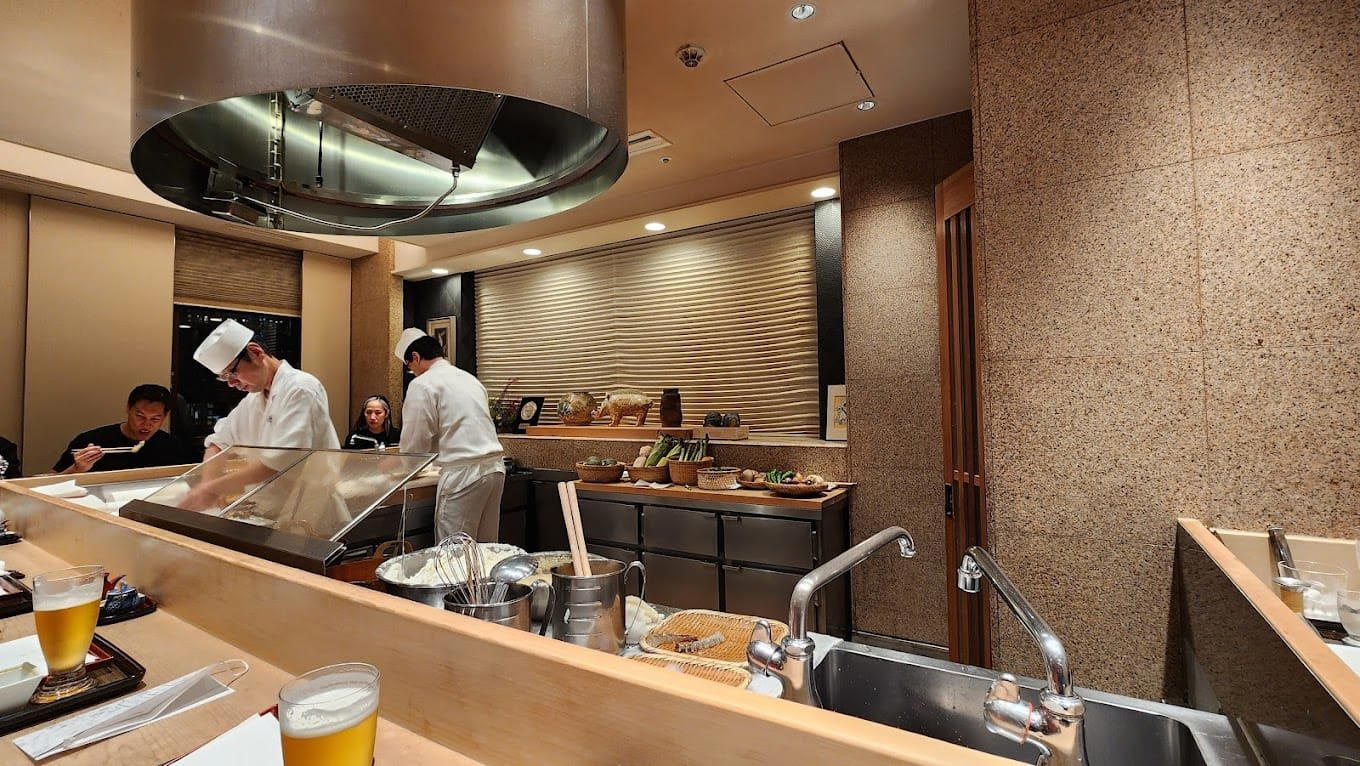
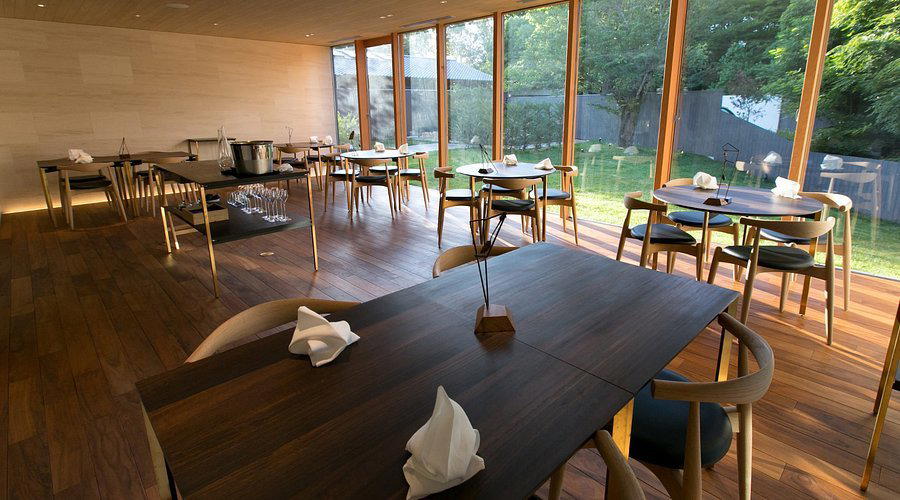
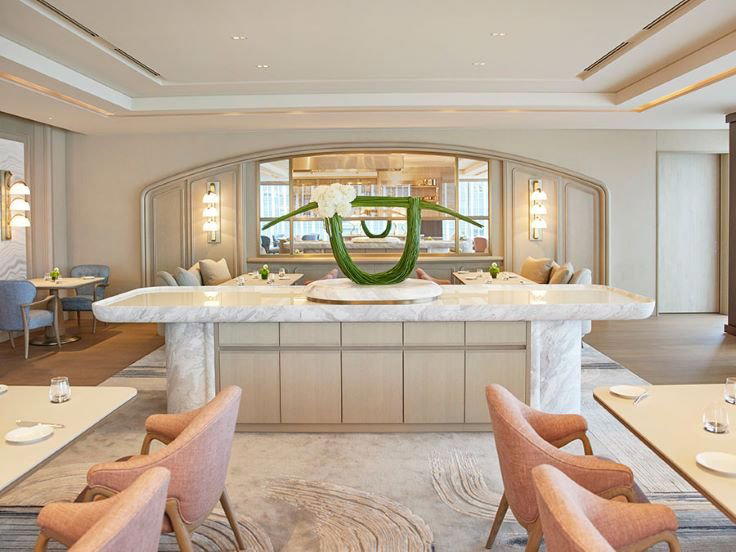
Hakunei sits on the quieter side of Nishiazabu and cultivates an atmosphere of restraint and precision. The writing emphasizes understatement — low-rise streets, muted signage and a kitchen that privileges the integrity of ingredients over theatricality. The dining room reads as calm and considered: classical French technique meets Japanese seasonality, producing an experience that feels composed rather than showy. Service and plating follow that same logic, favoring technical clarity and minimal adornment. Guests who appreciate finely tuned, sophisticated cooking in a serene, intentionally quiet setting will find Hakunei especially appealing.
Best For
Hakunei is best for evenings when a focused, technically driven meal is the point of the visit. The restaurant’s placement in a discreet Nishiazabu block and its alignment with Michelin-caliber standards make it a natural choice for special occasions and date nights where foodcraft matters. The kitchen’s emphasis on seasonal Japanese ingredients treated with classical French technique lends itself to multi-course, sit-down dining rather than casual stops. Visitors seeking a quiet, refined dinner — rather than a loud social scene — will get the most out of what Hakunei offers.
Ordering Tips
When booking, expect a menu that spotlights careful technique and seasonality; the kitchen’s philosophy centers on extraction and waste-minimizing methods. Make sure to sample the house signatures — the mille crêpe and the straw-smoked venison — which are highlighted as representative preparations. Because the restaurant occupies a low-key spot in Nishiazabu and attracts a clientele that knows where to find it, reservations are advisable. Avoid expecting elaborate spectacle: this is a meal about precision, restraint and the quality of individual ingredients, so plan to savor courses at a measured pace.
Venue details
Ambiance
Chic and elegant basement space with white and creamy tones, hinoki wood counter for 8 guests, open kitchen, relaxed and pure atmosphere focusing on cuisine.
Tags
Vibe
Best For
Experience
At the Table
- Dress Code
- Smart Casual
- Noise Level
- Quiet
- Service Style
- Formal
- Meal Pacing
- Leisurely
- Capacity
- Intimate
Signature Dishes
- mille crepe
- straw-smoked venison
Know before you go
Know Before You Go
- Getting there
- 4 Chome-9-11 Nishiazabu, Minato City, Tokyo 106-0031, Japan
Planning details
Location
Recognition and awards

Also consider
Also Consider
- Harutaka, Sushi, ¥¥¥¥
- RyuGin, Kaiseki, Japanese, ¥¥¥¥
- L'Effervescence, French, ¥¥¥¥
- HOMMAGE, Innovtive French, French, ¥¥¥¥
- Florilège, French, ¥¥¥
Restaurant context
At Tokyo’s ¥¥¥¥ tier, hakunei sits closest to L'Effervescence and HOMMAGE for diners seeking a contemporary French tasting menu. L'Effervescence brings a longer press history and more established name recognition, making it the safer choice when familiarity matters. HOMMAGE offers another innovative French interpretation at the same price. Hakunei takes a more defined French-Japanese route, using French technique with Japanese ingredients; that specificity is the reason to choose it over either alternative.
RyuGin belongs in a different culinary tradition, even at the same budget level. Its kaiseki structure follows Japanese principles, while hakunei applies French frameworks to Japanese ingredients. Choose RyuGin for a meal rooted in Japanese culinary tradition; choose hakunei to explore how French technique changes when Japanese ingredient philosophy leads. Both hold Michelin recognition and require advance planning.
If you want to spend less without moving far down the quality scale, Florilège is the practical comparison at ¥¥¥. It is a well-regarded contemporary French restaurant and costs less than hakunei. For diners seeking a strong French tasting menu rather than hakunei’s specific French-Japanese approach, Florilège makes the more economical choice. Harutaka is a ¥¥¥¥ sushi restaurant, relevant only if you are still deciding between formats.
Explore Tokyo
Around this place
Discover more on Pearl
Unlock the full hakunei guide in Pearl, including awards, comparisons, FAQs, planning details, and nearby places.
Compare hakunei
| Venue | Cuisine | Price | Awards | Booking Difficulty |
|---|---|---|---|---|
| hakunei | Contemporary | ¥¥¥¥ | 2026 OAD Top Restaurants in Japan Recommended2026 Michelin 1 Star2024 Michelin 1 Star | Hard |
| Harutaka | Sushi | ¥¥¥¥ | 2026 Tabelog Silver · #312026 OAD Top Restaurants in Japan Ranked · #1282026 Michelin 3 Stars2026 La Liste Top RestaurantsTabelog 100 - Sushi - TOKYO - 2025 · #372025 Asia's 50 Best Restaurants · #762025 OAD Top Restaurants in Japan Ranked · #1172025 La Liste Top Restaurants2025 Tabelog Bronze | Unknown |
| RyuGin | Kaiseki, Japanese | ¥¥¥¥ | 2026 OAD Top Restaurants in Japan Ranked · #802026 Tabelog Bronze · #3772026 Michelin 3 Stars2026 La Liste Top RestaurantsTabelog 100 - Japanese cuisine - TOKYO - 2025 · #212025 OAD Top Restaurants in Japan Ranked · #542025 Michelin 3 Stars2025 La Liste Top Restaurants2025 The Best Chef Three Knives | Unknown |
| L'Effervescence | French | ¥¥¥¥ | 2026 Tabelog Silver · #682026 OAD Top Restaurants in Japan Ranked · #103Star Wine Lists 20262026 Black Pearl 2 Diamond2026 Relais Chateaux Restaurants2026 La Liste Top Restaurants2026 Michelin 3 Stars2025 Asia's 50 Best Restaurants · #692025 OAD Top Restaurants in Japan Ranked · #92 | Unknown |
| HOMMAGE | Innovtive French, French | ¥¥¥¥ | 2026 Tabelog Bronze · #1232026 OAD Top Restaurants in Japan Highly Recommended2026 Michelin 2 StarsTabelog 100 - French - TOKYO - 2025 · #762025 Asia's 50 Best Restaurants · #782025 OAD Top Restaurants in Japan Ranked · #1752025 Michelin 2 Stars2025 The Best Chef One Knife2025 La Liste Top Restaurants | Unknown |
| Florilège | French | ¥¥¥ | 2026 Asia's 50 Best Restaurants · #312026 Tabelog Bronze · #712026 OAD Top Restaurants in Japan Ranked · #1242026 Black Pearl 1 Diamond2026 Michelin 2 Stars2026 La Liste Top Restaurants2025 Asia's 50 Best Restaurants · #172025 World's 50 Best Restaurants · #36Tabelog 100 - French - TOKYO - 2025 · #68 | Unknown |












Comparing your options in Tokyo for this tier.
FAQ
Frequently Asked Questions
Is hakunei worth the price?
At ¥¥¥¥ with a 2024 Michelin star, Hakunei sits in a defensible price bracket for what it delivers: French technique applied to Japanese produce, with details like straw-smoked meats, bonito-accented sauces, and a signature millefeuille de crêpes built layer by layer. If you are comparing spend, it offers a more concept-driven experience than a straightforward French bistro at half the price, but less theatrical spectacle than multi-star peers like RyuGin. Worth it if the French-Japanese crossover format genuinely interests you.
What should a first-timer know about hakunei?
Hakunei is in Nishiazabu, a quieter part of Minato City — less foot traffic than Ginza, so build in navigation time. The restaurant's name signals its intent: 'haku' for purity, 'nei' for meticulous work. Expect a tasting menu built around French structure using Japanese ingredients, not a fusion novelty act. Reservations are essential at this level; walk-ins are not realistic.
What should I order at hakunei?
Hakunei runs a set tasting menu format, so there is no à la carte ordering. The kitchen is known for straw-smoked, oven-roasted meats with bonito-inflected sauces, and the millefeuille de crêpes dessert is the dish most associated with the restaurant's philosophy of patient, layered craft. Trust the progression rather than trying to direct it.
Is the tasting menu worth it at hakunei?
Yes, if French-Japanese crossover cooking is the format you want. The 2024 Michelin star confirms technical credibility, and the concept — unripe pepper instead of black pepper, bonito in French sauces, straw-smoked proteins — is thought-through rather than gimmicky. If you prefer a purely Japanese format, RyuGin or a kaiseki venue will be a better fit at a comparable price point.
Is hakunei good for a special occasion?
Yes. The ¥¥¥¥ price range, Michelin recognition, and considered tasting menu format make it a credible choice for a celebration dinner. Nishiazabu is quieter than Ginza, which suits an intimate occasion over a scene-heavy one. For a larger group or a more theatrical setting, a multi-Michelin-starred venue may deliver more event-level impact.
What are alternatives to hakunei in Tokyo?
For French-influenced contemporary cooking, L'Effervescence and Florilège are the closest comparisons — both hold serious Michelin credentials and work within a French-forward framework using Japanese produce. HOMMAGE covers similar Franco-Japanese territory at a comparable tier. If you want the prestige ceiling raised, RyuGin operates at a higher price point with more international name recognition. Harutaka is a strong alternative only if you are open to shifting from French to high-end sushi omakase.