

Sushi Ichi
Sushi · BOULEVARD, Singapore
Restaurant in Singapore, Singapore
 Book with Pearl
The Read
Classical Edomae Precision
Price
$200–300per person
Dress
Smart Casual
Why go
A Michelin-starred Edomae omakase counter on Orchard Road, Sushi Ichi sources its seafood, rice, and sauces directly from Japan and holds an Opinionated About Dining ranking alongside Tokyo's top sushi counters. At $$$$ pricing, it is Singapore's most technically disciplined sushi option. Book three to four weeks out minimum: this is not a walk-in venue.
About Sushi Ichi
A $$$$-tier omakase counter that earns its price: if you can get a seat
Expect to spend at the top of Singapore's sushi price range at Sushi Ichi, and expect to wait weeks for the privilege. This is a Michelin-starred counter inside the Singapore Marriott Tang Plaza Hotel on Orchard Road, and it operates with the same level of material seriousness as its flagship in Japan. The question of whether it's worth the spend versus other $$$$ options in the city has a clear answer: for traditional Edomae sushi executed with technical discipline, nothing in Singapore comes closer to the Tokyo source.
What to know before you book
Sushi Ichi's credentials are well-documented. It holds a Michelin star (2024) and appeared on the Opinionated About Dining Leading Restaurants in Japan list at both #455 (2025) and #406 (2024): a meaningful ranking for a Singapore-based counter, and a signal that the kitchen is being judged against the full global sushi tier, not just its local peers. For food-focused travellers comparing Sushi Ichi against Tokyo benchmarks like Harutaka, Sukiyabashi Jiro Roppongiten, or Sushi Kanesaka, that OAD placement is the most honest calibration available.
The craft behind the counter
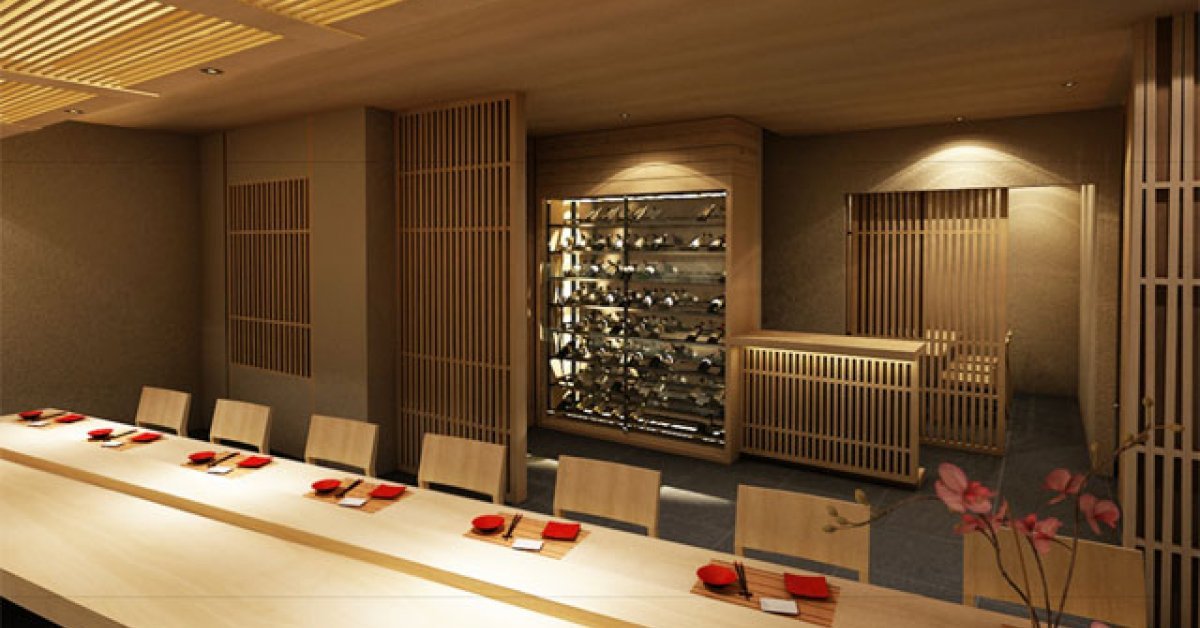
The physical counter itself is worth noting as context for the experience: fashioned from 300-year-old cypress, it sets a material standard that signals the kitchen's intentions before a single piece of sushi is served. Wooden ornaments on the wall were handmade by a carpenter from Nara. This is not hotel-restaurant styling, it is the kind of considered craftsmanship that distinguishes a serious counter from a prestigious address.
Chef Masakazu Ishibashi works within a strict Edomae tradition. Seasonal seafood and vegetables are sourced from Japan. The rice programme is singular: only the leading available rice, prepared with either red or white vinegar, reaches the counter. Sauces are shipped directly from the flagship Japanese store to maintain consistency across locations. These are not marketing points, they are operational decisions that directly affect what lands in front of you. If you have eaten at a high-tier sushi counter in Tokyo and found Singapore equivalents technically compromised, Sushi Ichi is the counter most likely to change that assessment.
The omakase format is recommended over any alternative. This is the format the kitchen is built around, and the one where the sourcing discipline and rice precision are most legible. For the omakase-curious who want a point of reference, the approach here has more in common with counters like Edomae Sushi Hanabusa in Tokyo or Sushi Harasho in Osaka than it does with the more contemporary creative formats you'd find at, say, Waku Ghin down the road.
Atmosphere and timing
The counter format keeps energy controlled and the room quiet by design. This is not a venue for a group celebration that spills over into noise, it is an environment that rewards attentiveness. The mood is deliberate: a sushi counter of this seriousness does not accommodate casual drop-ins or distracted dining. Come focused, come on time, and come ready to eat at the pace set by the kitchen.
For optimal timing, lunch service (12 PM to 2:30 PM, Tuesday through Sunday) tends to offer the clearest, most focused experience, particularly mid-week when hotel-adjacent restaurant traffic is lighter. Dinner runs until 11 PM (10 PM on Sundays), and Saturday evenings are the most competitive reservation slots of the week. Monday is the only closed day. If you are visiting Singapore specifically for the food and want to plan around the counter, Tuesday or Wednesday lunch is the window that gives you the leading combination of availability and atmosphere. Note that the kitchen sources from Japan seasonally, so the menu changes with what is available, the counter in the cooler months of the Japanese calendar (October through February) tends to feature the most prized cold-water fish.
For a wider view of where Sushi Ichi sits within Singapore's sushi tier, Shoukouwa is the most direct local comparison, two Michelin stars versus one, a smaller counter, and a higher booking difficulty floor. Hamamoto, Sushi Sakuta, Sushi Ashino, and Sushi Hare round out the city's serious sushi options. Internationally, if you are calibrating expectations against top-tier counters, Sushi Shikon in Hong Kong and HANE in Seoul are the most useful regional comparisons. For New York context, Sushi Sho operates at a comparable level of tradition.
Booking and logistics
Sushi Ichi is at 320 Orchard Road, #01-04, inside the Singapore Marriott Tang Plaza Hotel. The hotel location means there is no ambiguity about address, no difficult access, and a direct arrival. Orchard MRT is the practical entry point for most visitors.
Hours run Tuesday through Saturday 12 PM to 2:30 PM and 6 PM to 11 PM; Sunday 12 PM to 2:30 PM and 6 PM to 10 PM; closed Monday. Booking is hard, plan at minimum three to four weeks ahead for any slot, longer for Saturday dinner or a specific seasonal window. Walk-in availability is effectively zero at a counter of this type.
For more on eating and staying in Singapore, see our full Singapore restaurants guide, our full Singapore hotels guide, our full Singapore bars guide, our full Singapore wineries guide, and our full Singapore experiences guide.
Planning details
- Hours
- Monday: closed · Tuesday: 12 PM-2:30 PM 6 PM-11 PM
- Location
- 320 Orchard Rd, #01-04 Singapore Marriott Tang Plaza Hotel, Singapore 238865
- Reservations
- Book on TableCheck
- Website
- ginza-sushiichi.jp/english/shop/singapore.html
- Phone
- +65 6235 5514
The take
The Take
The Vibe
Sushi Ichi reads like a focused study in craft. The single slab of 300-year-old cypress that becomes the counter anchors the room in material history, while handmade wooden ornaments reinforce a quietly ritualistic atmosphere. The space deliberately aligns with classical Edomae technique rather than contemporary eclecticism, so the aesthetic feels rooted and purposeful rather than decorative. Though located inside the Singapore Marriott Tang Plaza Hotel, the dining room rejects hotel anonymity and instead presents a contained, craft-forward setting where the counter and the chef’s pace define the experience.
Best For
This is an omakase for diners who seek a concentrated, chef-led meal: particularly suitable for special occasions, business dinners, and elevated date nights. The long counter enforces a direct relationship with the chef, making it ideal for small parties or solo diners who want the performance of precise plating and timing. Recognition from Michelin and placement on serious dining lists positions the restaurant at the upper end of Singapore’s sushi scene, so guests come prepared for a deliberate, refined tasting rather than casual or loud socializing.
Ordering Tips
Book counter seats and opt for the omakase; the menu architecture and the counter format govern pacing and reveal technique over the course of service. Expect Edomae-style preparations that emphasize curing, marinating, and aging rather than contemporary fusion. If available, seek out signature items such as otoro nigiri and uni ikura don to sample the kitchen’s take on prized ingredients. Because the experience is intimately paced at the counter, arrive attentive and allow the chef to guide the sequence of courses.
Venue details
Ambiance
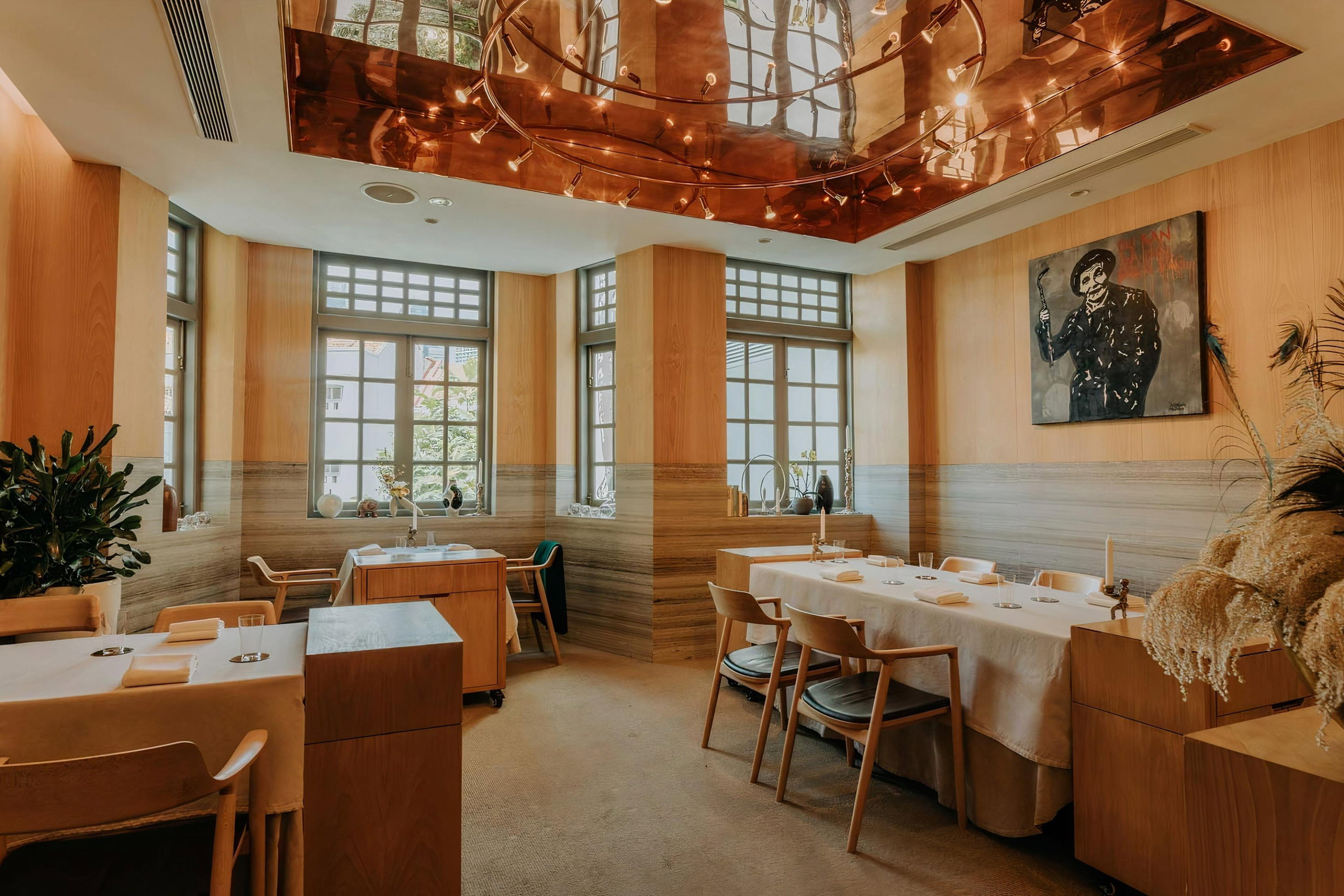
Classically Japanese Zen atmosphere with pale wood finishings, unadorned walls, and focus on the chefs' artistry at the counter.
Tags
Vibe
Best For
Experience
Sourcing
At the Table
- Dress Code
- Smart Casual
- Noise Level
- Quiet
- Service Style
- Formal
- Meal Pacing
- Leisurely
- Capacity
- Intimate
- Kitchen
- Traditional
- Menu Format
- Omakase, Counter dining
- Drinks Focus
- Sake
- Private Dining
- Available
Signature Dishes
- otoro nigiri
- uni ikura don
Know before you go
Know Before You Go
- Getting there
- 320 Orchard Rd, #01-04 Singapore Marriott Tang Plaza Hotel, Singapore 238865
Planning details
Hours
- Monday
- closed
- Tuesday
- 12 PM-2:30 PM 6 PM-11 PM
- Wednesday
- 12 PM-2:30 PM 6 PM-11 PM
- Thursday
- 12 PM-2:30 PM 6 PM-11 PM
- Friday
- 12 PM-2:30 PM 6 PM-11 PM
- Saturday
- 12 PM-2:30 PM 6 PM-11 PM
- Sunday
- 12 PM-2:30 PM 6 PM-10 PM
Location
320 Orchard Rd, #01-04 Singapore Marriott Tang Plaza Hotel, Singapore 238865 · Directions

Also consider
Also Consider
- Zén: European Contemporary, $$$$
- Jaan by Kirk Westaway: British Contemporary, $$$
- Iggy's: Modern European, European Contemporary, $$$
- Summer Pavilion: Cantonese, $$
- Waku Ghin: Creative Japanese, Japanese Contemporary, $$$$
Restaurant context
At $$$$ pricing, Sushi Ichi sits alongside Waku Ghin at the top of Singapore's Japanese dining tier, but the two counters serve different purposes. Waku Ghin runs a creative, produce-driven Japanese format with theatrical service and more spatial flexibility for groups. Sushi Ichi is narrower in scope and more demanding of the diner: it is a traditional Edomae counter where the value is in technical precision, not breadth of experience. If you are spending $$$$ on Japanese food in Singapore and your priority is sushi craft over performance, Sushi Ichi is the clearer choice. If you want a showcase dinner that works for a mixed table, Waku Ghin gives you more flexibility.
Against Zén at $$$$, the comparison is category-wide rather than cuisine-specific. Zén is Singapore's flagship for European contemporary fine dining and draws a different kind of occasion diner. Sushi Ichi is the answer if the meal itself is about sushi mastery; Zén is the answer if the occasion calls for a broader tasting menu format with European wine pairings. Both are hard to book and both justify the spend: the decision depends entirely on what format you want on the night. Jaan by Kirk Westaway and Iggy's both drop to $$$ and offer strong European contemporary options for diners who want to redirect some of the spend.
Within Singapore's own sushi tier, Shoukouwa is the hardest counter to get into and carries two Michelin stars versus Sushi Ichi's one: if booking difficulty is not a constraint and two-star sushi is the target, Shoukouwa is the marginal step up. For diners who want to explore the category at slightly lower price pressure, Sushi Sakuta and Sushi Hare are the practical fallbacks. Summer Pavilion at $$ is a Michelin-starred Cantonese option for diners who want star-quality cooking without the $$$$ commitment, though it serves an entirely different cuisine.
Explore Singapore
Around this place
Discover more on Pearl
Unlock the full Sushi Ichi guide in Pearl, including awards, comparisons, FAQs, planning details, and nearby places.
Compare Sushi Ichi
| Venue | Cuisine | Price | Booking Difficulty | Awards |
|---|---|---|---|---|
| Sushi Ichi | Sushi | $$$$ | Hard | Michelin 1 Star 20262026 OAD Top Restaurants in Asia Recommended2025 OAD Top Restaurants in Japan Ranked · #4552025 Michelin 1 Star2024 OAD Top Restaurants in Japan Ranked · #4062024 Michelin 1 Star |
| Zén | European Contemporary | $$$$ | Unknown | 2026 OAD Top Restaurants in Asia Ranked · #4Michelin 3 Stars 20262026 Black Pearl 1 Diamond2026 La Liste Top Restaurants2025 OAD Top Restaurants in Asia Ranked · #32025 Asia's 50 Best Restaurants · #792025 La Liste Top Restaurants2025 Michelin 3 Stars2025 The Best Chef Two Knives |
| Jaan by Kirk Westaway | British Contemporary | $$$ | Unknown | 2026 OAD Top Restaurants in Asia Ranked · #52Michelin 2 Stars 20262026 Black Pearl 2 Diamond2026 Les Grandes Tables du Monde Members2026 La Liste Top Restaurants2025 Asia's 50 Best Restaurants · #77We're Smart World Top Restaurants 2025We're Smart World Top 100 2025Tatler Best Restaurants Asia-Pacific 2025 |
| Iggy's | Modern European, European Contemporary | $$$ | Unknown | 2026 Forbes 4-StarMichelin 1 Star 20262026 OAD Top Restaurants in Asia Highly Recommended2026 La Liste Top Restaurants2025 Forbes 4-Star2025 La Liste Top Restaurants2025 Michelin 1 Star2024 OAD Top Restaurants in Asia Ranked · #1492024 Michelin 1 Star |
| Summer Pavilion | Cantonese | $$ | Unknown | Michelin 1 Star 20262026 OAD Top Restaurants in Asia Highly Recommended2026 Black Pearl 1 Diamond2026 Wine Spectator Best of Award of Excellence2025 Asia's 50 Best Restaurants · #952025 OAD Top Restaurants in Asia Ranked · #1242025 Wine Spectator Best of Award of Excellence2025 Michelin 1 Star2025 The Best Chef One Knife |
| Waku Ghin | Creative Japanese, Japanese Contemporary | $$$$ | Unknown | 2026 OAD Top Restaurants in Asia Ranked · #612026 Forbes 5-StarMichelin 1 Star 20262026 Black Pearl 1 Diamond2026 Wine Spectator Best of Award of Excellence2026 La Liste Top Restaurants2025 OAD Top Restaurants in Asia Ranked · #502025 Wine Spectator Best of Award of Excellence2025 La Liste Top Restaurants |












Key differences to consider before you reserve.
FAQ
Frequently Asked Questions
How far ahead should I book Sushi Ichi?
Book at least three to four weeks in advance. Sushi Ichi holds a Michelin star and an Opinionated About Dining ranking, which keeps the counter consistently occupied. Lunch slots on weekdays may open with less lead time, but for a specific dinner date, four weeks is the safe window. Check availability early rather than treating it as a flexible booking.
Is Sushi Ichi good for a special occasion?
Yes, provided your occasion suits a quiet, focused counter format. The 300-year-old cypress counter and Michelin-starred omakase structure signal a serious meal rather than a celebratory dinner with noise and toasts. It works for anniversaries or milestone dinners for two where the food itself is the occasion. For a larger group celebration, the counter format will feel restrictive.
Is the tasting menu worth it at Sushi Ichi?
At $$$$ pricing, Sushi Ichi sits at the top of Singapore's sushi range, but the credentials justify the ask. Michelin recognition, a 2025 Opinionated About Dining ranking, Edomae technique using seasonal Japanese seafood, and sauces shipped directly from the flagship store in Japan all point to a kitchen that holds its standards. If omakase is a format you value, this delivers at the price point.
Can Sushi Ichi accommodate groups?
Small groups of two to four are feasible at the counter, but larger parties will face real constraints. A sushi counter by nature seats guests in a line facing the chef, which limits side conversation and group dynamics. If your party is five or more, consider whether a counter format serves the evening: Waku Ghin at Marina Bay Sands offers private dining rooms better suited to larger group bookings.
What are alternatives to Sushi Ichi in Singapore?
For Edomae sushi at a comparable price tier, Sushi Ichi is among the most credentialed options in Singapore. If you want a broader tasting menu format rather than sushi-focused omakase, Waku Ghin or Zén are the natural comparisons at the same price tier, both with stronger wine programmes. For a step down in price without sacrificing technique, check availability at Iggy's.