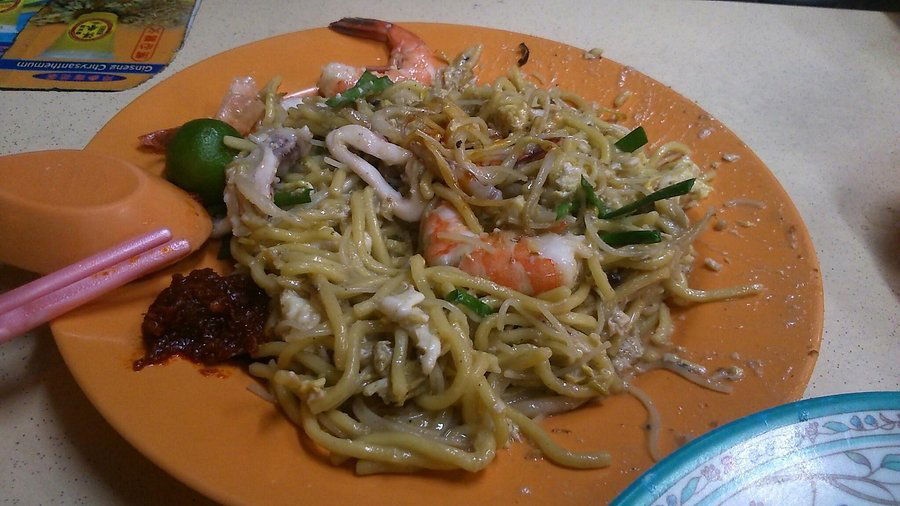

Singapore Fried Hokkien Mee
Street Food · LAVENDER, Singapore
Restaurant in Singapore, Singapore
 Book with Pearl
The Read
Wok-Fire Hokkien Mee
Price
$1–10per person
Dress
Casual
Why go
Singapore Fried Hokkien Mee on Whampoa Drive holds back-to-back Michelin Bib Gourmand recognition for 2024 and 2025, making it one of the clearest value cases in Singapore's hawker circuit. At $ pricing with no reservations required, it delivers Michelin-assessed quality at street food cost. Go early to beat the lunch queue.
About Singapore Fried Hokkien Mee
A Michelin Bib Gourmand stall on Serangoon Road — and one of the clearest cases for Singapore street food at its price point
At the $ price tier, Singapore Fried Hokkien Mee on Serangoon Road delivers something that most sit-down restaurants in the city cannot: back-to-back Michelin Bib Gourmand recognition (2024 and 2025) for a dish that costs a fraction of what you'd spend at a $$$ or $$$$ restaurant elsewhere in Singapore. If you are in the Serangoon area and you want to understand why Singapore's hawker tradition draws serious food travellers, this stall makes the case efficiently and honestly.
Portrait
Serangoon Road is one of Singapore's most historically layered corridors, running through Little India and connecting a string of residential and commercial neighbourhoods that have evolved continuously over decades. A stall earning repeat Michelin recognition here is not an accident of location — it is a signal that the cooking is consistent enough to hold up against annual scrutiny, and that the neighbourhood's regulars and visitors alike keep returning. For a food traveller trying to build a picture of Singapore beyond the hotel dining room, this is exactly the kind of anchor point worth building time around.
The physical context matters for planning. Hawker stalls and coffee shop setups in Singapore typically operate in open or semi-open spaces: communal tables, plastic chairs, the ambient noise of a working neighbourhood. If you are coming from a hotel in the Orchard or Marina Bay area, Serangoon Road requires a deliberate trip, not a casual detour. That trip is worth making, but go in with the right expectations about the setting. This is not a restaurant with a reservation system or a curated interior, it is a stall, and the experience is shaped by that format entirely. The space is functional and communal, which is the point.
Hokkien mee in the Singapore style is a stir-fried noodle dish built around a combination of yellow noodles and rice vermicelli, cooked in prawn and pork stock until the liquid is largely absorbed into the noodles. The quality differential between a mediocre version and a well-executed one is significant: the stock depth, the wok heat, and the timing of the sambal and lime on the side all matter. A stall earning consecutive Bib Gourmand recognition is, by Michelin's framework, delivering good cooking at a price accessible to most diners, which at the $ tier in Singapore means you are eating well for very little money.
Chef Hashimoto Kiyoshi is the name attached to this stall in the venue record. Beyond that attribution, the cooking is what the Michelin recognition speaks to directly. Two consecutive years of Bib Gourmand status, covering both 2024 and 2025, indicates consistency rather than a one-time spike in quality, which is the more meaningful signal when you are deciding whether to make the journey.
For a food traveller who takes Singapore's hawker culture seriously, Serangoon Road's version of this dish sits within a wider circuit worth planning. Hill Street Tai Hwa Pork Noodle and 545 Whampoa Prawn Noodles represent similar Michelin-recognised hawker benchmarks across different noodle formats. 91 Fried Kway Teow Mee offers a direct comparison in the wok-fried noodle category. A Noodle Story and Adam Rd Noo Cheng Big Prawn Noodle round out the picture of what Singapore's recognised hawker tier looks like across styles. Planning a half-day around two or three of these stops in connected neighbourhoods is a more efficient use of time than treating each as a standalone destination.
The Serangoon Road address also positions this stall as a genuine neighbourhood anchor rather than a tourist-circuit anomaly. The area draws a local crowd for everyday eating, which tends to keep quality honest. Stalls that survive primarily on tourist traffic often drift; stalls embedded in residential neighbourhoods with a local repeat-customer base have a different kind of accountability. The Michelin recognition layers on top of that, but the neighbourhood context predates and supports it.
For context on how Singapore's street food tradition compares regionally, the broader Southeast Asian hawker circuit includes venues like 888 Hokkien Mee (Lebuh Presgrave) in George Town, which offers a direct Penang-style comparison for the same dish name, though the two are distinct preparations. Other regional street food reference points worth knowing: A Pong Mae Sunee in Phuket, Ah Boy Koay Teow Th'ng in George Town, Air Itam Duck Rice, Air Itam Sister Curry Mee, Ali Nasi Lemak Daun Pisang, Anuwat in Phang Nga, and Banana Boy in Hong Kong each represent their own local street food traditions worth tracking if you are building a broader Southeast Asia food itinerary.
Practical details: Address: 566 Serangoon Rd, Singapore 218181. Cuisine: Singapore Street Food, Hokkien Mee. Price tier: $ (hawker pricing). Awards: Michelin Bib Gourmand 2024 and 2025. Reservations: Walk-in only, no booking system available. Dress: Casual; hawker setting, no dress expectations. Leading approach: Arrive during off-peak hours (before 12pm or after 2pm on weekdays) to avoid queuing, as Bib Gourmand recognition consistently drives lunch crowds. Getting there: Serangoon Road is accessible by MRT; plan the trip deliberately if travelling from the central hotel districts.
For more on where to eat, stay, and drink across the city, see our full Singapore restaurants guide, our full Singapore hotels guide, our full Singapore bars guide, our full Singapore wineries guide, and our full Singapore experiences guide.
Frequently Asked Questions
How far ahead should I book Singapore Fried Hokkien Mee?
- No booking is required or possible, this is a walk-in hawker stall. Arrive early (before 12pm) or after the lunch rush to minimise waiting. The Michelin Bib Gourmand status for both 2024 and 2025 means queues during peak hours are a realistic expectation, particularly on weekends.
What should I order at Singapore Fried Hokkien Mee?
- The stall's singular focus is Singapore-style fried Hokkien mee, yellow noodles and rice vermicelli stir-fried in prawn and pork stock. There is no extended menu to navigate. The Michelin Bib Gourmand recognition for consecutive years signals that this dish, cooked consistently, is the reason to visit. Order it with sambal and lime on the side, which are standard accompaniments to the dish in Singapore.
What should a first-timer know about Singapore Fried Hokkien Mee?
- Expect a hawker environment: communal seating, no table service, and a cash-and-order-at-the-counter format typical of Singapore coffee shops. The address on Serangoon Road is a working neighbourhood, not a tourist precinct, so the crowd skews local. At the $ price tier, this is one of the most cost-effective ways to eat at a Michelin-recognised venue in Singapore. The dish itself is a Singapore original, distinct from the drier, darker Penang Hokkien mee style.
Is the tasting menu worth it at Singapore Fried Hokkien Mee?
- There is no tasting menu here. This is a single-dish hawker stall at $ pricing. The question of value is simpler: you are paying hawker prices for back-to-back Michelin Bib Gourmand-recognised cooking. That ratio is hard to argue.
Is Singapore Fried Hokkien Mee worth the price?
- At the $ tier with two consecutive Michelin Bib Gourmand awards, the value case is clear. You are paying street food prices for cooking that Michelin has assessed as good quality twice running. For comparison, a meal at Summer Pavilion ($$) or Jaan by Kirk Westaway ($$$) will cost multiples more. If your goal is to eat well in Singapore at minimal spend, this stall delivers.
Is Singapore Fried Hokkien Mee good for a special occasion?
- Not in the conventional sense. There is no private dining, no wine list, and no service beyond the counter. If the occasion calls for atmosphere and table service, consider Summer Pavilion ($$, Cantonese, Michelin-recognised) or step up to Zén ($$$$) for a full tasting menu experience. That said, if the occasion is specifically about Singapore food culture and the person you are taking knows why Michelin Bib Gourmand matters, a meal here can be deliberately chosen and meaningful, just go in knowing what the format is.
Planning details
- Location
- 566 Serangoon Rd, Singapore 218181
- Website
- misstamchiak.com/original-serangoon-fried-hokkien-mee
The take
The Take
The Vibe
This is unapologetically hawker: functional, unadorned and focused on the dish. The stall sits on the Serangoon Road footpath with plastic stools and a wok that sends smoke sideways, creating a sensory immediacy that feels direct rather than theatrical. The writing emphasises a no-frills transaction—no menu, no reservation, no dress code—so the atmosphere is dominated by the rhythm of cooking, queuing and eating. The Michelin Bib Gourmand nod underlines that quality here is about execution and consistency rather than ceremony, so the overall impression is casual, earnest and singularly food-forward.
Best For
Singapore Fried Hokkien Mee suits diners who prize straightforward, high-value hawker cooking: solo eaters stopping by for a quick, authentic meal, locals who appreciate a reliably executed classic, and budget-minded food lovers chasing quality rather than ambiance. The stall’s Bib Gourmand recognition also makes it a draw for curious visitors who want an unvarnished taste of Singapore’s hawker traditions without the fuss of fine dining. Expect a simple, efficient experience where the dish is the focus and the surroundings are intentionally modest.
Ordering Tips
There’s no menu and no reservation—be prepared to queue and to accept the fast-moving, canteen-style service. Sambal and calamansi are standard accompaniments, so use them to dial heat and acidity to your liking. The stall’s inclusion in the Michelin Bib Gourmand signals consistent execution at very low prices, so order the signature Hokkien mee and judge it on texture and the glossy, umami-rich prawn-and-pork stock reduction rather than on presentation.
Venue details
Ambiance
Casual hawker stall in a coffee shop with busy, no-frills atmosphere and charcoal-fired cooking.
Tags
Vibe
Best For
Experience
At the Table
- Dress Code
- Casual
- Noise Level
- Lively
- Service Style
- Counter Service
- Meal Pacing
- Quick Bite
- Capacity
- Small
- Kitchen
- Traditional
- Menu Format
- A la carte
Signature Dishes
Fried Hokkien Mee
Know before you go
Know Before You Go
- Getting there
- 566 Serangoon Rd, Singapore 218181
Planning details
Location
566 Serangoon Rd, Singapore 218181 · Directions
Recognition and awards
Also consider
Also Consider
- Zén, European Contemporary, $$$$
- Jaan by Kirk Westaway, British Contemporary, $$$
- Iggy's, Modern European, European Contemporary, $$$
- Summer Pavilion, Cantonese, $$
- Waku Ghin, Creative Japanese, Japanese Contemporary, $$$$
Restaurant context
Compared to the rest of Singapore's Michelin-recognised dining, Singapore Fried Hokkien Mee sits at the opposite end of almost every variable except quality credibility. Zén ($$$$) and Waku Ghin ($$$$) are full tasting menu experiences requiring advance reservations and significantly larger budgets. Jaan by Kirk Westaway ($$$) and Iggy's ($$$) offer European-leaning fine dining with formal settings and reservation requirements. None of those are competitors in any practical sense, they serve different occasions entirely.
The more useful comparison is with Summer Pavilion ($$, Cantonese, Michelin-recognised), which bridges the gap between hawker accessibility and restaurant formality. If you want a sit-down meal with table service and a Chinese kitchen, Summer Pavilion is the right call. If you want Michelin recognition at the lowest possible price point with the most direct expression of Singapore's hawker tradition, Singapore Fried Hokkien Mee on Serangoon Road is the clearer choice.
For diners building a Singapore food itinerary across multiple price tiers, the practical recommendation is to use this stall as the hawker anchor, pair it with a lunch or dinner at Summer Pavilion for mid-range, and reserve Zén or Waku Ghin for a single special-occasion splurge. Booking difficulty is easy here (walk-in only), which also makes it the most flexible stop to slot into a changing schedule.
Explore Singapore
Around this place
Discover more on Pearl
Unlock the full Singapore Fried Hokkien Mee guide in Pearl, including awards, comparisons, FAQs, planning details, and nearby places.
Compare Singapore Fried Hokkien Mee
| Venue | Awards | Price |
|---|---|---|
| Singapore Fried Hokkien Mee | Michelin Bib Gourmand 20262025 Michelin Bib Gourmand2024 Michelin Bib Gourmand | $ |
| Zén | 2026 OAD Top Restaurants in Asia Ranked · #4Michelin 3 Stars 20262026 Black Pearl 1 Diamond2026 La Liste Top Restaurants2025 OAD Top Restaurants in Asia Ranked · #32025 Asia's 50 Best Restaurants · #792025 La Liste Top Restaurants2025 Michelin 3 Stars2025 The Best Chef Two Knives | $$$$ |
| Jaan by Kirk Westaway | 2026 OAD Top Restaurants in Asia Ranked · #52Michelin 2 Stars 20262026 Black Pearl 2 Diamond2026 Les Grandes Tables du Monde Members2026 La Liste Top Restaurants2025 Asia's 50 Best Restaurants · #77We're Smart World Top Restaurants 2025We're Smart World Top 100 2025Tatler Best Restaurants Asia-Pacific 2025 | $$$ |
| Iggy's | 2026 Forbes 4-StarMichelin 1 Star 20262026 OAD Top Restaurants in Asia Highly Recommended2026 La Liste Top Restaurants2025 Forbes 4-Star2025 La Liste Top Restaurants2025 Michelin 1 Star2024 OAD Top Restaurants in Asia Ranked · #1492024 Michelin 1 Star | $$$ |
| Summer Pavilion | Michelin 1 Star 20262026 OAD Top Restaurants in Asia Highly Recommended2026 Black Pearl 1 Diamond2026 Wine Spectator Best of Award of Excellence2025 Asia's 50 Best Restaurants · #952025 OAD Top Restaurants in Asia Ranked · #1242025 Wine Spectator Best of Award of Excellence2025 Michelin 1 Star2025 The Best Chef One Knife | $$ |
| Waku Ghin | 2026 OAD Top Restaurants in Asia Ranked · #612026 Forbes 5-StarMichelin 1 Star 20262026 Black Pearl 1 Diamond2026 Wine Spectator Best of Award of Excellence2026 La Liste Top Restaurants2025 OAD Top Restaurants in Asia Ranked · #502025 Wine Spectator Best of Award of Excellence2025 La Liste Top Restaurants | $$$$ |














A quick look at how Singapore Fried Hokkien Mee measures up.
FAQ
Frequently Asked Questions
How far ahead should I book Singapore Fried Hokkien Mee?
You cannot book: this is a hawker stall, so walk-in only. Arrive early or expect a queue — Michelin Bib Gourmand recognition two years running (2024 and 2025) means word has spread. Sell-outs before the listed close are common at stalls with this profile, so coming in the first hour of service is the practical move.
What should I order at Singapore Fried Hokkien Mee?
The fried Hokkien mee is the only dish you need to think about — it is what earned two consecutive Bib Gourmand awards. Hokkien mee in Singapore is a wet-style prawn and pork lard noodle dish; the quality of the wok hei and the prawn stock are what differentiate stalls. Sambal chilli on the side is standard.
What should a first-timer know about Singapore Fried Hokkien Mee?
This is a hawker stall at 566 Serangoon Road, not a restaurant — no reservations, no table service, and seating is shared. Payment is typically cash at hawker operations of this type. The Michelin Bib Gourmand award signals value at the $ price tier, not fine-dining production, so calibrate expectations accordingly.
Is the tasting menu worth it at Singapore Fried Hokkien Mee?
There is no tasting menu. This is a single-dish hawker stall. If a structured multi-course format is what you are after, Waku Ghin or Zén are the relevant options in Singapore at the opposite end of the price spectrum.
Is Singapore Fried Hokkien Mee worth the price?
Yes, plainly. At the $ price tier with back-to-back Michelin Bib Gourmand recognition in 2024 and 2025, it is one of the clearest value propositions in the city. For comparison, Zén or Iggy's will cost 40–60x more per head and serve a different purpose entirely — this stall is the case for why Singapore's hawker culture punches above its price class.
Is Singapore Fried Hokkien Mee good for a special occasion?
Not in the conventional sense — no private dining, no atmosphere beyond a hawker setting, no wine list. If the occasion is specifically about eating one of Singapore's Michelin-recognised street dishes in its natural context, it fits. For a celebratory dinner with service and setting, Summer Pavilion or Waku Ghin are the practical alternatives.