
Hai Nan Zai
Street Food · NORTHLAND, Singapore
Restaurant in Singapore, Singapore
 Book with Pearl
The Read
Cooked-to-Order Wok Hawker
Price
$1–10per person
Why go
Hai Nan Zai is a hawker stall in Yishun's Soon Hong Eating House cooking Singaporean classics — oyster omelette, fried prawn mee, carrot cake, and fried kway teow with cockles and Chinese sausage — all to order. At $ pricing with no booking required, it is worth the trip north if you want to eat the way Singapore's neighbourhoods actually eat.
About Hai Nan Zai
Who Should Eat Here — and When
Hai Nan Zai is the right call for anyone who wants to eat the way Singapore actually eats: at a kopitiam table, ordering dishes cooked to order by a single stall, paying almost nothing. It is a particularly good fit for a weekday lunch or casual dinner where the goal is honest, well-executed hawker food rather than a restaurant occasion. This is not a special-occasion venue in the conventional sense, but for visitors or locals who treat great hawker food as its own kind of celebration, it earns that framing easily.
The Venue Portrait
Hai Nan Zai operates out of Soon Hong Eating House in Yishun, the kind of industrial-estate coffee shop that exists well outside Singapore's tourist corridor. The address — 1 Yishun Industrial Street 1, tells you something useful before you arrive: this is a working neighbourhood stall, not a heritage-district institution dressed for visitors. Getting here takes intention. That is not a warning so much as a filter: the people who make the trip tend to know exactly what they are coming for.
The cooking sits squarely in the Singaporean hawker canon. Oyster omelettes, fried prawn mee, and carrot cake form the backbone of the menu. The stall's fried kway teow with cockles and Chinese sausage is cooked to order, which matters: kway teow is a dish that degrades quickly once it leaves the wok, and the cooked-to-order approach keeps the texture and wok hei intact in a way that batch cooking cannot replicate. For the fried prawn mee, the comparison benchmark in Singapore is strong, 545 Whampoa Prawn Noodles and Adam Rd Noo Cheng Big Prawn Noodle both carry serious reputations, so the category is competitive. Hai Nan Zai holds its ground on the strength of consistent execution across multiple dishes rather than a single breakthrough item.
The carrot cake and oyster omelette round out a stall that covers more ground than most single-operator hawker stations. Each of those dishes demands different technique: the oyster omelette requires timing and a properly seasoned pan; the carrot cake needs patient frying to develop the right crust.
Hawker stalls in Singapore are frequently under-reviewed relative to restaurants, and many of the strongest stalls in the city carry modest aggregate scores simply because their regulars do not leave digital reviews. The more meaningful signal here is the cooked-to-order model, which indicates a stall with enough volume and confidence to hold that standard rather than pre-cooking and holding.
For context on where Hai Nan Zai sits in the broader Singapore street food picture: the fried kway teow format has strong competition across the island. 91 Fried Kway Teow Mee is one of the more discussed addresses in that specific category. The difference at Hai Nan Zai is the range, you can build a full meal across multiple dish types rather than committing to a single speciality stall. That makes it more practical for a table of two or three with different appetites, or for someone who wants to eat across the hawker repertoire in a single sitting.
Compared to Singapore's other hawker reference points, Hill Street Tai Hwa Pork Noodle carries a Michelin star and the queues to match; A Noodle Story has crossover appeal for visitors, Hai Nan Zai is operating at a lower profile and a lower price point in a less central location. Whether that is a drawback depends entirely on what you are optimising for. If you want to eat well at hawker prices without queuing alongside tour groups, the Yishun location is a feature, not a flaw.
The price tier is the lowest available, which means a full meal here costs a fraction of what you would spend at any sit-down restaurant in Singapore, let alone the fine-dining tier. For a visitor trying to understand what Singapore food actually tastes like at the neighbourhood level, this is a more instructive meal than many higher-profile options. For a local who lives or works near Yishun, this is a stall worth knowing for regular use.
Regional comparisons for street food context: the hawker format has close cousins across Southeast Asia. 888 Hokkien Mee in George Town and Ah Boy Koay Teow Th'ng in Penang operate in the same tradition of single-operator wok cooking with long institutional histories. A Pong Mae Sunee in Phuket and Anuwat in Phang Nga represent the Thai side of the same regional street food culture. Hai Nan Zai belongs to this broader category of serious single-operator hawker cooking that rewards the traveller willing to leave the city centre. See also: Air Itam Duck Rice, Air Itam Sister Curry Mee, Ali Nasi Lemak Daun Pisang, and Banana Boy in Hong Kong for comparable operators in other cities.
Know Before You Go
- Address
- 1 Yishun Industrial Street 1, #01-12 Soon Hong Eating House, Singapore 768160
- Price
- $, hawker pricing; expect to spend very little per person
- Cuisine
- Singaporean hawker: oyster omelette, fried prawn mee, carrot cake, fried kway teow with cockles and Chinese sausage
- Booking
- No booking required or expected; walk-in only
- Booking difficulty
- Easy, turn up and order
- Dress code
- None, come as you are
- Getting here
- Yishun MRT is the nearest station; the stall is inside Soon Hong Eating House in the industrial estate
- Hours
- Not confirmed, check on arrival or call ahead if possible
- Phone
- Not listed
For more Singapore eating and drinking options: our full Singapore restaurants guide, Singapore hotels, Singapore bars, Singapore wineries, and Singapore experiences.
Planning details
- Location
- 1 Yishun Industrial Street 1, #01-12 Soon Hong Eating House, Singapore 768160
The take
The Take
The Vibe
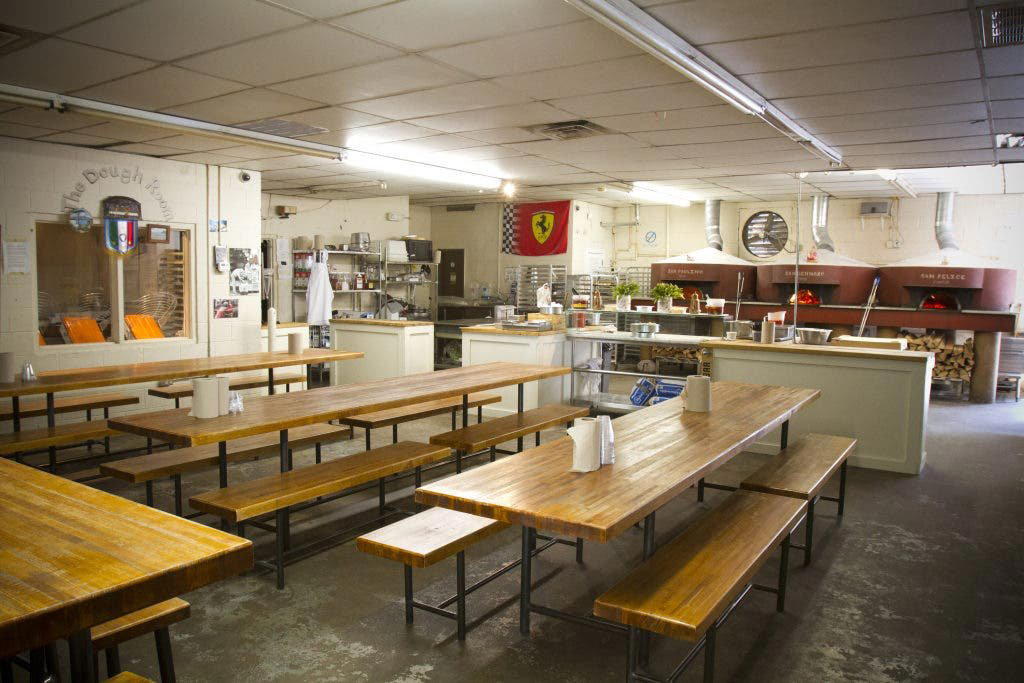
Hai Nan Zai sits in an industrial-fringe coffee shop in Yishun and leans fully into the practical, no-frills side of Singapore hawker culture. The room is defined by fluorescent lighting, plastic stools and shared tables, and the ambient clatter of a working coffee shop; it feels like a practiced neighborhood operation rather than a curated dining theatre. The focus is squarely on technique and repeat local trade, so the atmosphere is direct and unpretentious—ideal for diners who come for clear, expertly executed hawker cooking rather than an Instagram moment.
Best For
This is a destination for food-focused locals and visitors willing to make the trip north on the MRT. The stall’s clientele skews overwhelmingly local and the economics run on volume and repeat custom, so it rewards people who prioritize authentic, high-heat wok cooking over ambience. Because it sits away from central Singapore, treat a visit as a standalone outing rather than a casual detour. It’s well suited to solo diners and small groups who want technically faithful fried hawker classics done to order.
Ordering Tips
Check whether the stall is operating before you travel: the write-up warns of informal, non-publicised hours common to this format. Expect hawker-counter ordering at the stall and shared seating on plastic stools and communal tables. Plates such as fried kway teow are cooked to order—each passes through a wok individually—so allow a little time for that freshly made wok hei rather than expecting pre-plated speed. Given the setting, come prepared for a lively, utilitarian coffee-shop environment.
Venue details
Tags
Vibe
Best For
At the Table
- Noise Level
- Lively
- Service Style
- Counter Service
- Meal Pacing
- Quick Bite
- Capacity
- Large
- Kitchen
- Traditional
- Menu Format
- A la carte
Signature Dishes
fried kway teow
Know before you go
Know Before You Go
- Getting there
- 1 Yishun Industrial Street 1, #01-12 Soon Hong Eating House, Singapore 768160
Planning details
Location
1 Yishun Industrial Street 1, #01-12 Soon Hong Eating House, Singapore 768160 · Directions
Recognition and awards
Also consider
Also Consider
- Zén, European Contemporary, $$$$
- Jaan by Kirk Westaway, British Contemporary, $$$
- Iggy's, Modern European, European Contemporary, $$$
- Summer Pavilion, Cantonese, $$
- Waku Ghin, Creative Japanese, Japanese Contemporary, $$$$
Restaurant context
How It Compares
Hai Nan Zai and the restaurants typically listed alongside Singapore's dining scene are not really competing for the same occasion. Zén ($$$$ ) and Waku Ghin ($$$$) are tasting-menu destinations where you are paying for a structured multi-course experience, advance booking weeks out, and formal service. Jaan by Kirk Westaway ($$$) and Iggy's ($$$) are white-tablecloth rooms where the occasion is as much the setting as the food. Hai Nan Zai is a $ hawker stall in a kopitiam. The comparison is not unflattering to either side, it is simply a different category of eating.
The more useful peer group is Singapore's serious hawker stalls. Hill Street Tai Hwa Pork Noodle has a Michelin star and queues that reflect it; if you want credentialed hawker food with a clear award signal and are willing to wait, that is the safer bet for a first Singapore hawker experience. 545 Whampoa Prawn Noodles and Adam Rd Noo Cheng Big Prawn Noodle are both stronger single-dish references if fried prawn mee is your specific goal. What Hai Nan Zai offers that single-speciality stalls do not is range: you can order across four or five dish types in one sitting, which makes it more practical for a group with different preferences.
If you are deciding between Summer Pavilion ($$, Cantonese, Ritz-Carlton) and Hai Nan Zai, you are really deciding between a polished restaurant lunch and a kopitiam meal, different budgets, different atmospheres, different reasons to go. For visitors trying to understand Singapore food at the neighbourhood level, Hai Nan Zai is the more instructive meal. For a business lunch or a celebration dinner, Summer Pavilion is the appropriate choice. They do not compete; pick based on what the occasion actually calls for.
Explore Singapore
Around this place
Discover more on Pearl
Unlock the full Hai Nan Zai guide in Pearl, including awards, comparisons, FAQs, planning details, and nearby places.
Compare Hai Nan Zai
| Venue | Cuisine | Awards | Booking Difficulty |
|---|---|---|---|
| Hai Nan Zai | Street Food | Michelin Bib Gourmand 20262025 Michelin Bib Gourmand2024 Michelin Bib Gourmand | Easy |
| Zén | European Contemporary | 2026 OAD Top Restaurants in Asia Ranked · #4Michelin 3 Stars 20262026 Black Pearl 1 Diamond2026 La Liste Top Restaurants2025 OAD Top Restaurants in Asia Ranked · #32025 Asia's 50 Best Restaurants · #792025 La Liste Top Restaurants2025 Michelin 3 Stars2025 The Best Chef Two Knives | Unknown |
| Jaan by Kirk Westaway | British Contemporary | 2026 OAD Top Restaurants in Asia Ranked · #52Michelin 2 Stars 20262026 Black Pearl 2 Diamond2026 Les Grandes Tables du Monde Members2026 La Liste Top Restaurants2025 Asia's 50 Best Restaurants · #77We're Smart World Top Restaurants 2025We're Smart World Top 100 2025Tatler Best Restaurants Asia-Pacific 2025 | Unknown |
| Iggy's | Modern European, European Contemporary | 2026 Forbes 4-StarMichelin 1 Star 20262026 OAD Top Restaurants in Asia Highly Recommended2026 La Liste Top Restaurants2025 Forbes 4-Star2025 La Liste Top Restaurants2025 Michelin 1 Star2024 OAD Top Restaurants in Asia Ranked · #1492024 Michelin 1 Star | Unknown |
| Summer Pavilion | Cantonese | Michelin 1 Star 20262026 OAD Top Restaurants in Asia Highly Recommended2026 Black Pearl 1 Diamond2026 Wine Spectator Best of Award of Excellence2025 Asia's 50 Best Restaurants · #952025 OAD Top Restaurants in Asia Ranked · #1242025 Wine Spectator Best of Award of Excellence2025 Michelin 1 Star2025 The Best Chef One Knife | Unknown |
| Waku Ghin | Creative Japanese, Japanese Contemporary | 2026 OAD Top Restaurants in Asia Ranked · #612026 Forbes 5-StarMichelin 1 Star 20262026 Black Pearl 1 Diamond2026 Wine Spectator Best of Award of Excellence2026 La Liste Top Restaurants2025 OAD Top Restaurants in Asia Ranked · #502025 Wine Spectator Best of Award of Excellence2025 La Liste Top Restaurants | Unknown |














A quick look at how Hai Nan Zai measures up.
FAQ
Frequently Asked Questions
What should a first-timer know about Hai Nan Zai?
Hai Nan Zai sits inside Soon Hong Eating House at 1 Yishun Industrial Street 1, deep in an industrial estate well outside the city centre. Getting there requires intent, but that's the point: this is a working kopitiam serving fried kway teow with cockles and Chinese sausage, oyster omelettes, and prawn mee to a local crowd, not a tourist-facing hawker hall. Budget $-range pricing means you can eat well for very little, but go knowing the location is inconvenient unless you're already in the north.
Can Hai Nan Zai accommodate groups?
A kopitiam setting like Soon Hong Eating House generally has shared tables, so larger groups can pull chairs together without a reservation system. That said, a hawker stall operating at this price point and format isn't designed for structured group bookings. For parties of 6 or more, arrive early and expect to manage seating yourselves.
What should I order at Hai Nan Zai?
The fried kway teow with cockles and Chinese sausage is the core order here: it's cooked to order, which matters in a format where many stalls batch-cook. Oyster omelette, fried prawn mee, and carrot cake round out the menu. If you're choosing one dish, the kway teow is the reason most people make the trip to Yishun.
Does Hai Nan Zai handle dietary restrictions?
The menu is built around shellfish (cockles, oysters, prawns) and pork (Chinese sausage), so options for those avoiding either are limited. Dietary restriction handling is not documented in the available venue data, and a hawker stall of this format rarely offers formal substitutions. Guests with shellfish or pork restrictions should review the menu carefully before the trip.
How far ahead should I book Hai Nan Zai?
Hai Nan Zai doesn't operate a reservation system — this is a hawker stall in a kopitiam, so it's walk-in only. The trade-off for no booking friction is unpredictable wait times during peak meal hours. Arriving at off-peak times (mid-morning or mid-afternoon if hours permit) is the practical way to avoid a queue.
What should I wear to Hai Nan Zai?
Dress for a casual industrial-estate coffee shop in Singapore's humidity: whatever you'd wear running errands. There is no dress code at a kopitiam of this type. Comfortable, lightweight clothing is the only sensible call.