
Restaurant in Sienna, Italy
Particolare di Siena
290Pearl PointsTen tables, biodynamic kitchen garden, Michelin-noted.
.png?width=144&height=144&quality=80)
About Particolare di Siena
Particolare di Siena holds a Michelin Plate for 2024 and 2025, operating from just ten tables with a kitchen committed to certified organic and biodynamic sourcing. At the €€€ price point, it delivers Michelin-calibre modern cuisine in a deliberately intimate room. Book ahead in peak season — this is the right choice if sustainability-led fine dining is what you are after in Siena.
A Michelin-recognised fine-dining room in Siena that punches above its price point — if you catch it at the right time of year
At the €€€ price range, Particolare di Siena is one of the more considered spending decisions in Siena's restaurant scene. You are paying for a ten-table room that made a deliberate choice in 2020 to shrink its footprint and redirect its kitchen toward certified organic, biodynamic, and locally sourced ingredients. The Michelin Plate — awarded in both 2024 and 2025 , confirms the kitchen is cooking at a level worth the outlay. The question for a first-timer is whether modern, sustainability-led cuisine is what you want from a Sienese dining night, or whether you would be better served by a more traditional regional table.
If you are visiting Siena now, the timing works in your favour. Particolare's model is built around a kitchen garden producing seasonal ingredients in line with biodynamic growing cycles, which means the menu shifts with what is actually available. In late spring and summer, that garden is at its most productive. Autumn brings a different range of produce, but the commitment to the seasonal calendar is consistent year-round. This is not a restaurant coasting on a fixed menu , the ingredient sourcing is the engine of the cooking.
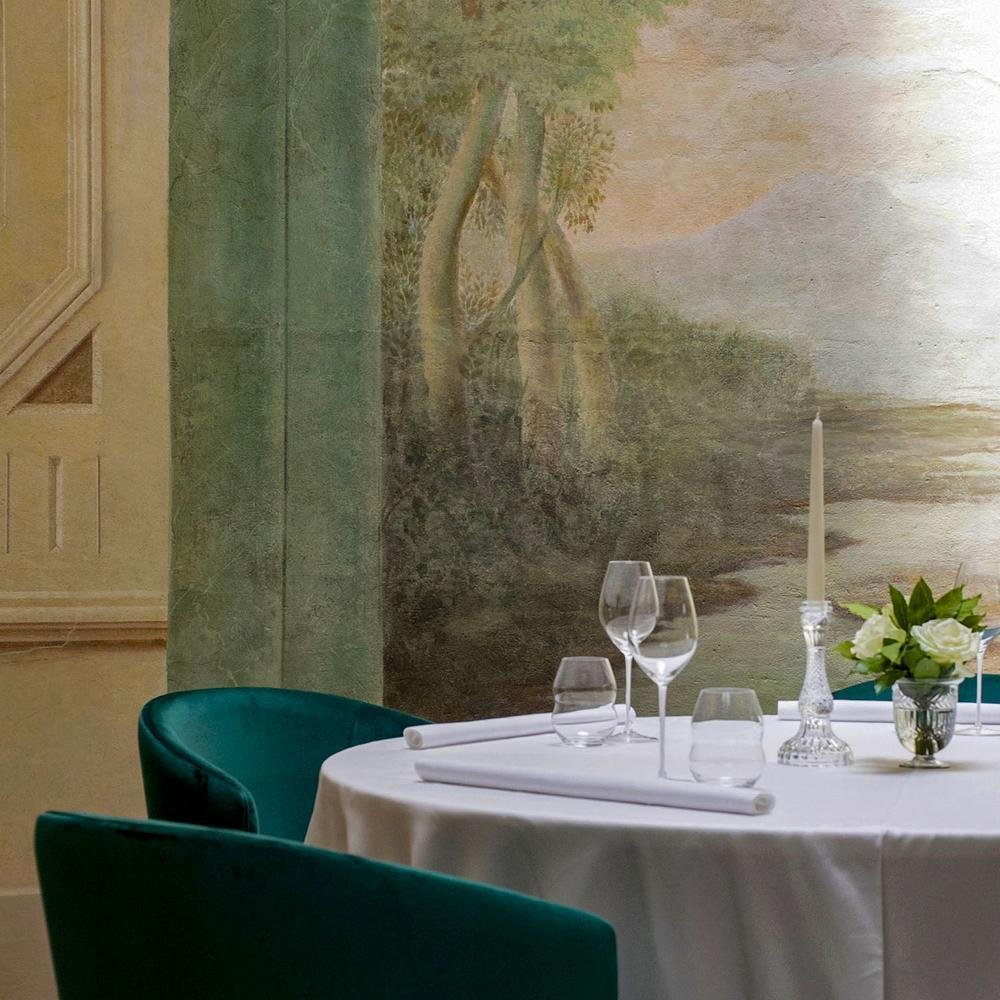
For a first-timer at Via Baldassarre Peruzzi, 26, the room itself will set expectations before you sit down. With only ten tables, this is an intimate space where the pace is deliberately unhurried. That small scale means the service-to-guest ratio is high, and the kitchen has a clear view of the dining room's rhythm. You will not feel rushed, and you will not feel anonymous. If you are coming from a larger, more theatrical fine-dining room in Florence or Rome, the register here is quieter , more focused on what is on the plate than on the production around it.
The Google rating of 4.4 across 698 reviews is a meaningful signal at this price tier. A sustained score at that level, across that volume, indicates consistent execution rather than a one-visit spike. At €€€, consistency matters more than occasional brilliance, because you are making a financial commitment every time you book. Particolare's record suggests the kitchen delivers reliably.
The editorial angle here is casual excellence: a room that does not perform formality for its own sake but still produces cooking at a level that justifies the price tag. The 2020 pivot , reducing tables, committing to organic certification, introducing the kitchen garden , was a structural choice, not a marketing rebrand. Restaurants that cut covers and invest in supply chain integrity tend to do so because the kitchen team has a point of view about what quality actually requires. The Michelin recognition in consecutive years confirms the direction has been right.
For first-timers deciding between Particolare and other Siena fine-dining options, the key differentiator is the sustainability framework. If you want Sienese tradition , pici, ribollita, cinta senese , you will find more of that at Gallo Nero, which sits in the same €€€ tier and leans into regional cuisine. If budget is a consideration, Osteria le Logge and Campo Cedro both operate at €€ and offer solid contemporary cooking without the full fine-dining price point. Particolare makes the most sense if you want a modern kitchen with a clear ethical framework and Michelin-level technique.
On booking difficulty, this is rated Easy. Ten tables sounds tight, but the booking process is not the obstacle it would be at a comparably credentialled restaurant in Milan or Florence. That said, in peak Siena tourist season , late spring through early autumn , the room will fill. Book ahead rather than assuming availability on the day.
To situate Particolare within the wider Italian fine-dining picture: it is cooking in a category below the three-star heights of Osteria Francescana in Modena or Uliassi in Senigallia, and well below the investment required at Enoteca Pinchiorri in Florence or Piazza Duomo in Alba. What it offers is Michelin-recognised cooking at a scale and price that does not require you to treat the meal as a once-a-decade event. That is a specific and useful position in the market. If you are also travelling elsewhere in Italy and want comparable sustainability-led cooking at a higher intensity, Atelier Moessmer Norbert Niederkofler in Brunico and Reale in Castel di Sangro both operate in the same ethical cooking register at a higher tier. For broader context on dining in the region, see our full Siena restaurants guide.
Know Before You Go
- Price range: €€€
- Address: Via Baldassarre Peruzzi, 26, 53100 Siena SI, Italy
- Awards: Michelin Plate 2024, Michelin Plate 2025
- Google rating: 4.4 (698 reviews)
- Covers: Ten tables , small room, intimate pace
- Booking difficulty: Easy, but advance booking is advisable in peak season (late spring to early autumn)
- Cuisine: Modern cuisine with a certified organic and biodynamic sourcing framework
- Leading for: First-timers who want Michelin-calibre cooking without the formality of a larger destination restaurant
- Also explore in Siena: Hotels · Bars · Wineries · Experiences
FAQ
What should a first-timer know about Particolare di Siena?
- Expect a ten-table room with an unhurried pace and a kitchen focused on certified organic and biodynamic ingredients. The menu changes with the seasons because the sourcing model demands it. Two consecutive Michelin Plates confirm the kitchen is delivering at a level worth the €€€ price point. Book ahead in high season.
Is Particolare di Siena good for solo dining?
- The intimate ten-table format works for solo diners who want a quiet, considered meal rather than a social scene. At €€€ in Siena, you are spending more per head than at Osteria le Logge or Campo Cedro, but the Michelin recognition and the kitchen's consistency justify that if fine-dining is your priority. The room is not a counter-service or bar-seat format, so confirm table arrangements when booking.
What should I order at Particolare di Siena?
- The menu is not available in our database, so we cannot list specific dishes. What is confirmed: the kitchen prioritises ingredients from its own biodynamic kitchen garden and certified organic local suppliers. Ordering based on what the kitchen is highlighting that day , rather than looking for signature standards , is the right approach here, given how directly the menu tracks the seasonal calendar.
Is Particolare di Siena worth the price?
- Yes, for a specific type of diner. At €€€, you are paying for Michelin Plate-level cooking in a deliberate, small-scale room with a genuine supply chain commitment. If you want value-per-euro, Campo Cedro at €€ is worth considering. If you want regional Sienese cooking at the same price tier, Gallo Nero is the comparison. Particolare earns its price if modern cuisine with an organic framework is the meal you are planning.
Is the tasting menu worth it at Particolare di Siena?
- We cannot confirm tasting menu specifics or pricing from the available data. What we can say: the restaurant's 2020 restructuring reduced covers to ten tables and refocused the kitchen on seasonal, biodynamic sourcing. That operational model is usually aligned with a tasting menu format, where the kitchen controls the sequence and can leading express seasonal produce. The Michelin Plate in 2024 and 2025 supports the case for trusting the kitchen's direction. Confirm the current menu format directly when booking.
Frequently Asked Questions
What should a first-timer know about Particolare di Siena?
Book in advance — this is a ten-table room that operates on a small, deliberate scale since its 2020 pivot to sustainable fine dining. The menu is seasonal and shaped by a biodynamic kitchen garden, so what's available depends heavily on when you visit. It holds a Michelin Plate for 2024 and 2025, which signals consistent cooking quality without the full star-level price ceiling. Arrive knowing what season you're in; that's what drives the menu here.
Is Particolare di Siena good for solo dining?
A ten-table room at the €€€ price point can feel awkward for solo diners at busier services, but the intimate scale means you're unlikely to feel anonymous. There's no counter or bar seating documented for this venue, so a solo table is the format. If solo fine dining in Siena is your plan, book early — a small room fills quickly and a single seat is easier to fit in during weekday services than peak weekend slots.
What should I order at Particolare di Siena?
Specific dishes aren't documented here, but the kitchen's identity is clearly seasonal: expect plates built around what the biodynamic kitchen garden and local certified organic suppliers are producing at the time of your visit. Ask the front-of-house what's coming directly from the garden that week — that's the best guide to ordering at a restaurant structured around this kind of sourcing. Avoid arriving with a fixed dish in mind.
Is Particolare di Siena worth the price?
At €€€, it sits above casual Sienese trattorias but below the cost of Michelin-starred rooms in Florence or Montalcino. The 2020 decision to cut to ten tables and build around biodynamic and organic sourcing gives it a clear rationale for its price: small-volume, high-intention cooking. The consecutive Michelin Plates (2024, 2025) suggest the quality is consistent. For the price bracket in Siena specifically, it's a well-supported spend — better value than equivalent spending at a generic upscale hotel restaurant in the city.
Is the tasting menu worth it at Particolare di Siena?
The format details aren't publicly documented, but at a ten-table fine-dining room with a kitchen garden and a seasonal sourcing philosophy, a tasting menu is the logical way to experience what the kitchen is actually built around. If a tasting menu is offered, it's the format that aligns with how this restaurant has operated since 2020. If you prefer à la carte flexibility, confirm the format before booking — the restaurant's post-2020 model suggests the menu structure is deliberate and may not accommodate ad hoc ordering easily.
Location
Via Baldassarre Peruzzi, 26, 53100 Siena SI, Italy
Sienna, Italy
Compare Particolare di Siena
| Venue | Cuisine | Price | Booking Difficulty |
|---|---|---|---|
| Particolare di Siena | Modern Cuisine | €€€ | Easy |
| Osteria le Logge | Contemporary | €€ | Unknown |
| Campo Cedro | Italian Contemporary | €€ | Unknown |
| Gallo Nero | Regional Cuisine | €€€ | Unknown |
What to weigh when choosing between Particolare di Siena and alternatives.
Also Consider
- Osteria le Logge, Contemporary, €€
- Campo Cedro, Italian Contemporary, €€
- Gallo Nero, Regional Cuisine, €€€
At the €€€ tier in Siena, Particolare di Siena sits alongside Gallo Nero as the city's fine-dining options at this price point. The two restaurants serve different instincts: Gallo Nero leans into regional Sienese cuisine, which is the better call if you want traditional dishes, pici, cinta senese, Tuscan staples done well. Particolare is the choice if you want a modern kitchen with a documented sustainability framework and consecutive Michelin Plate recognition. Both are worth the price; the decision comes down to what kind of meal you are planning.
Drop a tier to €€ and the choice broadens. Osteria le Logge offers contemporary cooking at a lower spend per head and is the easiest recommendation for first-timers who want quality without committing to full fine-dining prices. Campo Cedro operates in the Italian contemporary register at the same €€ level and is worth considering if you want a more relaxed room with less formality. For pure value-per-euro in Siena, the €€ options outperform on accessibility; for a deliberate fine-dining evening with Michelin credibility, Particolare is the stronger booking.
On booking difficulty, all three comparison venues are accessible without significant lead time. Particolare's ten-table format means high season availability can tighten, but it does not require the weeks-out planning you would need at a comparably credentialled room in Florence or Milan. If you are undecided and want to keep options open, lock in Particolare first given the smaller room size, then choose between Osteria le Logge and Campo Cedro based on your group's budget on the night.
Recognized By

Explore Sienna
Save or rate Particolare di Siena on Pearl
Keep this venue in your Pearl passport, rate it after you visit, and track it alongside every other place you collect.