
Ren He Guan (Xuhui)
Shanghainese · Xuhui, Shanghai
Restaurant in Shanghai, China
 Book with Pearl
The Read
Farm-Source Freshwater Precision
Price
¥¥
Dress
Casual
Why go
Ren He Guan holds a Michelin star and charges ¥¥ prices — a combination that makes it one of Shanghai's most compelling special-occasion bookings for Shanghainese cooking. The kitchen is crab-forward and fish-focused, with owner-farmed crab among the strongest dishes. Book three to four weeks out minimum; this one fills fast.
About Ren He Guan (Xuhui)
Verdict
Book Ren He Guan — but book it well in advance. This Michelin one-starred Shanghainese restaurant in Songjiang District offers a combination that is genuinely rare in Shanghai: credentialled cooking at ¥¥ prices, in a room that could easily charge three times as much. The draw is crab-forward, fish-focused Shanghainese fare that earns its star without demanding a premium price tag. If you are planning a special occasion dinner where the food needs to impress but the bill does not need to devastate, this is one of the strongest cases in the city.
The Experience
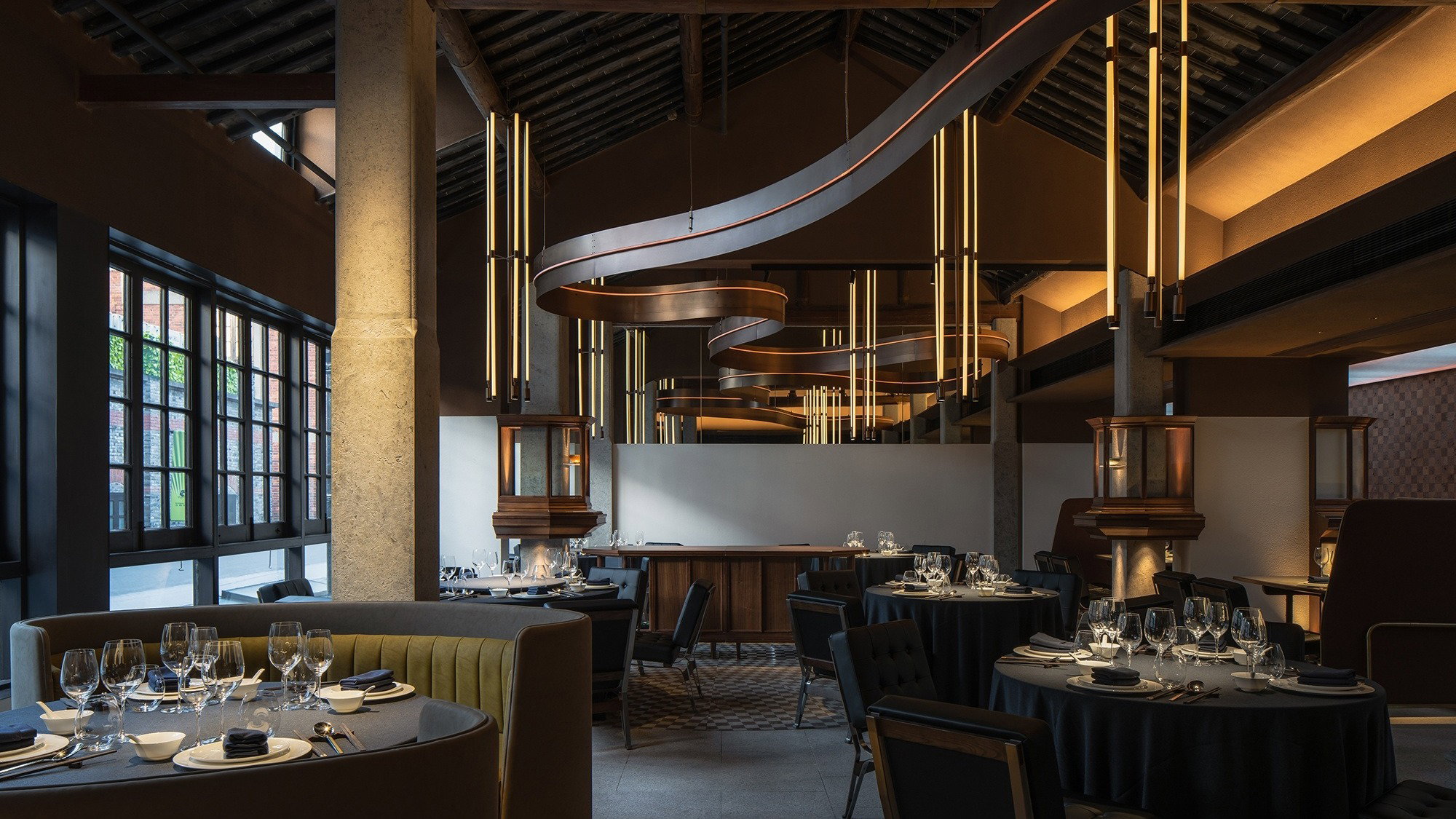
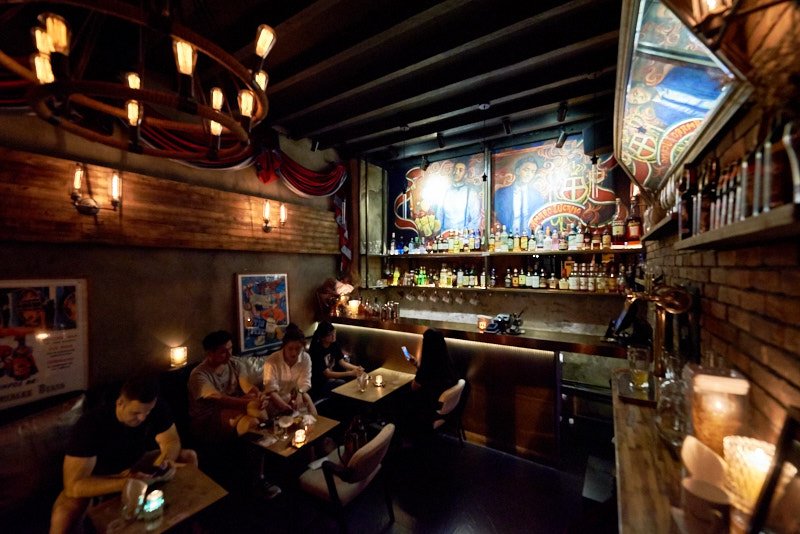
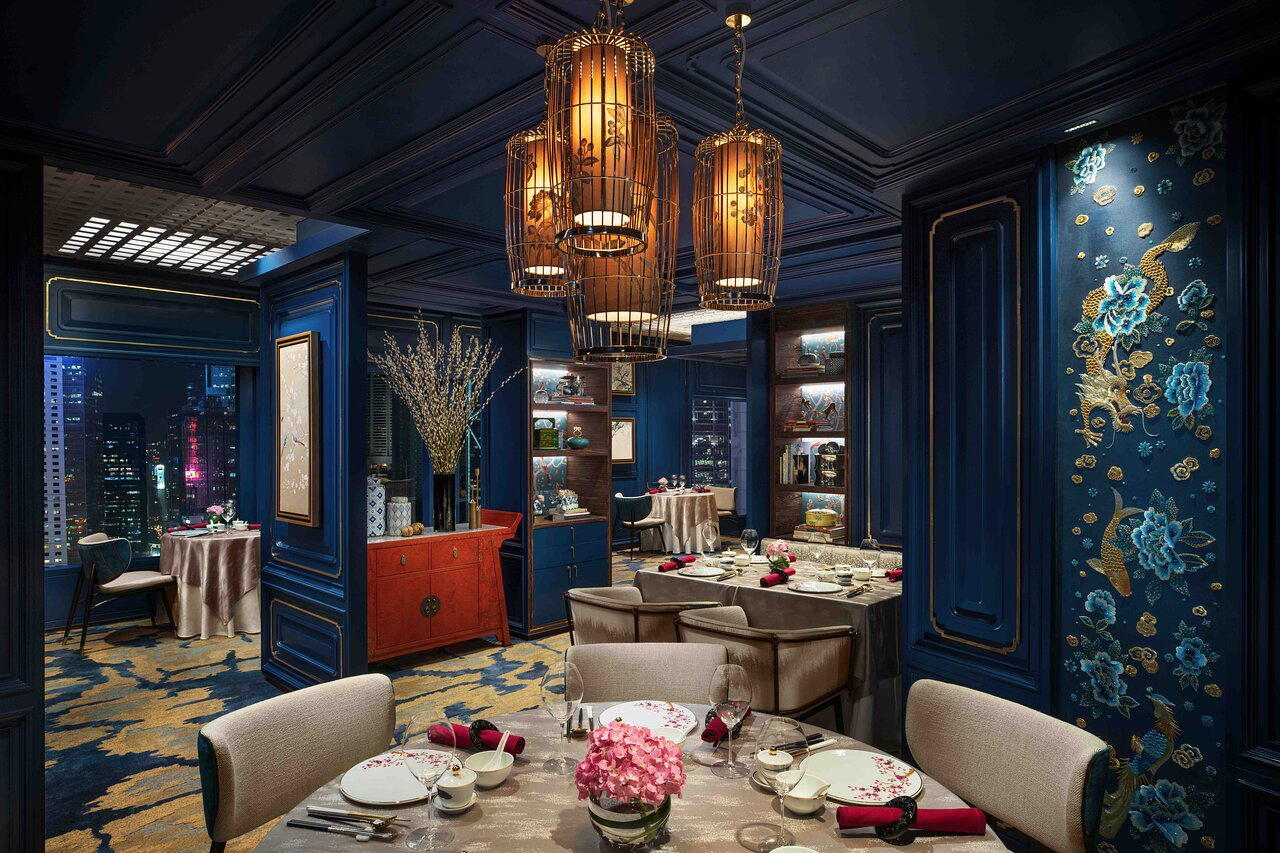
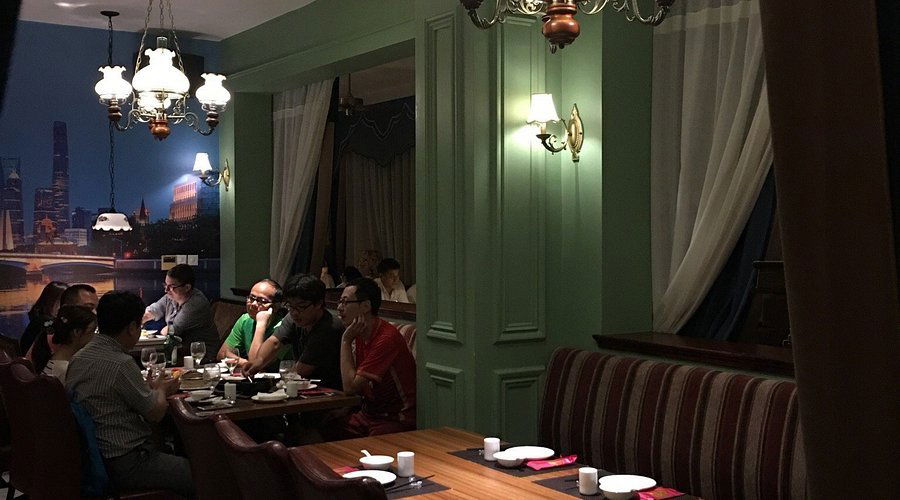
Walk in and the atmosphere does its job immediately: dim yellow lighting, 1930s memorabilia arranged without irony, and singers in qipao performing golden oldies at a register that fills the room without swallowing conversation. For a celebration dinner, the setting lands well — it is distinctive enough to feel considered, without the stiffness of a formal dining room. The visual and sonic backdrop makes it genuinely useful for dates, milestone dinners, or business meals where you want atmosphere without clinical formality.
But the room is not what keeps this place booked solid. That is down to the kitchen. The menu leans toward seafood and freshwater fish, an emphasis that is native to Shanghainese cooking, where the Yangtze Delta's produce has historically defined the cuisine. The owner sources crab directly from his own farm, and that provenance shows in what arrives at the table. The crabmeat and roe on rice is the dish most consistently flagged as the reason to return. Fried shredded eel with water bamboo delivers a contrast of textures, tender eel against crisp bamboo shoot, that reflects the technical control behind an apparently direct preparation.
For a first visit, the fish-focused dishes are where to concentrate. Shanghainese cooking at this level prioritises clean flavours and precise technique over heavy seasoning, so expect dishes that reward attention rather than assault. This is not the place for bold Sichuan fire or northern wheat-based staples; the kitchen is working in a specific regional register, and it does so with authority.
Drinks
The venue data does not detail a drinks program, and this is worth noting practically: Ren He Guan is not a destination for an ambitious cocktail list or deep wine cellar. The experience is food-led. Shanghainese restaurants at this price tier typically offer Chinese rice wines and baijiu alongside beer and tea, and the editorial emphasis here belongs on the cooking. If a significant drinks program is a priority for your occasion, pair this dinner with a visit to one of Shanghai's dedicated cocktail bars, our full Shanghai bars guide covers the options. For the meal itself, follow the kitchen's lead: order what pairs with crab and freshwater fish, and let the food carry the evening.
Booking and Logistics
Getting a table here requires planning. That combination creates pressure on reservations that a room of this size, and at this price point, cannot easily absorb. Plan to book at least three to four weeks out for a weekend dinner, and further in advance if your date is fixed around a public holiday or the crab season peak in autumn. Songjiang District is not central Shanghai, so factor travel time: this is not a walk-in venue, and arriving late after a long cross-city journey will compress your evening. The address is on Taogan Road in Songjiang, so build your logistics around that location rather than assuming proximity to the Bund or Xintiandi.
No dress code is confirmed in available data, but the Michelin-starred setting and the 1930s-inflected room suggest that smart casual is the appropriate register. Overdressing is unlikely to be a problem; underdressing on a special occasion would feel misaligned with the room's character.
Who Should Book
Ren He Guan earns its place on a short list for any occasion where food quality and atmosphere both matter but budget is a genuine consideration. It is particularly well-suited to: diners who want a credentialled Shanghainese meal without the pricing of Shanghai's higher-tier Chinese restaurants; couples marking a birthday or anniversary who want atmosphere and cooking over performance-dining theatrics; and visitors to Shanghai who want to eat regional cuisine at a level that reflects what the city's cooking actually does well, rather than an adapted version aimed at international palates.
It is less well-suited to diners who need a central location, those who want a significant bar program integrated into the evening, or groups requiring flexible menus. If any of those factors are priorities, consider alternatives in central Shanghai first, our full Shanghai restaurants guide covers the broader field.
For Shanghainese cooking elsewhere in the region, the same commitment to regional precision appears at Yè Shanghai (Tsim Sha Tsui) in Hong Kong and, further afield, at Shanghai Cuisine in Beijing. Within Shanghai's own Shanghainese dining scene, Fu 1088, Fu 1015, and Fu 1039 represent alternative takes on the format, at different price points and with different room characters, alongside Lao Zheng Xing and Cheng Long Hang (Huangpu) for comparison. For fine Chinese dining across the region, Xin Rong Ji in Beijing, Xin Rong Ji in Chengdu, Ru Yuan in Hangzhou, Chef Tam's Seasons in Macau, Imperial Treasure Fine Chinese Cuisine in Guangzhou, and Dai Yuet Heen in Nanjing each offer a point of reference for calibrating what Michelin-recognised Chinese cooking looks like across different cities and traditions. Explore our Shanghai hotels guide, Shanghai wineries, and Shanghai experiences to round out your trip.
Planning details
- Location
- 45CP+HW5, Taogan Rd, Songjiang District, Shanghai, China, 201602
- Phone
- +86 21 6403 0731
The take
The Take
The Vibe
Ren He Guan frames its experience in golden-era Shanghai style—dim yellow light, 1930s memorabilia and singers in qipao—but the writing in the room is the cooking. The restaurant leans into nostalgia without letting décor overwhelm the meal: attention lands on precise, seasonally attuned Shanghainese techniques and dishes. That balance creates a sophisticated, slightly theatrical dining room that still feels quietly intimate; live vocalists add texture while the kitchen’s Michelin-recognized rigor keeps the spotlight on braising, freshwater fish and rich, measured sweetness. It reads as both historic and refined, with charm that serves the food rather than competing with it.
Best For
This is a place to bring an occasion that benefits from both atmosphere and culinary seriousness. The Michelin star and focused regional menu suit business dinners and special-occasion nights when exacting execution matters. The dim, nostalgic room and live singers also make it well suited to date nights or romantic evenings where ambiance contributes to the experience. Because the kitchen works tightly within Shanghainese traditions and seasonal rhythms—hairy crab season is specifically noted—planning around seasonal highlights elevates the visit and aligns with the restaurant’s strengths.
Ordering Tips
Prioritize the signatures that showcase Shanghainese technique and freshwater seafood: the hong shao rou (braised pork belly) and freshwater fish preparations are representative of the restaurant’s strengths. The menu’s focus on braising and seasonal seafood means dishes like crab-focused plates are timely—visit during hairy crab season if possible. Other noted items, including crabmeat with rice, squirrel mandarin fish, fried shredded eel with water bamboo and smoked fish, are useful anchors when deciding how to pace a multi-course meal. Let the kitchen’s emphasis on balance and seasonality guide shared ordering.
Venue details
Ambiance
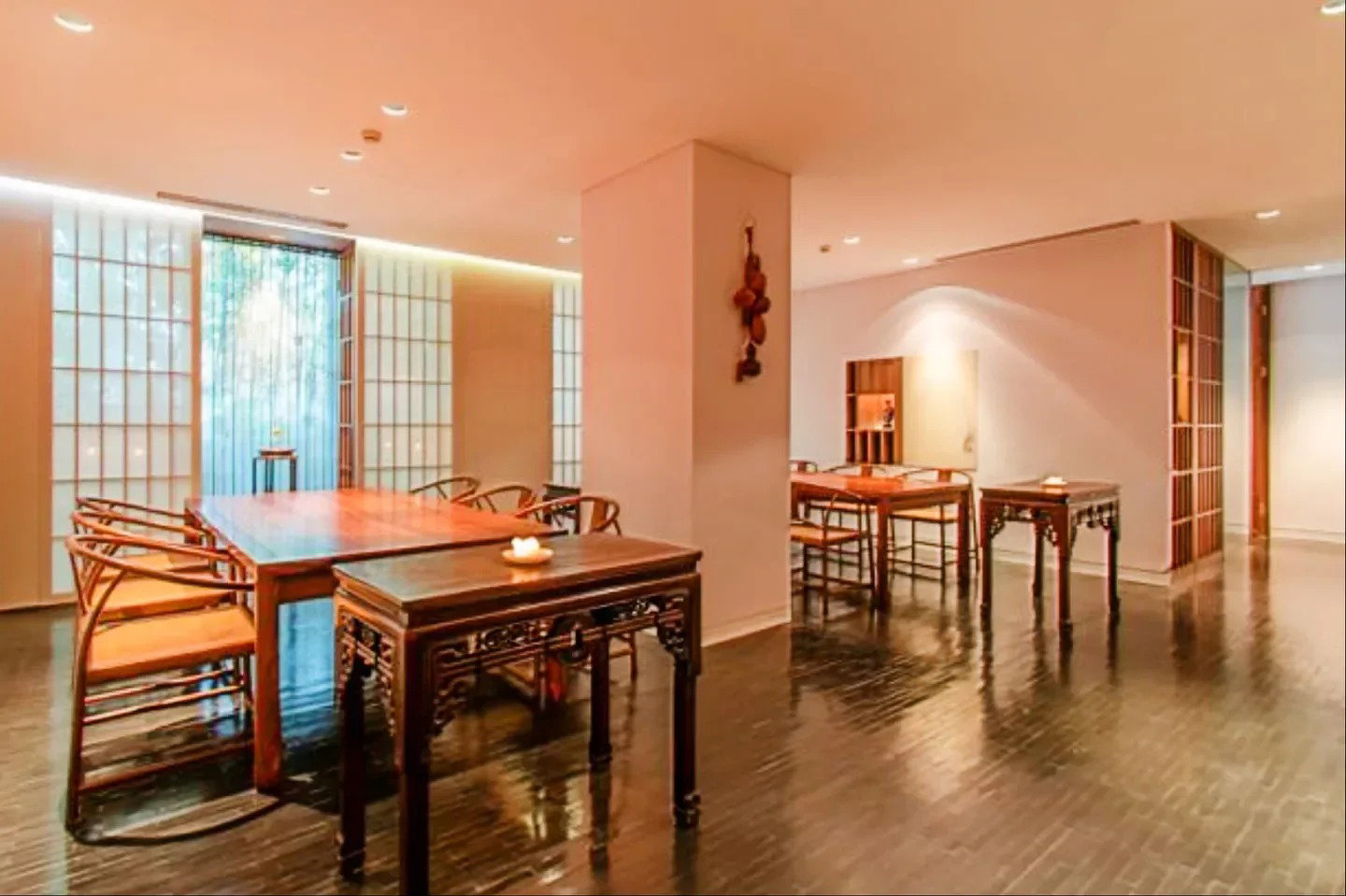
Dim yellow lighting, 1930s memorabilia, art deco stained glass panels, period-costumed waitstaff, and live singers in qipao performing golden oldies create an immersive vintage Shanghai atmosphere.
Tags
Vibe
Best For
Experience
Sourcing
At the Table
- Dress Code
- Casual
- Noise Level
- Lively
- Service Style
- Upscale Casual
- Meal Pacing
- Leisurely
- Capacity
- Small
Signature Dishes
- hong shao rou (braised pork belly)
- crabmeat with rice
- squirrel mandarin fish
- fried shredded eel with water bamboo
- smoked fish
Know before you go
Know Before You Go
- Getting there
- 45CP+HW5, Taogan Rd, Songjiang District, Shanghai, China, 201602
Planning details
Location
45CP+HW5, Taogan Rd, Songjiang District, Shanghai, China, 201602 · Directions
Recognition and awards
Also consider
Also Consider
- Fu He Hui, Vegetarian, ¥¥¥¥
- Ming Court, Cantonese, ¥¥¥
- Royal China Club, Chinese, Cantonese, ¥¥¥
- Scarpetta, Italian, ¥¥¥
- Yè Shanghai, Shanghainese, ¥¥
Restaurant context
Within Shanghai's Shanghainese tier, Yè Shanghai is the most direct comparison: same price band (¥¥), same cuisine category, and a similarly atmospheric room. The difference is location and style, Yè Shanghai operates in a more central, accessible position, making it the easier pick for visitors without the time or inclination to reach Songjiang. Ren He Guan pulls ahead on cooking credibility: a Michelin star versus Yè Shanghai's non-starred status means the kitchen is operating at a demonstrably higher verified level. If the food is the priority and you can handle the commute, Ren He Guan is the stronger choice.
For diners considering a step up in budget, Ming Court and Royal China Club both operate at ¥¥¥ and deliver Cantonese rather than Shanghainese cooking, a meaningful distinction if regional specificity matters to you. Fu He Hui at ¥¥¥¥ is the correct comparison for diners prioritising atmosphere and design as much as food, but its vegetarian format makes it a different kind of booking entirely. For a celebratory meal where the room and the bill both need to impress, Fu He Hui is the splurge pick; for Michelin-quality food at a fraction of the cost, Ren He Guan makes a stronger practical argument.
Scarpetta at ¥¥¥ offers Italian cooking and a different dining register altogether, useful if your group is split on Chinese cuisine, but not a like-for-like alternative. The bottom line: for Shanghainese cooking specifically, Ren He Guan delivers the highest verified quality at the lowest price point among this comparison set. It is the booking to make if regional cuisine and value alignment are your criteria, provided you are willing to plan ahead and travel to Songjiang.
Explore Shanghai
Around this place
Discover more on Pearl
Unlock the full Ren He Guan (Xuhui) guide in Pearl, including awards, comparisons, FAQs, planning details, and nearby places.
Compare Ren He Guan (Xuhui)
| Venue | Price | Booking Difficulty | Awards |
|---|---|---|---|
| Ren He Guan (Xuhui) | ¥¥ | Hard | 2025 Michelin 1 Star2024 Michelin 1 Star |
| Fu He Hui | ¥¥¥¥ | Unknown | 2026 Asia's 50 Best Restaurants · #112026 OAD Top Restaurants in Asia Ranked · #562026 Black Pearl 2 DiamondMichelin Guide Shanghai Jiangsu Zhejiang 20262026 La Liste Top Restaurants2025 Asia's 50 Best Restaurants · #152025 OAD Top Restaurants in Asia Ranked · #592025 World's 50 Best Restaurants · #64We're Smart World Top Restaurants 2025 |
| Ming Court | ¥¥¥ | Unknown | 2025 OAD Top Restaurants in Asia Ranked · #1692025 Black Diamond 1 Diamond2025 Michelin 1 Star2024 OAD Top Restaurants in Asia Ranked · #1602024 Michelin 1 Star2023 OAD Top Restaurants in Asia Highly Recommended |
| Royal China Club | ¥¥¥ | Unknown | 2026 Michelin Plate2025 OAD Casual in Europe Ranked · #216The Good Food Guide 20252025 Michelin Plate2024 OAD Casual in Europe Ranked · #2142024 Michelin Plate2023 OAD Casual in Europe Highly Recommended |
| Scarpetta | ¥¥¥ | Unknown | Michelin Guide Shanghai Jiangsu Zhejiang 20262025 Wine Spectator Best of Award of Excellence2025 Michelin Plate2024 Michelin Plate |
| Yè Shanghai | ¥¥ | Unknown | 2025 OAD Top Restaurants in Asia Ranked · #2092025 Michelin Plate2024 OAD Top Restaurants in Asia Ranked · #2162024 Michelin Plate2023 OAD Top Restaurants in Asia Highly Recommended |






.png?width=1200&quality=80)


Comparing your options in Shanghai for this tier.
FAQ
Frequently Asked Questions
How far ahead should I book Ren He Guan (Xuhui)?
Book at least one to two weeks in advance, and longer on weekends or during crab season. A Michelin star at ¥¥ prices creates reliable demand — this is not a walk-in restaurant. If you are visiting from outside Shanghai, lock in a reservation before you arrive.
What should I wear to Ren He Guan (Xuhui)?
The venue has 1930s Shanghai atmosphere and qipao-dressed performers, so it has a sense of occasion, but the ¥¥ price point and local following mean this is not a formal dress situation. Neat, presentable clothing is appropriate — you will not be underdressed in clean casualwear, nor out of place in something smarter.
Is Ren He Guan (Xuhui) worth the price?
Yes. A Michelin one-star meal at ¥¥ pricing is a strong value case by any measure. The kitchen sources crab directly from the owner's farm, and dishes like crabmeat and roe on rice represent that quality directly on the plate. Compared to Yè Shanghai, which operates at a higher price tier for a comparable Shanghainese experience, Ren He Guan delivers more per yuan spent.
Is the tasting menu worth it at Ren He Guan (Xuhui)?
Menu structure is not detailed in available venue data, so it is not possible to confirm whether a formal tasting menu exists. What is documented is a fish-focused menu with standout dishes including crabmeat and roe on rice and fried shredded eel with water bamboo — ordering from those anchors is the reliable approach for a first visit.
What should a first-timer know about Ren He Guan (Xuhui)?
The atmosphere — dim lighting, 1930s Shanghai décor, live qipao performers — is genuine, but the food is why it holds a 2024 Michelin star. Prioritise the crab dishes, as the owner sources directly from his own farm. The restaurant sits in Songjiang District, which is further from central Shanghai than most visitors expect, so factor in travel time when planning your evening.