
Moose (Changning)
Jiangzhe · Xujiahui, Shanghai
Restaurant in Shanghai, China
The Read
Seasonal Jiangzhe Classicism
Price
¥¥¥
Dress
Smart Casual
Why go
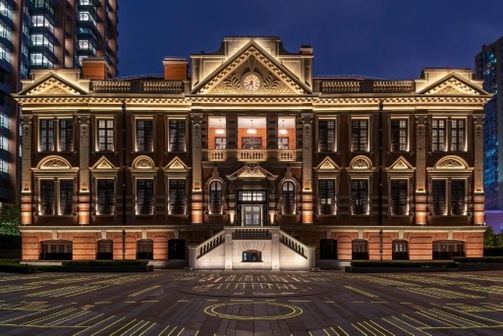
Moose (Changning) is a Michelin 1 Star (2024) Jiangzhe restaurant set inside a century-old Xinhua Road mansion in Changning. At ¥¥¥, it is best suited to special occasions and formal dinners where the heritage setting and seasonally driven cooking; particularly the braised lion's head pork balls; justify the spend. Book at least two to three weeks ahead; this one is hard to get into.
About Moose (Changning)
Who Should Book Moose (Changning)
Book Moose (Changning) if you want Michelin-starred Jiangzhe cooking in a setting that earns its price tag on atmosphere alone. This is a strong choice for a formal dinner with clients, a significant anniversary, or any occasion where the room needs to match the food. The century-old mansion on Xinhua Road, dressed in antique furniture and oil paintings against an all-white interior, gives you the kind of backdrop that makes a ¥¥¥ spend feel considered rather than extravagant. If you are looking for a casual weeknight meal or a quick lunch, look elsewhere.
The Venue
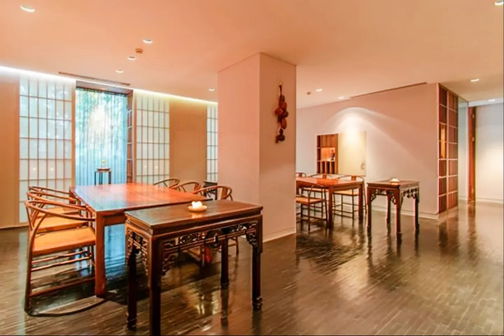
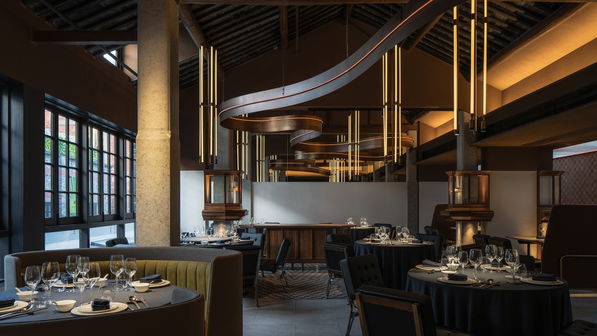
Moose sits inside a refurbished early 20th-century mansion in Changning, one of Shanghai's quieter, tree-lined residential districts. The all-white interior paired with antique furniture and oil paintings creates a tension between European salon and classical Chinese dining house; it works, it sets the room apart from the glass-and-marble luxury restaurant formula that dominates the city's higher end. The space signals occasion without being cold.
The cooking is Jiangzhe; the regional cuisine of Jiangsu and Zhejiang provinces, characterised by careful seasoning, clean broths, a preference for texture and restraint over bold spicing. This is not the cuisine that announces itself loudly. The head chef brings over 30 years of experience to the kitchen, his focus is on Jiangzhe classics executed with precision. The results earned a Michelin 1 Star in 2024, which places Moose in credible company for serious Chinese regional dining in Shanghai.
The kitchen's approach to the signature braised lion's head pork balls, the dish most worth ordering here, shows real craft. The preparation shifts with the seasons: longsnout catfish and bird's nest go into the dish from May through July, while crabmeat and roe take over from August through October. Right now, if you are visiting between August and October, you are in the optimal window for the crabmeat and roe version, which is the richer and more complex preparation. Outside those months, the dish is still available but in its off-season form. Timing your visit around this calendar works if the dish is your primary reason for coming. Peking duck is also listed as a chef strength, though this is less common as a Jiangzhe restaurant centrepiece, it suggests a kitchen with range beyond its regional focus.
For context on the regional cuisine: Jiangzhe cooking relies on quality ingredients and subtle layering rather than aggressive seasoning, which means the leading dishes here will read as quiet on first taste and more complex on reflection. This is a cuisine that rewards attention. Diners expecting the punchy flavours of Sichuan or the roasted richness of Cantonese roast meats will find the style understated by comparison. That is not a weakness, it is the point.
Wine at Moose
No specific wine list data is available for Moose (Changning). At a Michelin-starred ¥¥¥ venue operating in a restored heritage property, a curated wine offering would be expected, but Pearl cannot confirm the depth or focus of the program. Jiangzhe cuisine's clean, savoury profile, particularly dishes built around delicate broths and freshwater fish, pairs well with white Burgundy, dry Alsatian Riesling, or aged Chinese Shaoxing wine if the list extends to traditional pairing options. If wine is central to your evening, confirm the list directly with the restaurant before booking rather than assuming depth at this price tier. Venues at ¥¥¥ in Shanghai vary considerably in wine program investment.
Booking and Timing
Moose (Changning) carries a hard booking difficulty rating. No online booking link or phone number is currently listed in Pearl's database, which means your leading route is to contact the venue directly via the address at 119 Xinhua Road, Changning, or through a hotel concierge if you have one available. For a Michelin-starred venue in this category, booking at least two to three weeks in advance is advisable for weekend dinners; weekday availability tends to be more accessible but should not be assumed at short notice. If you are planning around the seasonal crabmeat and roe window (August to October), add additional lead time, this is when demand at Jiangzhe-specialist restaurants in Shanghai peaks.
No dress code data is confirmed, but the formal setting and price tier suggest smart dress is appropriate. Arrive prepared for a slower-paced, multi-course experience rather than a quick dinner.
Quick reference: Michelin 1 Star (2024) | ¥¥¥ | Jiangzhe cuisine | Changning, Shanghai | Booking difficulty: Hard
How It Compares
See the comparison section below for peer venues in Shanghai.
Other Jiangzhe and Regional Chinese Dining to Consider
If Moose is fully booked or you want to explore the broader Jiangzhe category, several strong options exist across China's major cities. In Shanghai, Dining Room, Easeful Cuisine (Jingan), Lin Jiang Yan, Shanghai Club, and Yong Jiang Zhen cover different points of the regional Chinese dining spectrum. For the wider Pearl view on eating in Shanghai, see our full Shanghai restaurants guide.
For the same regional cuisine tradition in other cities: Xin Rong Ji (Xinyuan South Road) in Beijing and Xin Rong Ji in Chengdu offer strong Jiangzhe-adjacent reference points. In Nanjing, Chi Man and Du Shi Li De Xiang Cun are worth considering for Jiangzhe cooking closer to its geographic heartland. Ru Yuan in Hangzhou is another Zhejiang-rooted option with regional authority. For broader fine Chinese dining across the region, Chef Tam's Seasons in Macau, Imperial Treasure Fine Chinese Cuisine in Guangzhou, and Dai Yuet Heen in Nanjing round out a useful peer set.
For everything else in Shanghai: our full Shanghai hotels guide, our full Shanghai bars guide, our full Shanghai wineries guide, and our full Shanghai experiences guide.
Planning details
- Location
- China, 119弄1号CN 上海市 长宁区 新华路 119 邮政编码: 200052
- Phone
- +86 21 6205 5058
The take
The Take
The Vibe
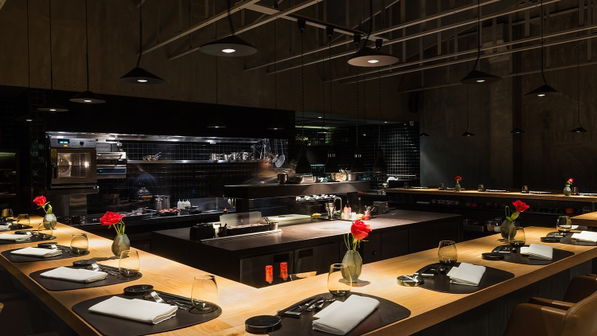
Moose sits in a century-old mansion on a quietly tree-lined stretch of Xinhua Road, and the space is deliberately restrained so the food takes center stage. Antique furniture and oil paintings sit against an all-white interior that leans on modern European renovation while keeping the original architectural bones visible. The result is a measured, historic dining room—sophisticated without theatricality—where the residential calm of Changning shapes an intimate, considered experience rather than a headline-seeking spectacle.
Best For
This is a restaurant for diners who prize focused, regionally informed Chinese cooking in a refined setting. Its 2024 Michelin one-star recognition and positioning among mid-tier fine Chinese addresses indicate it suits business dinners, special occasions and small group meals where the emphasis is on craft and ingredients rather than spectacle. Because it occupies a standalone mansion in a residential part of Changning, it also works well for visitors who travel across districts specifically for a quieter, more contemplative meal.
Ordering Tips
Moose showcases Jiangzhe cooking traditions and highlights a handful of signature plates worth sampling. The menu calls attention to classics such as lion's head meatballs, Peking duck and the crispy white teat fish—dishes that underline the kitchen's technical precision and regional flavor profile. Given the cuisine's emphasis on balance and technique rather than heat, opt for shared dishes that let contrasting textures and seasonality come through; these signature items are the clearest expression of the restaurant's approach.
Planning details
Location
China, 119弄1号CN 上海市 长宁区 新华路 119 邮政编码: 200052 · Directions
Recognition and awards

Also consider
Also Consider
- Fu He Hui; Vegetarian, ¥¥¥¥
- Ming Court; Cantonese, ¥¥¥
- Royal China Club; Chinese, Cantonese, ¥¥¥
- Scarpetta; Italian, ¥¥¥
- Yè Shanghai; Shanghainese, ¥¥
Restaurant context
At ¥¥¥ with a Michelin 1 Star, Moose (Changning) sits in a clear position: it is the choice when you want serious regional Chinese cooking in a setting that carries its own weight. Against Yè Shanghai at ¥¥, Moose is the clear upgrade in formality and technique, but roughly twice the price; worth it for a significant occasion, less so for a casual Shanghainese meal. Ming Court and Royal China Club both occupy the ¥¥¥ tier with Cantonese cooking; if you are weighing regional Chinese styles, Moose's Jiangzhe focus is more restrained and ingredient-driven than Cantonese roast-forward menus, the heritage property gives it a distinct atmosphere advantage.
Fu He Hui at ¥¥¥¥ is the comparison that matters most if you are considering the top end of the market. Fu He Hui delivers a vegetarian tasting menu with a strong creative identity and commands a higher price; Moose offers classical Jiangzhe execution with a more accessible price point and a stronger case for meat-eating diners. Choose Fu He Hui if conceptual ambition is the priority; choose Moose if you want technically accomplished regional cooking in a room that earns a special occasion price. Scarpetta at ¥¥¥ is the only non-Chinese peer in this set; a reasonable alternative if your group is split on cuisine preference, but not a direct competitor in category.
On booking difficulty, Moose is rated hard; harder than most of its direct peers at this tier. If you cannot secure a table, Lin Jiang Yan and Easeful Cuisine (Jingan) are the closest fallback options for Jiangzhe-style cooking in Shanghai. Check our full Shanghai restaurants guide for a broader view of what is available across price tiers.
Explore Shanghai
Around this place
Discover more on Pearl
Unlock the full Moose (Changning) guide in Pearl, including awards, comparisons, FAQs, planning details, and nearby places.
Compare Moose (Changning)
| Venue | Price | Awards |
|---|---|---|
| Moose (Changning) | ¥¥¥ | Michelin Guide Shanghai Jiangsu Zhejiang 20262025 Michelin 1 Star2024 Michelin 1 Star |
| Fu He Hui | ¥¥¥¥ | 2026 Asia's 50 Best Restaurants · #112026 OAD Top Restaurants in Asia Ranked · #562026 Black Pearl 2 DiamondMichelin Guide Shanghai Jiangsu Zhejiang 20262026 La Liste Top Restaurants2025 Asia's 50 Best Restaurants · #152025 OAD Top Restaurants in Asia Ranked · #592025 World's 50 Best Restaurants · #64We're Smart World Top Restaurants 2025 |
| Ming Court | ¥¥¥ | 2025 OAD Top Restaurants in Asia Ranked · #1692025 Black Diamond 1 Diamond2025 Michelin 1 Star2024 OAD Top Restaurants in Asia Ranked · #1602024 Michelin 1 Star2023 OAD Top Restaurants in Asia Highly Recommended |
| Royal China Club | ¥¥¥ | 2026 Michelin Plate2025 OAD Casual in Europe Ranked · #216The Good Food Guide 20252025 Michelin Plate2024 OAD Casual in Europe Ranked · #2142024 Michelin Plate2023 OAD Casual in Europe Highly Recommended |
| Scarpetta | ¥¥¥ | Michelin Guide Shanghai Jiangsu Zhejiang 20262025 Wine Spectator Best of Award of Excellence2025 Michelin Plate2024 Michelin Plate |
| Yè Shanghai | ¥¥ | 2025 OAD Top Restaurants in Asia Ranked · #2092025 Michelin Plate2024 OAD Top Restaurants in Asia Ranked · #2162024 Michelin Plate2023 OAD Top Restaurants in Asia Highly Recommended |







.png?width=1200&quality=80)


Comparing your options in Shanghai for this tier.
FAQ
Frequently Asked Questions
Can I eat at the bar at Moose (Changning)?
No bar seating details are available in Pearl's database for Moose. The venue operates inside a refurbished century-old mansion with a formal all-white interior, which points toward a structured table-service setup rather than casual counter dining. Assume a reservation is required and plan accordingly.
What are alternatives to Moose (Changning) in Shanghai?
Yè Shanghai is the most direct peer if you want polished Shanghainese cooking in an atmospheric setting at a comparable price tier. For plant-based Chinese fine dining, Fu He Hui is a strong alternative. If Moose's booking difficulty is the issue, Yè Shanghai tends to be more accessible on shorter notice. Outside Shanghai, Ming Court in Hong Kong covers Cantonese at a similar Michelin-recognised level.
What should I order at Moose (Changning)?
The head chef's signature braised lion's head pork balls are the dish to anchor your meal around, they change meaningfully by season: longsnout catfish and bird's nest from May to July, crabmeat and roe from August to October. Peking duck and Jiangzhe classics are also documented strengths. Ordering the seasonal version of the lion's head is the clearest way to eat what this kitchen does best.
Is Moose (Changning) good for a special occasion?
Yes, the setting does a lot of the work. A refurbished early 20th-century mansion with antique furniture, oil paintings, an all-white interior gives the meal a backdrop most Shanghai restaurants at this price point cannot match. The Michelin 1 Star (2024) and a chef with over 30 years' experience provide the culinary credibility to support a significant occasion. Book well in advance given the hard booking difficulty rating in Pearl's data.
Is the tasting menu worth it at Moose (Changning)?
No tasting menu structure or pricing is confirmed in Pearl's database, so a direct cost-per-dish verdict is not possible. What the data does support: a ¥¥¥ price range, Michelin 1 Star recognition in 2024, a kitchen whose strongest dishes are explicitly seasonal. If a tasting format is available, the seasonal build of dishes like the lion's head pork balls suggests it would be the format that best showcases the kitchen's range. Confirm the menu format directly when booking.