.png?width=1200&quality=80)
Menya Ultra
Japanese · Kearny Mesa, San Diego
Restaurant in San Diego, United States
 Book with Pearl
The Read
Akita-Rooted Tonkotsu Counter
Price
$20–30per person
Dress
Casual
Why go
Menya Ultra is a Michelin-selected ramen counter in a Clairemont strip mall, delivering a focused menu of tonkotsu-miso and tantanmen at $$ with no reservation required., it is one of San Diego's clearest value propositions for quality Japanese noodles. Walk in, order the tantanmen, add the egg.
About Menya Ultra
Should You Book Menya Ultra?
Getting a seat at Menya Ultra is not a logistical puzzle. This is one of the easier wins on San Diego's ramen circuit: no reservation system to fight, no ticketed release dates, just show up at the Clairemont strip mall on 8199 Clairemont Mesa Blvd and expect a wait during peak hours. The line moves, the service is efficient, and the whole operation runs with the kind of low-friction confidence you see in ramen shops that know exactly what they are. If you have been once and liked it, the only question is whether to go back for the tonkotsu or finally try the tantanmen. The answer, for most repeat visitors, is the tantanmen.
The Ramen Case
Menya Ultra earned a Michelin Plate in 2025, which for a $$ strip-mall ramen counter is a meaningful signal. Michelin Plates are awarded to restaurants the inspectors consider worth a visit on quality grounds, not on atmosphere or price point. The recognition lands credibly here: the kitchen traces its lineage to a shop that first opened in Akita Prefecture in Japan before expanding internationally, and the San Diego location has carried that consistency forward.
The menu stays narrow by design. The house broth is a tonkotsu built on pork bones, deepened with miso, and the result is a bowl that reads richer than a straight tonkotsu but without the fermented intensity of a full miso ramen. For a returning visitor, the tantanmen is the more interesting order: Menya Ultra's version takes the Sichuan dan dan noodle format and builds it with ground pork and a measured heat. It is not a direct replica of the Chengdu original, which is often served without broth, but it is a considered adaptation that holds its own as a distinct dish rather than a diluted imitation. Both options come with springy noodles that hold up through the bowl. The ajitsuke tamago (seasoned soft-boiled egg) is worth adding as a supplement: it has the right jammy yolk and marinade depth that separates a well-run ramen shop from a careless one.
Does It Travel? The Takeout Question
Given the PEA-R-15 angle here, the honest answer is: ramen is a format that punishes delay. Broth continues to cook noodles after packing, and by the time a bowl travels fifteen minutes, the noodle texture that makes Menya Ultra worth going to has softened considerably. If you are ordering for off-premise, request noodles packed separately if the shop allows it, and eat as quickly as possible after pickup. The tantanmen, with its slightly thicker, sauce-forward profile compared to a straight tonkotsu, holds marginally better in transit than the house broth bowl because the noodles are less at risk of turning waterlogged. For the full experience, eating on-site is the call. The no-frills environment is not a drawback here — it is the appropriate container for what the kitchen is doing. You are not paying for ambiance; you are paying for the bowl.
Timing and Practical Details
Menya Ultra draws a crowd reliably, particularly at lunch and early dinner. If your window is flexible, arriving at opening or mid-afternoon between meal rushes reduces wait time. The operation is efficient enough that even a visible queue tends to move faster than it looks. Given the Michelin Plate recognition in 2025, foot traffic has likely increased compared to the pre-award baseline, so patience is worth factoring in during weekends.
Reservations: Walk-in only. Dress: Casual. Budget: $$ per head, making this one of the lower-cost Michelin-recognised dining options in San Diego. Location: 8199 Clairemont Mesa Blvd M, San Diego, CA 92111 — strip mall setting, parking available on-site.
How to Use Menya Ultra in a San Diego Dining Week
Menya Ultra sits at the practical end of San Diego's Japanese dining spectrum. If you are planning a broader Japanese dining run in the city, it pairs well against higher-commitment options: Soichi operates at the $$$$ omakase end of the market and requires advance booking, while Menya Ultra fills the role of the reliable, accessible, high-quality casual meal. For Japanese dining at different price points elsewhere in California, Myojaku and Azabu Kadowaki in Tokyo give context for where San Diego's Japanese dining scene sits globally. Closer to home, if you want a contrast meal on the same trip, Cloak & Petal offers a different register of Japanese-influenced dining in a more atmospheric setting.
For broader San Diego planning: our full San Diego restaurants guide, San Diego hotels guide, San Diego bars guide, San Diego wineries guide, and San Diego experiences guide cover the full picture. If you are weighing Menya Ultra against the city's fine dining tier, Addison and Hidden Fish represent the upper end of what San Diego offers. For a sense of how Michelin-recognised dining performs at different price points nationally, Le Bernardin in New York City, The French Laundry in Napa, and Lazy Bear in San Francisco set the comparative frame. Menya Ultra is not competing in that tier, it is doing something different, and doing it well within its own terms.
Other reference points for occasion-specific San Diego dining: 1450 El Prado for a setting-forward meal, and Smyth in Chicago or Emeril's in New Orleans for national context on what chef-driven restaurants at similar recognition levels offer. Single Thread Farm in Healdsburg is the benchmark for the highest-craft end of California dining if you want to understand where the ceiling sits.
The Verdict
Book Menya Ultra, or rather, show up, since no booking is needed. Returning visitors should order the tantanmen and add the ajitsuke egg. Eat on-site for the leading result. If you want the full-service Japanese dining experience in San Diego, Soichi is the upgrade path, but for a fast, reliable, quality-first ramen meal, Menya Ultra is the answer.
FAQ: Menya Ultra, San Diego
- Is Menya Ultra good for a special occasion? Not the right venue for a milestone dinner. The strip-mall setting and no-frills format are part of what makes Menya Ultra work, but they are not the conditions for a celebratory meal. At $$, with walk-in queuing and efficient table turnover, this is an excellent casual lunch or weeknight dinner, not a birthday or anniversary destination. For a special occasion with Japanese roots in San Diego, Soichi at $$$$ is the correct call.
- Is the tasting menu worth it at Menya Ultra? Menya Ultra does not operate a tasting menu format. The menu is intentionally short: a house tonkotsu-miso broth ramen and a tantanmen are the main options, with add-ons like the ajitsuke egg. The value is in the quality of those bowls at a $$ price point with Michelin Plate recognition in 2025. There is no multi-course structure to evaluate here.
- What should I order at Menya Ultra? On a second visit, order the tantanmen. The house tonkotsu-miso is the entry point most first-timers take, and it is a well-made bowl, but the tantanmen, ground pork, measured spice, dan dan noodle-inspired, is the more distinctive item on the menu. Add the ajitsuke egg regardless of which broth you choose. The noodles in both bowls are springy and well-calibrated to the respective broths.
- How far ahead should I book Menya Ultra? No advance booking is required or available, this is a walk-in operation. Expect waits during peak lunch and dinner service, particularly on weekends. The 2025 Michelin Plate recognition has raised the venue's profile, so arriving at opening or during off-peak hours is the practical move if you want to minimise queue time.
- Does Menya Ultra handle dietary restrictions? The menu is built around pork-based broths (tonkotsu, ground pork), which limits options for those avoiding pork. No contact details or website are currently listed in the Pearl database to confirm specific dietary accommodations. If you have a significant restriction, visiting in person during a quiet period to ask the kitchen directly is the most reliable approach, given the lack of published information.
- What are alternatives to Menya Ultra in San Diego? For Japanese dining at a higher price point and with more ceremony, Soichi ($$$$ omakase) is the step up. For comparable casual dining at $$ in San Diego's broader scene, Callie offers Mediterranean at a similar price tier if you want a change of format. Hidden Fish is worth considering for a different style of focused, quality-driven dining. Menya Ultra's specific combination of Michelin recognition at $$ in a casual ramen format has no direct equivalent in San Diego's current landscape.
Planning details
- Location
- 8199 Clairemont Mesa Blvd M, San Diego, CA 92111
- Website
- menya-ultra.com
- Phone
- +1 858-571-2010
The take
The Take
The Vibe
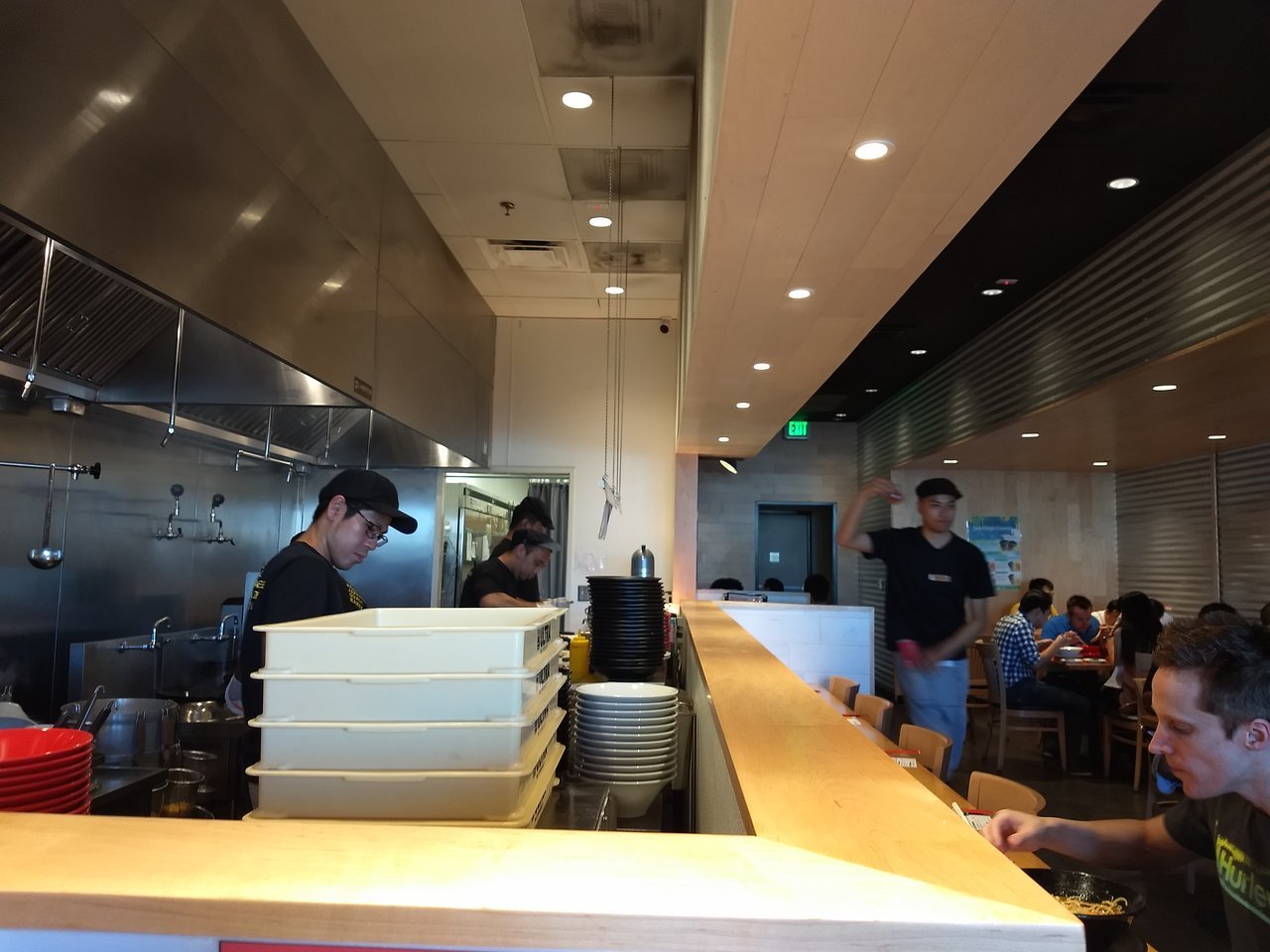
Menya Ultra presents as a bowl-first ramen shop tucked into a Clairemont Mesa strip mall. The tone is deliberately unpretentious: a modest shopfront, efficient service and a disciplined, tightly focused menu that lets the food do the speaking. The room stays out of the way—there’s no theatrical décor or design flourishes—so attention stays on the broth, noodles and balance of toppings. That restrained, no-frills approach traces back to the brand’s origins in Akita Prefecture, signaling culinary seriousness rather than dining-room showmanship. The result is casual, pared-back and resolutely about the eating rather than the atmosphere.
Best For
This is a spot built for straightforward ramen service: quick, focused and bowl-driven. It suits solo diners who want an unencumbered meal, small groups or families seeking authentic, concentrated flavors, and anyone comfortable with casual counter-and-table seating in a busy, popular shop. The profile’s references to peak-hour queues suggest it’s a draw at typical lunch and dinner windows, so it’s best for people who prioritize the quality of the bowl over a leisurely dining-room experience. Expect efficient turnaround and a dining scene that favors the food first.
Ordering Tips
The menu is intentionally narrow, so pick carefully and lean on the highlights. The signature Tantan Black Sesame Ramen, Negi Miso Ramen and Paiko Tantanmen are the house specialties mentioned—try one of those to sample the kitchen’s strengths. If you want a clear stylistic contrast, order the tantanmen to compare its Sichuan-inspired spice and ground pork against the house tonkotsu-style broths. Menya Ultra draws lines outside during peak hours, so plan for a wait at busy times and prioritize the bowls you most want to try rather than sampling a long list of sides.
Venue details
Ambiance
Casual ramen house atmosphere with traditional red lanterns, bustling energy, and a focus on quick, efficient service amid long lines.
Tags
Vibe
Best For
Experience
At the Table
- Dress Code
- Casual
- Noise Level
- Lively
- Service Style
- Casual
- Meal Pacing
- Quick Bite
- Capacity
- Small
- Kitchen
- Traditional
- Menu Format
- A la carte
- Dietary
- Vegetarian friendly
Signature Dishes
- Tantan Black Sesame Ramen
- Negi Miso Ramen
- Paiko Tantanmen
Know before you go
Know Before You Go
- Getting there
- 8199 Clairemont Mesa Blvd M, San Diego, CA 92111
Planning details
Location
Recognition and awards
Also consider
Also Consider
- Addison, French, Contemporary, $$$$
- Callie, Greek, Mediterranean Cuisine, Californian-Mediterranean, $$
- Trust, New American, American, $$$
- Sushi Tadokoro, Sushi, Japanese, $$$
- Soichi, Japanese, $$$$
Restaurant context
Menya Ultra sits at the accessible end of San Diego's Japanese dining options, and that positioning is a feature rather than a limitation. At $$, it is the only Michelin-recognised Japanese venue in the city operating without a reservation system or a high price floor. Soichi ($$$$ omakase) is the obvious Japanese upgrade, with a formal, chef-driven experience that justifies the price difference if you want the full omakase format, but it requires advance planning and a higher commitment per head. Menya Ultra asks for neither. If your priority is quality Japanese food with minimal logistical friction, Menya Ultra wins that comparison without contest.
Against San Diego's broader $$ dining tier, Callie (Mediterranean, $$) is the peer for casual quality in a more designed, atmosphere-forward setting. Callie suits a group that wants the room to do some work alongside the food; Menya Ultra suits a group that is there entirely for what is in the bowl. At $$$, Trust (New American) and Sushi Tadokoro (Japanese) both require more spend per head and more booking effort. Sushi Tadokoro is the natural comparison for Japanese cuisine specifically: it operates in sushi format at $$$, which is a different category from ramen but relevant if you are deciding between Japanese dining options for a given night. For two people who want Japanese food at the $$ level without a reservation, Menya Ultra is the cleaner choice.
At the high end, Addison (French, $$$$) is San Diego's most formal fine dining option and the benchmark for the city's top tier, relevant context if you are deciding whether to split a San Diego trip between a splurge and a casual meal. Menya Ultra fills the casual slot well. The two are not in competition; they serve different decisions entirely.
Explore San Diego
Around this place
Discover more on Pearl
Unlock the full Menya Ultra guide in Pearl, including awards, comparisons, FAQs, planning details, and nearby places.
Compare Menya Ultra
| Venue | Location | Cuisine | Awards | Price |
|---|---|---|---|---|
| Menya Ultra | San Diego | Japanese | Michelin Plate 20262026 Michelin Plate2025 Michelin Plate2024 Michelin Plate | $$ |
| Addison | San Diego | French, Contemporary | 2026 OAD Top Restaurants in North America Ranked · #222026 North America's 50 Best Restaurants · #312026 Forbes 5-Star2026 Relais Chateaux Restaurants2026 Wine Spectator Grand Award2026 Michelin 3 Stars2026 Les Grandes Tables du Monde Members2026 La Liste Top Restaurants2025 OAD Top Restaurants in North America Ranked · #19 | $$$$ |
| Callie | San Diego | Greek, Mediterranean Cuisine, Californian-Mediterranean | 2026 OAD Casual in North America Ranked · #412026 Wine Spectator Best of Award of Excellence2026 Bib Gourmand2025 OAD Casual in North America Ranked · #2622025 OpenTable Top 100 Restaurants2025 Wine Spectator Best of Award of Excellence2025 Michelin Bib Gourmand2024 OAD Casual in North America Ranked · #532024 Michelin Bib Gourmand | $$ |
| Trust | San Diego | New American, American | 2026 Michelin Plate2025 Michelin Plate2024 Michelin Plate2023 OAD Casual in North America Recommended | $$$ |
| Sushi Tadokoro | San Diego | Sushi, Japanese | 2026 OAD Top Restaurants in North America Recommended2026 Michelin Plate2025 OAD Top Restaurants in North America Ranked · #3892025 Michelin Plate2024 OAD Top Restaurants in North America Ranked · #2922024 Michelin Plate2023 OAD Top Restaurants in North America Recommended | $$$ |
| Soichi | San Diego | Japanese | 2026 OAD Top Restaurants in North America Recommended2026 Michelin 1 Star2025 Michelin 1 Star2024 Michelin 1 Star | $$$$ |









.png?width=1200&quality=80)



How Menya Ultra San Diego compares with similar nearby venues.
FAQ
Frequently Asked Questions
Is Menya Ultra good for a special occasion?
Not in the traditional sense. Menya Ultra is a no-frills strip-mall counter with efficient service and a $$ price point — the draw is the 2025 Michelin Plate quality at an everyday spend, not atmosphere or ceremony. For a milestone dinner, consider Sushi Tadokoro or Soichi instead. For a casual celebration over genuinely well-executed ramen, Menya Ultra delivers.
Is the tasting menu worth it at Menya Ultra?
Menya Ultra does not operate a tasting menu format. The menu is focused: a tonkotsu-miso house broth and a tantanmen are the headline options, with add-ons like the ajitama egg available. At $$ per head, the value case is in the quality of those core bowls, not breadth of courses.
What should I order at Menya Ultra?
The house tonkotsu-miso broth is the anchor — rich, porky, and miso-enhanced, with springy noodles. The tantanmen offers a spiced alternative built on Sichuan dan dan noodle tradition with ground pork. Add the ajitama egg: the Michelin entry specifically calls it out as a strong addition and it is worth the extra cost.
How far ahead should I book Menya Ultra?
No booking is needed or available — Menya Ultra operates on a walk-in basis. The counter draws a reliable crowd at lunch and early dinner, so arriving at opening or between peak meal windows will reduce your wait. No phone or online reservation system is listed.
Does Menya Ultra handle dietary restrictions?
The menu centers on pork-based broths — tonkotsu-miso and tantanmen with ground pork — so vegetarian and pork-free diners will find limited options. Specific allergen or dietary accommodation details are not documented in available venue data; checking directly before visiting is advisable.
What are alternatives to Menya Ultra in San Diego?
Within Japanese dining in San Diego, the alternatives depend on what you want. For omakase sushi at a higher price tier, Sushi Tadokoro and Soichi are the credentialed options. For broader Japanese cuisine with more atmosphere, Trust and Callie cover adjacent ground. Menya Ultra sits at the practical, high-value end of the spectrum — it is the call when you want Michelin-recognized cooking at $$ without a reservation battle.