Restaurant in Paris, France
Two hours from Paris. Punches above its price.
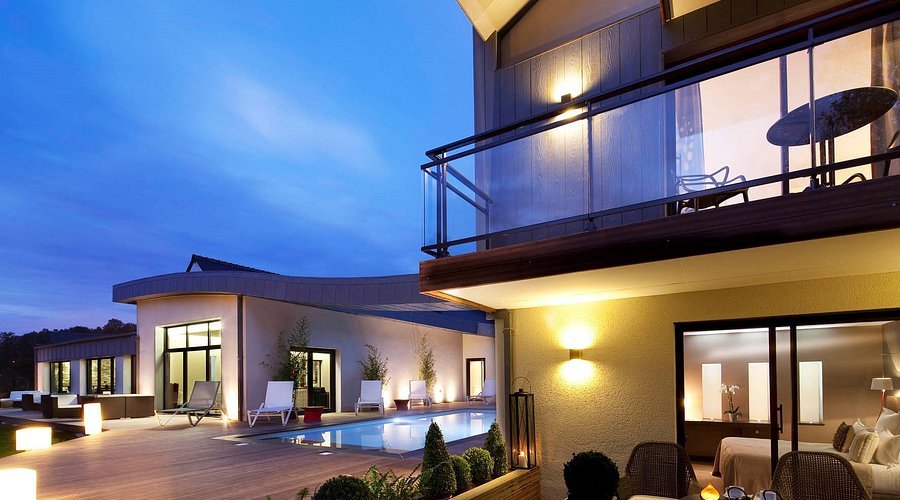
L'Aubinière is a Michelin Plate-recognised restaurant in Saint-Ouen-les-Vignes, roughly two hours from Paris, running a seasonal kitchen at a €€ price point that significantly undercuts comparable city alternatives. With a 4.7 Google rating, elegant guestrooms, a Loire wine cellar, and a dining room overlooking wooded parkland, it earns the drive for a celebration meal or overnight escape.
The common assumption about L'Aubinière is that it's a rural detour — something nice if you happen to be passing through the Loire. That's the wrong way to think about it. This is a destination in its own right: a Michelin-recognised restaurant at a €€ price point, built around rigorous seasonal sourcing, a wine cellar stocked with serious regional bottles, and guestrooms that make an overnight stay genuinely practical. If you're planning a special meal and you're willing to leave central Paris, L'Aubinière earns the trip in a way that most comparably priced Paris restaurants don't.
Situated in Saint-Ouen-les-Vignes — a village in the Loir-et-Cher department, roughly two hours southwest of Paris , L'Aubinière is the kind of address that rewards readers who look beyond the périphérique. Chef Christophe Gavot runs a kitchen built on the premise that ingredient quality is non-negotiable. The Michelin Guide's 2024 recognition as a Plate restaurant, combined with the Remarkable designation, confirms this isn't a casual country inn doing acceptable food. The Plate distinction is Michelin's signal that cooking here is worth your attention, even without the star structure of venues like Mirazur in Menton or Troisgros - Le Bois sans Feuilles in Ouches.
The dining room itself is a genuine asset. Large windows open onto wooded parkland, which means the room reads as light and contemporary , not the heavy, old-school auberge aesthetic you might expect from the address. That matters if you're booking for a celebration dinner or a date where atmosphere is part of the case for the restaurant.
The Michelin citation calls out specific producers and ingredients: Richelieu asparagus, Mouliherne escargots, line-caught meagre. These aren't decorative details. They're evidence of a kitchen that tracks where its produce comes from and builds menus around what the season actually delivers. At a €€ price point , significantly lower than the €€€€ tier occupied by Paris addresses like Plénitude or Le Cinq at the Four Seasons George V , the sourcing rigor here represents strong value. You're getting ingredient-driven cooking at a fraction of what you'd pay for comparable ambition in the city.
Wine list reinforces the regional identity. The cellar is stocked with Loire wines, which means you're drinking wines made within driving distance of the kitchen. For guests who care about coherence between plate and glass, that's a meaningful detail rather than a sales pitch.
If you're planning to return , or treating this as a recurring escape from Paris , there's a logical sequence to how you build your visits.
First visit: Come for lunch and commit to the full seasonal menu. Michelin's Remarkable citation and the 4.7 Google rating across 396 reviews suggest consistency, but the menu is seasonal, which means what's available in spring (asparagus season, Loire whites at their freshest) is structurally different from what you'll find in autumn. Your first visit establishes the baseline: the room, the service register, and which parts of the kitchen's approach suit your palate.
Second visit: Book an overnight stay and use the wellness area. The guestrooms are described as elegant, and combining dinner with a night on-site removes the Paris-to-Loire travel calculation from the equation. This is also when to go deeper on the wine list , if your first visit was a wine-by-the-glass affair, a second visit as a resident allows a proper exploration of the regional cellar without a return drive to manage.
Third visit: Come in a different season entirely. The kitchen's sourcing discipline means the menu shifts meaningfully across the year. A guest who's eaten Richelieu asparagus in spring and returns in winter will encounter a substantially different set of ingredients. This is a restaurant where repeat visits have genuine informational value, not just sentimental return. For this reason, it compares well against Maison Lameloise in Chagny and Flocons de Sel in Megève as a French regional address built for repeat discovery rather than a single prestige visit.
For celebration dinners, L'Aubinière has three practical advantages over central Paris options at the same or higher price tier. First, the room , windows onto parkland read as romantic rather than urban-transactional, which is harder to find in Paris restaurants at this price. Second, the overnight option means a celebration isn't constrained by last trains or late taxis. Third, at €€, you have meaningful budget to spend on wine without the meal cost becoming a source of stress. Compare that to booking a celebration at Pierre Gagnaire or Alléno Paris au Pavillon Ledoyen, where the base cost is substantially higher before a bottle is ordered.
For business meals, the setting is a double-edged consideration. The country house format creates a sense of occasion and removes the distractions of a busy city dining room, but the two-hour drive from Paris means it works only when the client relationship can support a half-day commitment. If that's a reasonable ask, the combination of serious food, a calm room, and wines by the glass or bottle makes the case easily.
See the comparison section below for a full breakdown against Paris peers.
For more options across Paris and the wider region, see our full Paris restaurants guide, our full Paris hotels guide, our full Paris bars guide, our full Paris wineries guide, and our full Paris experiences guide. For comparable French regional addresses, consider Auberge de l'Ill in Illhaeusern, Bras in Laguiole, or Paul Bocuse - L'Auberge du Pont de Collonges. Other Paris-area options worth considering include 114, Faubourg, Accents Table Bourse, Amâlia, Anona, and Auberge de Montfleury. For international comparisons in the modern cuisine category, Frantzén in Stockholm is a useful reference point for what serious ambition looks like at the leading of the price spectrum.
| Venue | Cuisine | Price | Awards | Booking Difficulty | Value |
|---|---|---|---|---|---|
| L'Aubinière | Modern Cuisine | €€ | Category: Remarkable; This attractive, contemporary dining space basks in the light of the windows that open out onto the wooded parkland. The seasonal cuisine never compromises on the quality of the ingredients (Richelieu asparagus, Mouliherne escargots, line-cut meagre etc) and the cellar is packed with regional wines: L'Aubinière restaurant has it all. There are also a number of elegant guestrooms, plus a wellness area.; Michelin Plate (2024) | Easy | — |
| Plénitude | Contemporary French | €€€€ | Michelin 3 Star, World's 50 Best | Unknown | — |
| Pierre Gagnaire | French, Creative | €€€€ | Michelin 3 Star, World's 50 Best | Unknown | — |
| Alléno Paris au Pavillon Ledoyen | Creative | €€€€ | Michelin 3 Star, World's 50 Best | Unknown | — |
| Kei | Contemporary French, Modern Cuisine | €€€€ | Michelin 3 Star, World's 50 Best | Unknown | — |
| Le Cinq - Four Seasons Hôtel George V | French, Modern Cuisine | €€€€ | Michelin 3 Star, World's 50 Best | Unknown | — |
Key differences to consider before you reserve.
Follow the sourcing. The Michelin citation specifically names Richelieu asparagus, Mouliherne escargots, and line-caught meagre as signature ingredients — these are the dishes to anchor your meal around when in season. Chef Christophe Gavot's cooking is defined by regional product quality, so ordering around whatever is most locally prominent at the time of your visit is the right strategy. Avoid building your expectations around a fixed dish list; the seasonal approach means the menu moves.
At €€ pricing, L'Aubinière sits well below Paris tasting menu benchmarks, and the Michelin Plate recognition (2024) confirms the kitchen is cooking at a level that justifies a full menu experience. If you're driving out from Paris specifically for dinner, the tasting format makes the most of the journey. For a quick lunch stop, à la carte may suit better, but specific menu structures aren't confirmed in available data — call ahead to confirm current options.
For city-based modern French at a higher price point, Kei offers Michelin-recognised Franco-Japanese cooking in central Paris. If you want regional French sourcing with more prestige, Alléno Paris au Pavillon Ledoyen operates at a significantly higher tier and price. L'Aubinière's specific value is the combination of countryside setting, €€ pricing, and serious ingredient sourcing — none of the Paris peers replicate that package within the city.
Yes, at €€ pricing with Michelin Plate recognition and named-producer sourcing, this is strong value relative to comparable cooking in Paris. The trade-off is the two-hour drive from central Paris — factor in travel time and the case strengthens if you're combining it with a stay in the guestrooms on site. For a one-way dinner trip, you need to be genuinely committed to the format.
This is not a Paris restaurant with a country postcode — it's a genuine countryside address in Saint-Ouen-les-Vignes (Loir-et-Cher), roughly two hours southwest of Paris. The dining room opens onto wooded parkland, and the venue includes guestrooms and a wellness area, so an overnight stay is a practical option. Book in advance; walk-in availability at a destination restaurant of this standing is unlikely. Hours and phone are not confirmed in available data, so contact via the restaurant directly before travelling.
The kitchen's identity is built around seasonal, high-quality regional ingredients, which suggests flexibility is possible, but specific dietary accommodation policies aren't documented in available data. Given the destination nature of the restaurant, contact ahead of your visit to confirm — showing up with complex restrictions unannounced at a small, produce-driven venue is a risk not worth taking.
Yes, with caveats. The combination of a light-filled contemporary room overlooking wooded parkland, Michelin-recognised cooking, €€ pricing, and on-site guestrooms makes it a practical choice for a celebration that doubles as a proper escape. It works better than a central Paris restaurant at the same price tier if your group values atmosphere and setting over city convenience. For larger groups, confirm room configuration in advance; the venue's scale as a countryside restaurant means capacity is limited.
Keep this venue in your Pearl passport, rate it after you visit, and track it alongside every other place you collect.



