Restaurant in Paris, France
Michelin-noted teppanyaki at a fair price point.
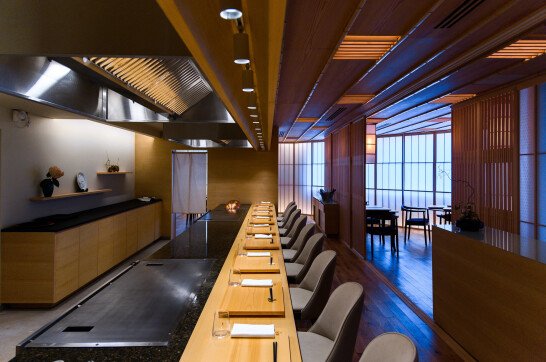
Koji is Paris's benchmark teppanyaki restaurant, holding a Michelin Plate in both 2024 and 2025 and a 4.9 Google rating across 442 reviews. At €€€, it is well-priced for Michelin-recognised cooking and works particularly well for special occasions, dates, and business dinners where the theatre of the format does half the work. Easy to book, and worth multiple visits.
Koji, a teppanyaki restaurant in Issy-les-Moulineaux on the southwestern edge of Paris, has earned a 4.9 Google rating across 442 reviews — a score that is statistically difficult to sustain at that volume and points to genuine, consistent execution rather than a honeymoon-period spike. Add two consecutive Michelin Plates (2024 and 2025) and the case for booking becomes clear. If teppanyaki is the format you want and you are in or near Paris, Koji is the reference point. The question is how to use it well.
Koji sits at 34 Bis Rue Ernest Renan in Issy-les-Moulineaux, a short commute from central Paris. The cuisine is teppanyaki: iron-griddle cooking performed at or near the table, where the theatre of the cook is as much a part of the meal as the food itself. This format works well for special occasions and business dinners because the performance gives the table something to focus on together, and the pacing is naturally controlled by the chef rather than the room. For a date or a celebration, that structured rhythm is an asset. The €€€ price positioning makes it meaningfully more accessible than the €€€€ fine-dining tier that dominates Paris's most-recognised restaurants, without dropping into casual territory.
The Michelin Plate designation — awarded in both 2024 and 2025 , signals that Michelin's inspectors found the cooking worth flagging, even if it sits below star level. In teppanyaki specifically, where the category has a limited number of dedicated venues in the Paris region, that recognition carries more weight than it might in a crowded bistro market. If you are looking for a celebration dinner that feels considered and distinctive without the formality of a three-star room, Koji is a strong answer.
Teppanyaki menus tend to follow a progression , proteins, vegetables, rice , with the chef's sequencing doing much of the work. On a first visit, the priority is understanding Koji's own rhythm and range: how the kitchen handles its main proteins, where the meal peaks, and how the pacing feels. Resist the urge to over-order or deviate from the recommended progression on visit one. Let the kitchen show you what it does.
A second visit rewards the diner who already knows the structure. With that baseline, you can make more targeted decisions: which courses justify upgrading, whether the opening or closing sequence is the stronger half of the meal, and how the experience changes at different seating times. Teppanyaki counters often shift in atmosphere depending on whether you are eating at an early seating or a later one, and that texture is worth testing across visits.
By a third visit, you are in a position to treat Koji as a known quantity for hosting others. The format is unusually well-suited to bringing first-timers , the theatre and the pacing carry guests who might otherwise need conversation to fill the room. If you are building a short list of reliable Paris special-occasion venues, Koji earns a slot at the €€€ tier that the €€€€ options cannot fill as efficiently.
For context on what dedicated teppanyaki looks like at a higher price point or in its home market, Hibana by Koki in Hanoi and Ishigaki Yoshida in Tokyo offer useful reference points for how the format scales in ambition and ceremony.
The Paris fine-dining tier is anchored by restaurants like L'Ambroisie, Arpège, and Alléno Paris au Pavillon Ledoyen , all operating at price points and formality levels well above Koji. Kei and Le Cinq at the Four Seasons Hôtel George V are the more directly comparable options for a special occasion at a table-service format, both at €€€€. Koji offers a different proposition: interactive cooking, a more relaxed ceiling on formality, and a price tier that makes repeat visits practical. For France's broader range of ambitious dining, Pearl also covers Mirazur in Menton, Flocons de Sel in Megève, Troisgros in Ouches, Paul Bocuse in Collonges-au-Mont-d'Or, Bras in Laguiole, and Auberge de l'Ill in Illhaeusern.
Pearl covers the full range of dining and hospitality in the city. Browse our full Paris restaurants guide, our full Paris hotels guide, our full Paris bars guide, our full Paris wineries guide, and our full Paris experiences guide.
At €€€, Koji sits below the top tier of Paris fine dining and delivers Michelin-recognised teppanyaki with a 4.9 Google rating across 442 reviews. For the format and the consistency those numbers represent, the pricing is fair. If you want to spend more and go deeper into French haute cuisine, Kei or Le Cinq are the €€€€ alternatives. But for teppanyaki specifically, Koji is the Paris benchmark.
Yes, and it is better suited to it than most restaurants at this price tier. The teppanyaki format provides built-in theatre and a chef-controlled pace that takes pressure off the table , useful for dates, celebrations, or hosting guests who need something to anchor the evening. The Michelin Plate designation gives it enough credibility to impress without the stiffness of a formal fine-dining room.
Menu specifics are not confirmed in Pearl's data, so check directly before booking. In teppanyaki generally, the set progression tends to be the better choice on a first visit because it lets the kitchen show its range in sequence. If Koji offers a structured menu, that is where to start. Return visits are when à la carte selection becomes more useful.
Dish-level detail is not available in Pearl's current data , do not rely on third-party sources that may be outdated. On a first visit, follow the kitchen's recommended progression rather than building a custom order. Teppanyaki rewards diners who let the sequence unfold rather than those who cherry-pick individual courses.
This is not confirmed in Pearl's data. Contact the restaurant directly before booking , teppanyaki kitchens typically work with proteins and vegetables in a way that allows some flexibility, but shared cooking surfaces can be a concern for certain dietary requirements. Confirm in advance rather than at the door.
No dress code is specified in Pearl's data. At the €€€ price point with Michelin recognition, smart casual is a safe default , neat, put-together, but not black-tie formal. If you are going for a business meal or celebration, dress slightly above casual to match the room's register.
For Japanese-influenced fine dining at a higher price point, Kei applies French technique to Japanese sensibility at €€€€. For French fine dining on a special occasion, Le Cinq and Alléno Paris au Pavillon Ledoyen are the top-tier options, though both require more budget and more lead time to book. Koji's advantage is its format: teppanyaki as a shared table experience has no direct substitute in Paris at this price.
| Venue | Price | Value |
|---|---|---|
| Koji | €€€ | — |
| Plénitude | €€€€ | — |
| Pierre Gagnaire | €€€€ | — |
| Alléno Paris au Pavillon Ledoyen | €€€€ | — |
| Kei | €€€€ | — |
| Le Cinq - Four Seasons Hôtel George V | €€€€ | — |
A quick look at how Koji measures up.
This is not confirmed in Pearl's data. check the venue's official channels before booking. Teppanyaki kitchens work primarily with proteins and vegetables on a live griddle, which gives some flexibility, but cross-contamination and fixed progressions can limit options — so give the kitchen advance notice if restrictions apply.
Dish-level detail is not available in Pearl's data. On a first visit to any teppanyaki restaurant, follow the kitchen's set progression rather than building your own order — the format is designed around sequencing, and the chef's pacing is part of what you're paying for.
Yes, for what it is. At €€€, Koji sits below the top tier of Paris fine dining while delivering Michelin Plate-recognised teppanyaki and a 4.9 Google rating across 442 reviews — a consistency signal that holds real weight. If the teppanyaki format suits your group, the price-to-quality ratio is harder to fault here than at most comparably priced Paris restaurants.
No dress code is specified in Pearl's data, but two consecutive Michelin Plate recognitions at the €€€ price point suggest the room takes itself seriously. Smart casual — neat and put-together — is a reasonable default. Avoid overly casual clothing.
Menu specifics are not in Pearl's current data, so confirm directly before booking. As a general rule in teppanyaki, the set progression earns its keep — the chef controls the sequence and pacing, which is most of the point. A la carte at a teppanyaki counter can feel fragmented by comparison.
For Japanese-influenced fine dining at a higher price point, Kei applies French technique to Japanese sensibility and holds Michelin stars. For French fine dining on a grander scale, Plénitude, Le Cinq, Pierre Gagnaire, and Alléno Paris au Pavillon Ledoyen all operate at €€€€ and above — a different spend category entirely. Koji's case is its Michelin recognition at the €€€ level with a format most of those restaurants don't offer.
Yes, and it is better suited to it than most restaurants at this price tier. Teppanyaki puts performance at the centre of the meal, which gives the evening structure and momentum without requiring the table to generate its own occasion. The Michelin Plate recognition (2024 and 2025) confirms baseline consistency. Book ahead and let the format do the work.
Keep this venue in your Pearl passport, rate it after you visit, and track it alongside every other place you collect.


