Restaurant in Paris, France
Paris's most credible Chinese kitchen. Book it.
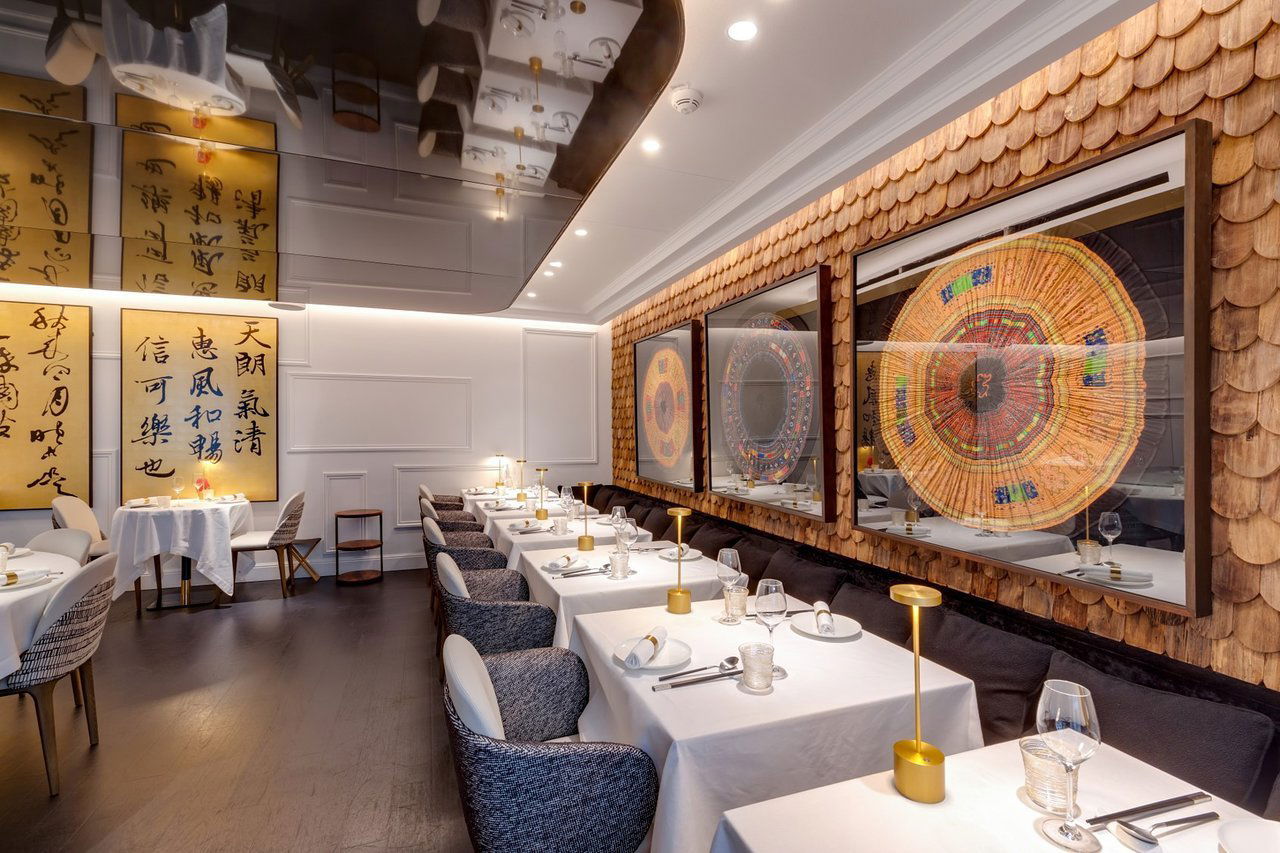
The most credible address for high-end Cantonese cooking in Paris, Imperial Treasure at 44 Rue de Bassano holds a 2025 Michelin Plate, an OAD Asia top-201 ranking, and a 4.6 Google rating across 502 reviews. Booking is easy by Paris fine-dining standards, the menu rotates seasonally, and the format rewards groups of three or four who want to share across the kitchen's full range.
Imperial Treasure at 44 Rue de Bassano is the most credible address in Paris for serious Cantonese and broader Chinese cooking. If you want a high-end Chinese meal in the 8th arrondissement and are willing to spend at the €€€€ tier, book here. The Google rating of 4.6 across 502 reviews reflects consistent execution rather than novelty hype, and the 2025 Michelin Plate alongside an Opinionated About Dining top-201 ranking in Asia for 2025 confirms that this is not a restaurant coasting on its address. First-timers should know: the room attracts a well-dressed international crowd, the kitchen rotates its menu with the seasons, and the experience is better suited to two or four than to solo dining.
Imperial Treasure is a Singapore-headquartered group with outlets across Asia and Europe, and the Paris address has established itself as the flagship for European diners who want cooking that tracks closely to what the group serves in Hong Kong and Shanghai. The kitchen works across the range of Cantonese technique: roasted meats, steamed preparations, wok-fired dishes, and dim sum at lunch. The scent from the kitchen, particularly the lacquered roasting aromas that carry through the dining room, is one of the first signals you get that this is not a casual neighbourhood Chinese restaurant.
For a first visit, the most practical approach is to come with a small group of three or four so you can share enough dishes to cover the menu's range. Two diners will have a good meal; four diners will have a much more complete one. The room is polished without being stiff, and the service team is experienced enough to guide you through the menu if you ask for help.
The kitchen at Imperial Treasure adjusts its menu according to season, which matters more here than at a direct brasserie. Chinese fine dining in the Cantonese tradition puts real weight on seasonal ingredients: winter melon preparations, crab in autumn, spring vegetables, and preserved or cured items that shift across the year. If you are planning a visit, it is worth checking directly with the restaurant about what the kitchen is currently featuring rather than arriving with a fixed expectation based on a review from six months prior.
The autumn window is particularly well-regarded at high-end Cantonese restaurants globally because of the alignment with crab season and richer, braised preparations. Spring brings lighter, cleaner dishes. Neither season is wrong for a first visit, but if you have flexibility, autumn through early winter typically gives you the widest range of the kitchen's more technically demanding preparations. Summer visits are perfectly viable; the menu will be lighter and the room somewhat quieter as Paris empties for August.
This seasonal sensitivity is also a reason to consider a return visit rather than treating a single dinner as exhaustive. The menu you experience in March will differ meaningfully from the one in October, which makes Imperial Treasure more interesting as a repeatable option than restaurants with fixed menus.
Paris has a range of Chinese dining options, but the high-end tier is small. LiLi at the Peninsula Paris is the most direct competitor at the leading of the market, with a comparable price point and a similarly polished room. Madame FAN offers a more contemporary take on Chinese cooking at a slightly lower entry cost. Taokan is a step down in formality and price but reliable for a direct Chinese dinner without the commitment of a full fine-dining experience. Impérial Choisy in the 13th arrondissement is the address for Cantonese cooking at a fraction of the price, but the experience and setting are entirely different.
If you are specifically after Cantonese technique at fine-dining level, Imperial Treasure and LiLi are the two serious options in Paris. Imperial Treasure has the edge in terms of group-friendly format and the depth of its roasted meat and dim sum programme. LiLi has the edge in room grandeur. For most first-time visitors to high-end Chinese dining in Paris, Imperial Treasure is the more practical starting point.
For Chinese fine dining in other European cities, Restaurant Tim Raue in Berlin represents a very different approach, with a chef-driven fusion angle rather than traditional Cantonese. In the United States, Mister Jiu's in San Francisco occupies a similar tier of ambition with a distinctly American-Chinese perspective. Neither is a substitute for Imperial Treasure if what you want is the Cantonese tradition in a European fine-dining setting.
Booking difficulty at Imperial Treasure is rated Easy. You do not need to plan weeks in advance the way you would for a three-Michelin-star French restaurant in Paris. A booking three to seven days out is typically sufficient for dinner; lunch can often be arranged with less notice. The address is 44 Rue de Bassano in the 8th arrondissement, close to the Champs-Élysées and easily accessible by taxi or metro. Phone and website details are not listed in the Pearl database; the most reliable booking route is via a direct search for the restaurant's current reservation platform or through your hotel concierge.
Price sits at the €€€€ tier, consistent with a full dinner running well above €100 per person before wine. Lunch is typically the more accessible entry point if the dinner spend is a concern. The group is experienced in handling private dining enquiries; if you are planning a larger celebration, contact the restaurant directly rather than assuming a standard reservation will accommodate a larger party.
If you are building a broader Paris itinerary around this meal, see our full Paris restaurants guide, Paris hotels guide, Paris bars guide, Paris wineries guide, and Paris experiences guide. For France's leading fine-dining destinations beyond Paris, the Pearl database also covers Mirazur in Menton, Flocons de Sel in Megève, Troisgros in Ouches, Bras in Laguiole, Auberge de l'Ill in Illhaeusern, Alléno Paris au Pavillon Ledoyen, and Paul Bocuse in Collonges-au-Mont-d'Or.
Quick reference: 44 Rue de Bassano, 75008 Paris | Chinese (Cantonese) | €€€€ | Michelin Plate 2025 | Google 4.6/5 (502 reviews) | OAD Top 201 Asia 2025 | Booking difficulty: Easy.
For high-end Cantonese cooking in Paris, yes. The 4.6 Google rating across 502 reviews, the 2025 Michelin Plate, and the OAD Asia ranking collectively indicate a kitchen that delivers at the price point. You are paying €€€€ for technical Cantonese cooking in a polished room in the 8th arrondissement. If your benchmark is a three-Michelin-star French restaurant in Paris, Imperial Treasure will feel like reasonable value. If your benchmark is a neighbourhood Chinese restaurant, it will feel expensive. The comparison that matters is against LiLi or Madame FAN, where Imperial Treasure holds its own on cooking quality and has a slight edge on group-dining versatility.
Without confirmed details on the current tasting menu format from the Pearl database, the safest approach is to ask the restaurant directly when booking. At the €€€€ tier, a tasting menu at Imperial Treasure is worth considering for a first visit if you want the kitchen to lead, particularly given the seasonal menu rotation. If you prefer to order à la carte and share across the table, a group of four will likely cover more ground and spend comparably. Confirm current menu formats at the time of booking.
Booking difficulty is rated Easy. Three to seven days in advance is typically enough for dinner; lunch can often be arranged with shorter notice. This is meaningfully different from the weeks-in-advance required for Paris's starred French restaurants. If you are visiting during peak Paris periods (Fashion Week, Christmas week, major public holidays), add a few extra days as a buffer. Weekend dinners fill faster than weekday ones.
Smart casual at minimum; the room attracts a well-dressed international clientele in the 8th arrondissement. A jacket for men is appropriate for dinner. There is no confirmed dress code in the Pearl database, but given the €€€€ price point and the Champs-Élysées location, arriving in business casual or above will fit the room. Trainers and shorts will read out of place at dinner.
The Imperial Treasure group has experience with private dining arrangements across its global locations. For groups of six or more, contact the restaurant directly rather than using a standard online reservation. The Paris address does not have confirmed private room details in the Pearl database, but the format of Chinese fine dining (shared dishes, round-table service) makes it structurally better suited to groups than a European tasting-menu format. Groups of four are the practical sweet spot for ordering range without needing to coordinate a private room.
Yes, with a few caveats. The polished room, the serious kitchen, and the €€€€ price point make it a credible special-occasion choice. It works well for a birthday dinner or an anniversary where the guest of honour wants something outside the standard French fine-dining circuit. If maximum grandeur is the priority, LiLi at the Peninsula has a more theatrical room. If the occasion calls for the most technically serious cooking in Paris regardless of cuisine, the three-Michelin-star French options (Pierre Gagnaire, Alléno Pavillon Ledoyen) set a higher ceiling. Imperial Treasure sits comfortably in the middle: a meaningful occasion restaurant without requiring the full commitment of a Michelin three-star evening.
It is viable but not the optimal format. Chinese Cantonese cooking is designed for sharing, and a solo diner at the €€€€ tier will see less of the menu than a table of two or four. If you are a solo traveller with a genuine interest in the kitchen, lunch is a better entry point than dinner: shorter, typically less expensive, and the dim sum format works reasonably well for one. For solo dining at a high-end level in Paris more generally, tasting-menu French restaurants with counter seats (where available) give you more for your money as a solo guest.
For Chinese fine dining specifically: LiLi is the closest like-for-like competitor at the same price tier with a grander room; Madame FAN is a step down in price with a more modern approach; Taokan is reliable and more casual; Impérial Choisy is for Cantonese cooking without the fine-dining spend. For €€€€ dining in Paris across cuisines, Kei offers a French-Japanese hybrid at the same price tier if you want something adjacent rather than directly competitive.
| Venue | Cuisine | Price | Booking Difficulty |
|---|---|---|---|
| Imperial Treasure | Chinese | €€€€ | Easy |
| Plénitude | Contemporary French | €€€€ | Unknown |
| Pierre Gagnaire | French, Creative | €€€€ | Unknown |
| Alléno Paris au Pavillon Ledoyen | Creative | €€€€ | Unknown |
| Kei | Contemporary French, Modern Cuisine | €€€€ | Unknown |
| Le Cinq - Four Seasons Hôtel George V | French, Modern Cuisine | €€€€ | Unknown |
What to weigh when choosing between Imperial Treasure and alternatives.
Dress as you would for any serious prix-fixe in the Paris 8th: jacket for men is a safe choice, and anything you would wear to Le Cinq or a comparable address works here. The clientele and price point (€€€€) make smart evening dress the practical baseline. No denim or trainers is the sensible rule.
LiLi at the Peninsula Paris is the most direct competitor for high-end Chinese cooking in Paris and worth comparing on price before you book. For broader fine dining in the 8th at a similar spend, Le Cinq or Pierre Gagnaire are the obvious French alternatives. Kei offers a French-Japanese crossover at a lower price point if Cantonese is not the priority.
Booking difficulty is rated Easy, so you do not need to plan weeks out the way you would for a three-star French table. A few days to a week ahead is generally sufficient, though weekend dinners and holiday periods will book faster. If your date is fixed, booking as soon as you know is sensible.
Imperial Treasure's format, rooted in the Singapore group's Cantonese fine dining model, is well-suited to groups: sharing dishes are a core part of how the kitchen operates. Larger tables benefit from more dishes on the table, so groups of four or more get the most out of the format. check the venue's official channels for private dining availability.
At the €€€€ price point, the tasting menu format makes sense if you want to cover the kitchen's range in a single sitting, particularly given the seasonal rotation. If you prefer to order selectively, à la carte is the better route for smaller parties. The Michelin Plate recognition (2025) and Opinionated About Dining ranking suggest the kitchen earns the spend.
Yes, straightforwardly. The €€€€ pricing, the address in the Paris 8th, and the Michelin Plate recognition (2025) put it in the bracket where a special occasion dinner makes sense. It reads as a more original choice than another French grand restaurant on the same street, and the Cantonese fine dining format gives the meal a clear identity.
For serious Cantonese cooking in Paris, it is the most credible option at this level, which is a narrow category. The Opinionated About Dining ranking (Top Restaurants in Asia, #201, 2025) and Michelin Plate support the spend. If the price feels steep for Chinese cooking, LiLi at the Peninsula is the comparison check worth making before you commit.
Keep this venue in your Pearl passport, rate it after you visit, and track it alongside every other place you collect.



