Restaurant in Paris, France
Classical French seafood done with real conviction.
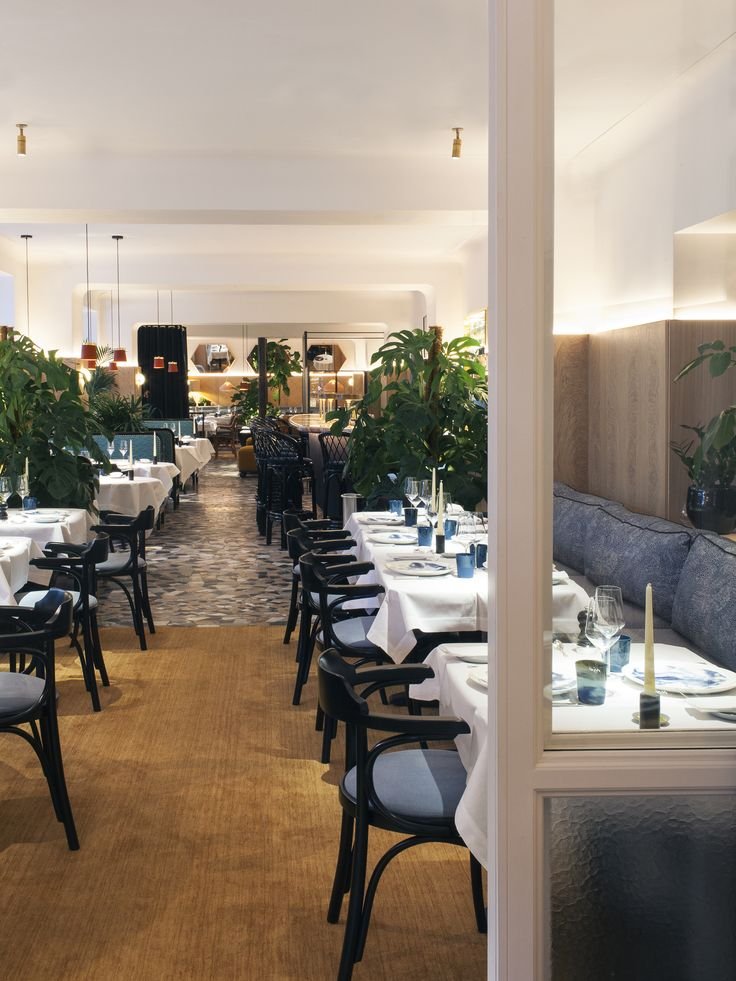
Divellec holds a Michelin star and an OAD Classical Europe ranking (#392, 2025) for classical French seafood in the 7th arrondissement. Mathieu Pacaud runs the kitchen with a sourcing-led focus on small-boat sole and Breton turbot. Book 3–4 weeks out; request the winter garden room for dinner, the deck for lunch overlooking the Invalides.
If you're returning to Divellec after your first visit, here's the move: when you call to reserve, ask specifically for the room that was formerly a bookshop. Divellec expanded into this adjacent space, creating a winter garden-inspired room lined with woven wicker panels. It's quieter than the main dining room, better for conversation, and gives you a different read on the restaurant than the deck seating facing the Esplanade des Invalides. Both rooms are worth knowing; the winter garden is the better pick for a long, unhurried dinner.
For lunch, the deck is the call. The view over the Esplanade des Invalides is a genuine ambient advantage — broad, calm, and entirely removed from the noise that defines much of central Paris dining. The energy at lunch is measured rather than theatrical: the kind of room where conversation carries easily and the pace is set by the kitchen rather than the crowd. Dinner shifts the mood slightly, with a more formal register and a room that fills with a mix of local regulars and visitors who've done their research. Neither service period is loud. This is not a restaurant that hums with the kind of competitive energy you get at a brasserie or a fashionable bistro. The atmosphere is composed.
Divellec holds a Michelin star (2024) and an Opinionated About Dining Classical Europe ranking of #392 (2025), with an OAD Recommended nod in 2023. It carries a Google rating of 4.3 from 567 reviews — consistent for a restaurant at this price point in Paris's 7th arrondissement. Mathieu Pacaud now runs the kitchen in a space that originally built its reputation under Jacques Le Divellec from 1983 to 2013, and the seafood focus has remained the anchor through the transition.
The kitchen's orientation is classically French seafood , sole meunière from small-boat fishermen finished with hazelnut butter, wild young turbot from Brittany. These are not generic luxury ingredients; they are specific sourcing decisions that reflect a supply chain commitment worth noting at a €€€€ price point. If you're coming from outside France, the closest international comparator for the style and ambition is Le Bernardin in New York City, though Divellec is more classical in its technique and less influenced by global flavour registers. For French regional seafood at a different register, Le Petit Nice in Marseille is the obvious Mediterranean counterpoint.
At a restaurant anchored this firmly in classical French seafood, the wine list is the mechanism by which the food either lands or falls flat. Divellec's orientation , sole, turbot, the butter-rich sauces of the Norman and Breton tradition , demands a list with real depth in white Burgundy, Chablis, and Loire. A one-star Paris seafood address at €€€€ should be running serious producers in those categories, and a returning visitor should treat the wine conversation with the sommelier as part of the booking rather than an afterthought.
The practical implication: if wine pairing is part of your calculus, ask about the list when you book. At this price tier, the right pairing for a dish like turbot from Brittany , something with enough weight to match the richness but enough acid to cut through it , is the kind of call a good sommelier will have a specific answer to. Don't default to a house recommendation; ask what they're currently excited about in white Burgundy. The answer will tell you something useful about where the program actually sits.
For a direct comparison in the Paris seafood and classic French space, Le Duc is the other address serious about this category. The wine philosophies differ, and the room dynamics are different enough that returning visitors to one should try the other.
Divellec is a hard booking. At €€€€ in the 7th, with a Michelin star and a room that the OAD classical rankings have consistently flagged, demand is genuine rather than speculative. Plan three to four weeks ahead minimum for dinner; lunch windows sometimes open closer in, but don't rely on it. Hours run 12 PM to 1:30 PM for lunch service and 7 PM to 9:30 PM for dinner, every day of the week. The tight lunch window (90 minutes of seating time) means arriving promptly matters if you want to take the meal at a pace you control rather than one dictated by a kitchen managing two sittings.
See the full comparison below.
Focus on the dishes that reflect the sourcing story: sole meunière from small-boat fishermen with hazelnut butter and wild young turbot from Brittany are the documented anchors of the menu. At a €€€€ address with a classical seafood orientation, those two dishes are the clearest signal of what the kitchen does well. If you're a returning visitor, ask what's come in from Brittany that week , the kitchen's supply chain is specific enough that the answer should change.
No dress code is listed in the available data, but the combination of Michelin star, €€€€ pricing, and a location in the 7th arrondissement opposite the Invalides sets clear expectations. Smart dress is the practical default , a jacket for men is unlikely to feel out of place; jeans and trainers are a risk. When in doubt at this tier in Paris, overdress slightly rather than underdress.
No specific dietary restriction policy is confirmed in available data. Given the classical French seafood orientation, a fish-free or shellfish-free requirement would significantly limit the menu. Contact the restaurant directly before booking , at this price point and with this cuisine type, calling ahead to discuss restrictions is standard practice and will get you a better answer than any online source.
Lunch is the better value proposition, and possibly the better experience overall. The 90-minute window (12 PM to 1:30 PM) is tight, so arrive on time. You get the Invalides view from the deck, a calmer room, and the same kitchen for , typically at this tier in Paris , a lower prix fixe price than dinner. Dinner runs until 9:30 PM and allows a longer, more formal pace. If the occasion is a celebration or you're prioritising the wine program, dinner gives you more room. For a first return visit, lunch.
At €€€€ with a Michelin star and an OAD Classical Europe ranking, the tasting menu is the format that makes most sense if you want to understand the full range of the kitchen's sourcing and technique. The classical French seafood focus is narrow enough that a tasting menu here isn't padding , it's the most coherent way to move through the supply chain story from small-boat sole to Breton turbot. Specific menu pricing is not confirmed in available data; ask when booking.
Paris at €€€€ is a reasonable solo splurge if the occasion calls for it, and a classical seafood restaurant with a composed, quieter room is a better solo environment than a loud brasserie or an open kitchen counter. No counter seating configuration is confirmed in available data. If solo dining, the winter garden room is likely the more comfortable option over the open deck. The relatively early last seating (9:30 PM) keeps the evening manageable without a late finish.
| Venue | Awards | Price | Value |
|---|---|---|---|
| Divellec | Opinionated About Dining Classical in Europe Ranked #392 (2025); The famous restaurant of Jacques Le Divellec (1983-2013) is now the lair of Mathieu Pacaud. The culinary theme continues to demonstrate a seafaring slant and the food keeps pace with the tides, paying a fine tribute to first-class seafood, such as sole meunière from small boats with hazelnut butter or wild young turbot from Brittany. Take a seat on the deck and savour the view over the Esplanades of the Invalides. The establishment has even extended its premises into a former bookshop, creating a winter garden-inspired room depicted by woven wicker panels.; Michelin 1 Star (2024); Opinionated About Dining Classical in Europe Recommended (2023) | €€€€ | — |
| Plénitude | Michelin 3 Star, World's 50 Best | €€€€ | — |
| Pierre Gagnaire | Michelin 3 Star, World's 50 Best | €€€€ | — |
| Alléno Paris au Pavillon Ledoyen | Michelin 3 Star, World's 50 Best | €€€€ | — |
| Kei | Michelin 3 Star, World's 50 Best | €€€€ | — |
| Le Cinq - Four Seasons Hôtel George V | Michelin 3 Star, World's 50 Best | €€€€ | — |
Comparing your options in Paris for this tier.
Focus on the dishes the OAD Classical Europe ranking specifically flagged: sole meunière from small-boat fishermen with hazelnut butter, and wild young turbot from Brittany. These are the clearest expressions of what Mathieu Pacaud is doing at Divellec and the most direct line back to the restaurant's founding identity under Jacques Le Divellec. If you're ordering à la carte, anchor your choices around the daily seafood sourcing rather than the periphery of the menu.
No formal dress code is confirmed, but the context demands you dress accordingly: a Michelin-starred room at €€€€ on Rue Fabert, directly opposite the Esplanade des Invalides, draws a dressed-up clientele. Business formal or upscale evening wear is the reasonable baseline. Arriving in casual clothes risks feeling out of place rather than facing a door policy, but the room's tone is set firmly at the formal end.
No specific dietary accommodation policy is confirmed in available data. Given the classical French seafood orientation, anyone with a fish or shellfish allergy should check the venue's official channels before booking — this is not a menu with easy protein substitutions built in. A plant-based or fish-free guest would find the kitchen working against its own strengths.
Lunch is the more practical entry point and likely the better value at €€€€, but the 90-minute service window (12 PM to 1:30 PM) is tight — arrive on time or you will lose covers. Dinner runs until 9:30 PM and allows a more relaxed pace. If you want the winter garden room and a slower meal, dinner is the stronger call; if you're managing a budget or fitting Divellec into a longer Paris afternoon, lunch works — just don't be late.
At €€€€ with a Michelin star and a 2025 OAD Classical Europe ranking, the tasting menu is the format that makes the spend coherent — it lets the kitchen move through its sourcing story in sequence, which is where Mathieu Pacaud's approach to classical seafood reads most clearly. À la carte is viable, but the tasting format is the stronger argument for the price point if you're deciding between the two.
A composed, quieter room anchored in classical French seafood is a more comfortable solo setting than a loud brasserie or a high-energy counter format. Paris at €€€€ is a serious solo spend, so the occasion needs to justify it — a deliberate celebratory lunch or a self-directed deep-cut meal makes sense here. Divellec is a better solo option than Pierre Gagnaire or Le Cinq if you want focus over spectacle.
Keep this venue in your Pearl passport, rate it after you visit, and track it alongside every other place you collect.



