.png?width=1200&quality=80)
Lillotatini
Umbrian · Panicale
Restaurant in Panicale, Italy
 Book with Pearl
The Read
Medieval Square Sourcing
Dress
Smart Casual
Why go
A Michelin Plate kitchen in a medieval Umbrian hill town, Lillotatini earns its recognition with a focused menu of Trasimeno freshwater fish and seasonal truffles at €€ prices that make serious regional cooking genuinely accessible. With a family-run wine boutique on the same piazza, this is the most compelling dining stop in Panicale for food-focused travellers.
About Lillotatini
Lillotatini, Panicale: The Verdict
You are sitting on a medieval piazza in one of Umbria's smallest hill towns, and the kitchen in front of you is doing something that most restaurants in the region do not bother attempting: cooking freshwater fish and seasonal truffles with enough seriousness to earn back-to-back Michelin Plate recognition in 2024 and 2025. Lillotatini is not a tourist trap dressed in stone walls. It is a genuine, locally rooted Umbrian kitchen that rewards the kind of traveller who came to Panicale to eat the actual food of this territory, not a sanitised version of it. Book it.
Portrait
Panicale sits above Lake Trasimeno in southern Umbria, and the lake defines what ends up on Lillotatini's menu. Freshwater fish from Trasimeno is the detail that separates this kitchen from most of the trattorias you will pass through in the region. Umbrian cooking is dominated by pork, lentils, and the black truffle triangle anchored around Norcia and Spoleto, but the lake towns have their own culinary logic: tench, eel, perch, and carp prepared in ways that have not changed much across generations. Lillotatini leans into that tradition with enough technical attention to have caught Michelin's notice twice running.
The truffle component matters too, and for visitors timing a trip around it, Umbrian black truffles are generally at their peak from late autumn through winter, while the summer brings lighter, more aromatic varieties. If you are visiting in that window, the kitchen's use of truffles in season is one of the clearest arguments for booking here over a more generic Umbrian restaurant. This is not the kind of place that dusts truffle powder over pasta to satisfy a tourist expectation. The Michelin Plate, awarded for good cooking rather than for spectacle, suggests the application is considered.
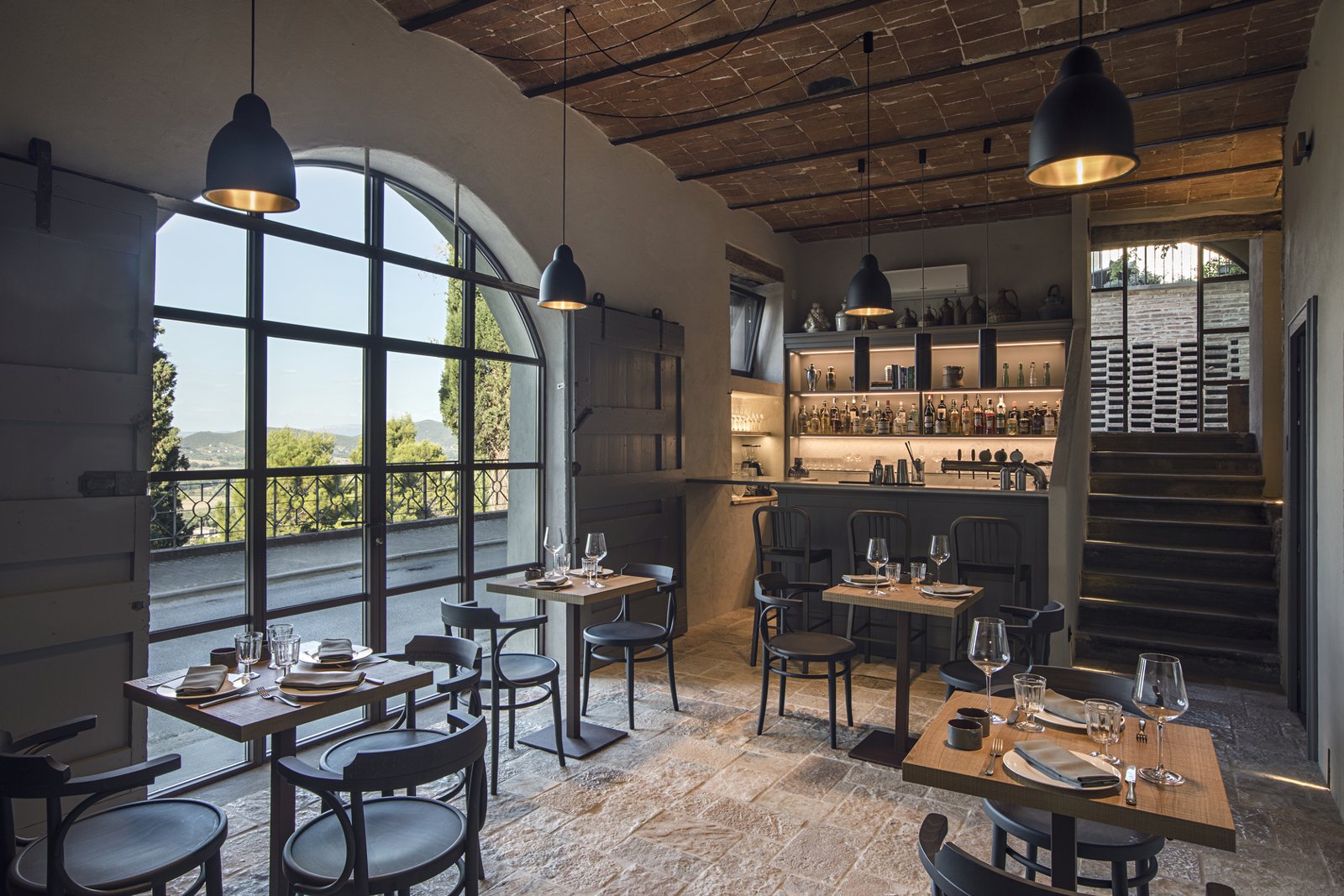
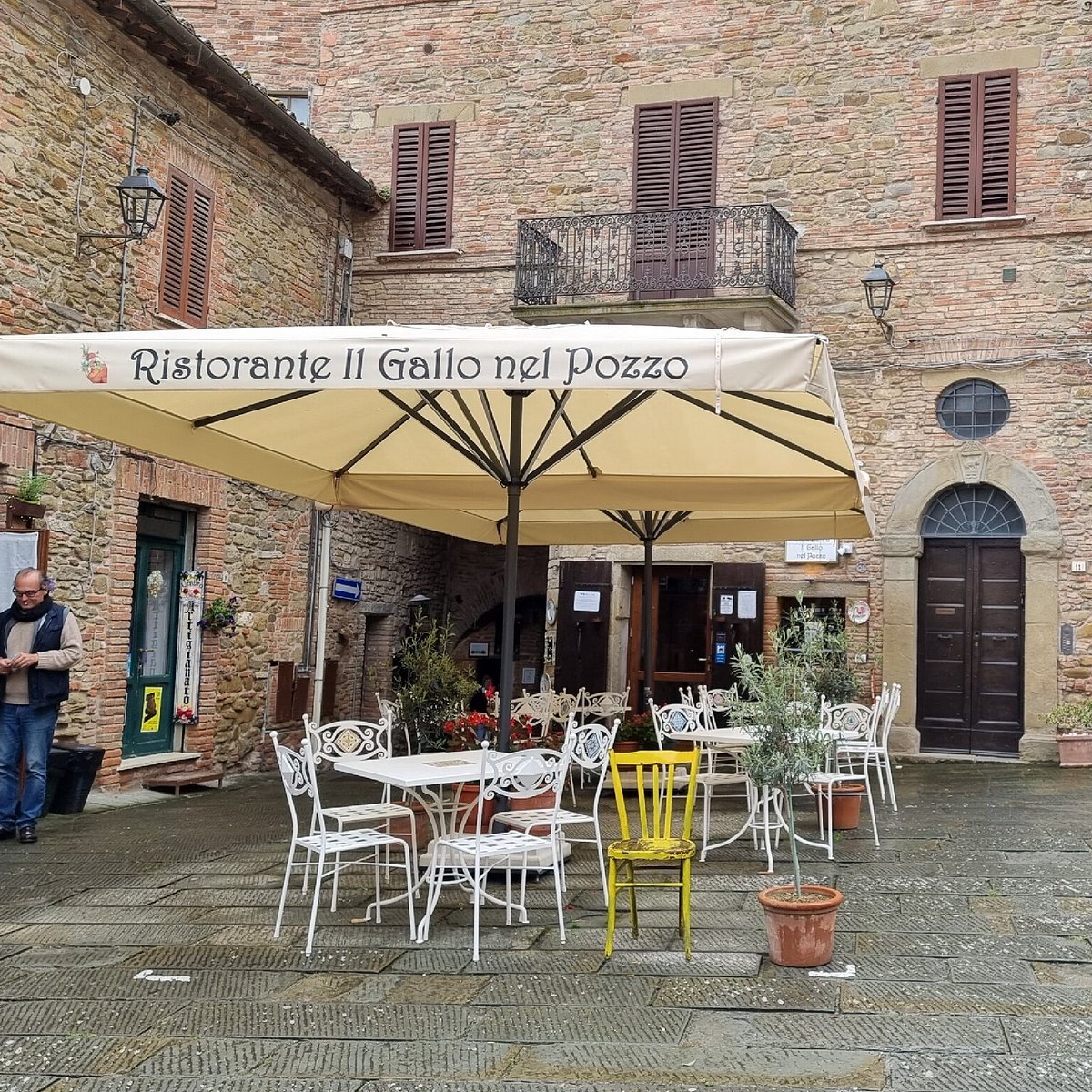
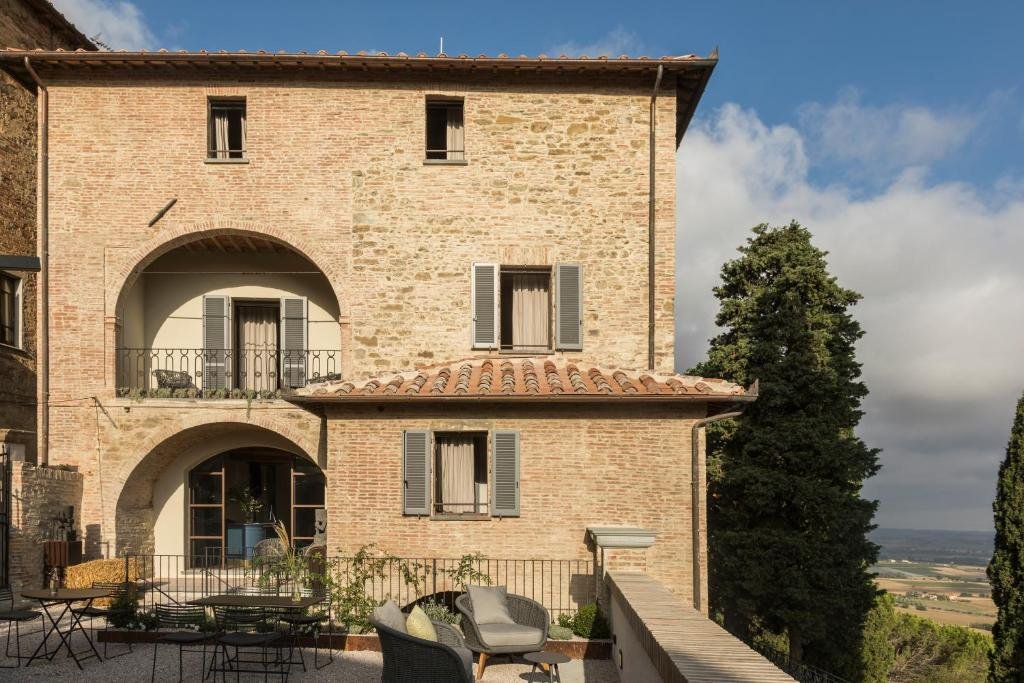
The setting earns its own weight in the decision. The restaurant is positioned within the historic centre of the castle-hamlet, with a terrace on the piazza that functions as one of the more direct cases for eating outdoors in central Italy. Arriving through the old walls and finding the terrace already set for lunch or dinner is the kind of experience that makes the drive to a place like Panicale feel justified. It is a small town, and the square is genuinely historic, not reconstructed for visitors.
On the same piazza, the family operates a wine boutique selling local produce and a curated wine selection that also appears on the restaurant's list. This is practically useful: the family's involvement in both spaces means the wine recommendations carry actual conviction. Umbria's wine output is often overshadowed by Tuscany, but the Sagrantino di Montefalco produced nearby and the whites from the Colli del Trasimeno DOC are worth knowing, and a family that sells them daily is better placed to guide you than most. For anyone who wants to take something home, the boutique is worth a visit on its own terms. See also our full Panicale wineries guide for producers worth visiting in the area.
The price tier sits at €€, which in a village of this size and historical profile is fair positioning. You are not paying Florentine restaurant prices, and you are not eating at a Florentine restaurant. For context, dinner at Enoteca Pinchiorri in Florence or Osteria Francescana in Modena requires both significantly deeper pockets and considerably more planning. Lillotatini offers Michelin-recognised cooking in an Umbrian hill town at prices that make a return visit plausible. That is a different value proposition, and for many travellers it is a more interesting one.
For Umbrian cooking at a comparable quality level, Vespasia in Norcia and Camiano Piccolo in Montefalco are the natural comparisons. Vespasia skews toward a more polished hotel-restaurant experience; Camiano Piccolo leans into the agriturisimo tradition. Lillotatini sits in the middle: more structured than a farmhouse kitchen, less formal than a destination hotel dining room, and with a specific focus on lake fish that neither of those venues can match.
Booking is rated Easy, which reflects both the scale of the town and the restaurant's capacity relative to the broader market. Panicale does not draw the volume of visitors that Assisi or Orvieto attract, and a midweek reservation should present no difficulty. Summer weekends and peak truffle season in autumn and winter may require more lead time, but Lillotatini is not the kind of place where you need to plan months in advance. If you are building an Umbria itinerary, this is a stop you can add with reasonable confidence of securing a table. Check our full Panicale restaurants guide for additional options if dates do not align.
For the food-focused traveller building a serious Umbrian itinerary, Lillotatini belongs on the list alongside visits to Piazza Duomo in Alba or Le Calandre in Rubano as evidence that Italy's most interesting cooking is not always in its largest cities. For the broader picture of what to do in Panicale while you are there, see our full Panicale experiences guide, hotels guide, and bars guide.
Ratings at a Glance
- Michelin: Plate 2024, Plate 2025
- Price: €€
- Booking difficulty: Easy
How It Compares
Pearl Picks Nearby
- Vespasia, Umbrian in Norcia
- Camiano Piccolo, Umbrian in Montefalco
- Our full Panicale restaurants guide
- Our full Panicale hotels guide
- Our full Panicale experiences guide
- Our full Panicale wineries guide
- Our full Panicale bars guide
Planning details
- Location
- Via Antonio Grossi, 06064 Panicale PG, Italy
- Website
- lillotatini.it
- Phone
- +39 075 837771
The take
The Take
The Vibe
Lillotatini anchors itself in Panicale’s medieval piazza, where a low-key terrace places diners amid stone buildings and village life rather than above it. The restaurant favors honest Umbrian cooking—seasonal, local and uncomplicated—and its back-to-basics approach is reflected in a Michelin Plate that acknowledges steady, skilled execution. The atmosphere is quietly classical and charming: there is little spectacle here, only close attention to provenance and technique. Expect food that reads of place—handmade pasta, wild boar and Cinta Senese pork alongside freshwater fish drawn from nearby Lake Trasimeno—served in a compact, historically rooted setting.
Best For
This is a place for focused, slow meals that foreground regional ingredients. Its small-plate scale and piazza-side terrace make it well suited to intimate dinners and meaningful evenings rather than loud group gatherings; the setting encourages conversation and savoring rather than spectacle. Travelers who want a true taste of central Italy’s Umbrian tradition—especially diners seeking robust local meats and lake fish—find it particularly rewarding. Evening service, when the village settles into its social rhythm, best showcases the kitchen’s strengths and the restaurant’s quietly historic atmosphere.
Ordering Tips
Let the menu’s local focus guide your choices: the kitchen highlights wild boar, handmade pasta and Cinta Senese pork as signature items, and it also draws on freshwater fish traditions from nearby Lake Trasimeno. The Michelin Plate signals dependable execution, so choose dishes that showcase provenance and seasonality rather than elaborate reinterpretation. If the terrace is available, sit outside to absorb the piazza atmosphere—the setting is integral to the experience—and ask staff about the day’s locally sourced specialties to make the most of what’s freshest.
Venue details
Ambiance
Warm, welcoming family atmosphere with tasteful decor, terrace views of the historic piazza, and a relaxing, intimate setting.
Tags
Vibe
Best For
Experience
Sourcing
View
At the Table
- Dress Code
- Smart Casual
- Noise Level
- Quiet
- Service Style
- Upscale Casual
- Meal Pacing
- Leisurely
- Capacity
- Intimate
- Kitchen
- Traditional
- Menu Format
- A la carte, Tasting menu
- Wine Program
- Curated
- Outdoor Seating
- Yes
Signature Dishes
- wild boar
- handmade pasta
- Cinta Senese pork
Know before you go
Know Before You Go
- Getting there
- Via Antonio Grossi, 06064 Panicale PG, Italy
Planning details
Location
Recognition and awards
Also consider
Also Consider
- Atelier Moessmer Norbert Niederkofler, Italian, Creative, €€€€
- Dal Pescatore, Italian, Italian Contemporary, €€€€
- Osteria Francescana, Progressive Italian, Creative, €€€€
- Quattro Passi, Italian, Mediterranean Cuisine, €€€€
- Reale, Progressive Italian, Modern Cuisine, €€€€
Restaurant context
Lillotatini sits in a different category from the obvious Italian fine-dining comparisons. Osteria Francescana in Modena, Dal Pescatore in Runate, and Atelier Moessmer Norbert Niederkofler in Brunico are all €€€€ operations requiring advance planning, significant spend, and a tolerance for formal dining theatre. Lillotatini is €€, Michelin Plate-recognised, and Easy to book. If your priority is experiencing serious regional Italian cooking without the financial and logistical commitment of a starred destination, Lillotatini wins on practical grounds alone.
Quattro Passi in Marina del Cantone and Reale in Castel di Sangro are both €€€€ addresses with strong creative credentials and harder booking windows. They serve different audiences: diners who want progressive Italian cooking with a tasting menu format built around chef ambition. Lillotatini is not that. It is a kitchen grounded in Umbrian tradition, cooking the specific food of its territory, lake fish, truffles, local produce, with enough technical respect to satisfy a serious food traveller who does not need modernist technique to feel that a meal was worth making.
Within Umbria specifically, the comparison that matters most is against Vespasia in Norcia. Vespasia offers a more formal hotel-restaurant experience with stronger truffle credentials given Norcia's position at the heart of black truffle production. If the truffle is the primary reason for the trip, Norcia and Vespasia make a stronger case. But if you want Trasimeno fish alongside truffles, in a medieval piazza setting, with a family wine list, at €€, Lillotatini is the specific answer and Vespasia is not.
Explore Panicale
Around this place
Discover more on Pearl
Unlock the full Lillotatini guide in Pearl, including awards, comparisons, FAQs, planning details, and nearby places.
Compare Lillotatini
| Venue | Price | Awards |
|---|---|---|
| Lillotatini | €€ | 2026 Michelin Plate2025 Michelin Plate2024 Michelin Plate |
| Atelier Moessmer Norbert Niederkofler | €€€€ | 2026 OAD Top Restaurants in Europe Ranked · #92026 Falstaff Restaurant Guide2026 Les Grandes Tables du Monde Members2026 Michelin 3 Stars2026 La Liste Top Restaurants2025 World's 50 Best Restaurants · #202025 OAD Top Restaurants in Europe Ranked · #362025 The Best Chef Three Knives2025 Michelin 3 Stars |
| Dal Pescatore | €€€€ | 2026 OAD Classical in Europe Ranked · #172026 Relais Chateaux Restaurants2026 Les Grandes Tables du Monde Members2026 La Liste Top Restaurants2026 Michelin 3 Stars2026 Falstaff Restaurant Guide2025 OAD Classical in Europe Ranked · #162025 Michelin 3 Stars2025 Relais Chateaux Award |
| Osteria Francescana | €€€€ | 2026 OAD Top Restaurants in Europe Ranked · #212026 La Liste Top Restaurants2026 Les Grandes Tables du Monde Members2026 Michelin 3 Stars2026 Falstaff Restaurant Guide2025 OAD Top Restaurants in Europe Ranked · #27Chef's Table Featured Restaurants · 20252025 Michelin 3 Stars2025 The Best Chef Three Knives |
| Quattro Passi | €€€€ | 2026 OAD Top Restaurants in Europe Ranked · #972026 Les Grandes Tables du Monde Members2026 La Liste Top Restaurants2026 Michelin 3 Stars2026 Falstaff Restaurant Guide2025 OAD Classical in Europe Ranked · #522025 La Liste Top Restaurants2025 Michelin 3 Stars2024 OAD Classical in Europe Ranked · #116 |
| Reale | €€€€ | 2026 OAD Top Restaurants in Europe Ranked · #222026 Les Grandes Tables du Monde Members2026 La Liste Top Restaurants2026 Michelin 3 Stars2026 Falstaff Restaurant Guide2025 World's 50 Best Restaurants · #182025 OAD Top Restaurants in Europe Ranked · #25We're Smart World Top 100 2025We're Smart World Top Restaurants 2025 |











Comparing your options in Panicale for this tier.
FAQ
Frequently Asked Questions
Is Lillotatini good for solo dining?
Yes, and the terrace on Panicale's historic piazza makes it one of the more comfortable solo setups in the area — you are watching the square rather than staring at a wall. The €€ price range means a solo meal with wine stays manageable, and the adjacent wine boutique on the same piazza is worth browsing before or after.
How far ahead should I book Lillotatini?
Panicale is a small medieval hamlet, not a major city, which means capacity is limited and the terrace tables on the piazza go first in summer. Book at least one to two weeks ahead for a standard visit; further in advance if you want the terrace during peak season (June–August). The restaurant has no published online booking channel in current records, so booking by phone or via local accommodation is the practical route.
What are alternatives to Lillotatini in Panicale?
Panicale is small enough that Lillotatini is the primary dining destination in the historic centre. For a step up in format and price, Dal Pescatore in Canneto sull'Oglio (two Michelin stars) is the benchmark for traditional Italian regional cooking in the broader area, though it is a different league in cost. Within southern Umbria, Città della Pieve and Orvieto offer more options if Lillotatini is fully booked.
Is Lillotatini worth the price?
At €€, yes — this is not a stretch spend. Freshwater fish from Lake Trasimeno and in-season Umbrian truffles at a mid-range price point, with Michelin Plate recognition two years running, puts Lillotatini in strong value territory for the category. The terrace on a genuine medieval piazza is included at no premium. Compare that to truffle-focused restaurants in Norcia or Spoleto charging considerably more, and the case for Lillotatini is clear.
Is Lillotatini good for a special occasion?
The setting does a lot of the work: a terrace on the historic square of a small castle-hamlet, Michelin Plate cooking, and a wine list sourced from the boutique next door. For a low-key anniversary or a dinner that feels considered without requiring a full-dress occasion, this fits well. It is not the venue for a large celebration group — Panicale's scale and the restaurant's traditional format favour intimate parties of two to four.