


L’Express
French Bistro · La Fontaine Park, Montréal
Restaurant in Montréal, Canada
 Book with Pearl
The Read
Plateau Bistro Permanence
Price
$$
Dress
Smart Casual
Why go
L'Express has been doing the same thing since 1980 — French bistro classics, a serious francophile wine list, and ultra-professional service — and it hasn't needed to change. At $$ with a 4.6 rating across 3,500+ reviews, it delivers better value than most of Montreal's French dining options. Book a reservation for evenings; it's open daily until 2 am.
About L’Express
L'Express, Montreal: The Verdict
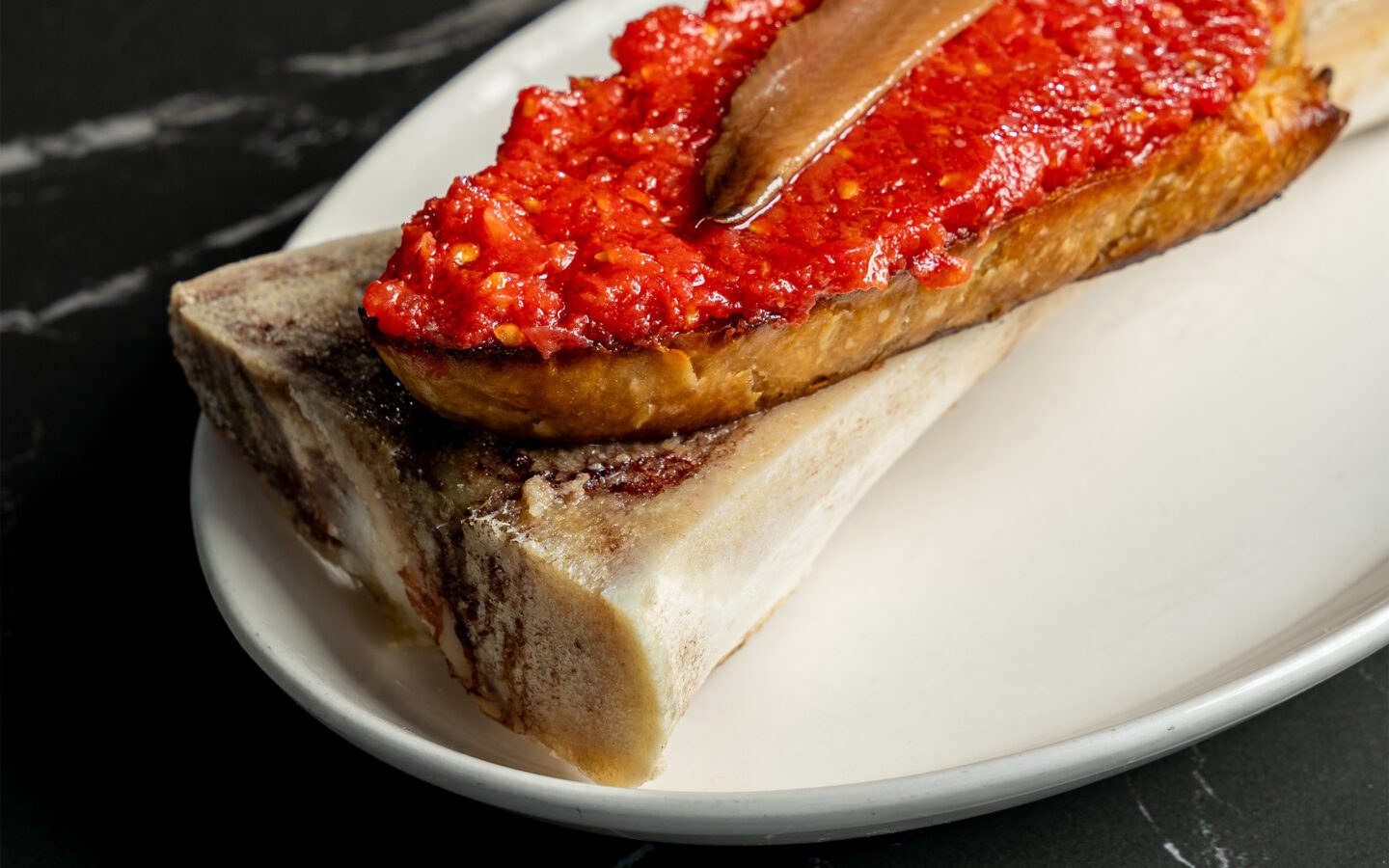
The most common mistake first-timers make about L'Express is assuming that a restaurant open since 1980 must be coasting. It isn't. If you want contemporary tasting menus and rotating seasonal surprises, this is the wrong room. If you want os à moelle with fleur de sel, tartare frites, and a francophile wine list served by waitstaff who actually know what they're doing, book L'Express.
Portrait
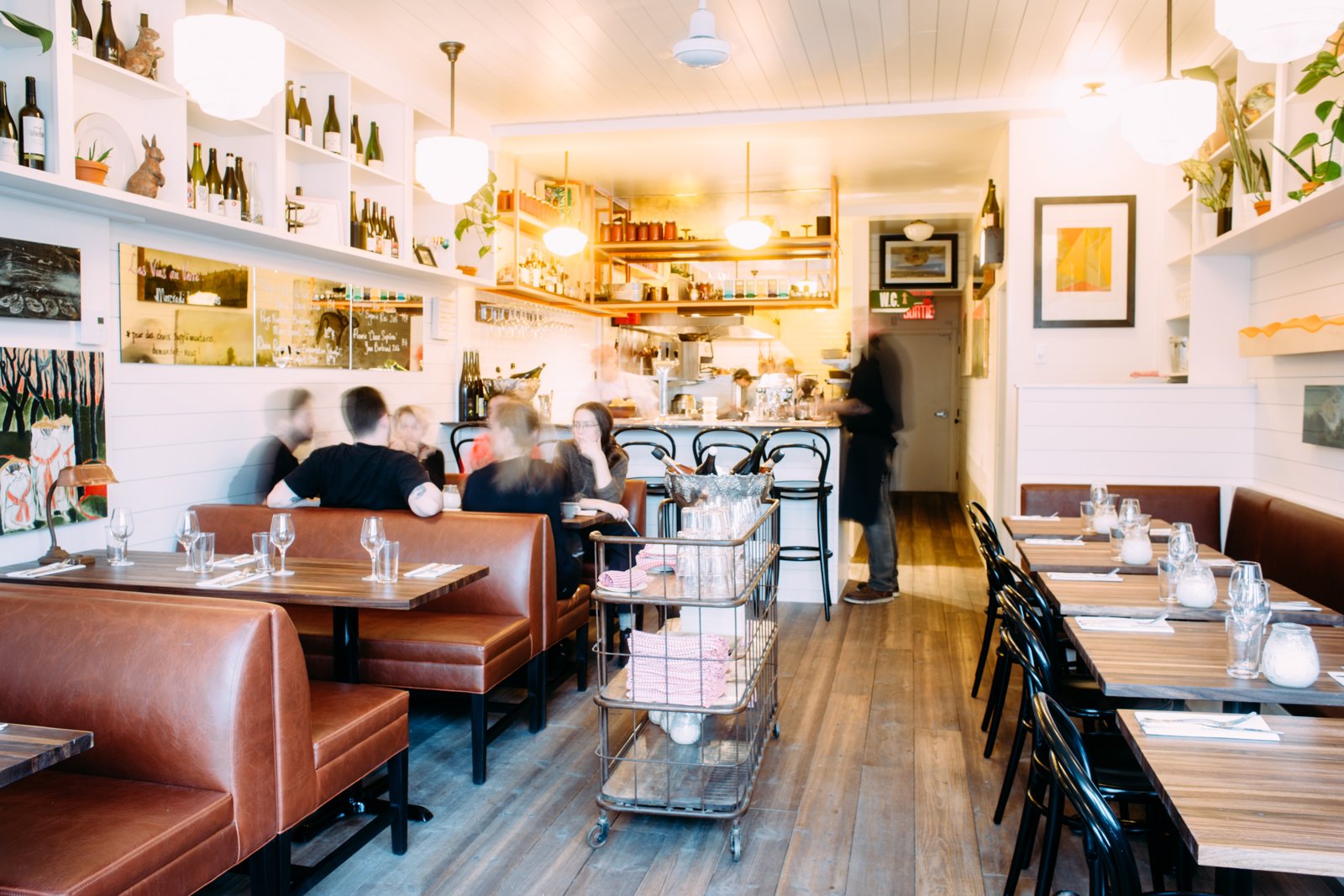
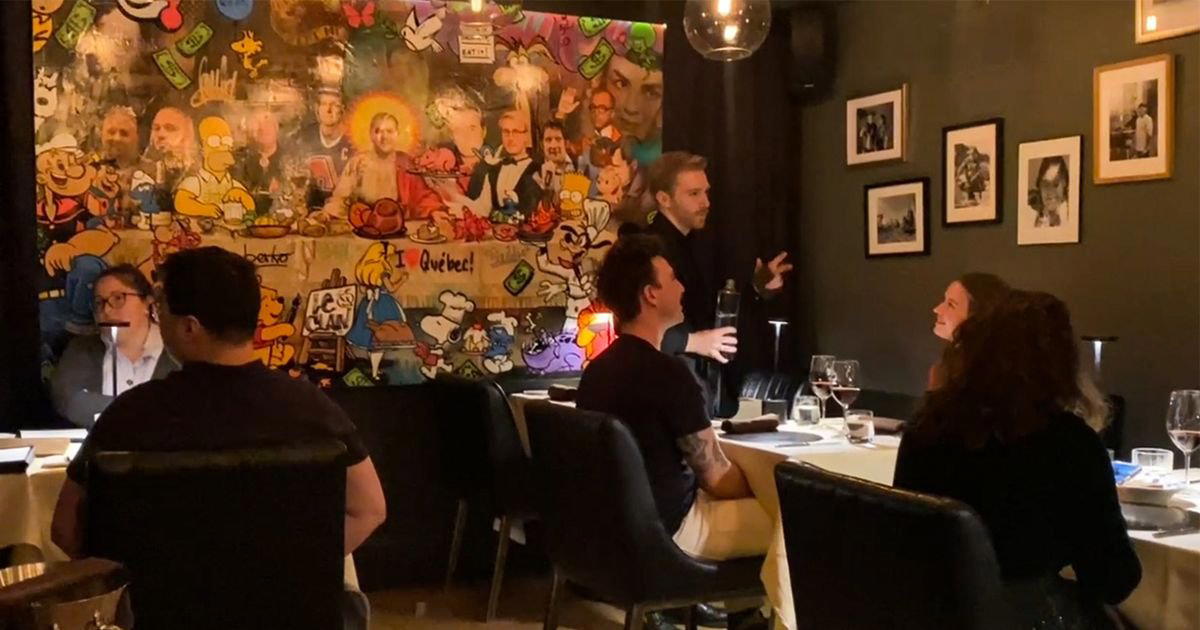
Walk into L'Express on any evening and the first thing you register is noise — not the aggressive, look-at-us noise of a trendy opening, but the settled hum of a room that has been full for forty-plus years. Banquettes, tile floors, a pressed tin ceiling, mirrors: almost nothing has changed inside, and that's not an accident. The room has the atmospheric density of a Paris brasserie, the kind where the clatter of plates and the overlap of a dozen conversations create a specific kind of energy — sociable rather than loud, alive rather than performative. It is not a quiet dinner spot. If you need to hear every word of a delicate conversation, note that. If you want to feel like you're actually in a city, this is your room.
The bar and counter seating at L'Express deserve specific attention. In a bistro format built around waitstaff rapport and a wine list with no sommelier, trust your server, as the house's own positioning suggests, counter seats put you closest to the action and, more practically, to the staff who know the list. Booking the counter or arriving as a solo diner or pair means faster pacing, a clearer view of the kitchen's rhythm, and the kind of service interaction where recommendations feel personal rather than scripted. For food-focused visitors who want to work through the wine list properly, counter or bar positioning is the right call.
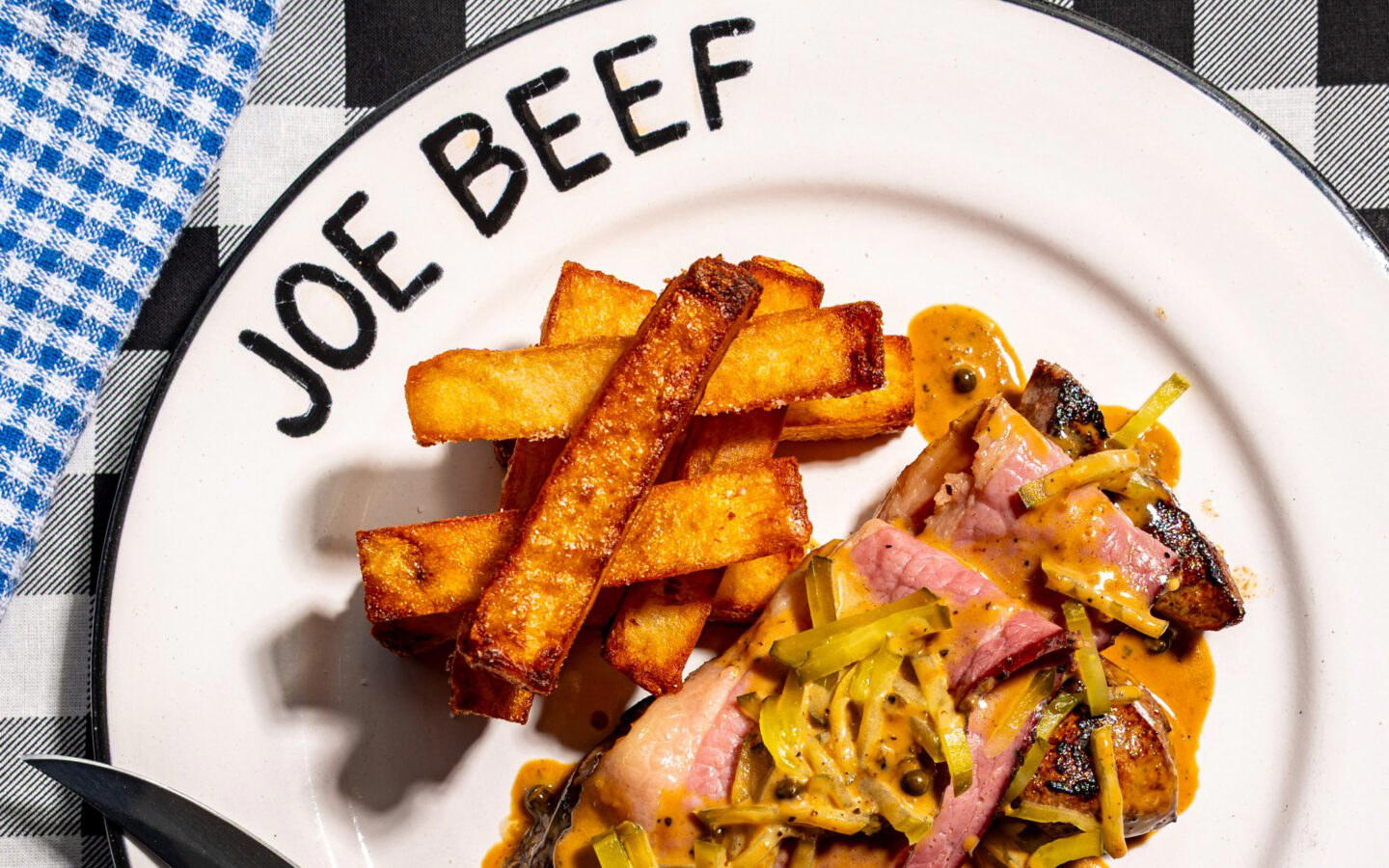
The menu at L'Express is what a French bistro menu should look like: anchored in classics, not cluttered with reinvention for its own sake. Dishes like os à moelle with fleur de sel and tartare frites sit alongside what the awards record describes as a few curveballs, a Japanese coleslaw is cited as one example, that keep the menu from feeling static without destabilising its identity. The kitchen does not need a wood-fired oven or a Michelin-commissioned concept to justify its prices. At the $$ price range, this is among the most sensible value propositions in Montreal's French dining category.
Wine list is extensive and, by the account of multiple independent sources, reasonably priced. There is no sommelier on the floor, which is an unusual position for a room of this calibre, but the waitstaff are described consistently as ultra-professional, and in a bistro where the wine list skews francophile, a well-briefed server is often more useful than a formal sommelier. Ask for guidance and use it. The absence of a sommelier is a feature of the format, not a gap in the offering.
L'Express is open daily from 11:30 am to 2 am, seven days a week. That late closing is genuinely useful in Montreal, a city where the dining rhythm runs later than most of English Canada. Booking is rated easy, walk-ins are possible, particularly at off-peak hours, but given the room's consistent popularity over four decades, a reservation for prime weekend slots is the sensible move. The address is 3927 Rue Saint-Denis, squarely in the Plateau-Mont-Royal neighbourhood, which puts it within easy reach of the Saint-Denis and Mont-Royal corridor and close to other Plateau dining and bar options. For a full picture of what else the neighbourhood offers, see our full Montreal restaurants guide, alongside our full Montreal bars guide and our full Montreal hotels guide.
For visitors who want to map L'Express against the broader Canadian French dining conversation: Tanière³ in Quebec City and Alo in Toronto both operate at a higher price point with more formal tasting-menu structures. AnnaLena in Vancouver shares something of the same bistro-adjacent warmth but in a Pacific context. None of them are doing what L'Express does: a fully realised, unchanged French bistro format that has survived four decades of Montreal dining trends without blinking. That's not a small thing.
Chef Jean-François Vachon leads the kitchen. The dishes in the awards record, os à moelle, tartare frites, the francophile wine positioning, are consistent with a kitchen that has clarity about what it is and isn't trying to be. For food-and-wine-focused visitors who appreciate depth over novelty, Leméac offers a comparable Plateau bistro experience worth knowing about. For something more contemporary in Montreal's modern cuisine bracket, Mastard and Sabayon are the relevant alternatives. And if the broader Quebec and Ontario table interests you, Narval in Rimouski and Restaurant Pearl Morissette in Lincoln are worth adding to your itinerary.
For North American French bistro comparisons outside Canada: Republique in Los Angeles and Au Cheval in Chicago both operate in a similar genre register, though each has a distinctly different format and price profile. L'Express is the more classical of the three. Among Montreal's other dining options worth knowing about in this context: Alep for a different cultural register entirely, and Jérôme Ferrer - Europea if the occasion calls for a significantly more formal and more expensive room. For a broader sweep of what to do beyond the table, see our full Montreal experiences guide, our full Montreal wineries guide, and The Pine in Creemore if you're building a wider Ontario itinerary.
Frequently Asked Questions
What should I wear to L'Express?
- No dress code is specified, but the room has a settled, classic bistro feel, smart-casual is appropriate and comfortable here.
- At the $$ price range, this is not a formal dining room, but it's also not a casual sandwich counter. Think: what you'd wear to a good neighbourhood restaurant in Paris.
- Overdressing is unnecessary; underdressing would feel slightly at odds with the room's character.
What should a first-timer know about L'Express?
- Book a reservation for prime evening slots even though walk-ins are possible, the room has been reliably full for four decades.
- There is no sommelier. Your server is the wine resource; ask for a recommendation and use it. The francophile list is extensive and reasonably priced.
- The menu is anchored in French bistro classics, os à moelle, tartare frites, with a few less-expected additions. Don't arrive expecting a modern tasting menu format.
- The room is lively and atmospheric, not quiet. It's a sociable environment, not a hushed fine-dining experience.
- Open daily until 2 am, which makes it one of the more flexible options in this category for late arrivals or post-event dinners.
Is the tasting menu worth it at L'Express?
- L'Express does not operate a tasting menu format. This is a à la carte French bistro. If a multi-course tasting structure is what you're after, Toqué or Jérôme Ferrer - Europea are the relevant Montreal options, both at the $$$$ tier.
- The value proposition at L'Express is a $$ price range with professional service and a serious wine list, not a curated progression of courses.
What are alternatives to L'Express in Montreal?
- Leméac, closest stylistic peer; Plateau bistro format, comparable price range, worth knowing for direct comparison.
- Mastard, steps up in price ($$$) and modernity; right choice if you want contemporary technique alongside the bistro warmth.
- Au Pied de Cochon, same $$$, very different register; Quebec regional excess versus French bistro precision.
- Toqué, the formal French option at $$$$ if the occasion requires a full fine-dining format.
- Schwartz's, only relevant if you want a quick, cheap Montreal institution hit rather than a sit-down bistro experience.
Is L'Express good for a special occasion?
- Yes, with the right expectations. L'Express is an excellent choice for a birthday dinner, anniversary, or celebratory meal where the atmosphere matters as much as the food, the room has the kind of lived-in energy that makes an evening feel memorable without requiring a $$$$ price tag.
- It is not a quiet, intimate special-occasion room. If you need hushed privacy or a formal progression of courses, consider Jérôme Ferrer - Europea instead.
- For celebrations where a great bottle of wine and professional service in a genuinely characterful room are the priority, L'Express at $$ is hard to beat at this price level in Montreal.
Planning details
- Hours
- Monday: 11:30 am–2 am · Tuesday: 11:30 am–2 am
- Location
- 3927 R. Saint-Denis, Montréal, QC H2W 2M4, Canada
- Website
- restaurantlexpress.com
- Phone
- +1 514-845-5333
The take
The Take
The Vibe
L'Express reads like a textbook Parisian bistro transplanted to Montreal’s Plateau. The room leans on decades of continuity — tiled floors, mirrored walls and paper-covered tables that have changed little since 1980 — and the result is quietly theatrical. The dining room hums: close-set tables, tile surfaces and an open kitchen create an animated, convivial soundtrack. It balances neighbourhood familiarity with professional polish, so the experience feels both lived-in and purposeful. The glazed wine cellar seen from the room adds a subtle, reassuring formality to an otherwise direct, unpretentious bistro setting.
Best For
This is a go-to spot for traditional bistro evenings where the food is the focus and the atmosphere is lively. It suits date nights, business dinners and special-occasion meals when you want classic French dishes without pretension; the room’s mid-range pricing keeps the experience approachable. At the same time, its identity as a neighbourhood canteen and late-night refuge makes it equally good for casual hangouts or late meals after a night out. Expect a bustling, social room rather than a hushed, formal dining environment.
Ordering Tips
Lean into the menu’s icons: steak frites, beef tartare, bone marrow and veal kidneys showcase the kitchen’s bistro proficiency, and profiteroles are a reliable finish. The restaurant pairs that straightforward, muscular cooking with a francophone wine program — the glazed wine cellar visible from the dining room signals a serious selection worth consulting. Portions and preparations skew classic rather than trendy, and the mid-range pricing means you can order a couple of classic plates and a bottle without overthinking the bill. Be prepared for a lively room and close tables when timing your visit.
Venue details
Ambiance
Buzzy and lively with tightly packed tables, checkered floors, brass fixtures, and walls with a distinctive sheen, evoking an authentic Parisian brasserie.
Tags
Vibe
Best For
Experience
At the Table
- Dress Code
- Smart Casual
- Noise Level
- Lively
- Service Style
- Upscale Casual
- Meal Pacing
- Standard
- Capacity
- Small
Signature Dishes
- steak frites
- beef tartare
- bone marrow
- veal kidneys
- profiteroles
Know before you go
Know Before You Go
- Getting there
- 3927 R. Saint-Denis, Montréal, QC H2W 2M4, Canada
Planning details
Hours
- Monday
- 11:30 am–2 am
- Tuesday
- 11:30 am–2 am
- Wednesday
- 11:30 am–2 am
- Thursday
- 11:30 am–2 am
- Friday
- 11:30 am–2 am
- Saturday
- 11:30 am–2 am
- Sunday
- 11:30 am–2 am
Location
Recognition and awards


Also consider
Also Consider
- Schwartz’s, Delicatessen, $
- Toqué, French, $$$$
- Jérôme Ferrer - Europea, Modern Cuisine, $$$$
- Mastard, Modern Cuisine, $$$
- Au Pied de Cochon, Regional Cuisine, $$$
Restaurant context
At the $$ price range, L'Express sits in a different category from Montreal's two flagship fine-dining rooms. Toqué and Jérôme Ferrer - Europea both operate at $$$$ with full tasting-menu formats and the formal service infrastructure to match. If the occasion demands that level of investment, those are the right choices. But if you want serious French cooking, a well-curated wine list, and professional waitstaff without committing to a four-figure bill for two, L'Express is the answer at roughly half the price or less.
Mastard and Au Pied de Cochon both sit at $$$, making them a step up from L'Express in price but not necessarily in overall satisfaction depending on what you're after. Au Pied de Cochon leans into Quebec regional excess, foie gras, game, abundance, which is a genuinely different register from L'Express's classical French restraint. Mastard brings more contemporary technique to the table. Choose Au Pied de Cochon if you want an exuberant, Quebec-specific experience; choose Mastard if modern cooking matters more than tradition; choose L'Express if the bistro format is the point.
Schwartz's is only a useful comparison if you're choosing between a quick, counter-service smoked meat lunch and a proper sit-down bistro dinner, they don't compete on the same occasion. For a direct stylistic peer in the $$ bistro bracket, Leméac is the closest alternative worth considering. L'Express has the longer track record, the more established wine program, and the deeper institutional character. Leméac is the right backup if L'Express is full.
Explore Montréal
Around this place
Discover more on Pearl
Unlock the full L’Express guide in Pearl, including awards, comparisons, FAQs, planning details, and nearby places.
Compare L’Express
| Venue | Price | Booking Difficulty | Awards |
|---|---|---|---|
| L’Express | $$ | Easy | 2026 Canada's 100 Best Restaurants · #73Star Wine Lists 2026Michelin Guide Quebec 20262025 Canada's 100 Best Restaurants · #612025 Michelin Bib Gourmand |
| Schwartz’s | $ | Unknown | 2026 OAD Cheap Eats in North America Ranked · #56Michelin Guide Quebec 20262025 Michelin Plate2024 OAD Cheap Eats in North America Ranked · #1012023 OAD Cheap Eats in North America in Recommended |
| Toqué | $$$$ | Unknown | 2026 Canada's 100 Best Restaurants · #702026 Forbes 4-StarStar Wine Lists 20262026 Wine Spectator Best of Award of Excellence2026 Les Grandes Tables du Monde Members2026 La Liste Top Restaurants2025 Canada's 100 Best Restaurants · #672025 La Liste Top Restaurants2025 Michelin Plate |
| Jérôme Ferrer - Europea | $$$$ | Unknown | 2026 Relais Chateaux RestaurantsMichelin Guide Quebec 20262026 Les Grandes Tables du Monde Members2025 Relais Chateaux Award2025 Michelin 1 Star |
| Mastard | $$$ | Unknown | 2026 Canada's 100 Best Restaurants · #63Michelin Guide Quebec 20262025 Canada's 100 Best Restaurants · #402025 The Best Chef One Knife2025 Michelin 1 Star |
| Au Pied de Cochon | $$$ | Unknown | 2026 Canada's 100 Best Restaurants · #782026 OAD Casual in North America RecommendedMichelin Guide Quebec 20262025 Canada's 100 Best Restaurants · #762025 OAD Casual in North America Ranked · #4392025 OAD Top Restaurants in North America Ranked · #4782025 OAD Casual in Europe Ranked · #5072025 Wine Spectator Best of Award of Excellence2025 Michelin Plate |


.png?width=1200&quality=80)







How L’Express stacks up against the competition.
FAQ
Frequently Asked Questions
What should I wear to L'Express?
No dress code is enforced, but the room has a lived-in Parisian bistro feel that has barely changed since 1980 — jeans are fine, a blazer fits naturally. Think put-together rather than formal. At $$ pricing, no one is arriving in black tie, but showing up in gym wear will feel conspicuous against the professional, francophile atmosphere.
What should a first-timer know about L'Express?
Go hungry and plan to stay. The bistro classics — tartare frites, os à moelle with fleur de sel — are the reason to visit, and the kitchen runs until 2 am every day of the week, which is genuinely rare on Saint-Denis. The wine list is extensive and reasonably priced; there is no sommelier on the floor, so ask your server directly for guidance — the staff here are described as ultra-professional and know the list cold.
Is the tasting menu worth it at L'Express?
L'Express does not operate a tasting menu format — this is a full à la carte bistro, and that is by design. At $$ per head, the value proposition is in ordering freely across the menu rather than following a set progression. If a structured multi-course format is what you want, Toqué is the obvious pivot in Montreal.
What are alternatives to L'Express in Montreal?
For a higher-budget, chef-driven French experience, Toqué or Jérôme Ferrer's Europea are the logical upgrades. If you want something looser and more carnivore-forward, Au Pied de Cochon covers different ground at a comparable price point. Mastard is a younger option for those who want modern bistro energy without the decades of patina that L'Express trades on.