
Restaurant in Tokyo, Japan
malca
560ptsÀ la carte Italian, serious fish sourcing.


About malca
malca is a fish-focused Italian restaurant in Minamiaoyama with Tabelog Bronze Awards in 2025 and 2026, a 4.30 score, and two consecutive Michelin Plates. Dinner runs JPY 20,000–29,999 at an 18-seat counter-and-private-room basement; lunch is available Thursday through Saturday from JPY 15,000–19,999. Book via TableCheck — currently easy to secure, which will not last at this credential level.
Who Should Book malca — and When
malca is the right call if you are a food-focused diner who wants Italian cooking built around Japanese fish sourcing, in a room small enough to feel personal. At JPY 20,000–29,999 per head at dinner (with some reviewers spending closer to JPY 30,000–39,999 once wine enters the equation, per Tabelog review data), it sits a tier below the city's ¥¥¥¥ Italian options and punches well above that price point for quality. Tabelog Bronze Award in both 2025 and 2026, a 4.30 score, a Michelin Plate in 2024 and 2025, and two consecutive selections to the Tabelog Italian TOKYO Top 100 give you a credential stack that makes the booking easy to justify. The 18-seat basement room in Minamiaoyama opened in October 2022, so it is still building its reservation profile — currently rated easy to book, which at this recognition level is a genuine advantage. Book soon, because that window will not stay open indefinitely.
The Room and the Format
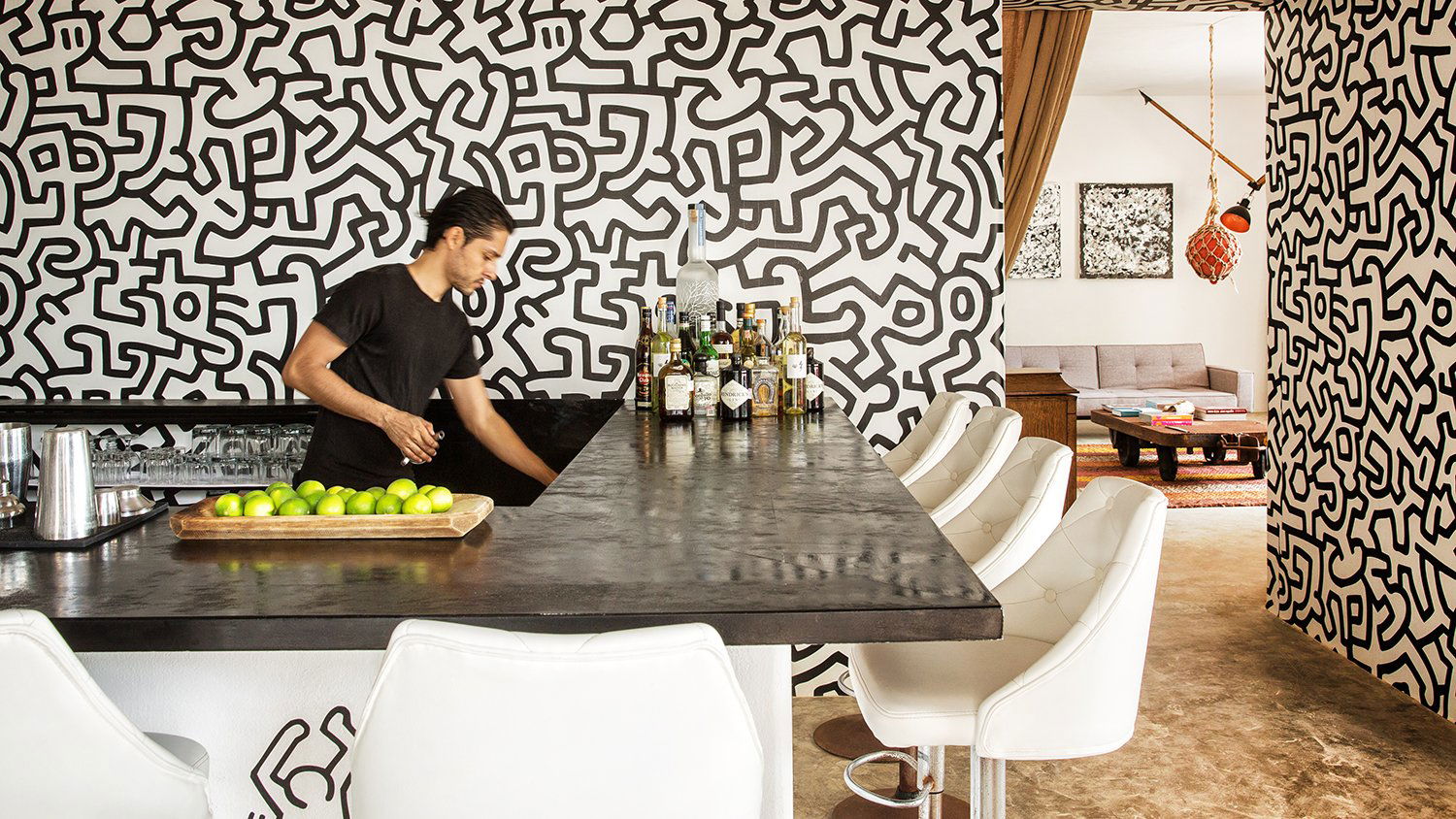
malca occupies a basement floor in the Shinozuka Building, Minamiaoyama 2-chome, a few minutes' walk from Gaienmae Station on the Tokyo Metro Ginza Line. The room runs to 18 seats: an 8-seat counter and two private rooms (one for 4, one for 6). If you are going for a first visit, take the counter. Visually, the space is described as stylish and relaxing , a combination that is rarer than it sounds in Tokyo's Italian category, where rooms tend toward either clinical minimalism or overdressed European pastiche. Counter seating here puts you close to the kitchen and the pass, which matters when the format includes à la carte ordering and you want to pace the meal yourself.
The name comes from the signboard of the chef's grandfather's fish shop on Awaji Island , a hiragana 'ka' inside a circle, or 'maru-ka.' That origin is not decorative branding. The kitchen lists each dish's place of origin on the menu, and the selection changes daily based on the catch and the chef's producer network. Fish is the declared focus. Wine is taken seriously. The combination of Italian technique, Japanese sourcing specificity, and an à la carte structure that allows you to eat as much or as little as you choose makes malca a more flexible proposition than most comparable venues at this price tier, where fixed courses are the norm.
A Multi-Visit Strategy
Because the menu changes daily and portions can be adjusted on request, malca rewards repeat visits in a way that fixed-course Italian restaurants cannot. A sensible approach across two or three visits: use the first to work through the counter à la carte, letting the day's catch guide your choices, and lean on the wine list. The kitchen is described as particularly attentive to fish, so prioritize whatever the catch has delivered that day. On a second visit, consider booking one of the private rooms , either the 4-person or 6-person option , which are also available to families with children (strollers welcome, kids menu available). The omakase course is also offered at dinner if you prefer to hand over the sequencing; this is worth trying on a visit where you already know what the kitchen does well and want to see how it sequences a full meal. For lunch, Thursday through Saturday only, the format switches to a reservation-required course menu starting at 12:00 or 12:30, priced at JPY 15,000–19,999 , a meaningfully lower entry point for the same kitchen.
Booking and Practical Details
Reservations are handled exclusively through TableCheck, accessible via the restaurant's Instagram profile or website (malca.svolta.co.jp). Cash is not accepted under any circumstances , cashless payment only, covering Visa, Mastercard, JCB, Amex, Diners, iD, and QUICPay. QR code payments are not supported. A 10% service charge applies. The restaurant is closed Monday and Sunday. Dinner runs Tuesday through Saturday with last seating at 23:00. Lunch is Thursday, Friday, and Saturday only. No parking on-site; coin parking is available nearby. The dress code note is specific: strong fragrances interfere with other guests' experience, and the restaurant asks you to keep scent minimal. Non-smoking throughout.
Know Before You Go
- Price: Dinner JPY 20,000–29,999 (reviewed spend up to JPY 30,000–39,999); Lunch JPY 15,000–19,999
- Booking: TableCheck only , via Instagram link or website. Currently easy to book.
- Hours: Tue–Wed dinner only (17:00–23:00); Thu–Sat lunch (12:00–15:00) and dinner (18:00–23:00); closed Mon and Sun
- Seats: 18 total , 8 counter, 2 private rooms (4-person and 6-person)
- Payment: Cashless only (Visa, MC, JCB, Amex, Diners, iD, QUICPay). No cash, no QR codes.
- Service charge: 10%
- Fragrance: Keep perfume/cologne to a minimum , specifically requested by the restaurant
- Getting there: 3-minute walk from Gaienmae Station, Tokyo Metro Ginza Line
- Awards: Tabelog Bronze 2025 and 2026; Tabelog Italian TOKYO Top 100 (2023, 2025); Michelin Plate 2024 and 2025
How malca Fits Tokyo's Italian Category
Tokyo's Italian dining category spans everything from neighborhood trattoria to Michelin-starred tasting menus. malca sits in the serious-but-not-ceremonial tier , a Tabelog 4.30 score and two Michelin Plates confirm the cooking is at a high level, while the à la carte option and moderate seat count keep the experience from tipping into the formal-course-only territory that can make a meal feel more like an obligation than a pleasure. For Italian dining in Tokyo with a comparable or related approach, Aroma Fresca operates at a higher price bracket with a long-standing reputation, while PRISMA, Principio, and AlCeppo give you further reference points across the city's Italian range. For Italian in a different Japanese context, cenci in Kyoto is worth knowing, as is Gucci Osteria da Massimo Bottura Tokyo for a higher-profile occasion meal in the same city.
If your Tokyo trip extends to other dining categories, our full Tokyo restaurants guide covers the range. For planning beyond the table, see our Tokyo hotels guide, Tokyo bars guide, and Tokyo experiences guide. If you are traveling across Japan, comparable serious dining exists at HAJIME in Osaka, Gion Sasaki in Kyoto, akordu in Nara, Goh in Fukuoka, 1000 in Yokohama, and 6 in Okinawa. For Italian at a three-Michelin-star level in the region, 8½ Otto e Mezzo Bombana in Hong Kong is the benchmark comparison. See also our Tokyo wineries guide if wine sourcing is part of your trip planning.
The Verdict
malca is worth booking now, while it is still easy to get into. The credentials are real , two consecutive Tabelog Bronze awards, two Michelin Plates, and a 4.30 score from a venue that has only been open since late 2022 is a track record that warrants attention. The fish-focused Italian approach with daily-changing sourcing gives you a reason to return more than once, and the lunch price point (JPY 15,000–19,999, Thursday through Saturday) makes a first visit lower-stakes financially. Counter seats give the most direct experience; private rooms work for groups of 4 or 6. The booking window is open , use it.
Compare malca
Frequently Asked Questions
Does malca handle dietary restrictions?
The venue lists a kids menu and welcomes families, so some flexibility exists. malca's kitchen has a strong emphasis on fish — if you eat seafood, you are well-positioned. For serious allergies or plant-based requirements, check the venue's official channels via TableCheck or the website (malca.svolta.co.jp) before booking, as the menu changes daily based on the catch and producer sourcing.
Is malca worth the price?
At JPY 20,000–29,999 for dinner (review averages push closer to JPY 30,000–39,999 with drinks and the 10% service charge), malca is priced in line with serious Tokyo Italian. The back-to-back Tabelog Bronze awards for 2025 and 2026, a 4.30 score, and two Michelin Plates give the price credibility. If you want a fixed tasting menu at a comparable spend, L'Effervescence operates at a higher price point with full Michelin recognition — malca is the better call if you want à la carte flexibility with the same level of sourcing discipline.
Can malca accommodate groups?
malca has 18 seats total across 8 counter seats and two private rooms that seat 4 or 6 respectively. Private use of the whole restaurant is not available. For groups of 4 or 6, request a private room when booking through TableCheck — it is the most practical option and the venue explicitly recommends it for families. Parties larger than 6 cannot be seated together.
Can I eat at the bar at malca?
Yes. malca has 8 counter seats, and dinner operates with an à la carte menu, so you can order freely rather than committing to a full course. Portions can be adjusted on request. The counter is the better seat for solo diners or pairs who want to interact with the kitchen and graze across multiple smaller dishes.
Is the tasting menu worth it at malca?
malca offers an omakase course alongside its à la carte dinner menu — so both formats are on the table. The omakase makes sense if you want the kitchen to drive the experience around the day's catch, given that the menu changes daily and reflects the chef's producer relationships. For first-time visitors who want to explore the range, the course is the lower-risk entry; regulars and confident diners often prefer à la carte to focus on specific dishes.
Is malca good for a special occasion?
It works well for a special occasion, particularly for two to six people. The two private rooms (seating 4 or 6) give you a contained space, and the restaurant is non-smoking throughout. The venue is Tabelog Bronze-awarded and Michelin Plate-recognised, which adds weight if the occasion calls for credentials. For a larger celebration or a venue with more ceremony, RyuGin or L'Effervescence carry higher formal recognition — malca is the right pick when you want a serious dinner without full tasting-menu rigidity.
Recognized By


More restaurants in Tokyo
- SézanneOccupying the seventh floor of the Four Seasons Hotel Tokyo at Marunouchi, Sézanne earned its first Michelin star within months of opening in July 2021 and now holds three. British chef Daniel Calvert applies French technique to Japanese ingredients, producing a prix-fixe format that Tabelog has recognised with Silver awards every year from 2023 through 2026. It ranked 4th in Asia's 50 Best Restaurants in 2025 and 15th globally in 2024.
- SazenkaSazenka is the address for Chinese cuisine in Tokyo at its most technically demanding. Chef Tomoya Kawada's wakon-kansai approach — Japanese seasonal ingredients applied through Chinese culinary technique — has earned consecutive Tabelog Gold Awards from 2019 to 2026, a #71 ranking on the World's 50 Best 2025, and 99 points from La Liste 2026. At JPY 50,000–59,999 per head, it is one of the hardest tables in the city to book and worth the effort.
- NarisawaNarisawa is Tokyo's most credentialled innovative tasting menu restaurant — two Michelin stars, Asia's 50 Best number 12, and a Tabelog Silver award — running at JPY 80,000–99,999 per head. Book for a milestone occasion, confirm vegetarian or vegan needs in advance, and reserve at least two to three months out. With 15 seats and reservation-only access, this is one of Tokyo's hardest tables to secure.
- FlorilègeFlorilège delivers two Michelin stars and an Asia's 50 Best #17 ranking at a dinner price of ¥22,000 — competitive for Tokyo at this level. Chef Hiroyasu Kawate's plant-forward tasting menus around an open-kitchen counter at Azabudai Hills make this the strongest choice for contemporary French dining in Tokyo if theatrical, produce-led cooking is what you want. Book well in advance; availability is near-impossible at short notice.
- DenDen holds two Michelin stars, a World's 50 Best top-25 Asia ranking, and a Tabelog Silver Award running back to 2017 — and it books out within hours of the two-month reservation window opening. Chef Zaiyu Hasegawa's daily-changing seasonal omakase runs JPY 30,000–39,999 at dinner in a relaxed house-restaurant setting near Gaiemmae. Book by phone only, noon–5 PM JST. Lunch is irregular; plan around dinner.
- MyojakuMyojaku is a 2-Michelin-star, 14-course French-leaning omakase in Nishiazabu holding a 4.47 Tabelog score, Tabelog Silver 2025–2026, and Asia's 50 Best #45 (2025). Chef Hidetoshi Nakamura's water-forward, no-dashi approach shifts meaningfully with the seasons — making timing your reservation as important as getting one. Budget JPY 50,000–59,999 per head plus 10% service charge; reservations only, near-impossible to secure.
Similar venues by awards
Related editorial
- Best Fine Dining Restaurants in ParisFrom three-Michelin-star icons to the next generation of Parisian chefs pushing boundaries, these are the restaurants that define fine dining in the world's culinary capital.
- Best Luxury Hotels in RomeFrom rooftop terraces overlooking ancient ruins to Michelin-starred hotel dining, these are the luxury hotels that make Rome unforgettable.
- Best Cocktail Bars in KyotoFrom sleek lounges to hidden speakeasies, Kyoto's cocktail scene blends Japanese precision with global influence in ways you won't find anywhere else.
Save or rate malca on Pearl
Keep this venue in your Pearl passport, rate it after you visit, and track it alongside every other place you collect.