Restaurant in Madrid, Spain
Sustainable, chef-led cooking at honest prices.
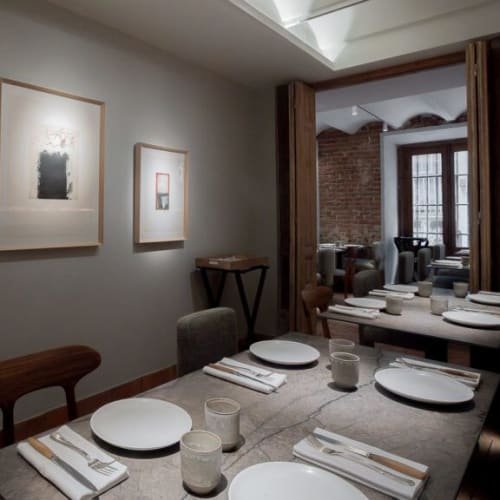
Desborre delivers Michelin Plate cooking at a €€ price point in Madrid's Austrias district. Chef Lucía Grávalos runs a vegetable-forward contemporary menu with a fermentation-led drinks program that goes beyond a standard wine list. Easy to book and consistent across nearly 200 Google reviews, it is one of the clearest value calls in central Madrid for first-timers and returning visitors alike.
At the €€ price point, Desborre is one of the clearest value calls in central Madrid. You get Michelin Plate cooking from a chef with a defined point of view, an address a short walk from the Royal Palace, and a room that reads like a serious bistro rather than a tourist-area compromise. If your budget is €€€€ and you want progressive theatrics, look elsewhere. But if you want ingredient-led contemporary cooking with real depth at a price that does not require advance financial planning, book Desborre.
Desborre sits on Calle de la Unión in the Austrias district, one of Madrid's older central neighbourhoods, close enough to the Royal Palace to draw foot traffic but not so close that the restaurant feels like a concession stand for tourists. The room is described as rustic-contemporary, which in practice means a stylish bistro aesthetic rather than white-tablecloth formality. The first thing you will notice on the way in is the display counter of fermented products near the entrance: kombuchas, kefirs, shrubs, and similar preparations. It signals the kitchen's orientation before you have seen a menu.
That fermentation counter is worth pausing at if you are visiting for the first time, because it tells you something specific about how Desborre approaches drinks and flavour. The bar and drinks program at Desborre extends beyond a standard wine list. The presence of house-made kombuchas, kefirs, and shrubs at the entrance counter suggests a kitchen that treats fermented and non-alcoholic beverages as a genuine component of the meal rather than an afterthought. For a first-timer who does not drink wine or who wants to match the vegetable-forward cooking with something more considered than a soft drink, this is a meaningful distinction. Ask what is available from the fermentation counter when you sit down; the house-made options are likely to pair more interestingly with the cooking than a generic pairing would.
Chef Lucía Grávalos was born in Rioja, a region with its own strong culinary identity, and her cooking at Desborre reflects a sustained commitment to organic and sustainably sourced ingredients, free-grazing livestock, and produce aligned with the seasons. The menu references her grandmother Ana Mari's recipes as a recurring influence, though this does not translate into nostalgic or retro cooking. What it produces, based on the available information, is a contemporary à la carte anchored by ingredients treated with clarity rather than excess technique. Dishes cited include soufflé crackling, chicken in citrus escabeche, and a preparation described as “green chromatic in different textures,” which points toward a kitchen comfortable with vegetable-led composition.
Vegetables play a prominent role throughout. If you eat meat but want a meal that will give plant-based preparations equal billing, Desborre handles that balance without framing vegetables as a secondary option. The Michelin recognition, which covers both 2024 and 2025 with a Michelin Plate designation, confirms technical consistency without placing Desborre in the starred tier. A Plate is Michelin's signal that a restaurant is producing good cooking worth knowing about, not that it is competing at the level of, say, DSTAgE or DiverXO. That is not a criticism. It is a calibration: Desborre is a serious neighbourhood-scale restaurant in a prime central location, not a tasting-menu destination requiring a six-month waitlist.
The Google rating of 4.8 across 193 reviews is a useful signal here. That score, on a meaningful volume of reviews, suggests consistent execution rather than occasional brilliance. For a first-time visitor, that is reassuring. You are not gambling on whether the kitchen is having a good night.
Two tasting menus are available alongside the à la carte: the Petit and the full Desborre menu. For a first visit, the Petit menu is worth considering if you want structure without committing to the full progression. The à la carte is the right call if you want to control the pace or if you are dining with someone whose preferences require flexibility. The fermentation-led drinks counter adds genuine optionality to both formats, particularly if you want to build a non-wine pairing.
Booking is easy by Madrid's central dining standards. Desborre is not operating on a weeks-out waitlist. This is a restaurant you can plan within a reasonable window, which makes it a practical option for visitors building an itinerary around more difficult reservations at starred venues elsewhere in the city. For the broader Madrid picture, see our full Madrid restaurants guide. For bars that complement this style of drinking, our full Madrid bars guide covers the city's range. If you are extending into other Spanish regions, Quique Dacosta in Dénia, El Celler de Can Roca in Girona, and Arzak in San Sebastián represent different points on the Spanish fine-dining spectrum worth knowing about.
Within Madrid's contemporary scene, Desborre sits alongside venues like Adaly, BANCAL, En la Parra, Ferretería, and Gofio as part of a mid-tier contemporary group that takes cooking seriously without requiring a special-occasion budget. For reference points outside Spain, the combination of vegetable-forward contemporary cooking, fermentation interest, and bistro-scale intimacy has parallels at venues like Jungsik in Seoul and César in New York City.
Yes, for most visitors. The Petit menu is the lower-commitment entry point and the right choice if you want to experience the kitchen's range without committing to a full progression. The full Desborre menu makes sense if you want to see how far the vegetable and fermentation focus extends across a longer sequence. Both represent good value at the €€ price tier compared to what the Michelin Plate recognition would cost you at starred venues in the same city. If you want the tasting-menu format but with starred-level ambition, DSTAgE and Cocina Hermanos Torres in Barcelona are the step up.
The venue data does not confirm bar seating as a specific option. Given the bistro format and the fermentation display counter near the entrance, the room is set up for seated dining rather than a stand-up bar experience. For Madrid bar dining specifically, our full Madrid bars guide covers venues where counter dining is a defined feature.
Yes. The bistro scale, the à la carte option, and the easy booking situation all work in a solo diner's favour. You are not committing to a long tasting menu with a full table unless you choose to. The contemporary setting is low on formality, which makes solo dining comfortable rather than awkward. Madrid's €€ contemporary restaurants generally handle solo diners well, and Desborre's Google rating of 4.8 across nearly 200 reviews suggests the front-of-house is consistent enough to make a solo visit feel well-managed.
No dress code is listed in the venue data. The rustic-contemporary bistro setting and the €€ price point suggest smart casual is appropriate. You do not need to dress for a starred restaurant, but this is not a jeans-and-trainers-at-lunch situation either. Madrid's central dining culture generally skews toward presentable rather than formal. If in doubt, wear what you would wear to a considered neighbourhood restaurant in a European capital.
At €€, yes, with a clear argument. You get two consecutive years of Michelin Plate recognition, a chef with a coherent culinary identity, a house-made fermented drinks program, and a location close to the Royal Palace. The comparison to make is not against starred venues but against other €€ contemporary restaurants in central Madrid. At that level, the Michelin consistency and the 4.8 Google rating are stronger signals than most alternatives in the same price tier. For the full Madrid contemporary picture, see our full Madrid restaurants guide alongside nearby options like Adaly and Gofio.
| Venue | Price | Value |
|---|---|---|
| Desborre | €€ | — |
| DiverXO | €€€€ | — |
| DSTAgE | €€€€ | — |
| Smoked Room | €€€€ | — |
| Paco Roncero | €€€€ | — |
| Coque | €€€€ | — |
What to weigh when choosing between Desborre and alternatives.
Yes, at the €€ price point both the Petit and Desborre tasting menus offer strong value for Michelin Plate-recognised cooking. The format suits anyone who wants to follow chef Lucía Grávalos's full seasonal logic — vegetables, sustainable proteins, and fermented elements all in sequence. If you want to pick and choose, the à la carte is available and covers the same ethos. The tasting menu is the better call if you have two hours and want to understand what the kitchen is actually doing.
Desborre has a display counter of fermented products by the entrance, which signals a casual edge to the room, but the venue operates as a sit-down bistro rather than a counter-service spot. Seating at or near that counter area may be possible, but the full menu is designed for table dining. If bar-counter omakase-style eating is your priority, this is not the format — book a table instead.
Yes. The bistro format and à la carte option make solo dining straightforward — you are not locked into a long tasting menu commitment if you prefer a shorter meal. At €€, the spend is manageable for one, and the rustic-contemporary room is relaxed enough that solo diners do not feel out of place. It is a more comfortable solo call than, say, a formal multi-course-only room.
The room is described as a stylish bistro with rustic-contemporary ambience, which points to relaxed but presentable rather than formal. There is no indication of a dress code. Standard Madrid dinner attire — neat casual — should be appropriate. No need to dress for a fine-dining occasion.
At €€, Desborre is one of the clearer value cases in central Madrid for cooking at this level. You get a Michelin Plate-recognised kitchen led by chef Lucía Grávalos, with a defined culinary focus on organic sourcing, free-grazing livestock, and sustainable fishing. Compared to Madrid's Michelin-starred rooms where spend climbs quickly, Desborre delivers chef-driven, ingredient-led food without the premium price. If you are eating in the Austrias area and want food that has a point of view, book it.
Keep this venue in your Pearl passport, rate it after you visit, and track it alongside every other place you collect.