.png?width=1200&quality=80)
Kolm Sõsarat
Modern Cuisine · Lüllemäe
Restaurant in Lüllemäe, Estonia
 Book with Pearl
The Read
Garden-to-Table Sisterhood
Price
$50–100per person
Dress
Smart Casual
Why go
Kolm Sõsarat is a Michelin Plate-recognised restaurant in rural Lüllemäe run by three sisters, each managing a distinct role: cooking, service, and the kitchen garden. The set menu is built around estate produce and family honey, making it one of Estonia's most genuinely territory-rooted dining experiences. At €€€€, it is worth the journey for a special occasion or a destination meal — book ahead and plan transport in advance.
About Kolm Sõsarat
Verdict
Kolm Sõsarat is worth the journey to Lüllemäe if you value cooking that is genuinely rooted in its landscape — produce from the kitchen garden, honey from the family hives, and a set menu that changes with what the farm provides. At €€€€ pricing, it sits at the top of the Estonian countryside dining tier, and the Michelin Plate recognition confirms this is not a novelty rural experience but a kitchen operating with real intention. If you have already visited once and are considering a return, the answer is yes — the seasonal rotation means the menu you ate last time is not the menu you will eat next time.
Portrait
The restaurant is run by three sisters, each with a distinct role: Kerti cooks, Triin manages service, and Kadri tends the kitchen garden. That division is not a marketing detail, it shapes the food in a way that is visible on the plate. The produce arriving at the kitchen comes from someone who has grown it specifically for this table, which is a different supply chain from even the leading farm-to-fork restaurants that source from third-party growers.
The set menu format is the right choice here. It reflects what the garden and the surrounding area are producing at any given time. Documented dishes include a country-style preparation of mushroom, potato and sauerkraut, ingredients that are ordinary in Estonian cooking but handled here with enough care to make the combination read as considered rather than rustic. Desserts built around honey from the sisters' father's long-established hives, including a combination of honey, apple and milk with sea buckthorn, anchor the menu in something genuinely local rather than generically Nordic.
Scent profile of a working kitchen garden feeds into what arrives at the table: fermented notes from sauerkraut, the mineral sharpness of foraged mushrooms, the waxy sweetness of estate honey. These are not manufactured sensory signals, they are the direct output of the production model the sisters have built.
For a returning guest, the kitchen garden is the variable that makes repeat visits worthwhile. Kadri's garden determines what Kerti can cook, which means the menu shifts across the year in ways that are not cosmetic. A spring visit and an autumn visit at Kolm Sõsarat are materially different meals. If your first visit was anchored by the honey dessert, a return in a different season is likely to reframe what the kitchen is capable of.
The Michelin Plate (2024) confirms quality-of-cooking recognition without the prix-fixe pressure of a starred venue. For the Estonian countryside category, that combination of credentials is as strong as it gets outside of Tallinn.
The remoteness of Lüllemäe in Valga County is a practical consideration, not a romantic one. There is no walk-in culture here, you are making a deliberate trip. Plan accommodation nearby, as the drive from Tallinn is substantial. See our full Lüllemäe hotels guide for options, and our full Lüllemäe restaurants guide if you are building a wider itinerary around the region.
For context across the broader Estonian countryside dining scene, Hiis in Manniva, Alexander in Pädaste, and SOO in Maidla are all operating in a similar territory-driven idiom, each worth considering depending on where you are based and what season you are travelling. Joyce in Tartu and Fellin in Viljandi are stronger options if you want a comparable quality ceiling with less logistical commitment. Further afield, Mere 38 in Võsu, Lahepere Villa in Kloogaranna, and Wicca in Laulasmaa round out the Estonian countryside category if you are touring the country.
If you are benchmarking Kolm Sõsarat against international peers in the farm-anchored modern cuisine format, Frantzén in Stockholm and Maison Lameloise in Chagny operate in a broadly comparable tradition, though at a different scale and price point. FZN by Björn Frantzén in Dubai and 180° by Matthias Diether in Tallinn are the most relevant comparators for €€€€ tasting-menu dining if you want to weigh up where to spend at that level in the region.
Booking is rated easy. Given the remote location and small-scale operation, confirm your reservation well in advance and treat the date as fixed, this is not a venue where rescheduling is likely to be frictionless. Check our Lüllemäe bars guide, wineries guide, and experiences guide to build out the rest of your visit.
Practical Details
| Detail | Kolm Sõsarat | 180° by Matthias Diether | NOA Chef's Hall |
|---|---|---|---|
| Price range | €€€€ | €€€€ | €€€€ |
| Format | Set menu | Tasting menu | Tasting menu |
| Location | Lüllemäe (rural) | Tallinn | Tallinn |
| Michelin recognition | Plate (2024) | Check listing | Check listing |
| Booking difficulty | Easy | Moderate | Moderate |
| Leading for | Destination dining, special occasions | City tasting menus | Creative city dining |
Planning details
- Location
- Lüllemäe, 68116 Valga maakond, Estonia
- Website
- kolmsosarat.ee
- Phone
- +372 506 8645
The take
The Take
The Vibe
Kolm Sõsarat feels quietly rooted in its place. The approach through Valga county — flat, forested farming country with few signposts — sets the tone: this is a restaurant that emerges from its landscape rather than arriving as an urban transplant. The kitchen garden sits up front, tended by one of the three sisters who run the operation, and that visible triage of soil-to-plate practice defines the room. The cooking leans on fermentation, root vegetables and foraged fungi, delivering an intimate, restrained dining experience that reads as rural, considered and quietly charming.
Best For
This is a destination for diners who prize provenance and seasonality: people seeking an intimate, ingredient-led tasting experience rooted in the surrounding farm and garden. The set menu format and precise, preservation-forward cooking make it well suited for special occasions and date nights where the focus is on thoughtful, terroir-driven food rather than casual grazing. Getting here is part of the experience — the rural approach and modest signage underscore that this is for guests who are traveling specifically for the meal.
Ordering Tips
Expect a set menu that changes with the garden and farm cycle: the kitchen constructs its tasting around what is available, and dishes like country-style mushroom with potato and sauerkraut signal a focus on preservation and seasonality. Fermentation, root vegetables and foraged fungi recur, so anticipate dishes that reflect the current harvest rather than a fixed à la carte list. If you care about particular ingredients or dietary needs, raise them in advance with the restaurant; otherwise come prepared to experience the kitchen’s snapshot of the local growing season.
Venue details
Ambiance
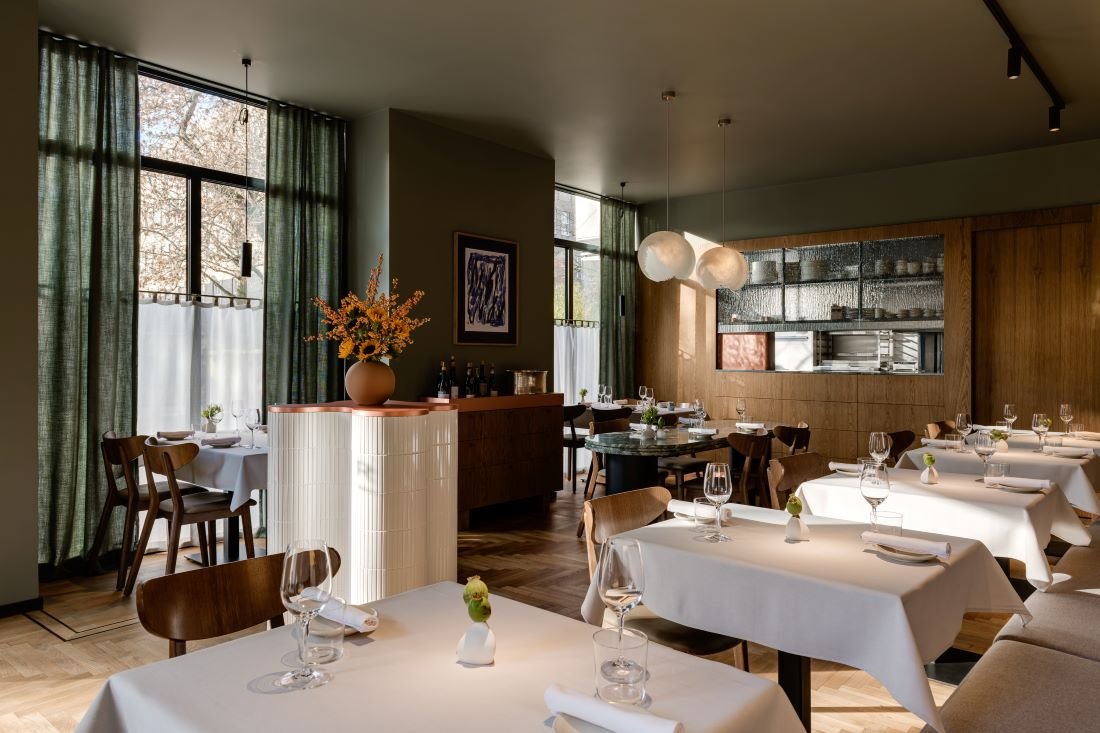
Cozy living room setting in a 100-year-old yellow wooden house with heartfelt hospitality and warm personal attention.
Tags
Vibe
Best For
Experience
Sourcing
At the Table
- Dress Code
- Smart Casual
- Noise Level
- Quiet
- Service Style
- Formal
- Meal Pacing
- Extended Experience
- Capacity
- Intimate
- Kitchen
- Seasonal
- Menu Format
- Set menu
- Wine Program
- Curated
- Private Dining
- Available
Know before you go
Know Before You Go
- Getting there
- Lüllemäe, 68116 Valga maakond, Estonia
Planning details
Location
Recognition and awards
Also consider
Also Consider
- NOA, Modern European, Modern Cuisine, €€
- 180° by Matthias Diether, Estonian Fusion, €€€€
- NOA Chef’s Hall, Creative, €€€€
- Tuljak, Modern Cuisine, €€
- Lee, Asian Fusion, Asian Influences, €€
Restaurant context
At €€€€, Kolm Sõsarat shares a price tier with 180° by Matthias Diether and NOA Chef's Hall, both of which operate tasting-menu formats in Tallinn. The key difference is context: Kolm Sõsarat is a destination in itself, set in Valga County, where the remoteness is part of what the kitchen is selling, produce grown on-site, family hives, a menu shaped by what the land is doing. If you are already in Tallinn and want a tasting menu at this price point, 180° by Matthias Diether or NOA Chef's Hall are easier choices logistically. If you are willing to travel for the meal, Kolm Sõsarat offers something those city venues cannot replicate.
NOA, Tuljak, and Lee all sit at €€, making them considerably more accessible for a casual visit. NOA and Tuljak both work in a modern cuisine register that overlaps with Kolm Sõsarat's territory focus, but at lower price points and without the farm-to-table production model. Lee's Asian Fusion approach is a different category entirely. None of the three carry Michelin recognition, which matters if credentials factor into your decision.
For diners choosing between these venues: book Kolm Sõsarat if the destination experience and territorial cooking are the point, and you are prepared to plan around the location. Choose NOA Chef's Hall or 180° by Matthias Diether if you want €€€€ tasting-menu quality without leaving Tallinn. Drop to NOA or Tuljak at €€ if budget is the deciding factor and you are not making a special trip.
Explore Lüllemäe
Around this place
Discover more on Pearl
Unlock the full Kolm Sõsarat guide in Pearl, including awards, comparisons, FAQs, planning details, and nearby places.
Compare Kolm Sõsarat
| Venue | Price | Booking Difficulty | Awards |
|---|---|---|---|
| Kolm Sõsarat | €€€€ | Easy | 2025 Michelin Plate2024 Michelin Plate |
| NOA | €€ | Unknown | 2026 White Guide Baltic Restaurants - Very Fine Level2025 Michelin Bib Gourmand2024 Michelin Bib Gourmand |
| 180° by Matthias Diether | €€€€ | Unknown | Star Wine Lists 2026Michelin Guide Estonia 20262026 Falstaff Restaurant Guide2026 White Guide Baltic Restaurants - Global Masters Level2026 La Liste Top Restaurants2025 The Best Chef One Knife2025 La Liste Top Restaurants2025 Michelin 2 Stars2024 Michelin 2 Stars |
| NOA Chef’s Hall | €€€€ | Unknown | Star Wine Lists 2026 · #12026 OAD Top Restaurants in Europe Recommended2026 White Guide Baltic Restaurants - Global Masters Level2026 La Liste Top Restaurants2026 Falstaff Restaurant Guide2025 La Liste Top Restaurants2025 The Best Chef One Knife2025 Michelin 1 Star2024 Michelin 1 Star |
| Tuljak | €€ | Unknown | 2026 White Guide Baltic Restaurants - Very Fine Level2025 Michelin Bib Gourmand2024 Michelin Bib Gourmand |
| Lee | €€ | Unknown | Star Wine Lists 2026 · #12026 White Guide Baltic Restaurants - Very Fine Level2026 Falstaff Restaurant Guide2025 Michelin Plate2024 OAD Casual in North America Ranked · #4342024 Michelin Plate |










A quick look at how Kolm Sõsarat measures up.
FAQ
Frequently Asked Questions
What should I order at Kolm Sõsarat?
There is no à la carte — Kolm Sõsarat runs a set menu only, so the choice is already made for you. The menu draws directly from Kadri's kitchen garden and the family farm, with dishes like mushroom, potato and sauerkraut, and desserts built around honey from the sisters' father's long-established hives. Come expecting produce-led Estonian cooking, not international fine dining formats.
What should a first-timer know about Kolm Sõsarat?
Getting there is the main logistical challenge: Lüllemäe is a small settlement in Valga County, so plan your transport carefully — this is not a drop-in venue. The restaurant is run by three sisters with clearly defined roles across kitchen, service, and garden, which gives the experience a personal, owner-operated feel rather than a staffed restaurant atmosphere. A Michelin Plate (2024) signals the cooking is taken seriously, but the setting is rural and informal.
Is Kolm Sõsarat worth the price?
At €€€€ pricing, Kolm Sõsarat is asking a premium that is only justified if you value hyperlocal provenance and the intimacy of a small, owner-operated kitchen. The honey-and-garden produce narrative is not a marketing angle — it is the actual cooking philosophy, which gives the price a clear rationale. If you want a broader Estonian fine dining comparison, NOA in Tallinn operates at a similar price tier with more accessible logistics.
What are alternatives to Kolm Sõsarat in Lüllemäe?
There are no direct alternatives in Lüllemäe itself — the village is too small. For comparable Estonian fine dining with Michelin recognition, NOA and NOA Chef's Hall in Tallinn are the most practical alternatives, with easier access and broader menus. Tuljak offers a different register if you want something less formal. The trade-off is that none of those replicate the three-sister, garden-to-table setup that makes Kolm Sõsarat distinct.
Is Kolm Sõsarat good for a special occasion?
Yes, provided the occasion suits an intimate, rural setting rather than a city restaurant atmosphere. The owner-operated format, personal service from Triin, and a menu built around the family's own produce create a sense of occasion that feels handmade rather than choreographed. At €€€€, it reads as a destination dinner — the kind where the journey is part of the event.
Is Kolm Sõsarat good for solo dining?
Solo dining here is an unusual proposition given the remote location and set menu format, but not an unwelcome one. The small, personal nature of the restaurant means solo guests are unlikely to feel like an afterthought. That said, the logistics of travelling to Lüllemäe alone and at €€€€ pricing make this a harder sell for solos than, say, a counter-seat omakase format in a city.
Is the tasting menu worth it at Kolm Sõsarat?
It is worth it if the premise matches what you are looking for: a Michelin Plate-recognised set menu in rural Estonia built entirely from the kitchen garden, family farm, and the father's honey hives. If you want more courses, wine pairing infrastructure, or the production of a larger fine dining kitchen, 180° by Matthias Diether in Tallinn is a stronger fit. Kolm Sõsarat's menu earns its price through specificity and conviction, not scale.