
Restaurant in Los Angeles, United States
Restaurant Ki
1,375Pearl PointsTen seats, one star, book early.







About Restaurant Ki
Restaurant Ki earns its 2025 Michelin star through a ten-seat chef's counter tasting menu that puts seasonally sourced seafood at the centre of contemporary Korean cooking. Chef Ki Kim's Atomix and Jungsik background is evident in the precision. With only ten seats and growing demand, reservations are hard to secure — book as far out as possible for any special occasion.
The Verdict
Ten seats. One star. A 4.9 on Google from diners who clearly did not want to leave. Restaurant Ki is the most focused fine-dining proposition in Los Angeles right now for contemporary Korean cuisine, and if you can get a reservation, you should take it. Chef Ki Kim, who trained at both Nae:um-adjacent Jungsik and the celebrated Atomix in New York, brings a technical vocabulary to Little Tokyo that Los Angeles has not had before at this format. The $$$$ price tag is steep, but the Michelin star earned in 2025 and a Resy Leading of the Hit List nod confirm this is not a vanity project. Book it for a milestone dinner, a serious date, or any occasion where the meal itself is the event.
The Room and the Format
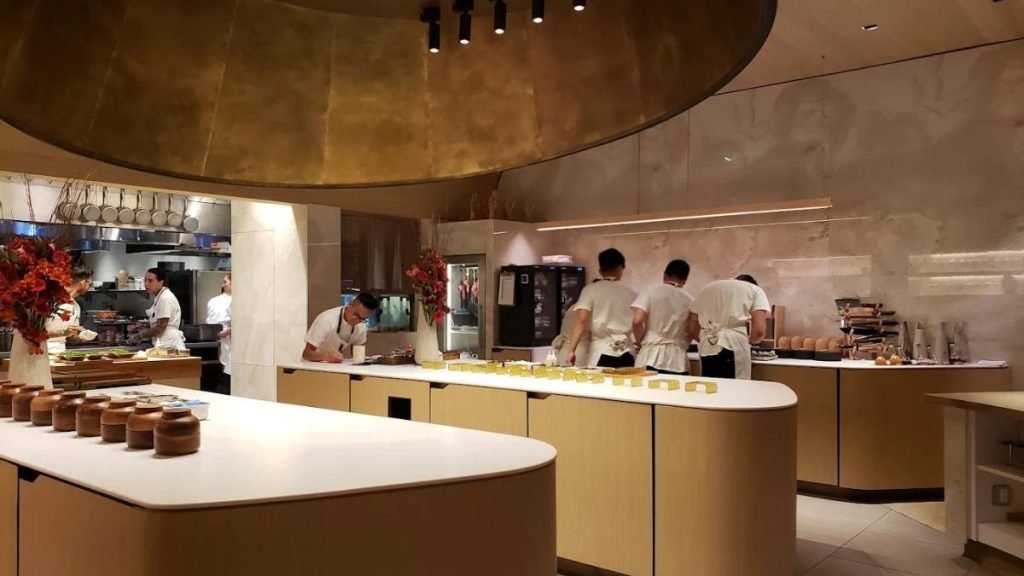
Walk into 111 San Pedro St and the first thing you register is restraint. The ten-seat chef's counter is minimalist in the way that signals deliberate choice rather than budget, a visual register closer to Tokyo's intimate kappo counters than to the maximalist dining rooms that dominate Los Angeles fine dining. Every seat faces the kitchen. There is nowhere to hide and no reason to. The format demands your attention, and that is the point. For a special occasion, the counter arrangement works in your favour: you are close enough to the preparation to understand what you are eating, which matters when the cooking draws on both traditional Korean technique and French precision. Compare this to the larger, more theatrical rooms at Vespertine or the open-plan sprawl of Kato — Ki is smaller and more focused, which is either exactly right or slightly claustrophobic depending on what you want from the night.
The Menu and What Drives It
Restaurant Ki runs a seafood-centric multi-course tasting menu rooted in seasonality. The sourcing logic here is central to what you are paying for. At the $$$$ tier in Los Angeles, you are competing against restaurants like Providence, which has built its reputation over two decades on exactly this kind of rigorous, ingredient-first seafood programme. Ki is newer, with a tighter seat count, and the sourcing choices read as intentional at every course: the menu is not decorating seafood with Korean flavour, it is using seasonally sourced product as the anchor and building nostalgic Korean references around it. This is the distinction that makes it worth the price over a more generic contemporary tasting format. If you are familiar with Atomix in New York, the DNA is recognisable, but Ki is its own thing rather than a West Coast satellite. For comparable ambition in the Korean contemporary category internationally, Nae:um in Singapore and ANJU in Saint-Gilles operate in a similar register. In Los Angeles itself, Baroo offers a more casual Korean-inflected dining experience if the tasting menu format feels like too large a commitment.
Who Should Book This
Restaurant Ki is clearest as a recommendation for two profiles: the serious diner who wants to benchmark Los Angeles fine dining against what is happening in New York and Seoul, and the special-occasion guest who wants a meal that holds together as a complete experience rather than a collection of good dishes. The counter format is not ideal for groups wanting side-conversation over a shared table. For a birthday dinner for six, you will need to look elsewhere — the ten seats make large-party bookings structurally difficult. For a dinner for two where the food is the focus, it is one of the most considered options in the city. The price is in line with Hayato, Le Bernardin in New York, or Lazy Bear in San Francisco , all counter-format tasting menus where the investment is in technique and product rather than room size or service theatre.
Booking and Timing
Getting a table at Restaurant Ki is genuinely difficult. With only ten seats and a Michelin star awarded in 2025, demand has accelerated sharply. Resy is the likely booking platform given the venue's profile, and you should expect to monitor release windows rather than walk in and secure a date. Book as far out as the system allows. The leading timing for a special occasion is mid-week: Saturday seatings fill first, and a Tuesday or Wednesday reservation gives you the same kitchen at lower ambient pressure. Little Tokyo as a neighbourhood rewards early arrival , the blocks around San Pedro St have enough to explore that arriving thirty minutes before your seating makes sense rather than rushing from elsewhere in the city. For context on the broader dining neighbourhood, our full Los Angeles restaurants guide covers the surrounding options in detail. You can also browse our Los Angeles hotels guide, bars guide, wineries guide, and experiences guide to build a full itinerary around the reservation.
The Case For and Against
The case for Restaurant Ki is direct: Michelin-starred Korean contemporary cooking at a ten-seat counter, sourced with the same seasonal rigour you would expect at The French Laundry or Single Thread Farm, delivered in a format where the chef's intent is legible at every course. The case against: it is hard to book, expensive, and the counter format will not suit everyone. If you want more flexibility in a $$$$ tasting menu, Somni offers a different kind of ambition and Camphor brings comparable French-Asian technical precision in a slightly more relaxed room. But if the specific combination of Korean technique, seafood-driven seasonality, and counter intimacy is what you are looking for, Restaurant Ki is the right answer in Los Angeles and there is no close second in that exact category.
Frequently Asked Questions
Does Restaurant Ki handle dietary restrictions?
Contact Restaurant Ki directly via Resy before booking to flag any restrictions. The tasting menu is seafood-centric and rooted in seasonal sourcing, so pescatarians are well-served, but a heavily customised menu at a 10-seat counter with no published substitution policy is a risk. If you have severe allergies or require significant modifications, this format may not be the right fit.
What should I order at Restaurant Ki?
There is no à la carte menu. Restaurant Ki runs a single multi-course tasting menu, so the kitchen decides what you eat. The format blends traditional Korean and French techniques with a seafood-forward, seasonal approach developed by Chef Ki Kim through training at Atomix and Jungsik. Your job is to show up, not choose.
Is Restaurant Ki worth the price?
At the $$$$ price point, Restaurant Ki delivers Michelin-starred Korean contemporary cooking at one of the smallest counters in Los Angeles fine dining. That concentration of attention across ten seats is the value proposition. If you want something closer to a traditional Korean dining experience or are price-sensitive, this is not the right call. If you are benchmarking LA against NYC's Atomix, it is.
What should a first-timer know about Restaurant Ki?
You are sitting at a 10-seat chef's counter at 111 San Pedro St in Little Tokyo, not at a conventional restaurant table. The format is a single tasting menu with no substitutions expected outside of dietary restrictions. Book through Resy, arrive on time, and understand that the kitchen sets the pace. First-timers should come without a hard end-time in mind.
Is the tasting menu worth it at Restaurant Ki?
Yes, if counter tasting menus are your format and you want a benchmark for Korean contemporary cooking in Los Angeles. The Michelin star awarded in 2025 and the Resy Hit List recognition confirm the kitchen is operating at a level that justifies the price. If you prefer à la carte flexibility or a larger, more social dining room, look at Camphor or Kato instead.
Can Restaurant Ki accommodate groups?
The entire restaurant is ten seats. A group of four to six can be seated together at the counter, but groups larger than that will occupy the majority of the room and should expect that dynamic when booking. Private buyouts may be possible, but there is no published policy confirming this. Do not plan a party of eight here without confirming directly through Resy.
What should I wear to Restaurant Ki?
The room is minimalist and the format is Michelin-starred fine dining, so dress accordingly. Smart, polished attire is appropriate. There is no published dress code, but the counter setting and $$$$ price point signal that casual streetwear would feel out of place. When in doubt, overdress slightly.
Location
111 San Pedro St, Los Angeles, CA 90012
Los Angeles, United States
Compare Restaurant Ki
| Venue | Price | Value |
|---|---|---|
| Restaurant Ki | $$$$ | — |
| Kato | $$$$ | — |
| Hayato | $$$$ | — |
| Vespertine | $$$$ | — |
| Camphor | $$$$ | — |
| Gwen | $$$$ | — |
Key differences to consider before you reserve.
Also Consider
- Kato — New Taiwanese, Asian, $$$$
- Hayato — Japanese, $$$$
- Vespertine — Progressive, Contemporary, $$$$
- Camphor — French-Asian, French, $$$$
- Gwen — New American, Steakhouse, $$$$
At the $$$$ tier in Los Angeles, Restaurant Ki sits closest to Hayato in format: both are counter-only tasting menus with strict seat counts, high booking difficulty, and a cooking philosophy built around sourcing and technique rather than room spectacle. Hayato's Japanese kaiseki is the more established reference point — it predates Ki and has a longer critical track record — but Ki's 2025 Michelin star puts it in the same conversation immediately. If the choice is between the two, pick Ki for Korean contemporary cuisine and Hayato for Japanese kaiseki; they are not substitutes for each other.
Kato is the other obvious comparison: New Taiwanese, also counter-format, also $$$$ and Michelin-recognised, and similarly focused on technique-driven Asian cuisine. Kato has more seats and a longer booking window to plan around, which makes it marginally easier to access for first-timers. Ki is the harder reservation and the more intimate room. If you can only do one counter tasting menu in LA, the choice comes down to whether you want to eat in the Korean or Taiwanese culinary register. Both are worth it.
Vespertine and Camphor round out the $$$$ fine dining field but offer different experiences. Vespertine is the most theatrical option in LA — a conceptual experience as much as a meal, with more room to move and a stronger design sensibility. Camphor brings French-Asian technique in a more relaxed setting and is considerably easier to book. If you want the most singular counter experience in LA right now, Ki is the answer. If you want the easiest $$$$ booking with strong technique and a more sociable room, Camphor is the practical choice.
Recognized By


Explore Los Angeles
Save or rate Restaurant Ki on Pearl
Keep this venue in your Pearl passport, rate it after you visit, and track it alongside every other place you collect.