
Restaurant in Los Angeles, United States
Camélia
735Pearl PointsNo wait-list battle. Book it now.



About Camélia
Ranked #46 on the LA Times 101 Best Restaurants 2024 and #4 on Esquire's Best New Restaurants list, Camélia brings a coherent French-Japanese bistro to Downtown LA's Arts District — with one of the city's more thoughtful wine and sake programs. From the team behind Tsubaki and Ototo, it's an easy booking relative to its peer set and a strong return visit for anyone already familiar with the group's work.
The Verdict
Camélia is worth booking, and the good news is that you won't fight for a table the way you would at Kato or Hayato. Ranked #46 on the LA Times 101 Best Restaurants 2024 and #4 on Esquire's Leading New Restaurants list the same year, this Arts District bistro has the credentials to back up the hype — and enough availability that a well-timed reservation is genuinely attainable. If you've already been once and are deciding whether to return, the answer is yes: the kitchen has been sharpening its output since opening in mid-2023, and the beverage program alone justifies a second visit.
What Makes Camélia Worth Your Night
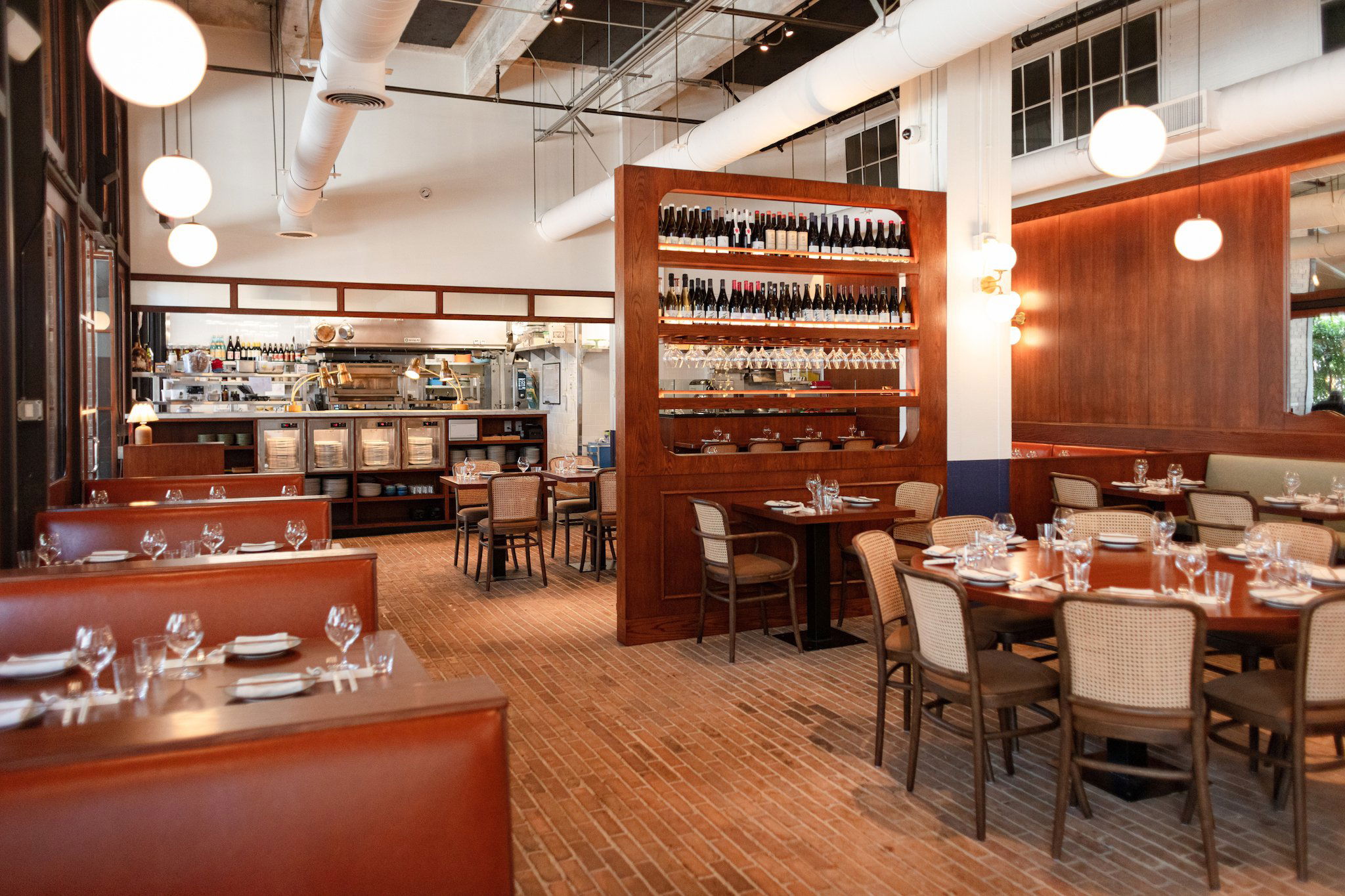
The Arts District already had a strong claim on serious dining in Downtown Los Angeles, but Camélia fills a gap the neighborhood was missing: a sit-down bistro format that takes both French and Japanese cooking seriously without turning the fusion angle into a gimmick. The space itself signals intent before a dish arrives — a Midcentury Modern interior with globe lighting, wood paneling, and brick floors gives the room a warm, enveloping atmosphere that pitches the energy somewhere between a lively dinner party and a properly considered restaurant. It's convivial rather than hushed, so expect ambient noise at peak hours. If you're planning a conversation-heavy evening, aim for an earlier seating.
The kitchen is run by the same team behind Tsubaki and Ototo, the well-regarded Echo Park izakaya and sake bar. What's different here is scale and ambition. The French-Japanese approach isn't a branding exercise; it reflects a genuine culinary logic drawn from Tokyo's own thriving French restaurant culture, where the two traditions have been in productive dialogue for decades. That context matters because it explains why dishes like beef cheeks in red wine with wasabi instead of horseradish, or scallops over dashi-lime cream with maitake and king trumpet mushrooms, read as coherent rather than arbitrary. The menu moves dish by dish, not as a statement. And for nights when you want something direct, a dry-aged cheeseburger with fries reportedly needs no conceptual framing, it's just a good burger.
Beverage program deserves more attention than it typically gets. Courtney Kaplan, one of the more knowledgeable wine and sake professionals working in Los Angeles, has built a list that rewards reading. The annotations on her selections, threading connections between ancient vine wines and ancient strains of rice, for example, are substantive enough to change what you order. For a regular, this is where the return visit pays dividends: the list evolves, and Kaplan's editorial voice gives you something to track across visits. For an equivalent depth of beverage thinking in a different format, Providence operates in a similar register of seriousness, though at a higher price tier and with a tasting menu structure.
Camélia is the third venue from Kaplan and chef Charles Namba, and in some ways it's the one that shows what the partnership looks like with more room to operate. Tsubaki and Ototo built a reputation as neighborhood anchors in Echo Park; Camélia is a more expansive project, occupying the space that Church & State held for years in the Arts District. Taking over a long-running room carries its own expectations from locals, and the fact that the restaurant has earned national recognition this quickly suggests the transition has landed well.
For the Los Angeles dining scene more broadly, Camélia adds something the city does well when it's firing: a restaurant that fits a specific neighborhood's identity while drawing a wider audience. The Arts District has grown into one of the more interesting pockets of Downtown for food and culture, and Camélia is now part of the reason to make the trip. Explore more options across the city in our full Los Angeles restaurants guide, or check our Los Angeles hotels guide if you're visiting from out of town.
Practical Details
Reservations: Easy, book through standard reservation platforms; no months-long wait required, though weekend prime-time slots fill faster. Dress: Smart casual fits the room; the Midcentury Modern interior sets a tone without enforcing a formal standard. Budget: Price range not confirmed in available data, but sister venues Tsubaki and Ototo are mid-range; expect Camélia to sit higher given the format and scale. Getting there: 1025 N State St, Arts District, Downtown Los Angeles, street parking and rideshare are the practical options for most visitors. Leading for: Dates, small groups, returning diners exploring the beverage list in depth. Sister venues: Tsubaki (Echo Park izakaya) and Ototo (sake bar) if you want to understand the group's full range.
For comparable experiences in other cities, the French-Japanese synthesis at work here has some kinship with Atomix in New York (Korean-French, higher price tier) and the precision-led approach of Le Bernardin. For California context, Single Thread Farm in Healdsburg and The French Laundry in Napa represent the higher end of the state's fine dining register. Lazy Bear in San Francisco is a useful peer reference for a chef-driven project that grew from a smaller format into a full restaurant, a trajectory Camélia's team will recognise.
Frequently Asked Questions
What should I wear to Camélia?
Dress as you would for a serious dinner out, not a special occasion. The space is a Midcentury Modern bistro with warm wood paneling and brick floors — put-together but not formal. Think a nice jacket or blouse rather than a suit. You won't feel overdressed at a moderate effort, and you won't feel out of place in clean, well-fitted casual clothes either.
What should a first-timer know about Camélia?
Come expecting French technique applied with Japanese ingredients and restraint — this is not a fusion novelty act. Camélia earned #46 on the LA Times 101 Best Restaurants 2024 and #4 on Esquire's Best New Restaurants list, and the beverage program from Courtney Kaplan is a real reason to pay attention to what's in your glass, not just on your plate. It's the third project from the team behind Tsubaki and Ototo, so the hospitality is practiced and the room is designed to be spent in, not rushed through.
Does Camélia handle dietary restrictions?
The French-Japanese menu is built around proteins, seafood, and vegetable compositions, which gives the kitchen natural flexibility around fish, shellfish, and produce-forward dishes. That said, specific dietary accommodation details aren't confirmed in available records — check the venue's official channels before booking if you have hard restrictions. For a cuisine-driven restaurant at this level, calling ahead is always the right move.
How far ahead should I book Camélia?
A week out is usually enough for most weeknight slots. Weekend prime-time fills faster, so 10 to 14 days ahead is a safer target if you want a specific Saturday time. This is one of Camélia's practical advantages over peers like Kato or Hayato, where waits stretch to months — you can act on a craving here without planning your calendar around it.
Can Camélia accommodate groups?
The lofty Arts District space, reimagined from the former Church & State, has more room than Tsubaki or Ototo, making it the more group-friendly option in the Kaplan-Namba portfolio. Parties of four to six should book in advance and note their group size at reservation. For larger private events, check the venue's official channels — specific private dining policies aren't confirmed publicly.
Is Camélia good for solo dining?
Yes. The bistro format and enveloping room design work well for solo diners, and the beverage list — built by one of LA's most knowledgeable wine and sake professionals — gives you plenty to engage with at your own pace. If counter or bar seating is available, it's worth requesting; otherwise a table for one here won't feel awkward the way it might at a more formal tasting-menu room.
Location
1025 N State St, Los Angeles, CA 90033
Los Angeles, United States
Compare Camélia
| Venue | Cuisine | Price | Booking Difficulty |
|---|---|---|---|
| Camélia | French-Japanese | Easy | |
| Kato | New Taiwanese, Asian | $$$$ | Unknown |
| Hayato | Japanese | $$$$ | Unknown |
| Vespertine | Progressive, Contemporary | $$$$ | Unknown |
| Camphor | French-Asian, French | $$$$ | Unknown |
| Gwen | New American, Steakhouse | $$$$ | Unknown |
Key differences to consider before you reserve.
Also Consider
- Kato, New Taiwanese, Asian, $$$$
- Hayato, Japanese, $$$$
- Vespertine, Progressive, Contemporary, $$$$
- Camphor, French-Asian, French, $$$$
- Gwen, New American, Steakhouse, $$$$
How Camélia Compares
Against the most obvious peer, Camphor is the direct comparison: both are French-Asian bistros operating at a high level in Los Angeles. Camphor leans more formal in its French execution and has a different price structure; Camélia's Arts District setting and sake-forward beverage program give it a warmer, more neighbourhood-rooted character. If you want the most technically precise French-Asian cooking in the city, Camphor is the call. If the beverage program and the room matter as much as the plate, Camélia makes a strong case.
Kato and Hayato both operate at a higher difficulty tier for bookings and at confirmed $$$$ pricing with tasting menu formats. If you want a curated multi-course experience, either is the stronger choice, but plan weeks or months ahead. Camélia's bistro format gives you more flexibility: you can build a lighter meal or go all-in, and you can book it on shorter notice. For value-conscious diners who want serious cooking without the tasting menu commitment, Camélia is the practical answer in this peer group.
Vespertine and Gwen occupy different corners of the same price tier. Vespertine is a full avant-garde experience, maximalist and concept-driven, not a bistro substitute. Gwen is the right call if you want steakhouse-adjacent New American with serious sourcing. Neither competes directly with Camélia's French-Japanese format. If the cuisine profile is what's drawing you, Camélia has no direct substitute in this comparison set, which is, in practical terms, a reason to book it.
Recognized By


Explore Los Angeles
Save or rate Camélia on Pearl
Keep this venue in your Pearl passport, rate it after you visit, and track it alongside every other place you collect.