Restaurant in London, United Kingdom
Ingredient-led Italian, no performance required.
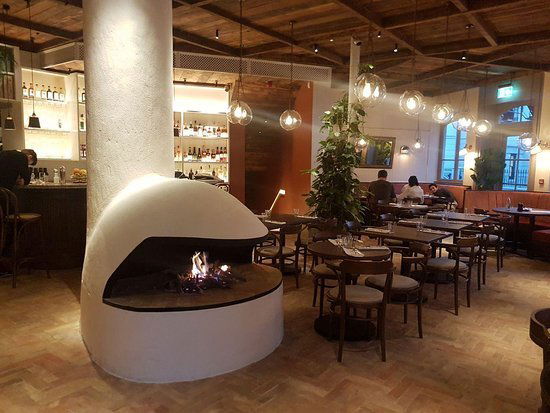
Wild Tavern is a Michelin Plate Italian in Chelsea (2025) that gets ingredient-led cooking right at the £££ price point. The Tavern Tortelli with Wagyu oxtail and a raw bar of Gillardeau oysters and Sicilian red prawn set it apart from most neighbourhood Italians in London. Book a week to two weeks ahead; weekday lunch overlooking Chelsea Green is the pick.
If you want ingredient-led Italian cooking done with genuine precision in a room that feels warm rather than performative, Wild Tavern is worth booking. Its 2025 Michelin Plate confirms what the Google rating of 4.4 across 350 reviews already suggests: this is a neighbourhood restaurant that punches above its postcode. At £££ pricing, it sits at an accessible point for Chelsea, and the kitchen's focus on quality sourcing — Gillardeau oysters, Sicilian red prawn, Wagyu oxtail in the house tortelli — puts it ahead of most Italian restaurants in the same price tier in London. Book it for a second visit knowing exactly what to order, and it will reward you.
Wild Tavern overlooks Chelsea Green, one of the few genuinely village-scale open spaces left in SW3, and the room takes full advantage of that setting. Waxed wooden floors and terracotta hues give it the feel of a Tuscan trattoria without the kitsch. This is not a cavernous restaurant designed for volume; it reads as intimate and settled, the kind of room where the pace slows naturally. Seating feels considered rather than maximised, which matters for a kitchen that relies on timing , grilled prime cuts and raw bar preparations both demand attention. If you have been once and sat in the main room, try to request a position with a view of Chelsea Green on your return: the combination of natural light and the green outside changes the feel of the meal considerably depending on time of day.
The editorial angle here is technique in service of produce, and Wild Tavern applies it consistently. The Michelin Plate , awarded for 2025 , recognises kitchens that cook with good ingredients and genuine skill, and the descriptor in the Michelin entry is precise: "simple but skilful." That framing is important. This is not a kitchen trying to complicate Italian cuisine; it is trying to honour it. The raw bar , oysters, tartares, carpaccios , requires confidence in sourcing above all else, and the use of Gillardeau oysters (one of the most reliably consistent premium oyster producers in France) and raw Sicilian red prawn signals that confidence. Neither ingredient tolerates mediation; they are on the plate because the kitchen trusts them.
The pasta section is where the cooking moves from reliable to genuinely good. The Tavern Tortelli with Wagyu oxtail is the dish to order if you have not had it. Wagyu oxtail in filled pasta is a combination that works because the fat content of the meat survives the braising and filling process in a way that leaner cuts do not, giving the pasta a depth that reads as rich without being heavy. For a regular returning visitor: if the pasta menu has rotated, the underlying logic of the kitchen , ingredient-led, grilled proteins, housemade pasta , means the safest strategy is always to ask the server what came in that day before ordering. The kitchen's sourcing approach makes daily provenance the most relevant information on the menu.
Grill work on prime cuts of meat and fish completes the picture of a kitchen that has decided what it is good at and stayed there. Compared to Italian restaurants in London that pursue tasting-menu ambition , Luca in Clerkenwell operates at a similar price point with a more contemporary Italian register , Wild Tavern is the choice when you want the material to lead rather than the concept. It is closer in spirit to a serious trattoria than to a modern Italian restaurant, and that is a deliberate position, not a limitation.
Chelsea Green is at its most pleasant in the warmer months, and a lunch booking on a weekday in late spring or summer , when light comes through the windows and the green is in use , gives the room its leading version of itself. Weekend lunch is also a practical option: the neighbourhood skews residential, which means the lunch crowd tends to be calmer than the evening service. Evening bookings work well for the raw bar and grilled sections, but if you want the pasta to be the centrepiece of the meal, lunch is the better frame , you will eat less around it, and the kitchen's lighter touch shows more clearly. Avoid Friday and Saturday evenings if a quieter room matters to you; a 4.4 rating and Michelin recognition mean those slots fill and the pace changes.
Booking difficulty is moderate. Wild Tavern is not a restaurant where you need to be on the phone at midnight three months out, but same-week availability on weekend evenings is unlikely given the Michelin recognition and the size of the room. A week to ten days of lead time is a reasonable working assumption for a weekday evening slot. For a weekend dinner, two to three weeks is safer. Walk-in chances are better at lunch, particularly mid-week, but the room's intimacy means capacity is limited and the risk is real. Book ahead.
For Italian cooking in London, Luca (Clerkenwell) is the closest comparison in price and ambition, though it takes a more British-Italian hybrid approach. Bocca di Lupo in Soho covers more Italian regional ground at a similar price tier. Bancone is the better call if fresh pasta is the sole priority and budget is the constraint. Artusi in Peckham offers a more casual, neighbourhood-focused Italian at a lower price point. Wild Tavern sits above all of these on sourcing signal and Michelin recognition, and below none of them on value for the price tier.
For pasta-focused Italian elsewhere in London, Archway is worth knowing. For Italian cooking at the furthest extreme of ambition globally, 8½ Otto e Mezzo Bombana in Hong Kong and cenci in Kyoto represent what the cuisine looks like when transplanted to an entirely different context. Wild Tavern is not operating at that register , but within London's neighbourhood Italian category at £££, it is among the more credible options currently holding a Michelin accolade.
If you are building a wider London dining trip, our full London restaurants guide, London hotels guide, London bars guide, London wineries guide, and London experiences guide are useful starting points. For destination restaurant travel outside London, The Fat Duck in Bray, L'Enclume in Cartmel, Moor Hall in Aughton, Gidleigh Park in Chagford, Hand and Flowers in Marlow, and hide and fox in Saltwood are all worth your time.
| Venue | Cuisine | Awards | Booking Difficulty | Value |
|---|---|---|---|---|
| Wild Tavern | Italian | Wild Tavern brings a new relaxed vibe to the smart neighbourhood of Chelsea. The menu oozes quality sourcing; ingredients are prepared simply but skilfully – Gillardeau oysters, raw Sicilian red prawn...; Set overlooking the tiny Chelsea Green, this homely neighbourhood restaurant has the enticing feel of a warm Tuscan trattoria, with its waxed wooden floors and terracotta hues. True to the ethos of Italian cuisine, the dishes are ingredient-led and rely on the natural flavours of the produce – an approach extended to the raw bar of oysters, tartares and carpaccios. Alongside the prime cuts of meat and fish cooked over the grill, there are some terrific homemade pastas you'd be a fool to miss, especially the 'Tavern Tortelli' with Wagyu oxtail.; Michelin Plate (2025); Set overlooking the tiny Chelsea Green, this homely neighbourhood restaurant has the enticing feel of a warm Tuscan trattoria, with its waxed wooden floors and terracotta hues. True to the ethos of Italian cuisine, the dishes are ingredient-led and rely on the natural flavours of the produce – an approach extended to the raw bar of oysters, tartares and carpaccios. Alongside the prime cuts of meat and fish cooked over the grill, there are some terrific homemade pastas you'd be a fool to miss, especially the 'Tavern Tortelli' with Wagyu oxtail. | Moderate | — |
| CORE by Clare Smyth | Modern British | Michelin 3 Star, World's 50 Best | Unknown | — |
| Restaurant Gordon Ramsay | Contemporary European, French | Michelin 3 Star, World's 50 Best | Unknown | — |
| Sketch, The Lecture Room and Library | Modern French | Michelin 3 Star, World's 50 Best | Unknown | — |
| The Ledbury | Modern European, Modern Cuisine | Michelin 3 Star, World's 50 Best | Unknown | — |
| Dinner by Heston Blumenthal | Modern British, Traditional British | Michelin 2 Star, World's 50 Best | Unknown | — |
What to weigh when choosing between Wild Tavern and alternatives.
Wild Tavern's format is ingredient-led à la carte rather than a set tasting menu, so the question is less about committing to a chef's progression and more about how much you order. The Michelin Plate (2025) recognition confirms the kitchen earns its £££ price point. For a structured multi-course format, look at Luca in Clerkenwell instead — Wild Tavern rewards diners who want to pick and graze rather than be guided through a fixed sequence.
The Tavern Tortelli with Wagyu oxtail is specifically called out in Michelin's own notes as something to prioritise — order it. Beyond that, the kitchen's approach centres on a raw bar (Gillardeau oysters, tartares, carpaccios) and prime cuts over the grill, so a sensible strategy is to open with something from the raw bar and build from there. The homemade pasta section is where the kitchen shows the most craft, so don't skip it for a second main.
The menu's heavy focus on raw seafood, meat, and pasta means pescatarian and omnivore diets are well served, but the format is less accommodating for strict vegetarians or vegans given the ingredient-led, protein-forward approach. Specific allergy or dietary policies are not documented in available venue data, so contact the restaurant at 2 Elystan St, SW3 3NS before booking if this is a deciding factor.
The room has the feel of a neighbourhood trattoria rather than a formal dining room, which makes solo dining less awkward than at higher-ceremony Chelsea addresses. Whether there is dedicated counter or bar seating for solo guests is not confirmed in the venue record, so it's worth requesting a bar or counter spot when booking. At £££ per head, solo dining here is a considered spend but the à la carte format means you control the total.
Yes, with the right expectations. Wild Tavern's Michelin Plate (2025) and £££ pricing signal a special-occasion-capable kitchen, but the atmosphere is relaxed and warm rather than formally celebratory — think anniversary dinner for two who prefer conversation over ceremony, not a landmark birthday that needs theatre. For more dramatic room presence in Chelsea, the bar is higher; Wild Tavern wins on food quality and comfort over spectacle.
At £££, Wild Tavern sits in a bracket where the Michelin Plate (2025) provides meaningful reassurance that the kitchen is operating at the right level. The sourcing — Gillardeau oysters, Wagyu oxtail, Sicilian red prawn — justifies a higher spend on ingredients alone. Compared to nearby Chelsea alternatives at similar prices that trade more on room or postcode, Wild Tavern's value case rests on what's actually on the plate.
For Italian at a similar price and ambition, Luca (Clerkenwell) is the closest comparison, though it takes a more British-Italian hybrid approach and has a busier, louder room. If you want stricter regional Italian technique, Padella (Borough Market and Shoreditch) is far cheaper but less refined. For a step up in formality and price within Italian-adjacent cooking, Locanda Locatelli in Marylebone is the reference point.
Keep this venue in your Pearl passport, rate it after you visit, and track it alongside every other place you collect.