
Restaurant in Puligny-Montrachet, France · Inside COMO Le Montrachet
Le Montrachet
485Pearl PointsBurgundy classics, serious wine, easy to book.



About Le Montrachet
A Michelin Plate hotel-restaurant in the heart of Puligny-Montrachet, Le Montrachet pairs classical Burgundian cooking — Bresse poultry, Charolais beef, Saône pike perch — with one of the world's most relevant on-location wine lists. At €€€ and easy to book, it is the most practical serious dining option in the appellation for wine-focused visitors already in the village.
Verdict: Worth the detour into Puligny-Montrachet village
Le Montrachet is easy to book by the standards of Burgundy's better dining rooms, but that accessibility shouldn't lower your expectations. This is a Michelin Plate restaurant with three consecutive Opinionated About Dining Classical Europe rankings — #73 in 2023, #77 in 2024, and #93 in 2025 — operating out of a hotel in one of the world's most wine-famous villages. If you're already visiting the Côte de Beaune for the vineyards, booking a table here is a direct decision. If you're making a dedicated trip, the combination of Burgundian cooking, local wine access, and a place to stay overnight makes the logistics considerably simpler than driving back to Beaune or Dijon after dinner.
The Room and the Mood
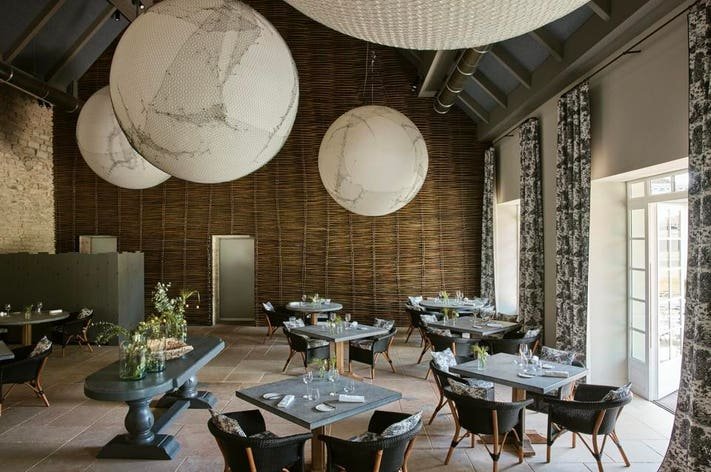
Le Montrachet sits at 10 Place du Pasquier de la Fontaine, in the centre of Puligny-Montrachet village. The setting is a traditional Burgundian hotel-restaurant, which means the atmosphere is composed rather than buzzing. Expect a room that feels calibrated for serious dining conversations: the kind of place where wine talk is the background noise, not competing music or table-to-table chatter. For a food and wine traveller who wants to discuss what's in the glass without raising their voice, this is a practical advantage over louder urban alternatives. The Google rating of 4.7 across 33 reviews reflects a small but consistent audience, largely visitors who came specifically for the food-and-wine combination.
Seasonal Eating at Le Montrachet
The seasonal angle matters here more than at most French restaurants because the sourcing is tightly regional. The kitchen's approach centres on Bresse poultry, Charolais beef, and pike perch from the Saône, all proteins with strong seasonal and provenance logic in Burgundian cooking. Vegetables come directly from a dedicated horticulturist who supplies the restaurant, which means the menu's vegetable element shifts with the calendar more noticeably than at kitchens working through broader distribution.
In practical terms: spring and early summer bring the lightest, most vegetable-forward plates. Autumn is when Charolais beef and game preparations tend to dominate, and the wine list's older Burgundy vintages find their most natural food partners. Winter visits lean into the richness the region is known for, pike perch preparations tend to appear with heavier, butter-intensive sauces when the weather calls for it. If you're choosing between a June visit and a November visit, November gives you the fuller, more classically Burgundian table. June gives you a lighter plate and the leading conditions for walking the appellation before dinner.
The wine program is the other seasonal variable worth planning around. Puligny-Montrachet is the village, the grand cru vineyards of Montrachet, Chevalier-Montrachet, and Bâtard-Montrachet are within sight of the restaurant. A kitchen that pays, in the venue's own words, as much attention to wines as to dishes, in this specific village, is a meaningful claim. The wine list access here is different in kind from what you'd find at a comparably priced Paris restaurant. You are, literally, in the appellation.
Recent Evolution: Chef Context
The venue database lists both Luc Filoé and Romain Versino in connection with Le Montrachet. The awards description attributes the sourcing philosophy and kitchen approach to Versino. This suggests a recent or ongoing chef transition, which is worth factoring into your booking decision. Restaurants mid-transition can run unevenly, but the 2025 OAD ranking holding at #93 (Classical Europe is a demanding list) indicates that whatever the current kitchen configuration, quality is being maintained at a recognisable level. If this is a concern, contacting the restaurant directly before booking is the practical approach.
How It Compares
Against the broader Puligny-Montrachet dining options, Le Montrachet is the most structured choice. Olivier Leflaive in the same village offers a more casual lunch format built around wine tasting with food, rather than a meal with wine. If your priority is maximum wine volume with food as context, Olivier Leflaive makes more sense. If you want a proper dinner with cooking that takes equal billing with the bottles, Le Montrachet is the right call. For the full Puligny-Montrachet restaurant picture, our guide covers the village's options in detail.
Beyond the village, Burgundy's broader dining geography is relevant for trip planning. Troisgros in Ouches and Georges Blanc in Vonnas represent the region's grand old institutions at a different price tier and ambition level. Paul Bocuse in Collonges-au-Mont-d'Or is the historical anchor of French classical cooking in the area. Le Montrachet doesn't compete with those on ambition or scale, it competes on locality and accessibility. For the wine-focused traveller spending two or three nights in the Côte de Beaune, it is the most sensible on-location option.
Staying and Exploring
Because Le Montrachet is a hotel-restaurant, the strongest case for booking here is an overnight stay combined with dinner. Driving back to Beaune after serious Burgundy wine consumption is not ideal, and staying in the village puts you within walking distance of the appellation at sunrise. Our Puligny-Montrachet hotel guide covers alternatives if the hotel itself is full, and our Puligny-Montrachet winery guide is the logical next step for planning the wider visit. The bars guide and experiences guide cover what else the village offers beyond the table.
For France's broader fine dining context, the reference points that help calibrate Le Montrachet's tier: Arpège in Paris and Mirazur in Menton sit several rungs above on the international scale, as do Le Cinq in Paris and Guy Savoy. Le Montrachet is not in that conversation, nor is it priced as if it were. At €€€ in a village with €€€€ wine lists, it is the correct price point for what it delivers. Flocons de Sel in Megève, Bras in Laguiole, Auberge de l'Ill in Illhaeusern, and Les Prés d'Eugénie in Eugénie-les-Bains are the better French regional comparisons for a restaurant of this type: serious classical cooking, strong regional identity, hotel-integrated, and operating outside Paris at a price that doesn't require a separate budget line for the meal. La Table du Castellet rounds out that peer group for southern France.
Quick reference: €€€ price range | Michelin Plate 2024–2025 | OAD Classical Europe #93 (2025) | Google 4.7/5 (33 reviews) | Hotel-restaurant | Easy to book | Puligny-Montrachet village centre.
Frequently Asked Questions
What should a first-timer know about Le Montrachet?
This is a hotel-restaurant in the centre of Puligny-Montrachet village, so the experience combines regional Burgundian cooking with a wine list built around the appellation on its doorstep. The kitchen, under Chef Romain Versino, sources from tightly regional producers — Bresse poultry, Charolais beef, Saône pike perch — so expect a menu that changes with what's in season. It holds a Michelin Plate and has ranked in the OAD Classical Europe top 100 for three consecutive years (2023–2025), which signals consistency without the pressure or price tag of a starred room. Plan around a meal-plus-overnight stay if you're not based locally; driving back to Beaune after dinner is possible but wastes the atmosphere.
What should I order at Le Montrachet?
The kitchen's documented focus is on Bresse poultry, Charolais beef, and pike perch from the Saône, supported by organic vegetables sourced directly from a dedicated horticulturist. Those proteins are the anchor dishes worth prioritising. Beyond that, the wine pairing is the real lever here — the restaurant explicitly integrates wine selection with the cooking, so ordering à la carte with a glass-by-glass recommendation from the team is likely the best approach rather than defaulting to a set menu.
How far ahead should I book Le Montrachet?
Le Montrachet is accessible by Burgundy fine-dining standards — 2 to 3 weeks' notice is generally sufficient outside harvest season (late September to October), when wine tourism peaks and tables are harder to secure. If you're planning a stay during the Hospices de Beaune weekend or peak summer, push that to 4 to 6 weeks. As a hotel-restaurant, booking the room and dinner together through the same property simplifies logistics and may improve table availability.
Is Le Montrachet good for a special occasion?
Yes, particularly for wine-focused occasions or anniversaries tied to a Burgundy trip. The setting — a traditional hotel in the village of Puligny-Montrachet — provides a more intimate and place-specific atmosphere than a city restaurant could. The price range (€€€) means it's a spend-up occasion without crossing into the three-figure-per-head territory of a starred destination. For a milestone requiring genuine theatre or a tasting menu format, a Michelin-starred room in Beaune or Dijon would be a stronger choice.
Is the tasting menu worth it at Le Montrachet?
The venue's documented strengths — regional sourcing, wine integration, and seasonal produce — suit a tasting menu format well, since those elements compound across multiple courses. At €€€ pricing, the format is likely to represent fair value compared to starred alternatives in the region. That said, the kitchen's emphasis on Bresse poultry, Charolais beef, and Saône fish means à la carte ordering around those key proteins is a legitimate alternative if you prefer to eat to appetite rather than format.
Is Le Montrachet worth the price?
At €€€, it sits in a fair position for what it delivers: three consecutive years in the OAD Classical Europe top 100 (peaking at #73 in 2023), a Michelin Plate, and sourcing that most restaurants at this price point can't replicate. The wine context adds value that's genuinely location-specific — you are eating in Puligny-Montrachet itself, which changes the wine list's relevance. If you're visiting the Côte de Beaune and want one proper dinner, this is a logical place to spend it.
What are alternatives to Le Montrachet in Puligny-Montrachet?
Olivier Leflaive, also in Puligny-Montrachet, operates a wine-led lunch format with a simpler menu built around their own domaine wines — lower spend, less kitchen ambition, but strong for a wine-first experience. For more serious cooking with Michelin recognition, Beaune (15 minutes north) has multiple starred options. Le Montrachet is the most structured full-service dining room in the village itself, which makes it the default if you want dinner with proper service rather than a domaine lunch.
Location
10 place du Pasquier de la Fontaine, 21190 Puligny-Montrachet, France
Compare Le Montrachet
| Venue | Cuisine | Price | Awards | Booking Difficulty |
|---|---|---|---|---|
| Le Montrachet | French, Modern Cuisine | €€€ | Easy | |
| Plénitude | Contemporary French | €€€€ | Michelin 3 Star, World's 50 Best | Unknown |
| Pierre Gagnaire | French, Creative | €€€€ | Michelin 3 Star, World's 50 Best | Unknown |
| Alléno Paris au Pavillon Ledoyen | Creative | €€€€ | Michelin 3 Star, World's 50 Best | Unknown |
| Kei | Contemporary French, Modern Cuisine | €€€€ | Michelin 3 Star, World's 50 Best | Unknown |
| Le Cinq - Four Seasons Hôtel George V | French, Modern Cuisine | €€€€ | Michelin 3 Star, World's 50 Best | Unknown |
Key differences to consider before you reserve.
Also Consider
- Plénitude, Contemporary French, €€€€
- Pierre Gagnaire, French, Creative, €€€€
- Alléno Paris au Pavillon Ledoyen, Creative, €€€€
- Kei, Contemporary French, Modern Cuisine, €€€€
- Le Cinq - Four Seasons Hôtel George V, French, Modern Cuisine, €€€€
Le Montrachet sits at €€€ against a comparison set of €€€€ Paris restaurants, which immediately reframes the conversation. Plénitude, Pierre Gagnaire, Alléno Paris au Pavillon Ledoyen, Kei, and Le Cinq at the Four Seasons George V all operate at higher price points, in Paris, with the kitchen ambition and service infrastructure to match. If you want the most technically demanding contemporary French cooking with full brigade service, those Paris rooms deliver something Le Montrachet does not attempt. Le Montrachet is classical Burgundian, not creative Parisian, and the price reflects that distinction honestly.
Where Le Montrachet outperforms all five Paris comparisons is location-specific value. No amount of spending at Plénitude or Alléno Ledoyen puts you in Puligny-Montrachet at dinner with the appellation's white wines available at source prices, and the vineyards walkable the next morning. That is not a small thing for a wine-focused trip. If your reason for visiting Burgundy is the wine, Le Montrachet gives you a dining experience calibrated to that context in a way a Paris restaurant structurally cannot.
The booking calculus also differs. All five Paris comparisons require advance planning of weeks to months. Le Montrachet is accessible with reasonable notice, a meaningful practical advantage if your Burgundy itinerary is still forming. The honest recommendation: if you are in the Côte de Beaune for wine, book Le Montrachet as your anchor dinner. If you are building a France trip primarily around fine dining rather than wine travel, one of the Paris €€€€ rooms will give you more cooking ambition per euro spent.
Recognized By


Explore Puligny-Montrachet
Save or rate Le Montrachet on Pearl
Keep this venue in your Pearl passport, rate it after you visit, and track it alongside every other place you collect.