
Restaurant in Tokyo, Japan
L'allium
370Pearl PointsSerious French cuisine without the ¥¥¥¥ premium.
.png?width=144&height=144&quality=80)

About L'allium
L'allium is a classical French dining room in Tokyo's Shirokanedai neighbourhood, built around foie gras, caviar, and truffle-led prix fixe menus. At ¥¥¥, it holds two consecutive Michelin Plates and sits below the price threshold of Tokyo's starred French competition. Book it when you want serious, unambiguous French cooking without the four-symbol commitment.
The Verdict
L'allium earns a confident booking recommendation for anyone who wants serious French cuisine in Tokyo without paying the four-symbol premium. At ¥¥¥, this Shirokanedai basement dining room delivers a prix fixe format built around classical luxury ingredients — foie gras, caviar, truffles — at a price point that sits meaningfully below comparably ambitious French tables in the city. Two consecutive Michelin Plates (2024, 2025) confirm it is on the guide's radar, and the kitchen's commitment to a guest-choice structure within the menu gives it a flexibility that stricter tasting menus do not. Book it for a special dinner where you want technical French cooking without a four-figure bill.
The Room
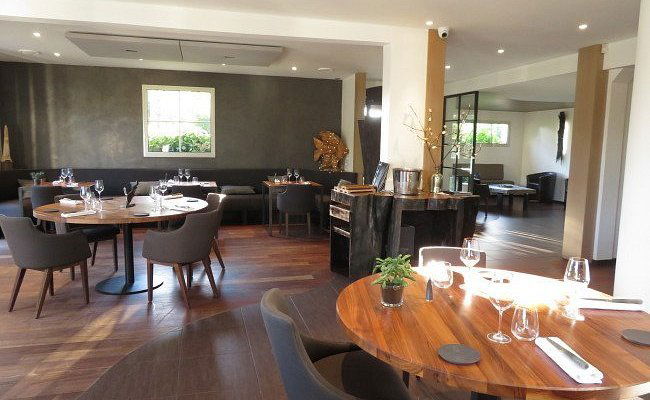
The address is basement level in Shirokanedai, one of Tokyo's quieter, more residential neighbourhoods in Minato City. Descend into what the Michelin inspectors have described as carrying the air of a concert hall: a brightly lit open kitchen positioned like a stage, Chef Yoshiaki Shindo conducting service from within it. The atmosphere is calm and focused rather than buzzy or celebratory. Noise levels are low. Conversation is easy. If you are coming from a louder, more scene-driven restaurant in Ebisu or Roppongi, the contrast is noticeable. L'allium is a room that asks you to pay attention to the food, and the kitchen delivers enough to justify that attention.
For Tokyo French dining in this sensory register, quiet, precise, chef-forward, the closest comparable is L'Effervescence in Nishi-Azabu, though that room operates at ¥¥¥¥ and carries two Michelin stars. L'allium offers a similar seriousness of atmosphere at a lower price commitment, which is a meaningful practical difference.
The Kitchen
The editorial angle here matters: what L'allium does technically is commit to French cuisine without hedging. In a Tokyo dining environment where French-Japanese fusion has become a default register for many ambitious kitchens, Chef Shindo's choice to anchor the menu in classical luxury ingredients is a deliberate stance. Poêle of foie gras sits at the centre of the prix fixe. Caviar and truffles appear as staple, not seasonal, offerings. This is not French technique applied to Japanese produce, it is French cuisine, presented in Tokyo, with the product choices to match.
That distinction matters when you are comparing options. Florilège in Aoyama sits at the same ¥¥¥ tier and carries two Michelin stars, but chef Hiroyasu Kawate works a distinctly French-Japanese synthesis. Sézanne in the Four Seasons operates at ¥¥¥¥ with two stars and a more international luxury positioning. If you specifically want French cuisine as the French would recognise it, foie gras, classical saucing, European luxury produce, L'allium is the more direct answer than either of those alternatives at this price level.
The guest-choice element within the menu is also worth noting. Being encouraged to select your own meat and fish within a prix fixe structure is not standard at this level of formality. It reduces the risk of a significant dish mismatch and makes the restaurant more practical for diners with strong protein preferences or dietary considerations. Compared to the fixed sequence you would face at ESqUISSE or Château Restaurant Joël Robuchon, that flexibility is genuinely useful.
Booking
Booking difficulty is rated Easy. L'allium does not require the weeks-out planning that Tokyo's most in-demand tables demand. For context: L'Effervescence and Florilège both require considerably more lead time given their two-star status and international profile. L'allium's Michelin Plate recognition keeps demand at a level where booking a week or two out should be achievable for most dates. Weekend evenings will fill faster than weekday sittings. If your travel dates are fixed, book as soon as your itinerary is confirmed, but you are not in the same planning window as the starred competition.
No website or phone number is currently listed in public databases for L'allium. Plan to book via a concierge service, your hotel's dining team, or a third-party reservation platform that covers Tokyo restaurants. This is standard practice for smaller Japanese fine dining rooms and should not be a deterrent.
Who It's For
L'allium works well for food-focused travellers who want a genuine French fine dining experience in Tokyo and are not willing to absorb the ¥¥¥¥ premium of the city's starred French tables. It is a good answer for the second or third night of a Tokyo itinerary after you have covered a high-profile kaiseki or sushi counter. If you are building a week-long dining programme that includes Gion Sasaki in Kyoto or HAJIME in Osaka, L'allium fits as a slightly lower-key but technically serious Tokyo evening that does not duplicate the Japanese traditions you are already covering elsewhere.
It is also a practical choice for solo diners and couples who want a calm, focused room rather than a high-energy dining environment. The concert hall atmosphere and open kitchen make solo dining at the counter or a small table feel purposeful rather than awkward.
For groups considering L'allium: with no seat count publicly listed, confirm capacity and private dining availability directly before planning a party of four or more. The basement format suggests limited flexibility for large groups, but smaller private parties should enquire with the restaurant directly.
If you are planning a wider Japan trip, Pearl's guides to Tokyo restaurants, Tokyo hotels, Tokyo bars, and Tokyo experiences cover the full city. For French cooking elsewhere in Japan, akordu in Nara and Goh in Fukuoka are worth considering depending on your route. For a regional comparison further afield, Les Amis in Singapore and Hotel de Ville Crissier represent the wider French fine dining tier L'allium is participating in.
Frequently Asked Questions
What should a first-timer know about L'allium?
The restaurant is basement-level in Shirokanedai, Minato City — a residential neighbourhood, so don't expect a buzzy street-level entrance. The format is prix fixe, with foie gras as a centrepiece, though guests choose their own meat and fish courses. Michelin has recognised it with a Plate in both 2024 and 2025, which positions it as competent and consistent rather than a destination flex. Booking is easier than most serious French tables in Tokyo, so you won't need to plan months ahead.
Is L'allium good for a special occasion?
Yes — the room has the feel of a concert hall with the kitchen as a lit stage, which gives it enough ceremony for a birthday or anniversary without requiring a ¥¥¥¥ budget. The prix fixe format with caviar, foie gras, and truffles reads as a special-occasion meal by design. If you want more theatrical prestige and can absorb the higher price, L'Effervescence or Florilège carry stronger critical profiles, but L'allium delivers the occasion at a more manageable spend.
Is L'allium good for solo dining?
The kitchen-as-stage setup — described as having the air of a concert hall — suggests counter or open-view seating that tends to suit solo diners well. The prix fixe format with guest choice over protein courses also works better for solo decision-making than shared-plate formats. Booking difficulty is rated Easy, which removes the stress of securing a single seat at short notice.
Can L'allium accommodate groups?
The venue data does not confirm private dining or specific group capacity, so larger parties should check the venue's official channels before assuming availability. The prix fixe format and chef-focused room layout typically favour smaller groups of two to four. For a group that needs a dedicated private space, L'Effervescence or HOMMAGE may be safer bets.
What are alternatives to L'allium in Tokyo?
For French fine dining with higher critical recognition, L'Effervescence and Florilège both carry stronger award profiles and suit food-focused travellers willing to pay ¥¥¥¥. HOMMAGE is a closer ¥¥¥ comparison if you want French technique with a Japanese ingredient focus. If you're open to Japanese cuisine at a similar price, Harutaka (omakase) or RyuGin (Japanese haute cuisine) are the benchmark Tokyo tables at that tier.
Is L'allium worth the price?
At ¥¥¥ with Michelin Plate recognition in 2024 and 2025, L'allium delivers a genuinely committed French fine dining experience — caviar, foie gras, truffles — at a price that sits below the top-tier Tokyo French tables. It's worth it if you want the format and the room without paying for a two- or three-star premium. If you're prioritising prestige or a name chef, Florilège or L'Effervescence justify their higher spend more clearly.
Location
Japan, 〒108-0071 Tokyo, Minato City, Shirokanedai, 4 Chome−9−23 B1F
Tokyo, Japan
Compare L'allium
| Venue | Cuisine | Awards | Booking Difficulty |
|---|---|---|---|
| L'allium | French | Easy | |
| Harutaka | Sushi | Michelin 3 Star, World's 50 Best | Unknown |
| RyuGin | Kaiseki, Japanese | Michelin 3 Star, World's 50 Best | Unknown |
| L'Effervescence | French | Michelin 3 Star, World's 50 Best | Unknown |
| HOMMAGE | Innovtive French, French | Michelin 2 Star, World's 50 Best | Unknown |
| Florilège | French | Michelin 2 Star, World's 50 Best | Unknown |
How L'allium stacks up against the competition.
Also Consider
- Harutaka, Sushi, ¥¥¥¥
- RyuGin, Kaiseki, Japanese, ¥¥¥¥
- L'Effervescence, French, ¥¥¥¥
- HOMMAGE, Innovtive French, French, ¥¥¥¥
- Florilège, French, ¥¥¥
At ¥¥¥, L'allium occupies a different price tier from most of its direct French-cuisine peers in Tokyo. L'Effervescence and HOMMAGE both operate at ¥¥¥¥ with two Michelin stars, and both require considerably more lead time to book. If your priority is the most decorated French table in the city and budget is secondary, L'Effervescence is the clearer choice. But L'allium's Michelin Plate recognition and classical ingredient programme, foie gras, caviar, truffles as menu anchors, mean you are not making a large quality concession for the price difference.
Florilège is the most direct ¥¥¥ competitor: two Michelin stars, easier to book than the ¥¥¥¥ tier, but working a French-Japanese synthesis rather than classical French cooking. If you want French cuisine in its European form, L'allium is the stronger fit. If French-Japanese fusion interests you more, Florilège's star credentials make it the better booking. For Japanese cuisine at the same ambition level, RyuGin (kaiseki, ¥¥¥¥) and Harutaka (sushi, ¥¥¥¥) are in different categories entirely and serve a different purpose on a Tokyo dining itinerary.
On booking ease, L'allium is the most accessible option in this peer group. RyuGin and Harutaka are among the hardest tables in Tokyo to secure, and both ¥¥¥¥ French tables require planning weeks out. L'allium's Easy rating means it functions well as a last-minute addition to a Tokyo programme or as a fallback when your first-choice booking is unavailable. The trade-off is that it carries a Plate rather than stars, but for a food-focused traveller who wants classical French technique in a calm, chef-forward room at a manageable price, L'allium delivers a stronger return than its rating alone suggests.
Recognized By


Explore Tokyo
Save or rate L'allium on Pearl
Keep this venue in your Pearl passport, rate it after you visit, and track it alongside every other place you collect.