
Restaurant in Ko Samui, Thailand · Inside Cape Fahn Hotel
Long Dtai
290Pearl PointsPrivate island Thai cooking with a real pedigree.
.png?width=144&height=144&quality=80)
About Long Dtai
Long Dtai is David Thompson's Southern Thai restaurant on a private island off Ko Samui's east coast, holding consecutive Michelin Plates in 2024 and 2025. At ฿฿฿, it earns its price through a combination of precise regional cooking, a documented marine sustainability focus, and panoramic bay terrace views. Book if setting and culinary credibility both matter to your trip.
Is Long Dtai worth visiting on Ko Samui?
Yes — and for a specific reason: it is the only place on the island where you can eat chef David Thompson's Southern Thai cooking on a private island with panoramic bay views, backed by consecutive Michelin Plate recognition in 2024 and 2025. If you are already interested in Southern Thai cuisine and want a setting that makes the meal an event, Long Dtai earns its ฿฿฿ price point. If you want casual beach food or are price-sensitive, Kapi Sator delivers authentic Southern Thai at ฿฿ without the resort premium.
The Venue Portrait
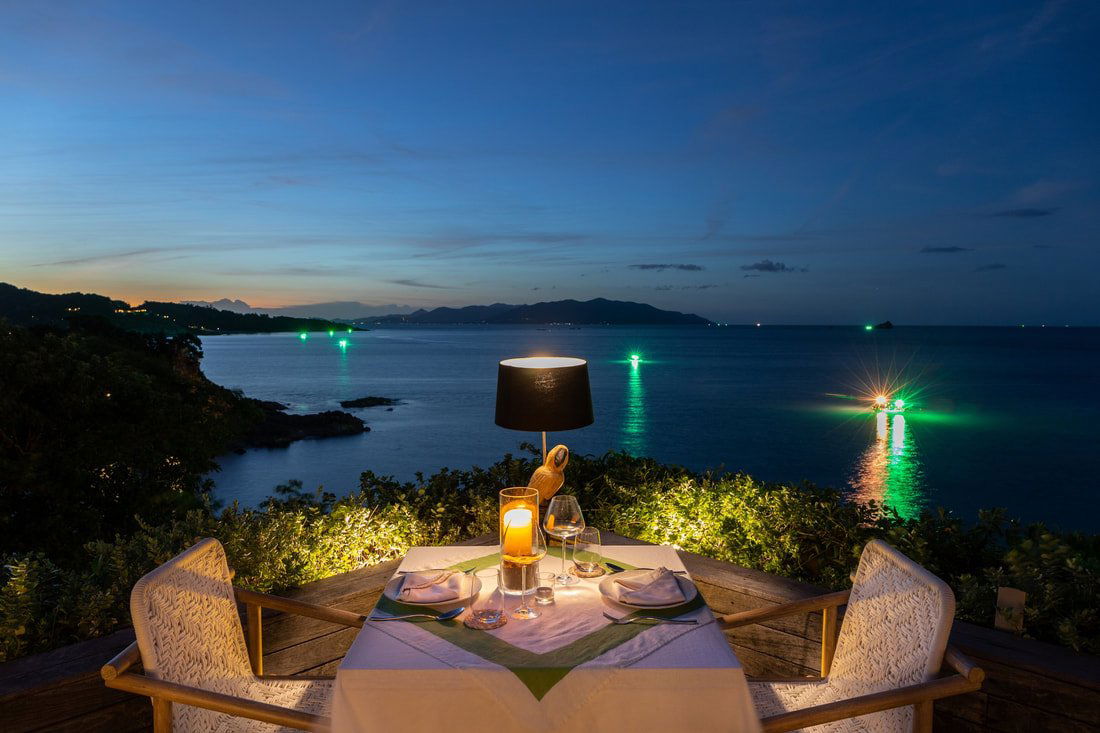
Long Dtai sits within a private island resort off Samui's east coast, reached by crossing shallow waters — a short transit that immediately frames the meal as a destination rather than a drop-in. The restaurant's terrace opens onto a panoramic bay view, which means the setting does real work before a single dish arrives. That context matters for decision-making: you are committing to an experience, not just a dinner booking, and the logistics require a small amount of intention.
What Thompson does with Southern Thai cooking is worth understanding before you go. Southern Thai cuisine is structurally more assertive than the Central Thai dishes most tourists encounter: sharper with turmeric, more aggressive with fermented shrimp paste, and less inclined toward sweetness. Thompson's approach, according to verified Michelin documentation, is deliberately restrained in presentation while being precise in technique. The grilled squid marinated in turmeric and coconut milk is the documented anchor dish , an example of the kitchen using marinade not to mask protein but to sharpen it. Marine sustainability is a stated kitchen priority, which shapes ingredient selection throughout the menu.
Two consecutive Michelin Plates (2024 and 2025) place Long Dtai in a specific bracket: not at the star level of Sorn in Bangkok or PRU in Phuket, but recognised as a kitchen producing food of consistent quality and identity. A Plate signals that Michelin inspectors found the cooking worth noting even without the structural complexity that earns stars. For a dining guide reader, the practical translation is: the food is reliable, the concept is coherent, and the kitchen has sustained that standard across at least two inspection cycles. Google reviews support this at 4.3 across 106 ratings , a score that reflects genuine repeat satisfaction rather than novelty hype.
How to Approach Long Dtai Across Multiple Visits
If you are staying on Samui for a week or longer, Long Dtai rewards a deliberate multi-visit strategy. On a first visit, let the documented dishes anchor the meal: the turmeric-marinated squid is the right entry point for understanding Thompson's approach to Southern Thai flavour. The restraint is the point , do not arrive expecting maximalist plating or tasting-menu pageantry.
A second visit is better spent exploring the protein and ferment-forward dishes that define Southern Thai cooking at its most regional. The cuisine's use of kapi (fermented shrimp paste) and dried seafood in its base sauces is not background flavour; it is the architecture. Thompson's menu, per Michelin documentation, treats these ingredients with the same precision applied to the squid. Come with that expectation and you will read the menu differently. For context on how other Southern Thai kitchens in Thailand handle the same ingredients, Chom Chan in Phuket and Juumpo in Phang Nga offer useful regional comparisons at different price tiers.
If a third visit is viable, use it to focus on the bay-facing terrace at a different time of day. The view shifts substantially depending on light conditions, and the setting is a material part of what justifies the ฿฿฿ spend. Evening visits capture the bay at its most atmospheric. A daytime or early evening approach gives you more visual range across the water. Neither is wrong , they are genuinely different experiences within the same venue.
For explorers cross-referencing Southern Thai cooking across the region, Anuwat in Phang Nga and AKKEE in Pak Kret represent the cuisine at different points on the formality spectrum. Long Dtai occupies the resort-fine-dining end of that range, which is a strength when the setting is working in your favour and a minor friction point if you want stripped-back, market-adjacent informality.
Who Should Book Long Dtai
Book if: you are interested in Southern Thai cooking from a kitchen with documented technique, you value setting as part of the dining experience, and ฿฿฿ is within your trip budget. The Michelin Plate recognition across two consecutive years gives you reasonable confidence that the kitchen is consistent rather than coast-dependent on its location premium.
Consider alternatives if: you want the most authentic Southern Thai cooking at the lowest friction and cost, in which case Kapi Sator at ฿฿ is the more direct answer. If seafood is your primary interest rather than regional cuisine, Baan Suan Lung Khai at ฿฿ removes the resort premium entirely. For the broader Ko Samui dining picture, see our full Ko Samui restaurants guide.
Know Before You Go
- Cuisine: Southern Thai, with a marine sustainability focus
- Price range: ฿฿฿
- Awards: Michelin Plate 2024 and 2025
- Google rating: 4.3 (106 reviews)
- Location: Private island resort, east coast of Ko Samui , accessed by crossing shallow waters
- Address: 24/269 Moo 5 T, A.Koh Samui, Surat Thani 84320, Thailand
- Booking difficulty: Easy
- Leading for: Special occasions, food-focused travellers, multi-night Samui stays
- Not ideal for: Budget-conscious diners, those seeking casual beach dining
- Explore more: Ko Samui hotels | Ko Samui bars | Ko Samui experiences | Ko Samui wineries
Frequently Asked Questions
Is Long Dtai good for solo dining?
Solo diners are well-suited to Long Dtai's format. A Southern Thai menu built on individual dishes — rather than sharing-heavy banquet formats — means you can eat through the menu at your own pace without needing a group to justify the spread. At ฿฿฿ pricing, a solo meal is a manageable spend relative to the private island setting and Michelin Plate credential.
What should I wear to Long Dtai?
The database does not specify a dress code, but the venue's context — a private island resort off Samui's east coast with terrace dining and a Michelin Plate recognition — points toward resort-appropriate attire: clean, presentable clothing rather than beachwear. Lightweight linen or a sundress would fit the setting without overdressing.
What are alternatives to Long Dtai in Ko Samui?
FishHouse is the go-to alternative if you want seafood focus without the private island transit. Kapi Sator and Koh Thai Kitchen are better for everyday Thai eating at a lower price point. Baan Suan Lung Khai suits groups who want a more casual, local experience. The Ranch is a different category entirely — go there for grilled meat, not Thai cooking. None of them offer David Thompson's documented Southern Thai technique.
Is Long Dtai good for a special occasion?
Yes — the combination of private island access, terrace views over the bay, and a Michelin Plate kitchen makes the occasion feel considered rather than manufactured. It works best for couples or small groups who care about food quality, not just atmosphere. If your group wants bottle service and volume, look elsewhere.
Does Long Dtai handle dietary restrictions?
Specific dietary policy is not documented in the available data. Southern Thai cooking frequently uses shrimp paste, fish sauce, and coconut milk as foundational ingredients, which limits straightforward vegan or shellfish-free adaptation. Contact the resort directly before booking if dietary restrictions are a factor — this is not a kitchen where off-menu substitutions are likely to be seamless.
Is Long Dtai worth the price?
At ฿฿฿, Long Dtai is priced at the upper end for Ko Samui dining, and the value case depends on what you are paying for. The Michelin Plate in both 2024 and 2025 confirms the kitchen's consistency, and chef David Thompson's Southern Thai menu is not replicated anywhere else on the island. Add the private island setting and you are paying for a complete experience, not just a meal. If Southern Thai cooking at this level is your reason for visiting, it justifies the price. If you just want good Thai food at a good table, Koh Thai Kitchen delivers that for less.
Location
24/269 Moo 5 T, A.Koh Samui, Surat Thani 84320, Thailand
Ko Samui, Thailand
Compare Long Dtai
| Venue | Awards | Price |
|---|---|---|
| Long Dtai | ฿฿฿ | |
| Baan Suan Lung Khai | ฿฿ | |
| FishHouse | ฿฿฿ | |
| Kapi Sator | ฿฿ | |
| Koh Thai Kitchen | ฿฿฿ | |
| The Ranch | ฿฿฿฿ |
A quick look at how Long Dtai measures up.
Also Consider
- Baan Suan Lung Khai, Seafood, ฿฿
- FishHouse, European, ฿฿฿
- Kapi Sator, Southern Thai, ฿฿
- Koh Thai Kitchen, Thai, ฿฿฿
- The Ranch, Steakhouse, ฿฿฿฿
At ฿฿฿, Long Dtai sits in the same price tier as FishHouse and Koh Thai Kitchen, but it delivers something neither does: Michelin Plate-recognised Southern Thai cooking in a private island setting. FishHouse is the stronger choice if European cooking is what you are after, and Koh Thai Kitchen suits diners who want a broader Thai menu without committing to the Southern regional focus. For the specific combination of culinary credential and setting, Long Dtai is the harder case to argue against at this price tier.
If budget is the constraint, Kapi Sator at ฿฿ is the most direct alternative for Southern Thai cooking on Samui, same cuisine category, no resort premium, lower overall spend. Baan Suan Lung Khai at ฿฿ is worth considering if seafood is your primary interest rather than regional cuisine. Both are easier to book and require no island transit logistics.
The Ranch at ฿฿฿฿ is the only Ko Samui option in this comparison set that spends more, but it operates in a completely different category, steakhouse rather than Thai, so it is not a direct substitute. Choose Long Dtai over The Ranch if you want cuisine that is specific to the region; choose The Ranch if the occasion calls for a format closer to international fine dining. For explorers cross-referencing the Ko Samui dining scene as a whole, see our full Ko Samui restaurants guide.
Recognized By

Explore Ko Samui
Save or rate Long Dtai on Pearl
Keep this venue in your Pearl passport, rate it after you visit, and track it alongside every other place you collect.