
Restaurant in Tokyo, Japan
Hatsuogawa
325Pearl PointsA century-old eel shop worth your time.
.png?width=144&height=144&quality=80)

About Hatsuogawa
A century-old unagi specialist in Asakusa with a Michelin Bib Gourmand (2024) and a kabayaki sauce recipe that has not changed since the original founder. At ¥¥ pricing with easy booking, this is the right call for anyone who wants a historically grounded eel meal in Tokyo without the financial commitment of a fine-dining room.
Who Should Book Hatsuogawa — and When
If you are visiting Asakusa and want a single meal that tells you something true about the neighbourhood, Hatsuogawa is the right call. This is not a destination for fine-dining ceremony or tasting-menu theatre. It is a century-old unagi shop, Michelin Bib Gourmand recognised in 2024, run by a family using a kabayaki sauce recipe inherited from the original founder. At ¥¥ pricing, it delivers more historical and culinary weight than most of Tokyo's mid-range options. For a special lunch or an unhurried anniversary meal in one of Tokyo's oldest districts, this is where you want to be.
A Century in Asakusa
Hatsuogawa has been part of the Asakusa fabric since the early 20th century. The name carries its own quiet logic: named after the previous proprietor Hatsutaro, with 'ogawa' translating as 'little river' — the natural habitat of the eels the kitchen has grilled for over a century. The walls display senjafuda, the slips of paper posted by shrine worshippers, which function here as something close to a guest book spanning generations. That continuity is visible and felt. The current proprietor's family runs the room and maintains the sauce, and the experience is built around patience: you wait with sake and appetizers while the eel is grilled to order over charcoal, which takes time and is worth it.
This is not the place for a quick lunch turnaround. The format rewards visitors who treat the meal as the event rather than a stop between attractions. If your Asakusa itinerary is tightly timed, adjust it around this meal rather than the other way round.
What to Order and When to Visit
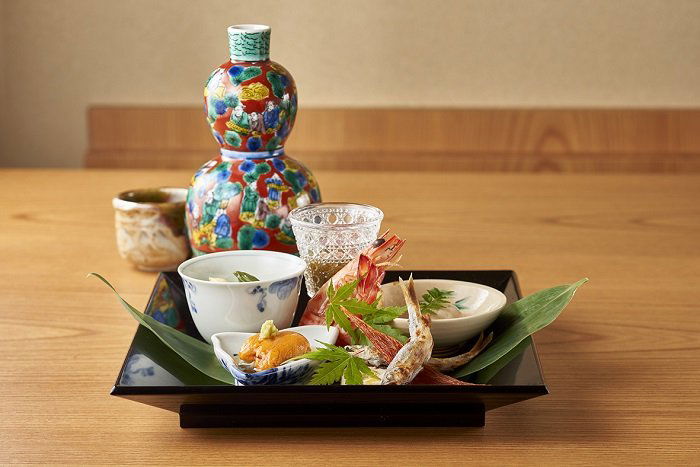
The central dish here is kabayaki, eel filleted, skewered, grilled, steamed, and glazed with the house tare that has been maintained across generations. Served over rice as a unadon or unaju, it is the format the kitchen has refined for over a hundred years. The appetizers served while you wait are part of the experience rather than incidental: use them to pace yourself and try what is offered before the main arrives.
On seasonality: in Japan, unagi has a traditional peak association with doyo no ushi no hi, a midsummer day (typically late July) when eel consumption spikes across the country based on a long-standing belief in its stamina-building properties. Visiting around this date means the city is collectively focused on the dish and the energy at historic shops like Hatsuogawa reflects that. Outside of midsummer, autumn and spring visits are quieter and the eel equally good, the sauce and grilling technique do not vary by season, though wait times and table availability will. Avoid the peak summer date unless you book ahead, as demand at well-regarded shops in Asakusa compresses significantly in that window.
Practical Details
Hatsuogawa sits at 2 Chome-8-4 Kaminarimon, Taito City, a short walk from Sensoji Temple and directly in the Asakusa tourist corridor, which means foot traffic is high. Despite the location, this functions as a neighbourhood restaurant with local regulars rather than a tourist-facing operation. The Google rating sits at 4.1 across 352 reviews, which is consistent for a specialist venue of this type in Tokyo. Booking is rated easy, and the ¥¥ price tier makes it accessible without advance financial planning. That said, arriving without a reservation during peak Asakusa periods (weekends, summer, cherry blossom) adds unnecessary risk to the visit.
The meal format is not suited to dietary restrictions that exclude fish or eel. If that applies to anyone in your group, this is not the right venue and no amount of goodwill from the kitchen will change the menu's structural focus. For groups where one person cannot eat eel, look elsewhere entirely rather than asking the kitchen to accommodate.
Quick reference: ¥¥ pricing / Michelin Bib Gourmand 2024 / Booking: easy, walk-ins possible off-peak / Asakusa, Taito City / Google 4.1 (352 reviews).
Other Unagi and Tokyo Dining to Consider
For more unagi in Tokyo, Nodaiwa Azabu Iikura Honten is the comparison point most serious eaters use, older pedigree, different neighbourhood, slightly more formal register. Unagi Tokito and Watabe are worth checking if you want unagi options across different parts of the city. Ginza Yondaime TAKAHASHIYA and Mejiro Zorome cover different cuisines at comparable or higher price tiers if you are building a wider Tokyo itinerary.
For unagi outside Tokyo, Kanesho in Kyoto and Ike Edoyakiunagi Asahitei in Nara are the peer references worth knowing. Beyond the unagi category, our full Tokyo restaurants guide covers the city's dining options in depth, and if you are extending into the wider Kansai region, Gion Sasaki in Kyoto, HAJIME in Osaka, and akordu in Nara are strong options at a different price tier. For broader Tokyo planning, see our guides to Tokyo hotels, Tokyo bars, and Tokyo experiences. Further afield, Goh in Fukuoka, 1000 in Yokohama, and 6 in Okinawa are worth flagging if your Japan trip extends beyond Tokyo.
Frequently Asked Questions
How far ahead should I book Hatsuogawa?
Book at least a few days in advance, ideally a week or more if your travel dates are fixed. Hatsuogawa is a small, long-established shop on the Asakusa tourist corridor near Sensoji, which means foot traffic is high and walk-in availability can be limited, particularly at lunch. Given the ¥¥ price point and Michelin Bib Gourmand recognition, it draws both locals and visitors regularly.
Is Hatsuogawa worth the price?
Yes, at a ¥¥ price point with a Michelin Bib Gourmand (2024) to its name, Hatsuogawa offers serious value. The kabayaki is prepared with a tare sauce handed down from the original founder, and the wait — structured around appetizers and sake — is part of the experience rather than a flaw. For unagi at this quality level in central Tokyo, you are unlikely to find a better price-to-craft ratio.
Is Hatsuogawa good for solo dining?
Yes. Traditional unagi shops in Japan are well-suited to solo diners, and Hatsuogawa's neighbourhood-local character makes it a low-pressure setting. Ordering kabayaki with a beer or sake while watching the kitchen is a practical, satisfying way to spend an hour in Asakusa. The Bib Gourmand designation signals it skews accessible rather than formal.
What should I order at Hatsuogawa?
Kabayaki is the core dish and the reason to come: eel grilled, steamed, and glazed with the house tare that traces back to the restaurant's founding in the early 20th century. The recommended approach is to order appetizers and sake to enjoy while the eel is grilled to order, which takes time by design. No specific menu items beyond kabayaki are documented in available venue data.
Is Hatsuogawa good for a special occasion?
It works for a meaningful meal rather than a formal celebration. The setting is a historic local shop, not a white-tablecloth room, so if you want ceremony or a private dining experience, look elsewhere. For a Tokyo trip where eating something genuinely rooted in the neighbourhood is the occasion, Hatsuogawa at ¥¥ with a century of history behind the sauce delivers that clearly.
What are alternatives to Hatsuogawa in Tokyo?
Nodaiwa Azabu Iikura Honten is the standard comparison for serious unagi in Tokyo: older pedigree, different neighbourhood, and a slightly more formal register. It is the right alternative if you want a more structured dining room rather than a local shop atmosphere. Hatsuogawa has the edge on location convenience for anyone already in Asakusa, and on price accessibility given its Bib Gourmand standing.
Is the tasting menu worth it at Hatsuogawa?
Hatsuogawa is a specialist unagi shop, not a multi-course tasting menu venue. The format is built around kabayaki as the central dish, with appetizers alongside. If a structured tasting menu is what you are looking for, this is not the right booking — venues like RyuGin serve that format. Hatsuogawa is the right call when you want a focused, high-craft single-dish experience at a ¥¥ price.
Location
2 Chome-8-4 Kaminarimon, Taito City, Tokyo 111-0034, Japan
Tokyo, Japan
Compare Hatsuogawa
| Venue | Price | Booking Difficulty |
|---|---|---|
| Hatsuogawa | ¥¥ | Easy |
| Harutaka | ¥¥¥¥ | Unknown |
| L'Effervescence | ¥¥¥¥ | Unknown |
| RyuGin | ¥¥¥¥ | Unknown |
| HOMMAGE | ¥¥¥¥ | Unknown |
| Crony | ¥¥¥¥ | Unknown |
Side-by-side comparison to help you decide where to book.
Also Consider
- Harutaka, Sushi, ¥¥¥¥
- L'Effervescence, French, ¥¥¥¥
- RyuGin, Kaiseki, Japanese, ¥¥¥¥
- HOMMAGE, Innovtive French, French, ¥¥¥¥
- Crony, Innovative, French, ¥¥¥¥
Hatsuogawa operates at ¥¥, which puts it in a different tier from most of the notable names on Tokyo's dining circuit. Compared to Harutaka (sushi, ¥¥¥¥) or RyuGin (kaiseki, ¥¥¥¥), the price gap is substantial and the experience is deliberately narrower in scope. That is not a weakness, it is a different kind of restaurant. If your goal is a technically precise, emotionally resonant meal at a mid-range price using a recipe and method that have been in continuous use for over a century, Hatsuogawa delivers something those ¥¥¥¥ venues are not trying to deliver.
For diners choosing between a higher-commitment Tokyo dinner at HOMMAGE (innovative French, ¥¥¥¥) or Crony (innovative French, ¥¥¥¥) and a lunch at Hatsuogawa, the decision comes down to occasion type. HOMMAGE and Crony suit evenings where the meal is the entire event and you want format and length to match the price. Hatsuogawa suits a midday meal in Asakusa where you want quality and history without four-hour commitment or four-figure spend. L'Effervescence (French, ¥¥¥¥) is the choice if French technique and seasonal tasting menus are the priority, it does not compete with Hatsuogawa on any dimension except the desire to eat well in Tokyo.
Within the unagi category specifically, Nodaiwa Azabu Iikura Honten is the natural peer comparison: older pedigree, Minato City location, more formal service register. If Asakusa is already on your itinerary, Hatsuogawa is the easier and more atmospheric choice. If you are based in central or south Tokyo, Nodaiwa is the more practical option. Both carry Michelin recognition. Neither requires you to plan weeks in advance.
Recognized By


Explore Tokyo
Save or rate Hatsuogawa on Pearl
Keep this venue in your Pearl passport, rate it after you visit, and track it alongside every other place you collect.