
Restaurant in Tokyo, Japan
EWIG
380ptsTokyo's only serious Austrian kitchen. Book it.

About EWIG
The only serious Austrian fine-dining address in Tokyo, EWIG in Minamiaoyama earns its 2025 Michelin Plate with traditional Viennese cooking updated for a contemporary setting. At ¥¥¥, it sits below the city's starred rooms in price but not in intent. Book here when you want a genuinely different evening — something no French or kaiseki menu will give you.
Who Should Book EWIG — and When
If you want to eat Austrian food in Tokyo, EWIG in Minamiaoyama is where you go. Full stop. This is the right venue for a diner who wants something genuinely different from Tokyo's deep roster of French, Japanese, and sushi options — someone who is curious about Central European cooking traditions and wants to experience them interpreted through a kitchen that has actually trained in Austria. It is also a reasonable choice for a special occasion dinner where you want intimacy and a sense of occasion without the four-symbol price tag that comes with the city's top-tier French rooms.
The Case for Austrian in Tokyo
Austrian cuisine is a small category globally and an almost invisible one in Japan. That specificity is a large part of EWIG's value. The kitchen works with traditional Austrian fare updated for a contemporary context: the most documented example is a foie gras terrine paired with cacao and jam, a combination that draws directly on Sachertorte , the famous Viennese chocolate-and-apricot-jam cake. That kind of flavour logic, where a classical dessert structure informs a savoury course, requires genuine engagement with the source cuisine. It is not a gimmick. For a first-timer, this dish is a useful orientation point: expect richness, some sweetness alongside the savoury, and a continental European sense of proportion rather than the more restrained minimalism of Japanese fine dining.
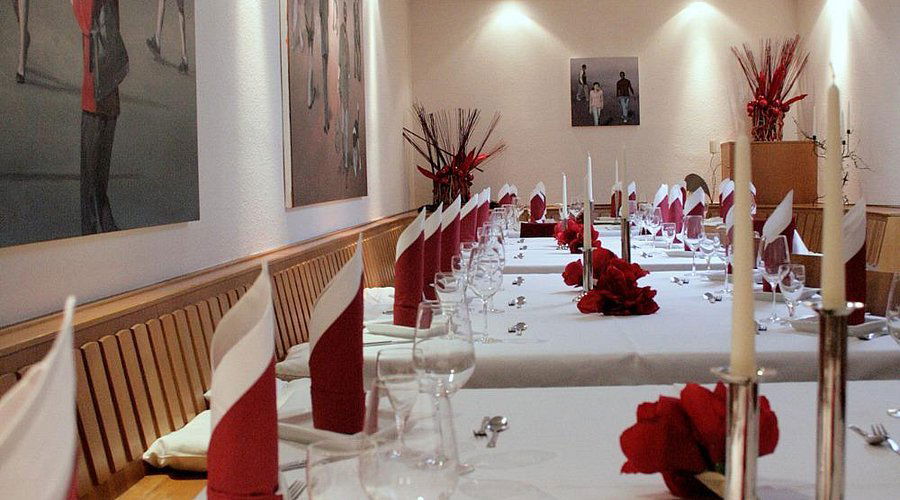
The room reinforces the concept. Famed Viennese china and glassware are used in service, and classical music runs in the background , choices that align with Vienna's identity as a city of fine arts. The result is a dining room that feels considered and deliberate without being theatrical. For someone visiting EWIG for the first time, the atmosphere will read as formal-ish but not stiff: closer to a serious European bistro than a ceremonial kaiseki setting.
Michelin Recognition and What It Signals
EWIG holds a Michelin Plate (2025), which in practical terms means Michelin's inspectors consider the cooking good enough to flag, without yet awarding a star. For a venue in this niche , Austrian cuisine in a Tokyo neighbourhood that also contains some of Japan's most competitive fine-dining addresses , the Plate is a meaningful signal. It tells you the kitchen is technically competent and consistent enough to earn third-party credentialing. It also positions EWIG clearly: this is not a casual neighbourhood restaurant, but it is not competing on the same level as the city's starred rooms. If you are weighing EWIG against a starred French or kaiseki meal, the correct framing is: different category, different price point, different kind of evening.
For context on what Michelin recognition means across Tokyo's Austrian options, the only other Vienna-influenced address worth noting in Japan is GINZA HABSBURG VEILCHEN, which takes a different approach to the same culinary tradition. If Austrian cuisine is your specific interest, comparing these two is a worthwhile exercise before you commit.
First-Timer Orientation: What to Expect
EWIG sits on the second floor of a building in Minamiaoyama, one of Tokyo's more composed and upscale residential-commercial neighbourhoods. The address , 4 Chome-3-23 Minamiaoyama, Minato City , is walkable from Omotesando station. Minamiaoyama is not a tourist-heavy area; it is where Tokyo's design-conscious and internationally minded locals eat and shop, which sets the tone for the kind of venue EWIG is.
The Google review score is 5.0, drawn from 11 reviews. That sample size is too small to treat as a statistically reliable signal, but the absence of negative feedback across those reviews, combined with the Michelin Plate, suggests a kitchen and front-of-house that deliver consistently at their stated level. For a first-timer, that means you are unlikely to be surprised in a bad way , the experience is defined and intentional.
On format: the menu appears to be a set-course structure in keeping with how Austrian cuisine is typically presented in a fine-dining context, with dishes that reference classical Viennese cooking. Expect a multi-course progression rather than à la carte selection. The use of high-quality Viennese tableware throughout service adds a layer of specificity that reinforces the overall concept.
Practical Details
Reservations: Bookings are described as easy to secure , this is not a venue where you need to plan three months in advance. A week or two of lead time is a reasonable approach, though booking further ahead for weekend evenings is sensible. Budget: Priced at ¥¥¥, EWIG sits below the ¥¥¥¥ tier occupied by Tokyo's starred French and kaiseki rooms. Expect a meaningful spend for a multi-course dinner, but not at the level of venues like L'Effervescence or RyuGin. Dress: No dress code is formally stated, but the Viennese tableware, classical music, and Michelin recognition suggest smart casual at minimum , treating this as a proper dinner-out is the right instinct. Getting there: Minamiaoyama is served by Omotesando station (Ginza, Chiyoda, Hanzomon lines). The address is a short walk from the station.
Tokyo and Beyond: Where EWIG Fits
EWIG is one address in a city with an extraordinary concentration of fine dining. For a broader view of where it sits in context, see our full Tokyo restaurants guide. If you are also planning hotels or other experiences during your trip, our Tokyo hotels guide, bars guide, and experiences guide are worth consulting.
If your travels extend beyond Tokyo, the same level of specificity in European cuisine interpreted through Japanese fine-dining craft appears at a handful of other addresses worth knowing: HAJIME in Osaka, Gion Sasaki in Kyoto, akordu in Nara, and Goh in Fukuoka each represent serious cooking with a strong point of view. For something closer to Tokyo, 1000 in Yokohama is worth considering. Further afield, if Austrian cuisine itself is your interest, Senns in Salzburg and 1er Beisl im Lexenhof in Nußdorf am Attersee are the benchmark addresses in the source country.
Compare EWIG
Frequently Asked Questions
Does EWIG handle dietary restrictions?
check the venue's official channels when booking to flag any restrictions. Given the tasting menu format and the specificity of Austrian cuisine, advance notice is important — substituting around core preparations like foie gras terrine takes planning. Don't assume flexibility on the night.
Can EWIG accommodate groups?
EWIG is a second-floor venue in a Minamiaoyama building with no published capacity data, so large group bookings are best confirmed directly. For groups of 4 or more, reach out well in advance — intimate European-style restaurants in this neighbourhood rarely have the floor space for parties above 6 or 8 without advance arrangement.
Is the tasting menu worth it at EWIG?
If you want to eat Austrian food in Tokyo, yes. EWIG holds a Michelin Plate (2025), signalling inspectors consider the cooking competent and worth noting. The menu draws directly on Viennese tradition — dishes like foie gras terrine inspired by Sachertorte give it a point of view you won't find anywhere else in the city. At ¥¥¥ pricing, you're paying for specificity and craft, not just novelty.
What should I wear to EWIG?
Minamiaoyama is one of Tokyo's more composed, upscale neighbourhoods, and EWIG's use of Viennese china and classical music sets a formal-adjacent tone. Dress neatly — a step above casual is appropriate. No formal dress code is confirmed in available data, but arriving underdressed would feel out of place.
Is EWIG good for a special occasion?
Yes, and it's a sharper choice than most Tokyo fine dining because the concept is specific. Viennese tableware, classical music, and a kitchen that apprenticed in Austria give it a considered atmosphere that generic tasting-menu restaurants lack. Michelin Plate recognition (2025) adds some external validation if that matters to your guest.
Is EWIG worth the price?
At ¥¥¥, EWIG sits in Tokyo's mid-to-upper fine dining tier. The value case is straightforward: this is the only serious Austrian kitchen in the city, it holds a Michelin Plate (2025), and bookings are described as relatively easy to secure — so you're not paying a scarcity premium on top of the food price. If Austrian cuisine is what you're after, there's no comparable alternative in Tokyo.
Recognized By

More restaurants in Tokyo
- SézanneOccupying the seventh floor of the Four Seasons Hotel Tokyo at Marunouchi, Sézanne earned its first Michelin star within months of opening in July 2021 and now holds three. British chef Daniel Calvert applies French technique to Japanese ingredients, producing a prix-fixe format that Tabelog has recognised with Silver awards every year from 2023 through 2026. It ranked 4th in Asia's 50 Best Restaurants in 2025 and 15th globally in 2024.
- SazenkaSazenka is the address for Chinese cuisine in Tokyo at its most technically demanding. Chef Tomoya Kawada's wakon-kansai approach — Japanese seasonal ingredients applied through Chinese culinary technique — has earned consecutive Tabelog Gold Awards from 2019 to 2026, a #71 ranking on the World's 50 Best 2025, and 99 points from La Liste 2026. At JPY 50,000–59,999 per head, it is one of the hardest tables in the city to book and worth the effort.
- NarisawaNarisawa is Tokyo's most credentialled innovative tasting menu restaurant — two Michelin stars, Asia's 50 Best number 12, and a Tabelog Silver award — running at JPY 80,000–99,999 per head. Book for a milestone occasion, confirm vegetarian or vegan needs in advance, and reserve at least two to three months out. With 15 seats and reservation-only access, this is one of Tokyo's hardest tables to secure.
- FlorilègeFlorilège delivers two Michelin stars and an Asia's 50 Best #17 ranking at a dinner price of ¥22,000 — competitive for Tokyo at this level. Chef Hiroyasu Kawate's plant-forward tasting menus around an open-kitchen counter at Azabudai Hills make this the strongest choice for contemporary French dining in Tokyo if theatrical, produce-led cooking is what you want. Book well in advance; availability is near-impossible at short notice.
- DenDen holds two Michelin stars, a World's 50 Best top-25 Asia ranking, and a Tabelog Silver Award running back to 2017 — and it books out within hours of the two-month reservation window opening. Chef Zaiyu Hasegawa's daily-changing seasonal omakase runs JPY 30,000–39,999 at dinner in a relaxed house-restaurant setting near Gaiemmae. Book by phone only, noon–5 PM JST. Lunch is irregular; plan around dinner.
- MyojakuMyojaku is a 2-Michelin-star, 14-course French-leaning omakase in Nishiazabu holding a 4.47 Tabelog score, Tabelog Silver 2025–2026, and Asia's 50 Best #45 (2025). Chef Hidetoshi Nakamura's water-forward, no-dashi approach shifts meaningfully with the seasons — making timing your reservation as important as getting one. Budget JPY 50,000–59,999 per head plus 10% service charge; reservations only, near-impossible to secure.
Similar venues by awards
Related editorial
- Best Fine Dining Restaurants in ParisFrom three-Michelin-star icons to the next generation of Parisian chefs pushing boundaries, these are the restaurants that define fine dining in the world's culinary capital.
- Best Luxury Hotels in RomeFrom rooftop terraces overlooking ancient ruins to Michelin-starred hotel dining, these are the luxury hotels that make Rome unforgettable.
- Best Cocktail Bars in KyotoFrom sleek lounges to hidden speakeasies, Kyoto's cocktail scene blends Japanese precision with global influence in ways you won't find anywhere else.
Save or rate EWIG on Pearl
Keep this venue in your Pearl passport, rate it after you visit, and track it alongside every other place you collect.