.png?width=1200&quality=80)
Mỳ Quảng Cô Sáu
Vietnamese · Hai Chau, Da Nang
Restaurant in Da Nang, Vietnam
 Book with Pearl
The Read
Turmeric-Noodle Tradition
Price
$1–10per person
Dress
Casual
Why go
Mỳ Quảng Cô Sáu has held a Michelin Plate in 2024 and 2025, making it the most externally validated place to eat Da Nang's signature noodle dish. At ₫ pricing, the decision is straightforward: there is no comparable bowl at this price-to-recognition ratio in the city. Walk-in only, busy at peak hours, and worth every minute of the wait.
About Mỳ Quảng Cô Sáu
Verdict
If you eat one bowl of mỳ quảng in Da Nang, make it here. Mỳ Quảng Cô Sáu has held a Michelin Plate in both 2024 and 2025, which for a single-dish street-food specialist at ₫ pricing is about as strong a quality signal as you will find in this city. The bowl is the point, the price is negligible, and the decision is easy: go.
The Portrait
The address is 397 Đường Trần Hưng Đạo in the Sơn Trà district, a working residential stretch that puts you on the eastern bank of the Han River, away from the tourist-facing promenade. That location matters because it tells you something about who this place is for. Mỳ Quảng Cô Sáu is not positioned toward the hotel-guest circuit or the international food-tour crowd, even if both have discovered it. It operates as a neighbourhood institution that happens to have attracted serious external recognition.
The atmosphere at a place like this is defined by function over comfort. Expect the ambient energy of a busy local eating house: the clink of ceramic bowls, condensation on plastic cups, the rhythm of a kitchen that has run the same dish hundreds of times a day for years. This is not a quiet lunch. Tables turn quickly, seating is communal by necessity, and the noise level is the noise level of a room that is always at capacity during peak hours. If you are returning after a first visit, come earlier than you did last time. The gap between a calm seat and a pressed one is usually thirty minutes.
Mỳ quảng as a dish is one of the most regionally specific things you can eat in central Vietnam. Unlike phở, which pulls a clear, long-simmered bone broth, mỳ quảng uses a minimal, turmeric-tinted broth that functions more as a sauce than a soup. The wide rice noodles sit mostly above the liquid, dressed with toppings rather than submerged. The sourcing and preparation of those toppings, and the quality of the noodles themselves, is where one bowl separates from another. Michelin's recognition of Cô Sáu at the Plate level, sustained across two consecutive years, implies consistent execution at a standard that the inspectors considered worth noting in a city with no shortage of mỳ quảng options. That is a meaningful distinction when you are choosing between several apparently similar operations on the same street or in the same district.
For a returning visitor, the practical question is not whether to come back but what to pay attention to. The dish is built around the interplay of the broth base, the noodle texture, the protein topping, and the table garnishes, which in the mỳ quảng tradition typically include fresh herbs, bean sprouts, shredded banana blossom, and bánh tráng crackers. The crackers are not a garnish to ignore: they are broken into the bowl to add texture and body as you eat. If you ate quickly on your first visit, slow down this time. The bowl reads differently at the halfway point when the crackers have softened slightly into the broth.
The ₫ price tier means you are spending a very small amount by any standard. Michelin Plate recognition at this price point is unusual in Vietnam and rare globally. It does not mean the experience competes with a full Michelin-starred restaurant on service, environment, or ambiance. It means the food quality has been assessed as worth a specific visit. For Da Nang specifically, where the dining conversation is often split between high-end resort dining and generic tourist-strip Vietnamese, Cô Sáu occupies a third category: authentic, locally embedded, externally validated.
If you are building a Da Nang eating itinerary, Cô Sáu fits naturally alongside other Michelin-recognised Vietnamese specialists in the city. For a broader view of where to eat across the city's range, the full Da Nang restaurants guide covers the complete picture. Those planning time in the wider region should also consider Saffron in Hue City for central Vietnamese cooking in a different register, or Cargo Club Cafe & Restaurant in Hoi An for a contrast in setting and price tier. Within Da Nang's Vietnamese street-food category, Mi Quang Ba Vi in Thanh Khe is the most direct peer worth comparing, and Bún Chả Cá Hờn covers the adjacent noodle format if you want to eat across the local canon.
For sizzling rice-based dishes that round out a Da Nang street-food session, Bánh Xèo 76, Bánh Xèo Bà Dưỡng, and Bánh Xèo Tôm Nhảy Cô Ba are each worth a separate meal. Bếp Cuốn and Bếp Hên cover the fresh-roll side of Da Nang's Vietnamese repertoire. For a broader trip through Vietnam's Michelin-recognised dining, CieL in Ho Chi Minh City and Hibana by Koki in Hanoi represent the higher end of the national recognition list. Vietnamese specialists elsewhere include Tầm Vị in Hanoi and Camille in Orlando for those travelling from the US. For everything else in Da Nang, the Da Nang hotels guide, bars guide, wineries guide, and experiences guide cover the full picture. And for a different Son Tra District stop after your bowl, Bau Troi Do is worth having on your list.
Know Before You Go
- Address: 397 Đường Trần Hưng Đạo, An Hải Trung, Sơn Trà, Đà Nẵng
- Price tier: ₫ — expect to spend very little; this is street-food pricing
- Awards: Michelin Plate 2024 and 2025
- Booking: Walk-in only (no booking system on record); arrive early to avoid queuing at peak meal times
- Hours: Not confirmed, verify locally before visiting
- Dress code: None; casual street clothes are appropriate
- Getting there: Sơn Trà district, eastern bank of the Han River; accessible by taxi or ride-share from central Da Nang
Planning details
- Location
- 397 Đ. Trần Hưng Đạo, An Hải Trung, Sơn Trà, Đà Nẵng 550000, Vietnam
- Website
- facebook.com/myquangcosau
- Phone
- +84 963 982 634
The take
The Take
The Vibe
Mỳ Quảng Cô Sáu presents a matter-of-fact, street-level character that leans into tradition rather than flourish. The room is defined by plastic stools, communal tables and the efficient cadence of a busy Vietnamese noodle house; service and seating feel informal and direct. The Michelin Plate nod in 2024 and 2025 matters less to the décor than to the cooking: this is a place where technique and consistency are the visible priorities. Expect an unpretentious, classic noodle-house atmosphere—casual, energized and anchored in everyday Da Nang life rather than tourist spectacle.
Best For
This is an ideal spot for straightforward, affordable eating—perfect for solo diners grabbing a bowl, small groups or families sharing plates at communal tables, and anyone seeking a quick, satisfying meal rooted in regional tradition. Because the kitchen focuses tightly on mỳ quảng’s components and proportions, the venue rewards repeat visits for sampling variations rather than a single formal tasting. The Michelin Plate recognition signals disciplined cooking at a low price point, making Cô Sáu a dependable everyday option rather than a special-occasion destination.
Ordering Tips
Order with an eye toward the dish’s regional logic: mỳ quảng arrives with only a small pour of turmeric-tinted broth that coats the wide rice noodles, not a submerged bowl like pho. Look for the signature variants—pork or shrimp bases and the noted specialties such as Mỳ Quảng Ếch and Mỳ Quảng Cá Nục—and try the Bánh Tráng Cuốn Thịt Heo if you want a contrasting texture. Pay attention to the garnish components—roasted peanuts, sesame rice crackers, fresh herbs and banana blossom—which are integral to the dish’s balance and reveal the kitchen’s care.
Venue details
Ambiance
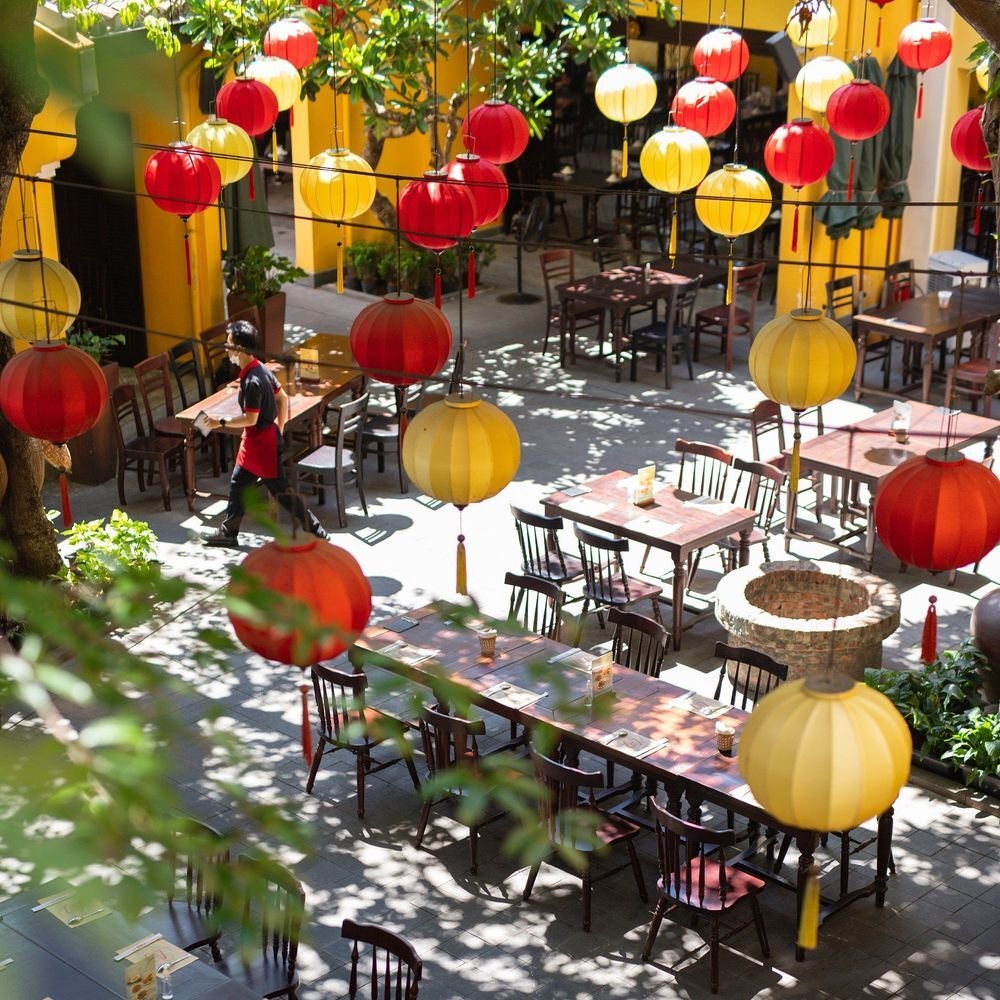
Relaxed and cheerful with yellow walls and greenery overlooking the Han River; bright natural lighting with a cool breeze from the waterfront location.
Tags
Vibe
Best For
Experience
Sourcing
View
At the Table
- Dress Code
- Casual
- Noise Level
- Lively
- Service Style
- Casual
- Meal Pacing
- Quick Bite
- Capacity
- Medium
- Kitchen
- Traditional
- Menu Format
- A la carte
- Drinks Focus
- Tea
- Dietary
- Pescatarian friendly
- Outdoor Seating
- Yes
Signature Dishes
- Mỳ Quảng
- Bánh Tráng Cuốn Thịt Heo
- Mỳ Quảng Ếch
- Mỳ Quảng Cá Nục
Know before you go
Know Before You Go
- Getting there
- 397 Đ. Trần Hưng Đạo, An Hải Trung, Sơn Trà, Đà Nẵng 550000, Vietnam
Planning details
Location
397 Đ. Trần Hưng Đạo, An Hải Trung, Sơn Trà, Đà Nẵng 550000, Vietnam · Directions
Recognition and awards
Also consider
Also Consider
- La Maison 1888, French Contemporary, ₫₫₫₫
- Quán Nhân, Street Food, ₫
- Le Comptoir, French, ₫₫₫
- Rang, Indian, ₫₫
- Bún Chả Cá Hờn, Noodles, ₫
Restaurant context
Mỳ Quảng Cô Sáu and Bún Chả Cá Hờn occupy the same ₫ tier and the same street-food register, but they serve different dishes: Cô Sáu is your best option for mỳ quảng specifically, while Bún Chả Cá Hờn covers the fish-cake noodle format that is equally embedded in Da Nang's local canon. If you have two meals to spend on Vietnamese noodles, do both. Quán Nhân sits in the same price bracket with a broader street-food scope, and is a reasonable alternative if your group cannot agree on a single dish format, but it does not carry Michelin recognition.
Rang at ₫₫ and Le Comptoir at ₫₫₫ are not direct competitors in cuisine or format, but they are relevant if you are deciding how to allocate a meal budget across the day. Neither offers the same value density as Cô Sáu for a single focused dish. La Maison 1888 at ₫₫₫₫ is a different category entirely: French Contemporary fine dining in a resort setting, appropriate for a special-occasion dinner rather than a midday bowl of noodles. The two venues do not compete for the same meal slot.
Among Da Nang's Vietnamese options, Cô Sáu is the strongest single-dish specialist with documented external recognition. If the mỳ quảng format is what you are after, this is where to go. If you want to explore the full range of Da Nang's Vietnamese eating in one sitting, consider pairing Cô Sáu with a stop at Bánh Xèo 76 or Bếp Cuốn for a second dish format. At ₫ prices across the board, both meals together will cost less than a single main course at Le Comptoir.
Explore Da Nang
Around this place
Discover more on Pearl
Unlock the full Mỳ Quảng Cô Sáu guide in Pearl, including awards, comparisons, FAQs, planning details, and nearby places.
Compare Mỳ Quảng Cô Sáu
| Venue | Price | Booking Difficulty | Awards |
|---|---|---|---|
| Mỳ Quảng Cô Sáu | ₫ | Easy | 2025 Michelin Plate2024 Michelin Plate |
| La Maison 1888 | ₫₫₫₫ | Unknown | 2026 Wine Spectator Best of Award of Excellence2025 Wine Spectator Best of Award of Excellence2025 Michelin 1 Star2025 La Liste Top Restaurants2024 Michelin 1 Star |
| Quán Nhân | ₫ | Unknown | No published awards |
| Le Comptoir | ₫₫₫ | Unknown | 2025 Wine Spectator Award of Excellence2025 Michelin Plate2024 OAD Top Restaurants in North America Ranked · #4132023 OAD Top Restaurants in North America Recommended |
| Rang | ₫₫ | Unknown | 2025 Michelin Bib Gourmand2024 Michelin Bib Gourmand |
| Bún Chả Cá Hờn | ₫ | Unknown | 2025 Michelin Bib Gourmand2024 Michelin Bib Gourmand |






Key differences to consider before you reserve.
FAQ
Frequently Asked Questions
What are alternatives to Mỳ Quảng Cô Sáu in Da Nang?
Bún Chả Cá Hờn is the closest like-for-like alternative if you want another Michelin-recognised, single-dish Vietnamese spot at the budget end. For something with more range and a sit-down format, Quán Nhân covers traditional Vietnamese cooking in a more structured setting. If you are after a full-service restaurant experience rather than a bowl of noodles, Rang or La Maison 1888 operate in a completely different tier, both in format and price.
What should I wear to Mỳ Quảng Cô Sáu?
This is a casual street-level Vietnamese noodle spot at ₫ pricing, so wear whatever you would wear to any Da Nang local eatery. Clean everyday clothes are fine. There is no dress expectation beyond basic comfort, and arriving overdressed will feel out of place.
Is the tasting menu worth it at Mỳ Quảng Cô Sáu?
Mỳ Quảng Cô Sáu does not operate a tasting menu format. This is a single-dish specialist: you come for mỳ quảng. At ₫ pricing with two consecutive Michelin Plates (2024 and 2025), the value proposition is straightforward — you are paying local street-food prices for a bowl that has cleared Michelin's quality threshold twice.
How far ahead should I book Mỳ Quảng Cô Sáu?
Booking information is not publicly listed which is typical for casual single-dish spots in Da Nang at this price point. Arriving early — particularly at peak mealtimes — is the safer approach. Given its Michelin Plate recognition in both 2024 and 2025, expect higher footfall than a comparable non-awarded local spot.
Can Mỳ Quảng Cô Sáu accommodate groups?
No group-booking policy is documented. At the ₫ price range and street-dining format, large groups should plan around potential wait times rather than reserved seating. Pairs or small groups of three to four will find it easier to manage than parties of six or more.
Is Mỳ Quảng Cô Sáu good for a special occasion?
Not in the conventional sense. There is no formal service, private dining, or multi-course format here. What it does offer is a Michelin Plate-recognised bowl of mỳ quảng at ₫ pricing — which makes it a strong choice if your version of a special occasion includes eating something genuinely well-executed at a local spot most visitors miss. For a formal celebration dinner, La Maison 1888 or Le Comptoir are better fits.