.png?width=1200&quality=80)
San Huberto
Traditional Cuisine · Ciudad Real
Restaurant in Ciudad Real, Spain
 Book with Pearl
The Read
Castilian Wood-Fire Roasting
Price
$30–50per person
Dress
Smart Casual
Why go
San Huberto holds consecutive Michelin Plate recognition (2024–2025) for a reason: the wood-fired roasts — baby lamb, Castilian suckling pig — are executed with genuine technical care, and the fresh fish programme (Cantabrian hake, sea bass, red tuna tataki) adds real range. At €€ in Ciudad Real, this is the most credentialled option for a special occasion without tasting-menu pricing.
About San Huberto
San Huberto, Ciudad Real: The Verdict
The common assumption about asador dining in Castilla-La Mancha is that it is simple, rustic, and interchangeable — that one wood-fired lamb is much like another. San Huberto corrects that assumption quickly. This is a restaurant-asador that has earned back-to-back Michelin Plate recognition (2024 and 2025) precisely because the kitchen applies genuine technical discipline to a tradition that many places treat as autopilot. If you want the most carefully executed version of Castilian roast cooking in Ciudad Real — baby lamb, suckling pig from the wood-fired oven, serious fresh fish, this is where to book.
At the €€ price range, San Huberto is one of the stronger value propositions in the city for a special occasion. You are getting Michelin-recognised cooking without the tasting-menu price tag or the booking difficulty that comes with it. For a celebration dinner, a business lunch, or a date where you want substance over spectacle, it works well across all three.
What San Huberto Does Well
The technical centre of gravity here is the wood-fired oven. Roasting baby lamb (lechazo) or Castilian-style suckling pig (cochinillo) in a proper horno de leña is not difficult to find in this region, but executing it consistently, the right skin texture, the correct internal temperature, the balance of smoke, is a different matter. San Huberto's Michelin Plate status signals that the kitchen is meeting a verifiable standard of preparation, not just trading on regional tradition.
The fish offer is the less obvious reason to book here, and arguably the more interesting one. Cantabrian hake, estuary sea bass, and red tuna tataki appearing on the same menu as classic Castilian roasts is an unusual range for a provincial asador. The fresh fish and seafood display counter at the bar entrance is a visual signal worth paying attention to: it tells you the kitchen is sourcing seriously and treating the fish programme as a peer to the roast section, not an afterthought.
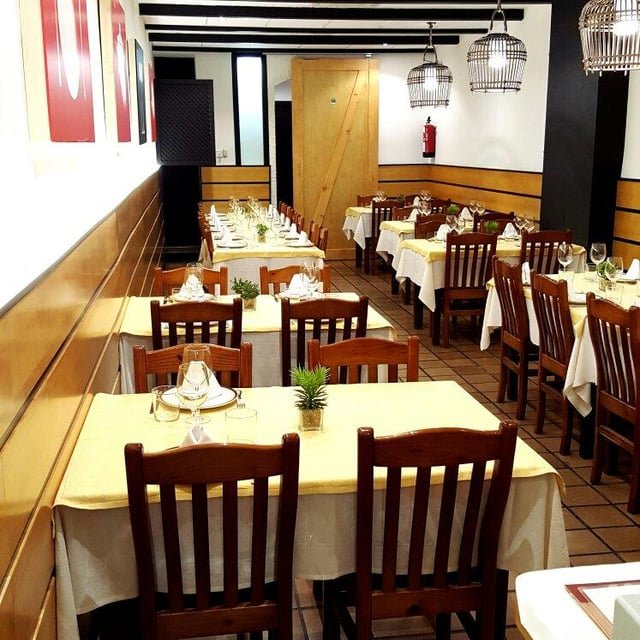
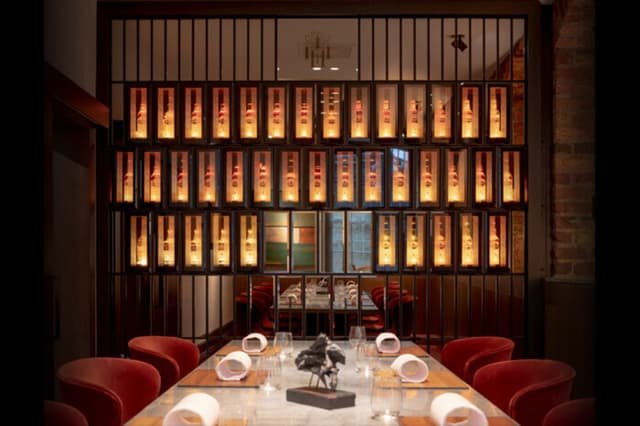
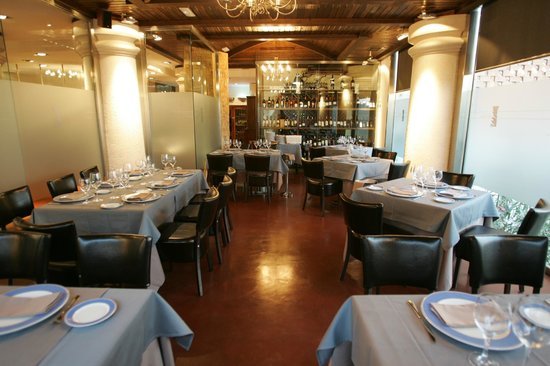
Room itself gives you clear visual cues about the seriousness of the operation. The glass-fronted bodega behind the bar is the kind of wine storage display that indicates investment in the cellar, not just the kitchen. The summer terrace adds a practical option for warmer months. The dining room sits within a classic asador format, this is not a minimalist tasting-menu room, and it is not trying to be. For a special occasion that wants warmth and substance rather than theatrical plating, the setting delivers.
À la carte structure includes starters and stews alongside the headline roasts and fish, which gives the table meaningful choice. For groups with mixed preferences, someone who wants the cochinillo, someone who wants the hake, this is a useful format. It is also a better fit for the €€ price range than a fixed tasting menu would be, since it lets the table calibrate spend without sacrificing the quality of the main event.
How San Huberto Compares in Ciudad Real
Within Ciudad Real itself, Mesón Octavio is the most direct competitor in the traditional Castilian dining space. San Huberto's consecutive Michelin Plate awards give it a verifiable edge in recognised kitchen standard, which matters if you are booking for a guest who expects a credential. For broader context on what else the city offers, see our full Ciudad Real restaurants guide.
For regional comparisons, Coto de Quevedo Evolución in Torre de Juan Abad occupies an interesting position, traditional cuisine with an evolutionary approach, roughly within the same Castilla-La Mancha culinary territory. If you are touring the region and building an itinerary, it is worth considering alongside San Huberto rather than instead of it.
Know Before You Go
Practical Details
- Price range: €€, mid-range for the city; good value relative to the Michelin Plate recognition
- Awards: Michelin Plate 2024 and 2025
- Address: C. de Montiel, s/n, 13004 Ciudad Real, Spain
- Booking difficulty: Easy, walk-ins are plausible outside peak periods, but calling ahead is recommended for weekend dinner or group bookings
- Format: À la carte; wood-fired oven roasts are the headline; fish programme also strong
- Seating options: Bar area, summer terrace, and main dining room
- Leading for: Special occasions, business meals, groups with mixed preferences between meat and fish
- Hours: Contact the venue directly to confirm current service times
Regional and International Context
If San Huberto is the anchor for your trip to Castilla-La Mancha, it is worth knowing what the broader Spanish fine dining map looks like for context. At the €€€€ end, Spain's benchmark restaurants include El Celler de Can Roca in Girona, Arzak in San Sebastián, and Azurmendi in Larrabetzu, all require advance planning and significant budget, and none of them are attempting what San Huberto does. The comparison is not competitive; it is contextual. San Huberto is operating in a different register: traditional, regional, and priced for regulars as much as occasion diners.
For progressive Spanish cooking closer to Madrid, DiverXO in Madrid and Quique Dacosta in Dénia represent the creative end of the spectrum, high investment in time and money, very different experience type. Aponiente in El Puerto de Santa María is the reference point for serious seafood ambition in Spain if the San Huberto fish menu sparks that interest.
For a closer regional parallel in traditional cuisine, Cave à Vin & à Manger - Maison Saint-Crescent in Narbonne offers an interesting cross-border comparison: serious traditional cooking, wine focus, mid-range pricing. Different culinary tradition, similar philosophy about doing classic things carefully.
If you are planning a wider trip to Ciudad Real, our Ciudad Real hotels guide, bars guide, wineries guide, and experiences guide cover the full picture. The region's wine production, particularly around the La Mancha DO, makes pairing locally with a meal at San Huberto a reasonable consideration worth raising when you book.
Bottom Line
San Huberto is the right call for anyone who wants serious Castilian roast cooking in Ciudad Real at a price that does not require a special budget. Book it for a special occasion, a business dinner, or as the centrepiece of a regional food itinerary. The wood-fired oven is the reason to come; the fish counter is the reason to stay curious about the menu.
Planning details
- Location
- C. de Montiel, s/n, 13004 Ciudad Real, Spain
- Reservations
- Book on the venue's website
- Website
- asadorsanhuberto.es
- Phone
- +34 926 92 35 35
The take
The Take
The Vibe
San Huberto leans into the elemental pleasures of a museum‑old Spanish roasting tradition. The restaurant foregrounds a wood‑fired asador where technique is deliberately spare: quality of the animal, the heat of the oven and the patience of the cook govern the result. That tactile, heat‑forward approach makes the room feel warm and grounded; the copy positions the place in the meseta towns of Castilla‑La Mancha and stresses continuity rather than reinvention. Consecutive Michelin Plate recognition in 2024 and 2025 confirms that this earnest, product‑led cooking reads as both regional and elevated.
Best For
San Huberto is best approached as an evening destination for anyone who wants a direct encounter with traditional Spanish roast cooking. The menu’s focus on whole roasted animals and slow wood‑fired technique lends itself to dinner service and gatherings that center on shared plates and bold flavors. The restaurant’s Michelin Plate mentions signal an occasion‑worthy experience—well suited to celebrations, family meals and business dinners where the emphasis is on provenance and the craft of roasting rather than flashy novelty.
Ordering Tips
Center your order on the wood‑fired roasts: the Paletilla de cordero lechal asada en horno de leña and the Cochinillo toston al estilo castellano are listed as signature dishes and embody the asador’s technique. These preparations showcase the oven’s heat and the careful handling of the animals—they are the clearest expression of the kitchen’s skill. Because the format prizes patience and slow roasting, opt for the roast specialties rather than off‑menu experiments; they give the most faithful sense of what San Huberto is doing well.
Venue details
Ambiance
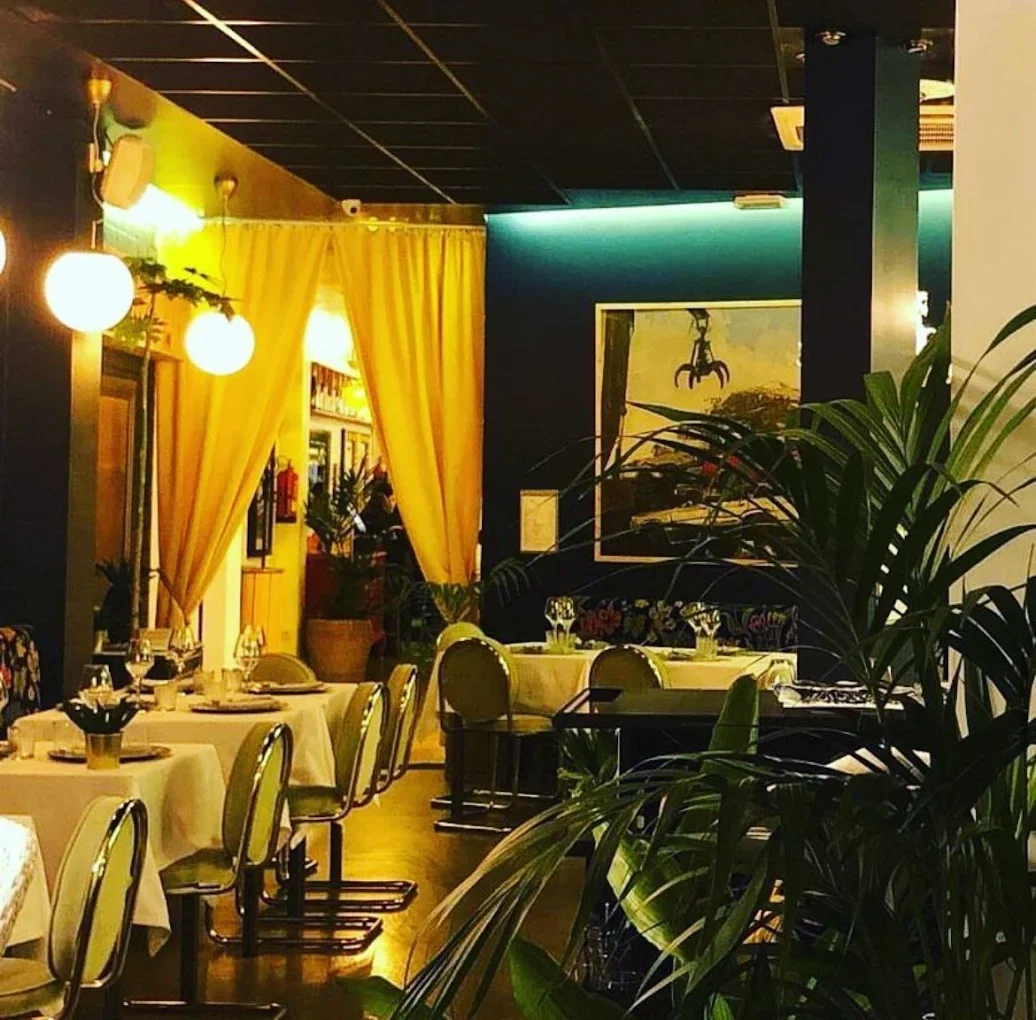
Cozy, tranquil, well-climatized interior with a pleasant summer terrace, clean and welcoming atmosphere.
Tags
Vibe
Best For
Experience
Sourcing
Accessibility
At the Table
- Dress Code
- Smart Casual
- Noise Level
- Quiet
- Service Style
- Upscale Casual
- Meal Pacing
- Leisurely
- Capacity
- Medium
- Kitchen
- Traditional
- Menu Format
- A la carte
- Wine Program
- Curated
- Drinks Focus
- Wine
- Dietary
- Vegetarian friendly, Vegan options, Gluten-free options
- Private Dining
- Available
- Outdoor Seating
- Yes
Signature Dishes
- Paletilla de cordero lechal asada en horno de leña
- Cochinillo toston al estilo castellano
Know before you go
Know Before You Go
- Getting there
- C. de Montiel, s/n, 13004 Ciudad Real, Spain
Planning details
Location
C. de Montiel, s/n, 13004 Ciudad Real, Spain · Directions
Recognition and awards
Also consider
Also Consider
- Quique Dacosta, Creative, €€€€
- El Celler de Can Roca, Progressive Spanish, Creative, €€€€
- Arzak, Modern Basque, Creative, €€€€
- Azurmendi, Progressive, Creative, €€€€
- Aponiente, Progressive - Seafood, Creative, €€€€
Restaurant context
Comparing San Huberto against Spain's €€€€ benchmark restaurants, Quique Dacosta in Dénia, El Celler de Can Roca in Girona, Arzak in San Sebastián, Azurmendi in Larrabetzu, and Aponiente in El Puerto de Santa María, is largely a question of format rather than competition. Those restaurants are operating in creative and progressive modes at three to four times the price point, require booking weeks or months in advance, and demand a different kind of commitment from the diner. If your priority is innovation, theatre, and tasting-menu depth, San Huberto is not the right choice. If your priority is technically sound traditional Castilian cooking at a fair price with straightforward booking, those restaurants are not the right choice either.
It is the strongest verified option in Ciudad Real for a special occasion dinner where quality matters but a tasting-menu budget does not apply. For diners who want the wood-fired roast tradition of Castilla done carefully, and who do not need the prestige of a three-Michelin-star room to justify the occasion, this is the sensible booking.
If you are weighing San Huberto against a trip to one of Spain's destination restaurants, the honest framing is this: Arzak, El Celler de Can Roca, and Azurmendi require advance planning, significant spend, and a willingness to build a trip around a meal. San Huberto requires a reservation and a drive to Ciudad Real. They are solving different problems. Book San Huberto when you are in the region and want the best local expression of Castilian cooking. Book the €€€€ destinations when you are planning a dedicated food trip and can absorb the full commitment those experiences demand.
Explore Ciudad Real
Around this place
Discover more on Pearl
Unlock the full San Huberto guide in Pearl, including awards, comparisons, FAQs, planning details, and nearby places.
Compare San Huberto
| Venue | Price | Awards |
|---|---|---|
| San Huberto | €€ | 2026 Michelin Plate2025 Michelin Plate2024 Michelin Plate |
| Quique Dacosta | €€€€ | 2026 OAD Top Restaurants in Europe Ranked · #12Guía Repsol Soles 20262026 Michelin 3 Stars2026 La Liste Top Restaurants2026 Falstaff Restaurant Guide2025 OAD Top Restaurants in Europe Ranked · #262025 World's 50 Best Restaurants · #652025 La Liste Top Restaurants2025 The Best Chef Three Knives |
| El Celler de Can Roca | €€€€ | 2026 OAD Top Restaurants in Europe Ranked · #292026 Falstaff Restaurant GuideGuía Repsol Soles 20262026 Michelin 3 Stars2026 La Liste Top Restaurants2025 OAD Top Restaurants in Europe Ranked · #572025 La Liste Top RestaurantsChef's Table Featured Restaurants · 20252025 The Best Chef Three Knives |
| Arzak | €€€€ | 2026 OAD Top Restaurants in Europe Ranked · #102Star Wine Lists 2026Guía Repsol Soles 20262026 La Liste Top Restaurants2026 Michelin 3 Stars2025 OAD Top Restaurants in Europe Ranked · #1252025 The Best Chef Two Knives2025 Michelin 3 Stars2025 La Liste Top Restaurants |
| Azurmendi | €€€€ | 2026 OAD Top Restaurants in Europe Ranked · #25Star Wine Lists 2026Guía Repsol Soles 20262026 La Liste Top Restaurants2026 Michelin 3 Stars2026 Falstaff Restaurant Guide2025 OAD Top Restaurants in Europe Ranked · #19We're Smart World Top Restaurants 20252025 La Liste Top Restaurants |
| Aponiente | €€€€ | 2026 OAD Top Restaurants in Europe Ranked · #62Guía Repsol Soles 20262026 Michelin 3 Stars2026 La Liste Top Restaurants2025 OAD Top Restaurants in Europe Ranked · #632025 World's 50 Best Restaurants · #84Chef's Table Featured Restaurants · 20252025 Michelin 3 Stars2025 The Best Chef Three Knives |












Comparing your options in Ciudad Real for this tier.
FAQ
Frequently Asked Questions
What should I order at San Huberto?
Start with the wood-fired oven roasts: baby lamb (lechazo) or Castilian-style suckling pig (cochinillo) are the core of the menu and the reason the restaurant has held consecutive Michelin Plates in 2024 and 2025. If you want fish instead, the Cantabrian hake and estuary sea bass are specifically highlighted in the venue's own description — both are strong choices at a €€ price point.
What are alternatives to San Huberto in Ciudad Real?
Mesón Octavio is the most direct local competitor in traditional Castilian dining. San Huberto's consecutive Michelin Plates give it a documented edge on consistency in Ciudad Real's traditional dining space, but if you want a less formal or more purely tapas-focused experience, the city has other options along the bar strip near the cathedral.
Is San Huberto good for a special occasion?
Yes, within a specific framing: it suits a celebratory meal where the occasion centres on classic Castilian cooking rather than a contemporary tasting menu format. The dining room, bar, summer terrace, and the glass-fronted bodega and seafood display counter make it feel like more than a workaday lunch stop, and the Michelin Plate recognition adds credibility. At €€ pricing, it is a low-financial-risk special occasion.
What should I wear to San Huberto?
The venue is described as a classic restaurant-asador with a traditional feel, not a formal fine dining room. At a €€ price point in a provincial Spanish city, neat casual is appropriate — you do not need to dress for a Michelin-starred tasting menu. Think a level above beach wear, not below a jacket.
Is the tasting menu worth it at San Huberto?
San Huberto operates an à la carte format, not a dedicated tasting menu. The menu specialises in wood-fired roasts alongside starters, stews, and fresh fish. At €€ pricing, ordering the roast plus a starter and a fish course from the à la carte will give you a thorough read on what the kitchen does without locking you into a fixed format.
Is San Huberto worth the price?
At €€, it is one of the stronger value propositions in Castilla-La Mancha for serious traditional cooking: two consecutive Michelin Plates (2024, 2025) for mid-range spend is a solid ratio. If you are comparing it to budget asadors in the region, the gap in execution is real; if you are weighing it against the three-Michelin-star restaurants in northern Spain, that is a different category and a different trip.