
Yakitori Onjung
Yakitori · Yeonsan 5(o)-dong, Busan
Restaurant in Busan, South Korea
 Book with Pearl
The Read
Binchōtan-Driven Skewers
Price
$20–30per person
Dress
Casual
Why go
Yakitori Onjung has earned back-to-back Michelin Bib Gourmand recognition in 2024 and 2025, making it the clearest value-for-money yakitori option in Busan. At the ₩ price tier, it rewards first-timers willing to sit at the counter and let the grill do the talking. Booking difficulty is low, so there is no reason to delay.
About Yakitori Onjung
Verdict
Yakitori Onjung has earned back-to-back Michelin Bib Gourmand recognition in 2024 and 2025, which tells you two things: the food is good enough to warrant a detour, and the price stays low enough that the inspector felt comfortable recommending it without reservation. For first-timers trying to eat well in Busan without committing to a formal multi-course dinner, this is one of the clearest yes-book decisions in the city.
The Room and What to Expect
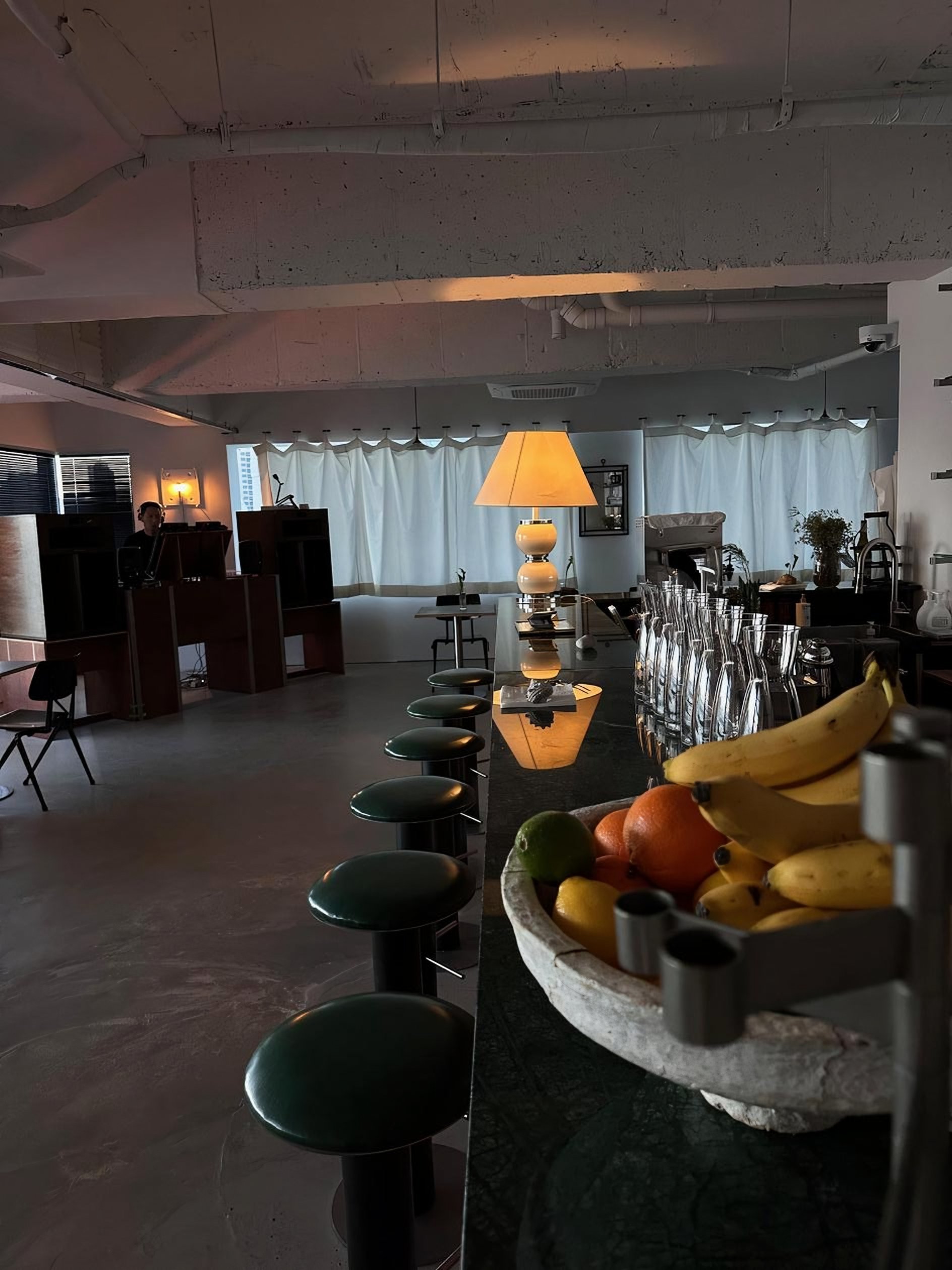
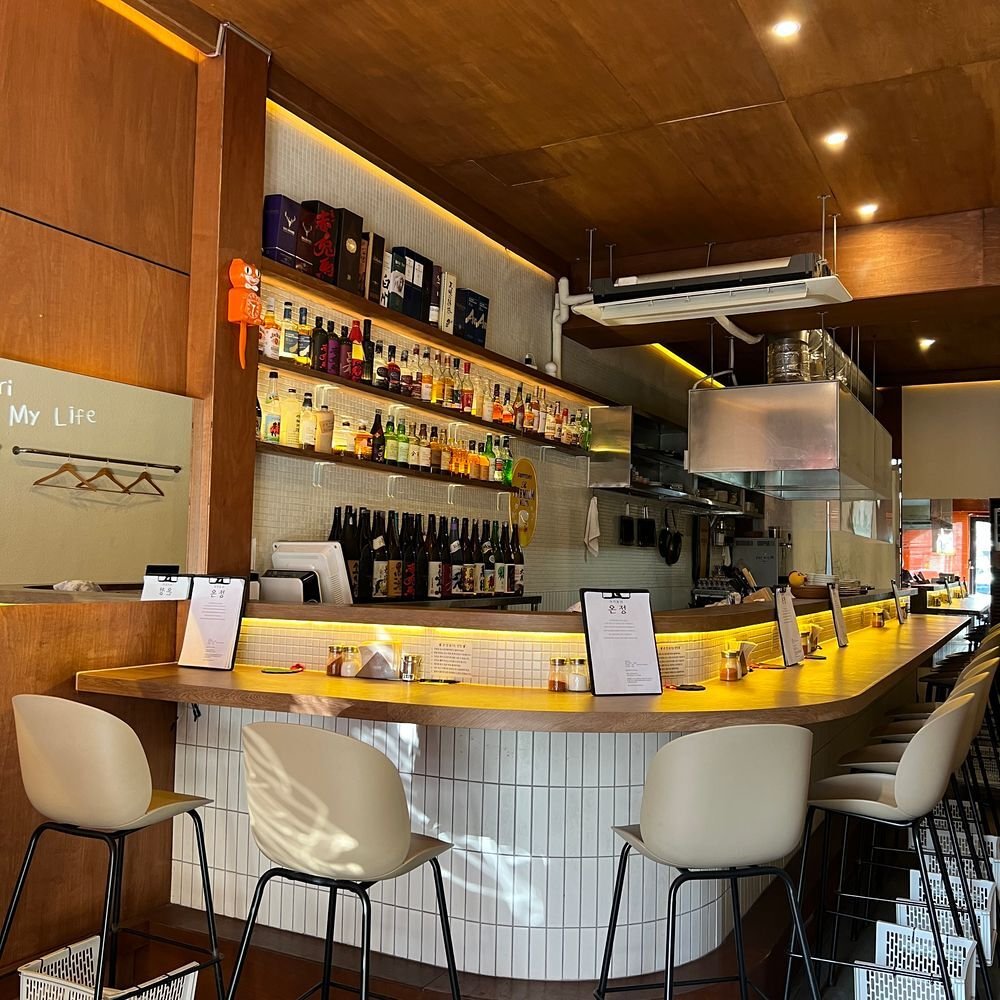
The address puts Yakitori Onjung in the Busanjin District, on a side street off Dongcheon-ro. Walk in expecting a compact, counter-forward space typical of yakitori formats — the visual experience here is the grill itself. Skewers over live charcoal, the amber glaze building on the surface of the meat, the incremental char that a good yakitori cook manages by rotating and pulling at precise moments. If you have never eaten at a yakitori counter before, this format is the whole point: you watch the cooking happen in front of you, and the menu follows the pace of the grill rather than a printed sequence.
Chef Axel Guilbert runs the kitchen here, which is an unusual detail worth noting. A French name at a yakitori counter in Busan is genuinely uncommon, and the Bib Gourmand recognition over two consecutive years suggests the result is working rather than merely being a novelty. That said, Pearl's remit is not to reconstruct a chef's biography — what matters is what arrives on the skewer and whether the sourcing behind it justifies the trip.
Sourcing and Why It Matters at This Price Point
Yakitori is a format where ingredient quality is unusually exposed. There is nowhere to hide behind a sauce or a garnish when the preparation is a skewer over coals with minimal seasoning. The bird, the cut, and the fire are the entire argument. At the ₩ price tier, Onjung is operating in territory where most competitors are buying commodity product and keeping margins tight. Back-to-back Bib Gourmand awards at this price level suggest the sourcing here is punching above what the single-won-sign price tier would normally imply.
For a first-timer, this means you should order broadly across the menu rather than anchoring on a single skewer type. Yakitori menus typically sequence from lighter cuts through richer offal and back to finishing dishes, and the sourcing story becomes clearest when you work through that range rather than ordering selectively. Ask the staff for a recommended sequence if the menu is unfamiliar, that approach tends to produce a better outcome than ordering piecemeal.
For context on how Busan yakitori compares more broadly, Yakitori Haegong is the other specialist in the city worth benchmarking against. Both sit in the same cuisine category, but Onjung's consecutive Bib Gourmand credentials give it a documented quality edge that Haegong currently does not carry.
Booking and Timing
Booking difficulty is rated easy, which is useful information for planning purposes: you are not competing against a two-month wait list here. That said, yakitori counters are typically small, and showing up without any form of contact or reservation is still a risk. The venue database does not carry a phone number or website, so your leading practical options are a walk-in during off-peak hours or booking through a third-party reservation platform if one covers this address. Going earlier in the evening, the first seating of the night, gives you the leading chance of securing a seat without a reservation and the most attentive service before the counter fills.
Current season framing: if you are visiting Busan in the warmer months, the charcoal heat at a compact counter becomes a material comfort consideration. Evening visits are more comfortable than lunch for that reason, and a full counter in summer can feel close. Winter visits are the reverse, the grill warmth is a benefit, and yakitori formats tend to feel more natural in the colder half of the year anyway.
For a broader orientation to eating in Busan, see our full Busan restaurants guide. If you are building a longer trip, our Busan hotels guide, bars guide, and experiences guide cover the full picture.
Ratings and Trust Signals
- Michelin Bib Gourmand: 2024 and 2025 (consecutive)
- Price tier: ₩ (single tier, accessible)
Thirteen reviews is a small sample; the Bib Gourmand is a professional judgment made over multiple visits. Both point in the same direction, which is reassuring, but the Michelin credential is the sturdier signal here.
Pearl Picks Nearby
If you are building a multi-night Busan food itinerary, these venues pair well with Onjung as a low-cost, high-quality anchor dinner:
- Palate, Contemporary dining at ₩₩, a step up in formality and price if you want a contrast
- Mori, Japanese at ₩₩₩, the city's leading argument for a more composed Japanese dinner
- 100.1.Pyeongnaeng, Naengmyeon at ₩, the obvious lunch pairing on days you are keeping costs low
- Born and Bred, Steakhouse at ₩₩₩₩, for a splurge night that sits at the opposite end of the price range
For yakitori outside Korea, Ichimatsu in Osaka and Torisaki in Kyoto represent the Japanese originals worth benchmarking against. Elsewhere in Korea, Mingles in Seoul is the reference point for what Korean-Japanese crossover cooking can look like at the fine dining end of the spectrum, a useful frame for understanding where Onjung sits in the broader conversation.
FAQs
Is Yakitori Onjung worth the price?
Yes, straightforwardly. At the ₩ price tier, back-to-back Michelin Bib Gourmand recognition in 2024 and 2025 represents significant value. You are getting food that a Michelin inspector judged worth recommending at a price point that makes it one of the most accessible quality meals in Busan. If your question is whether to spend more elsewhere, the answer depends on what you want: Onjung is the right call for an accessible, quality-grounded dinner; Mori at ₩₩₩ is the upgrade if you want a more composed Japanese experience.
What are alternatives to Yakitori Onjung in Busan?
- Yakitori Haegong, the direct yakitori comparison in Busan, without the Michelin credential
- Palate, if you want contemporary Korean cooking at ₩₩ rather than a specialist skewer counter
- 100.1.Pyeongnaeng, for a ₩ meal that represents a different tradition entirely (naengmyeon), useful if your group wants Korean rather than Japanese-influenced food
Can Yakitori Onjung accommodate groups?
Yakitori counters are typically compact, and this format generally suits parties of two to four more comfortably than larger groups. No seat count is available in the database, but the address and format suggest a small room. If you are planning a group of five or more, call ahead, though no phone number is currently listed, a walk-by visit during the day to check capacity is the practical fallback.
Does Yakitori Onjung handle dietary restrictions?
Yakitori is a meat-forward format by design, and the menu will be heavily centred on chicken in various cuts. Vegetarian and pescatarian dining is not well served by this format. If dietary restrictions are a factor in your group, Palate at ₩₩ offers a broader contemporary menu with more flexibility. No specific dietary accommodation information is available in the venue database for Onjung.
Can I eat at the bar at Yakitori Onjung?
Yakitori counters are built around bar or counter seating, that is the format. Sitting at the counter and watching the grill is the intended experience, not an alternative to table seating. If you prefer table dining, this may not be the right format for you. First-timers should lean into the counter: it is where the cooking is most visible and the interaction with the chef most direct.
Planning details
- Location
- South Korea, Busan, Busanjin District, Dongcheon-ro 108beon-gil, 9-7 1층
- Website
- instagram.com/yakitori_onjeong
The take
The Take
The Vibe
Yakitori Onjung presents itself as an unassuming, high-value find in Busan’s Busanjin District. Tucked down a lane off Dongcheon-ro amid apartment blocks and convenience stores, the restaurant reads like a locally frequented place rather than a tourist destination. That modest context makes its back-to-back Michelin Bib Gourmand nods in 2024 and 2025 feel earned rather than engineered. The overall impression is of a low-key, workaday spot where careful technique and consistent execution rise above flash. Travelers who prize the relation between price and quality will find the place quietly rewarding: it feels less like a staged dining event and more like a dependable neighborhood discovery.
Best For
Onjung is best for diners seeking high quality without the special-occasion markup. The write-up frames the restaurant alongside everyday Korean formats, noting the ₩ price tier and Michelin’s Bib Gourmand emphasis on value, so it suits people who want excellent yakitori in an unpretentious setting. It’s a practical choice for visitors and locals who prioritize thoughtful cooking and consistency over a flashy address. Because the spot sits in a working district rather than a tourist precinct, it also appeals to travelers who enjoy exploring local neighborhoods and rewarding well-executed, reasonably priced restaurants.
Ordering Tips
The coverage emphasizes 'smoke' and 'skewers' as central to the experience, so expect yakitori-style grilled items to be the focus. Given the restaurant’s recognition for delivering quality at modest prices, a practical approach is to sample a variety of skewers rather than seeking a single signature dish—this gives a sense of the kitchen’s range and consistency. Allow the Bib Gourmand status to guide expectations: you’re paying for careful execution and value rather than theatrical presentation, so prioritize a mix of charcoal-grilled items and straightforward preparations that showcase technique.
Venue details
Ambiance
Bright, lively, and compact, with a counter-forward grill-focused atmosphere.
Tags
Vibe
Best For
Experience
Sourcing
At the Table
- Dress Code
- Casual
- Noise Level
- Conversational
- Service Style
- Counter Service
- Meal Pacing
- Standard
- Capacity
- Small
- Kitchen
- Traditional
- Menu Format
- A la carte, Counter dining
Know before you go
Know Before You Go
- Getting there
- South Korea, Busan, Busanjin District, Dongcheon-ro 108beon-gil, 9-7 1층
Planning details
Location
South Korea, Busan, Busanjin District, Dongcheon-ro 108beon-gil, 9-7 1층 · Directions
Recognition and awards
Also consider
Also Consider
- Palate, Contemporary, ₩₩
- Mori, Japanese, ₩₩₩
- Born and Bred, Steakhouse, ₩₩₩₩
- 100.1.Pyeongnaeng, Naengmyeon, ₩
- Anmok, Dwaeji-gukbap, ₩
Restaurant context
At the ₩ price tier, Yakitori Onjung sits at the accessible end of Busan's quality dining options, and its back-to-back Michelin Bib Gourmand credentials (2024 and 2025) make it the most documented value option in the city right now. 100.1.Pyeongnaeng and Anmok occupy the same single-won price tier, but they are specialist Korean formats, naengmyeon and dwaeji-gukbap respectively, rather than direct competitors. For a first-timer choosing between them, the decision comes down to cuisine preference: Onjung is the call if you want Japanese-influenced yakitori with Michelin backing; the Korean specialists are the call if you want to eat what Busan locals eat on weekday evenings.
Palate at ₩₩ and Mori at ₩₩₩ both sit above Onjung on price and offer broader menus with more formal dining experiences. If your priority is a composed multi-course meal or a Japanese dinner with more range than a skewer counter provides, Mori is the stronger choice. Palate is the better option if you want contemporary Korean cooking in a more relaxed atmosphere. Neither matches Onjung's combination of price and Michelin-verified quality at the low end of the spending range.
Born and Bred at ₩₩₩₩ operates in a different category entirely, it is the splurge option in this set, suited to a group that wants a full steakhouse evening rather than a quick, focused meal. For the reader choosing between all five: if budget is the primary constraint, Onjung delivers the most credentialed experience at the lowest price. If you want to spend more and get more formality, move up to Mori. If you want to eat like a local on a tight budget, 100.1.Pyeongnaeng or Anmok are the honest answers.
Explore Busan
Around this place
Discover more on Pearl
Unlock the full Yakitori Onjung guide in Pearl, including awards, comparisons, FAQs, planning details, and nearby places.
Compare Yakitori Onjung
| Venue | Cuisine | Price | Booking Difficulty | Awards |
|---|---|---|---|---|
| Yakitori Onjung | Yakitori | ₩ | Easy | 2025 Michelin Bib Gourmand2024 Michelin Bib Gourmand |
| Palate | Contemporary | ₩₩ | Unknown | Michelin Guide Seoul & Busan 20262026 Wine Spectator Best of Award of Excellence2026 La Liste Top Restaurants2025 La Liste Top Restaurants2025 Michelin 1 Star2024 Michelin 1 Star |
| Mori | Japanese | ₩₩₩ | Unknown | Michelin Guide Seoul & Busan 20262025 Michelin 1 Star2024 Michelin 1 Star |
| Born and Bred | Steakhouse | ₩₩₩₩ | Unknown | 2026 La Liste Top Restaurants2025 OAD Top Restaurants in Asia Ranked · #122025 World's Best Steaks 101 Best Steak Restaurants · #152025 Asia's 50 Best Restaurants · #512025 Michelin Plate2024 OAD Top Restaurants in Asia Ranked · #92024 Michelin Plate2023 OAD Top Restaurants in Asia Ranked · #16 |
| 100.1.Pyeongnaeng | Naengmyeon | ₩ | Unknown | Michelin Guide Seoul & Busan 20262025 Michelin Bib Gourmand2024 Michelin Bib Gourmand |
| Anmok | Dwaeji-gukbap | ₩ | Unknown | Michelin Guide Seoul & Busan 20262025 Michelin Bib Gourmand2024 Michelin Bib Gourmand |







.png?width=1200&quality=80)
What to weigh when choosing between Yakitori Onjung and alternatives.
FAQ
Frequently Asked Questions
Does Yakitori Onjung handle dietary restrictions?
Yakitori is a chicken-forward format by design, and Onjung's menu will be built around that. Vegetarians will find very little to eat here. If someone in your party does not eat meat, this is not the right venue — consider a broader Korean dining option in Busanjin District instead.
Can I eat at the bar at Yakitori Onjung?
Yes, and counter seating is the intended format for yakitori. Watching the grill is part of the experience. If you prefer table seating, a counter-forward yakitori restaurant is the wrong format for you — but at the ₩ price tier with back-to-back Bib Gourmand recognition, the counter is where you want to be.
What are alternatives to Yakitori Onjung in Busan?
For a broader Korean dining experience in Busan at a similar price point, Palate and Born and Bred are worth considering. If cold noodles are on your itinerary, 100.1.Pyeongnaeng is a Busanjin-area option. Onjung is the strongest anchor for a low-cost, Michelin-validated dinner in the city — use it as the fixed point and build around it.
Is Yakitori Onjung worth the price?
Yes. At the ₩ price tier, back-to-back Michelin Bib Gourmand recognition in 2024 and 2025 means you are getting food that reviewers consider above its price class, two years running. For a Busan dinner that does not require a large budget or a long booking lead time, Onjung is a straightforward call.