
Restaurant in Beijing, China · Inside Waldorf Astoria Beijing
Brasserie 1893
210Pearl PointsTwo Michelin Plates. Dongcheng. Book it.
.png?width=144&height=144&quality=80)
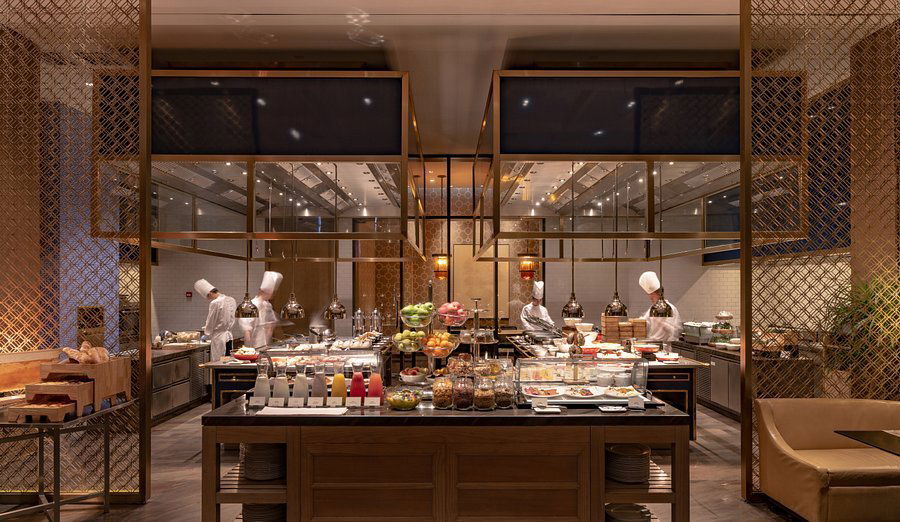
About Brasserie 1893
Brasserie 1893 holds back-to-back Michelin Plate recognition (2024 and 2025), making it the most credentialed French contemporary option at the ¥¥¥ price tier in Beijing's Dongcheng district. Booking is easy, the hutong setting adds genuine character, and the kitchen's consistency justifies the price. Book it for a serious French dinner without the splurge of a top-tier room.
Verdict
If you are weighing up French contemporary dining in Beijing's ¥¥¥ tier, Brasserie 1893 earns its place at the table more rigorously than most. Two consecutive Michelin Plate recognitions (2024 and 2025) confirm it is operating at a level of consistency that its direct peers in the same price bracket cannot all claim. For food and travel enthusiasts who want a serious European kitchen in Dongcheng rather than another international hotel brasserie going through the motions, this is worth booking. If your priority is cutting-edge tasting-menu ambition or a splurge-tier experience, look one tier up. Within the ¥¥¥ bracket, Brasserie 1893 is the more decorated option against a French-leaning alternative like Jing.
About Brasserie 1893
Brasserie 1893 sits in Jinyu Hutong in Dongcheng, one of Beijing's older commercial corridors that has quietly accumulated a concentration of serious restaurants. The address puts it within reach of the city's central cultural landmarks, and the hutong setting gives the approach a texture that a tower-block dining room cannot replicate. For an explorer-minded diner, the walk to the door is already part of the experience.
The kitchen works in French contemporary mode, which in Beijing's current dining context is a meaningful signal about sourcing priorities. French contemporary as a category, at the Michelin Plate level, demands ingredient quality that justifies the discipline of classical technique. Plate recognition from Michelin, awarded in both 2024 and 2025, indicates that the inspectors found the kitchen meeting a threshold of quality and consistency across visits, not just on a good night. That matters when you are deciding whether a ¥¥¥ price point is defensible.
Sourcing is where French contemporary kitchens at this level either earn or lose their price tier. At Brasserie 1893, the French contemporary label implies a kitchen oriented around product quality as the foundation of its cooking rather than spectacle or novelty. In Beijing, where supply chains for European-aligned ingredients require active management, maintaining Michelin Plate standards across two consecutive years suggests the kitchen is not cutting corners on provenance. Compare this to venues in higher price tiers, such as Xin Rong Ji on Xinyuan South Road at ¥¥¥¥, where the sourcing story is built around prized Taizhou regional produce. At Brasserie 1893, the sourcing logic is French in sensibility, and that shapes every course.
For context on what French contemporary cooking at Michelin Plate level looks like across China's dining scene, it is worth knowing that venues like Amber in Hong Kong and Odette in Singapore represent the best of the regional French fine-dining category at Michelin star level. Brasserie 1893 is not competing at that altitude, but within the ¥¥¥ bracket in Beijing, a Plate is a credible signal that the kitchen is doing something worth the booking. In Shanghai, 102 House offers a point of comparison for how French-influenced contemporary cooking positions itself in a different Chinese city context.
Timing matters here. Dongcheng in spring and autumn, when Beijing's climate is at its most manageable, makes the hutong approach to the restaurant considerably more pleasant. Beijing summers bring heat and occasional air quality issues that make walking hutong lanes less appealing; winters are cold but the low tourist density means the dining room is likely calmer. For an experience-focused visit, aim for October or April. Weekday evenings generally offer a more settled atmosphere than weekend services at ¥¥¥ tier restaurants in this part of the city.
Booking is rated Easy, which is a meaningful practical advantage in a city where the most talked-about rooms often require planning weeks in advance. You are not fighting for a table here the way you might at a newly starred venue. That accessibility is a genuine plus if you are building an itinerary around Beijing and need some flexibility in your dining calendar. For broader context on where Brasserie 1893 fits across the city's French and European dining options, see venues like Les Morilles, Rive Gauche, and Blackswan. For Chinese cuisine alternatives at a higher price point, Xin Rong Ji in Chengdu, Ru Yuan in Hangzhou, Chef Tam's Seasons in Macau, Imperial Treasure in Guangzhou, and Dai Yuet Heen in Nanjing provide useful regional benchmarks for how serious Chinese kitchens price and position themselves by comparison.
The Google review count is limited (two reviews at a 3.0 average), which tells you more about the venue's public profile than its quality. A Michelin Plate restaurant with thin public review data is often one that serves a repeat local clientele or business dining crowd rather than tourists hunting for it on aggregator platforms. That is not a red flag; it is a booking profile. Expect a room that skews toward professionals and occasion diners rather than a buzzy crowd-pleasing operation.
Practical Details
Address: 5-15 Jinyu Hutong, Dongcheng, Beijing 100006. Price tier: ¥¥¥ — mid-to-upper range for Beijing; appropriate for a special dinner without reaching the top-tier spend of ¥¥¥¥ venues. Cuisine: French Contemporary. Awards: Michelin Plate 2024 and 2025. Booking difficulty: Easy. Leading timing: Spring (April) or autumn (October) for comfortable hutong access; weekday evenings for a quieter room. Hours, phone, dress code: Not confirmed in available data — contact the venue directly or check current listings before visiting.
For a full overview of dining, hotels, bars, and experiences in the capital, see our full Beijing restaurants guide, our full Beijing hotels guide, our full Beijing bars guide, our full Beijing wineries guide, and our full Beijing experiences guide.
How It Compares
Frequently Asked Questions
What should I wear to Brasserie 1893?
A Michelin Plate restaurant in Beijing's ¥¥¥ tier typically expects polished casual at minimum — think neat trousers and a collared shirt for men, or a dress or smart separates for women. Trainers and activewear will read as underdressed for this address and price point. If you are coming from a business event, you will be fine; if you are coming from a tourist day out, change first.
Is Brasserie 1893 good for solo dining?
French brasserie format generally supports solo dining better than tasting-menu-only restaurants, and Dongcheng is easy to reach from central Beijing. At ¥¥¥, a solo dinner here is a considered spend but not an unreasonable one for a Michelin Plate venue. Counter or bar seating, if available, tends to suit solo diners better than a large table — worth requesting when booking.
Is Brasserie 1893 good for a special occasion?
Yes, and it earns that role through consecutive Michelin Plate recognition in 2024 and 2025 rather than just décor. The ¥¥¥ price tier makes it accessible for a meaningful dinner without the full commitment of Beijing's top-tier omakase or haute cuisine rooms. For a birthday or work celebration where French contemporary is the right register, this is a solid call.
Is Brasserie 1893 worth the price?
At ¥¥¥ with two consecutive Michelin Plates, the value case is credible. That recognition signals consistent kitchen standards rather than a one-year outlier, which matters when you are spending at this level. Compared to other French or international restaurants in Beijing at similar pricing without any Michelin recognition, Brasserie 1893 has a clear edge in verifiable quality signal.
What should I order at Brasserie 1893?
Specific menu items are not confirmed in Pearl's venue data, so we won't invent them. What the Michelin Plate designation does confirm is that the kitchen is executing its French contemporary format to a recognized standard. Ask the server what the kitchen is running as its current strength — in this format and price tier, that question usually gets a straight answer and a better meal.
What are alternatives to Brasserie 1893 in Beijing?
For Chinese fine dining at a comparable or higher tier, Jing and Lamdre are the relevant comparisons in Beijing. If you want to stay in the French or European contemporary lane, Brasserie 1893's Michelin Plate credentials give it a clearer quality anchor than most. The right alternative depends on whether cuisine format or neighbourhood is driving the decision.
Location
5-15 Jinyu Hu Tong, Dongcheng, Beijing, China, 100006
Compare Brasserie 1893
| Venue | Cuisine | Awards | Booking Difficulty |
|---|---|---|---|
| Brasserie 1893 | French Contemporary | Michelin Plate (2025); Michelin Plate (2024) | Easy |
| Jing | French Contemporary | Michelin 1 Star | Unknown |
| Xin Rong Ji (Xinyuan South Road) | Taizhou | Michelin 3 Star, World's 50 Best | Unknown |
| Chao Shang Chao (Chaoyang) | Chao Zhou | Michelin 3 Star | Unknown |
| Lamdre | Vegetarian | Michelin 1 Star, World's 50 Best | Unknown |
| Jingji | Beijing Cuisine | Michelin 2 Star | Unknown |
Comparing your options in Beijing for this tier.
Also Consider
- Jing, French Contemporary, ¥¥¥
- Xin Rong Ji (Xinyuan South Road), Taizhou, ¥¥¥¥
- Chao Shang Chao (Chaoyang), Chao Zhou, ¥¥¥¥
- Lamdre, Vegetarian, ¥¥¥¥
- Jingji, Beijing Cuisine, ¥¥¥¥
Within Beijing's ¥¥¥ French contemporary bracket, Brasserie 1893's most direct comparison is Jing. Both sit at the same price tier and operate in a broadly similar culinary register. Brasserie 1893 holds the stronger award position with two consecutive Michelin Plate recognitions, which gives it a measurable edge for diners who treat Michelin consistency as a quality signal. If your decision comes down purely to documented culinary credibility at this price point, Brasserie 1893 is the call.
Stepping up to ¥¥¥¥, the comparison set shifts significantly. Xin Rong Ji on Xinyuan South Road and Chao Shang Chao in Chaoyang both operate in Chinese cuisine categories with premium sourcing stories and higher price floors. If you are choosing between a French ¥¥¥ dinner at Brasserie 1893 and a Chinese ¥¥¥¥ meal at either of those venues, the decision is less about quality and more about what you want to eat and how much you want to spend. For pure value at the credentialed level, Brasserie 1893 is the more accessible entry point.
Lamdre (vegetarian, ¥¥¥¥) and Jingji (Beijing cuisine, ¥¥¥¥) serve distinctly different diner profiles: Lamdre suits plant-focused diners willing to pay a premium for a considered vegetarian kitchen, while Jingji suits those who want to eat Beijing cuisine at a serious level. Neither competes directly with Brasserie 1893's French contemporary format. If French cooking is the priority and budget is a consideration, stay with Brasserie 1893. If Chinese cuisine at a higher spend is on the table, Xin Rong Ji or Jingji are the stronger choices in that tier.
Recognized By

Explore Beijing
Save or rate Brasserie 1893 on Pearl
Keep this venue in your Pearl passport, rate it after you visit, and track it alongside every other place you collect.