
.png?width=1200&quality=80)

Qu Lang Yuan
Innovative · Dongsi, Beijing
Restaurant in Beijing, China
 Book with Pearl
The Read
Hutong-Rooted Innovation
Price
$200–300per person
Dress
Smart Casual
Why go
A Ming-era courtyard in Dongcheng sets the scene for contemporary Chinese fine dining that has earned a Michelin Plate, a Black Pearl 1 Diamond, and a place on the Tatler Best Restaurants Asia-Pacific 2025 list. At ¥¥¥ with easy booking, it sits below Beijing's top price tier while matching the ambiance of the city's most serious addresses. Book it when architecture and culinary ambition both need to be on the brief.
About Qu Lang Yuan
Verdict
If you've already been to Qu Lang Yuan, you'll notice that what holds up on a second visit is the setting itself: a Ming-era courtyard in Dongcheng that reframes the meal before a dish arrives. The question for repeat visitors and first-timers alike is whether the contemporary Chinese cooking justifies the ¥¥¥ price point against a Beijing fine-dining scene that has grown significantly more competitive. The answer is yes, with conditions. Qu Lang Yuan earned a Michelin Plate and a Black Pearl 1 Diamond in 2025, plus inclusion in the Tatler Leading Restaurants Asia-Pacific 2025 list, which places it in credentialed company across the region. That combination of recognition suggests consistent execution rather than a one-season arrival. Book it for a dinner when architecture and culinary ambition matter equally to you, and when you want a specifically Beijing address rather than a hotel dining room.
The Room and the Experience
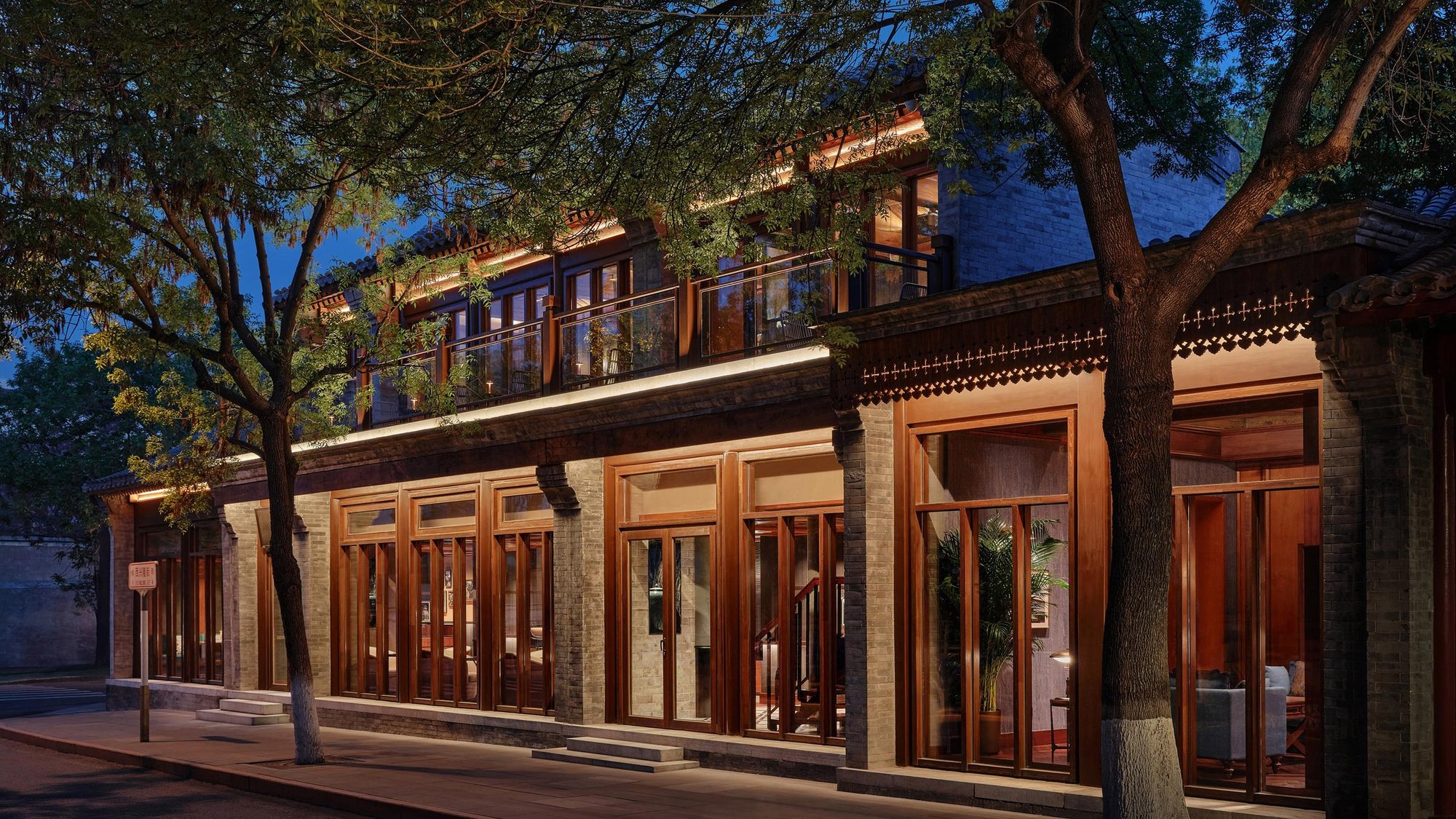
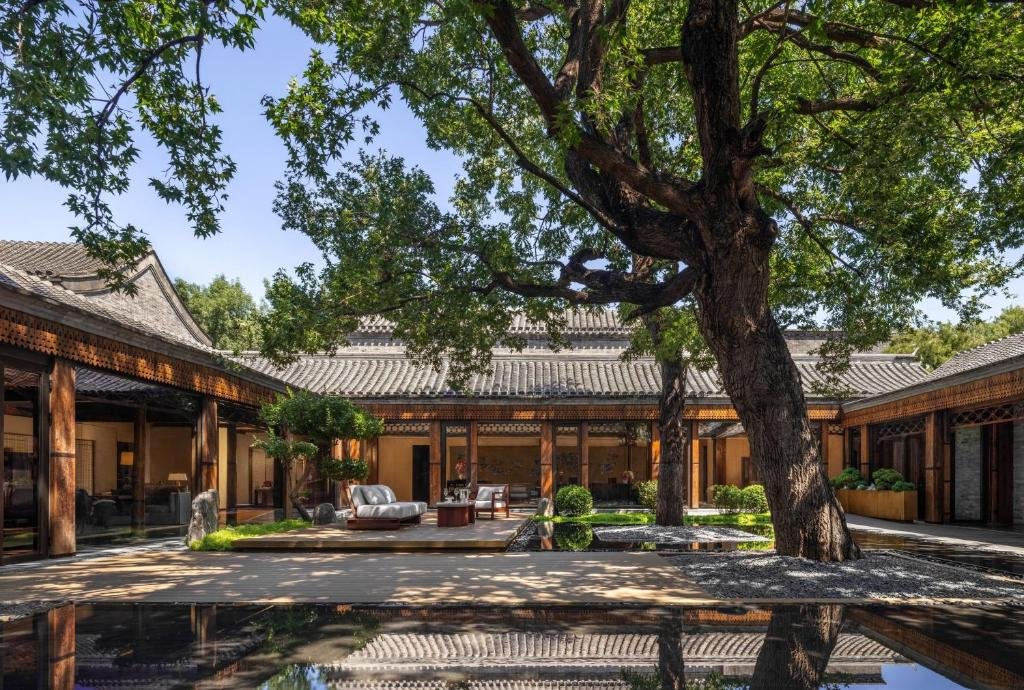
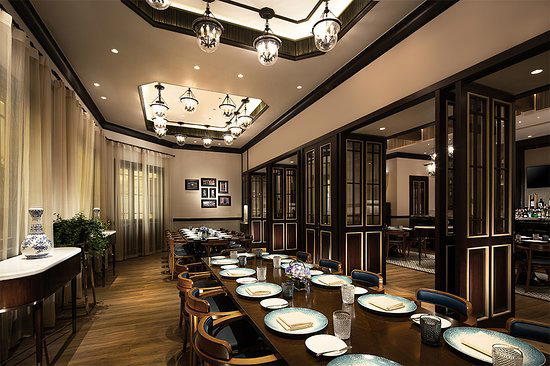
The first thing you register at Qu Lang Yuan is the courtyard architecture. Ming-era grey-tile rooflines, carved timber screens, and stone-paved passages give the space a visual weight that most contemporary restaurants in Beijing cannot replicate or import. This is not a converted hutong snack stop — it is a formal fine-dining environment where the setting does real work, orienting guests toward a slower, more considered pace from the moment they arrive. For an explorer-minded diner who treats the room as part of the brief, this matters: the visual context at Qu Lang Yuan is doing something that a modern hotel dining room in Chaoyang simply cannot.
The cuisine is classified as Innovative, which in Beijing's fine-dining vocabulary means a kitchen working with Chinese ingredients, techniques, and seasonal logic but presenting them through a contemporary lens. Tatler's listing frames it as a contemporary Chinese fine-dining experience, and the Black Pearl Diamond, a credentialing system specifically calibrated for Chinese restaurant excellence, confirms the kitchen is operating at a level that the local-market panel takes seriously. Without access to current menu specifics, the practical implication is this: arrive expecting a tasting format, structured courses, and plating that reflects the visual precision the room demands. This is not a venue for sharing plates and ordering freely — it is a sit-down, course-by-course commitment.
Wine at Qu Lang Yuan
Venue data does not confirm the specific wine program at Qu Lang Yuan, so specific claims about the list would be speculative. What the price tier, the Tatler listing, and the Black Pearl recognition collectively imply is a venue operating at a level where beverage pairing is expected to be available and considered. Contemporary Chinese fine dining at this tier in Beijing increasingly pairs international wine selections with Chinese spirits and regional teas alongside food courses, a format that rewards guests who ask about pairing options rather than defaulting to a single bottle. If wine depth matters to your decision, call ahead on +86 10 6406 1118 to ask about the current pairing menu before booking. For comparison, venues like 102 House in Shanghai and Chef Tam's Seasons in Macau show that the region's innovative fine-dining tier increasingly treats beverage as co-equal to the food program, Qu Lang Yuan's credential set suggests a similar ambition, though you should verify the specifics directly.
Practical Details
Qu Lang Yuan sits at 25 Dongsishiyi Alley in Dongcheng, a central hutong district that is navigable by taxi or subway. Booking difficulty is rated easy, which means you are unlikely to face a multi-week wait, a meaningful practical advantage over some of Beijing's harder-to-book addresses. Reservations are advisable nonetheless, particularly for evening slots when the courtyard setting draws its most consistent demand. The phone number on record is +86 10 6406 1118. No website is confirmed in the current data, so booking by phone or through a hotel concierge is the most reliable route. The price range is ¥¥¥, positioning it below the ¥¥¥¥ venues in Beijing's top tier, which makes it a more accessible entry point into credentialed fine dining without stepping down in ambiance. For context on other options in the city, see our full Beijing restaurants guide.
Regional Context
Qu Lang Yuan sits within a broader generation of innovative Chinese fine-dining venues across mainland China and the wider Asia-Pacific region. Comparable ambition at the same price tier appears at Ru Yuan in Hangzhou and Dai Yuet Heen in Nanjing, while Xin Rong Ji in Chengdu and Imperial Treasure Fine Chinese Cuisine in Guangzhou demonstrate how different regional Chinese traditions perform at the fine-dining tier. Outside China, the innovative-cuisine format finds expression at venues like alla prima in Seoul and Soigné in Seoul, though both operate from a distinctly Korean culinary base. Within Beijing specifically, Qu Lang Yuan occupies a position that is harder to replicate: the hutong courtyard setting combined with credentialed contemporary Chinese cooking is a pairing few addresses in the city can match. For broader Beijing planning, the hotels guide, bars guide, and experiences guide are useful companions.
Who Should Book
Book Qu Lang Yuan if the combination of historical architecture and contemporary Chinese cooking is the specific brief, it delivers both with a credentialed track record. It is a better fit for a dinner with one or two people who want to engage with the meal at a deliberate pace than for a large group looking for a lively shared-plate format. At ¥¥¥ it represents a real but not extreme financial commitment for a Beijing fine-dining evening. If you are comparing it against Beijing's ¥¥¥¥ tier, the question is not whether Qu Lang Yuan matches those venues course for course, but whether the Ming-era courtyard setting and the easier booking situation tilt the decision, for most visitors, they do. For further Beijing restaurant options across styles, the King's Joy listing offers a notable vegetarian alternative in a similarly serious architectural setting, and Jingji covers Beijing cuisine at the top tier if regional specificity matters more than innovation.
Planning details
- Location
- 25 Dongsishiyi Aly, 25, Dongcheng, Beijing, China, 100010
- Website
- qulangyuan.cn
- Phone
- +86 10 8403 8229
The take
The Take
The Vibe
Qu Lang Yuan inhabits a quiet corner of Dongcheng's hutong network, where narrow lanes and grey-brick courtyard transitions set the tone before a dish arrives. The neighbourhood's understated streetscape and lack of flashy signage encourage a dining experience that privileges reputation and repeat custom over walk-in volume. Inside, the format skews intimate and conversation-driven: the kind of place where the cooking is expected to do the talking. The copy frames the kitchen within Beijing's 'innovative Chinese' milieu, so the room feels both rooted in local dining history and quietly forward-looking.
Best For
This is a restaurant for people seeking focused, memorable evenings: date nights, business dinners and other special occasions translate well to the hushed hutong setting. The location and format reward diners who want to linger — conversations and multi-course plates unfold without the interruptions of a high-traffic dining district. Because the venue sits in a long-standing Beijing dining fabric and is discussed alongside the city's awards scene, it reads as a choice for returning diners and those after an elevated, considered meal rather than casual drop-ins.
Ordering Tips
Menus at Qu Lang Yuan read as a study in contemporary Chinese technique and reinterpretation. When building a meal, include signature items — foie liver truffle rice, stove roast lamb chops and the tea beef — to sample the kitchen's chief perspectives. The dining experience is conversation-forward, so order a selection to share and pace plates to let each preparation register. Given the venue’s emphasis on reputation and repeat custom, treating the meal as a sequence rather than a single course helps you appreciate how the kitchen reworks traditional flavours.
Venue details
Ambiance
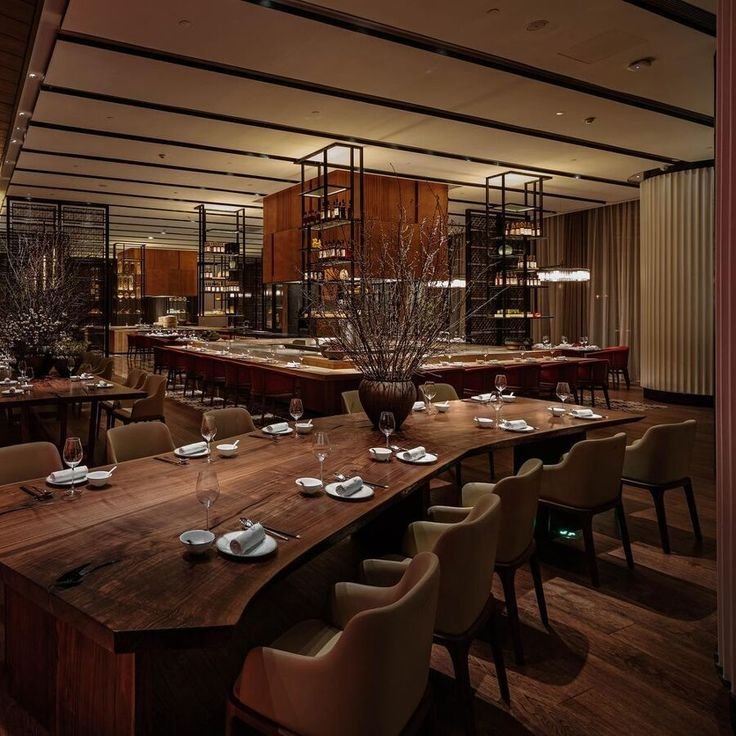
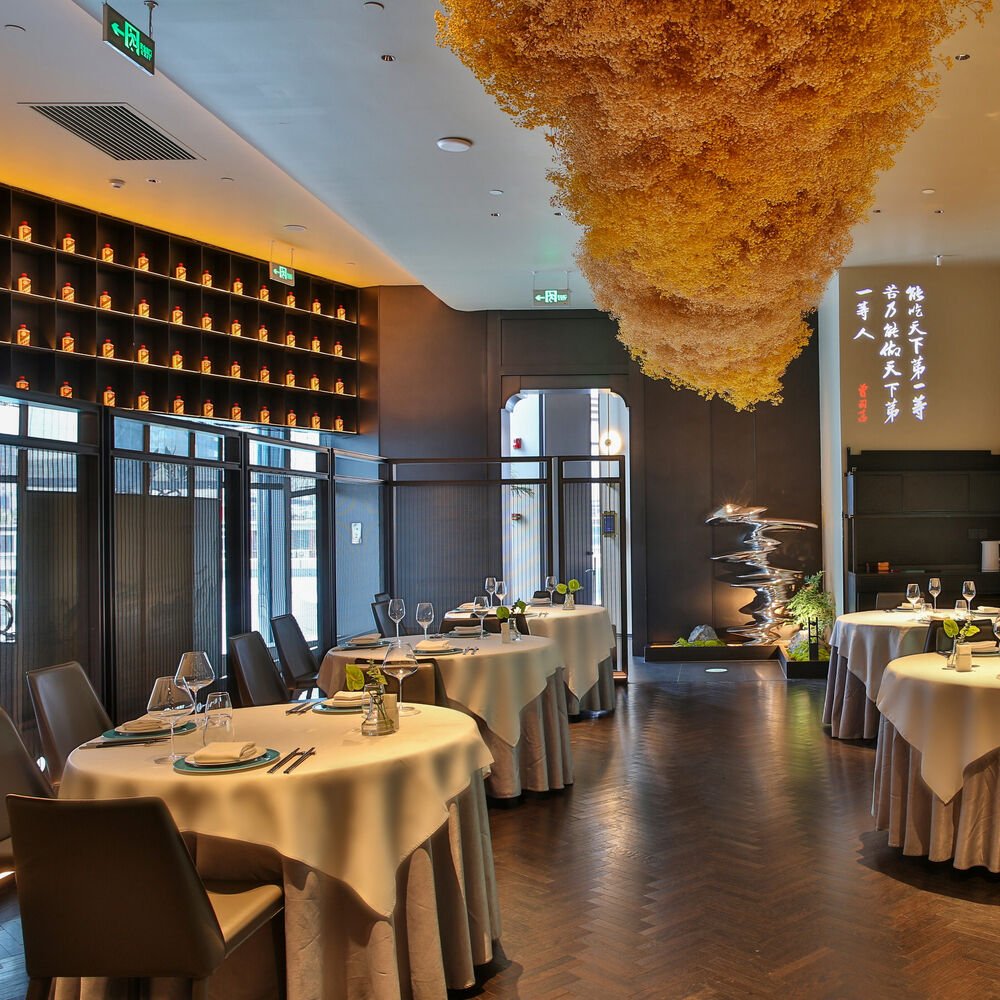
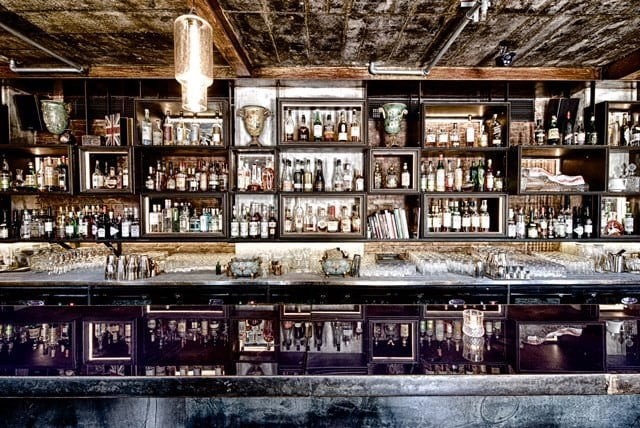
Sultry, sleek minimal space in a remodelled courtyard house blending history and modernism, with dark wood, central countertop of black stones and foliage, quiet and private with strong table spacing.
Tags
Vibe
Best For
Experience
Sourcing
View
At the Table
- Dress Code
- Smart Casual
- Noise Level
- Quiet
- Service Style
- Formal
- Meal Pacing
- Leisurely
- Capacity
- Small
- Kitchen
- Modern
- Menu Format
- Tasting menu
- Wine Program
- Curated
Signature Dishes
- foie liver truffle rice
- stove roast lamb chops
- tea beef
Know before you go
Know Before You Go
- Getting there
- 25 Dongsishiyi Aly, 25, Dongcheng, Beijing, China, 100010
Planning details
Location
Recognition and awards
Also consider
Also Consider
- Jing, French Contemporary, ¥¥¥
- Xin Rong Ji (Xinyuan South Road), Taizhou, ¥¥¥¥
- Chao Shang Chao (Chaoyang), Chao Zhou, ¥¥¥¥
- Lamdre, Vegetarian, ¥¥¥¥
- Jingji, Beijing Cuisine, ¥¥¥¥
Restaurant context
Against Beijing's ¥¥¥¥ tier, Qu Lang Yuan holds a clear practical advantage: it costs less and books more easily. Xin Rong Ji (Xinyuan South Road) and Chao Shang Chao (Chaoyang) both operate at ¥¥¥¥ and deliver serious regional Chinese cooking, Taizhou seafood and Chaozhou cuisine respectively, with a more traditional format and higher per-head spend. If precision regional cooking within a defined Chinese culinary tradition matters more to you than contemporary innovation or historical architecture, either of those two is a stronger call. But if you want a serious evening at a lower commitment level, Qu Lang Yuan wins on the value-to-credential ratio.
Lamdre and Jingji cover the ¥¥¥¥ tier from different angles, vegetarian fine dining and Beijing cuisine respectively, and suit guests for whom those specific identities are the brief. Neither competes directly with Qu Lang Yuan on setting: the Ming-era courtyard is a differentiator that the Chaoyang hotel-adjacent competition cannot replicate. For a French Contemporary alternative at the same ¥¥¥ price point, Jing serves guests who want European technique over Chinese culinary framing without stepping up in price.
The clearest direct comparison is King's Joy, which also occupies a hutong courtyard in Dongcheng and holds comparable recognition for vegetarian Chinese fine dining. If you eat meat, Qu Lang Yuan is the call. If you want the same courtyard architecture and setting gravity in a vegetarian format, King's Joy is the alternative. For the full picture across Beijing's dining options, see our full Beijing restaurants guide.
Explore Beijing
Around this place
Discover more on Pearl
Unlock the full Qu Lang Yuan guide in Pearl, including awards, comparisons, FAQs, planning details, and nearby places.
Compare Qu Lang Yuan
| Venue | Price | Awards |
|---|---|---|
| Qu Lang Yuan | ¥¥¥ | Tatler Best Restaurants Asia-Pacific 20252025 Michelin Plate2025 Black Diamond 1 Diamond2024 Michelin Plate |
| Jing | ¥¥¥ | 2025 OAD Top Restaurants in Asia Ranked · #3842025 Wine Spectator Best of Award of Excellence2025 The Best Chef One Knife2025 Michelin 1 Star2025 Black Diamond 1 Diamond2024 OAD Top Restaurants in Asia Ranked · #3522024 Michelin 1 Star2023 OAD Top Restaurants in Asia RecommendedWorld's Best Wine Lists 2022 |
| Xin Rong Ji (Xinyuan South Road) | ¥¥¥¥ | 2026 Asia's 50 Best Restaurants · #842026 La Liste Top Restaurants2025 Asia's 50 Best Restaurants · #732025 Black Diamond 2 Diamond2025 La Liste Top Restaurants2025 Michelin 3 Stars2025 Relais Chateaux Award |
| Chao Shang Chao (Chaoyang) | ¥¥¥¥ | 2026 La Liste Top Restaurants2025 The Best Chef Three Knives2025 Michelin Plate2025 Michelin 3 Stars2024 Michelin 3 Stars |
| Lamdre | ¥¥¥¥ | 2026 Asia's 50 Best Restaurants · #172026 OAD Top Restaurants in Asia Highly Recommended2026 Black Pearl 2 Diamond2026 La Liste Top Restaurants2025 Asia's 50 Best Restaurants · #502025 OAD Top Restaurants in Asia Ranked · #224We're Smart World Top Restaurants 2025We're Smart World Top 100 2025Tatler Best Restaurants Asia-Pacific 2025 |
| Jingji | ¥¥¥¥ | 2026 La Liste Top Restaurants2025 Michelin 2 Stars2024 Michelin 2 Stars |











Comparing your options in Beijing for this tier.
FAQ
Frequently Asked Questions
What are alternatives to Qu Lang Yuan in Beijing?
Lamdre is the closest comparison if you want ambitious Chinese cooking with serious critical recognition. Jingji and Jing both operate at the ¥¥¥ tier and suit different formats — Jing leans more accessible, Jingji more formal. For a different register, Xin Rong Ji (Xinyuan South Road) prioritises produce-driven precision over architectural atmosphere. If the courtyard setting is not a factor in your decision, the field is competitive enough that you should compare credentials before booking Qu Lang Yuan on price alone.
Is the tasting menu worth it at Qu Lang Yuan?
On credentials alone, yes: a Michelin Plate in both 2024 and 2025, a Black Pearl 1 Diamond, and a place on Tatler's Best Restaurants Asia-Pacific 2025 list collectively suggest the kitchen is consistently delivering at this price point. The ¥¥¥ tier is not trivial for Beijing, so the calculus tips in favour if the pairing of Ming-era architecture and innovative Chinese cooking is the specific thing you are coming for. If you want a tasting menu on cooking alone, Lamdre warrants comparison before you commit.
What should a first-timer know about Qu Lang Yuan?
The address is 25 Dongsishiyi Alley in Dongcheng — a hutong lane that is reachable by taxi or subway, but worth confirming your route in advance as alley addresses can be harder to locate at night. The cooking format is innovative Chinese fine dining, so expect a structured menu rather than à la carte ordering. The room is the experience as much as the food: the Ming-era courtyard sets expectations from arrival. First-timers with a specific interest in contemporary Chinese cuisine will find the credentials credible; those coming primarily for a casual meal should calibrate to the format first.
Is Qu Lang Yuan worth the price?
At ¥¥¥ in Beijing, Qu Lang Yuan sits at the premium end of a competitive market — and the awards record justifies the positioning. Michelin Plate recognition across two consecutive years (2024 and 2025), a Black Pearl 1 Diamond, and a Tatler Asia-Pacific listing all point to consistent quality rather than a one-year anomaly. The strongest case for the price is the combination of the setting and the cooking: either element alone could be sourced more cheaply elsewhere in Beijing. If you are price-sensitive, Chao Shang Chao (Chaoyang) operates at a different value point for Cantonese-leaning cooking.