
No. 69 Fangzhuanchang Zhajiangmian (Fangzhuanchang Hutong)
Noodles · Dianmen, Beijing
Restaurant in Beijing, China
 Book with Pearl
The Read
Hutong Zhajiangmian Counter
Price
$1–10per person
Dress
Casual
Why go
A back-to-back Michelin Bib Gourmand winner (2024 and 2025) serving Beijing-style zhajiangmian in Fangzhuanchang Hutong, Xicheng. Walk-in friendly and priced at ¥, this is the most accessible Michelin-recognised noodle bowl in the capital. If you want one dish that explains Beijing's noodle culture, this is the address.
About No. 69 Fangzhuanchang Zhajiangmian (Fangzhuanchang Hutong)
Verdict
No. 69 Fangzhuanchang Zhajiangmian is one of Beijing's most accessible Michelin-recognised bowls: a single-dish hutong counter that has earned Bib Gourmand recognition in both 2024 and 2025, and costs almost nothing to visit. Walk-ins are easy. The decision to go is simple — if you are in Xicheng and want to understand why Beijing's version of zhajiangmian has its own devoted following, this is the address.
About the Restaurant
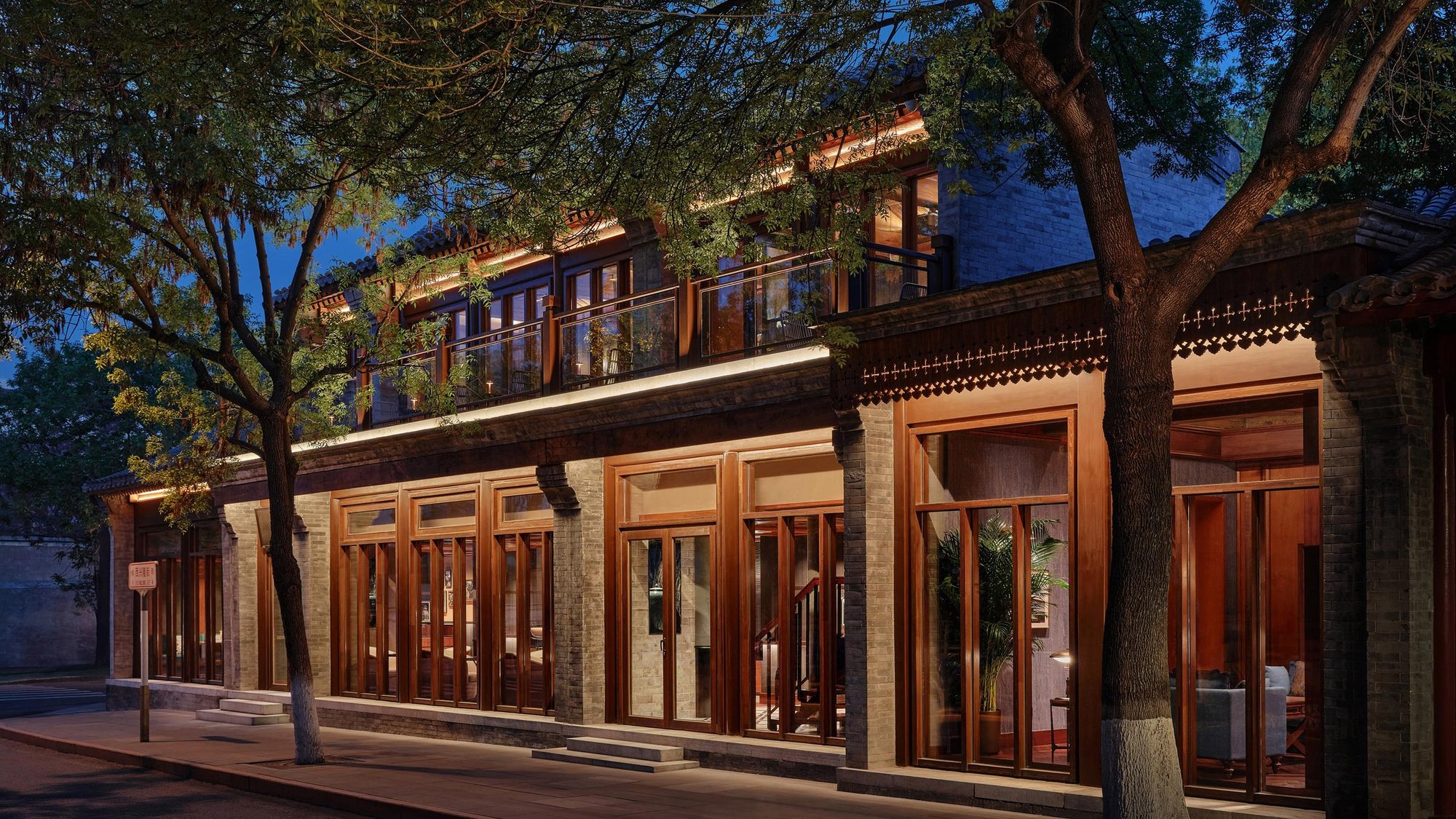
The restaurant sits in Fangzhuanchang Hutong, a narrow lane in the Shichahai area of Xicheng District. The address puts it in one of Beijing's most historically dense neighbourhoods, a few minutes from the lakeside and the old drum tower quarter. The setting is not staged for tourists — this is a working hutong, and the kitchen operates accordingly.
Zhajiangmian, wheat noodles topped with a slow-cooked fermented soybean paste sauce and fresh vegetable accompaniments, is one of Beijing's defining dishes, and has been a staple of the capital's working-class food culture for generations. The Michelin Bib Gourmand, awarded for two consecutive years, is a direct signal that the kitchen is executing the dish at a level the guide's inspectors consider worth a specific detour, not just a neighbourhood convenience. For context on how that credential sits in Beijing's broader food scene, see our full Beijing restaurants guide.
Price is in the lowest tier (¥), so a bowl here costs a fraction of what you would spend at, say, Xin Rong Ji (Xinyuan South Road) or Chao Shang Chao (Chaoyang).
Multi-Visit Strategy
Because the price point is so low and the walk-in policy is easy, repeat visits are genuinely practical rather than aspirational. On a first visit, the focus should be the zhajiangmian itself, the ratio of sauce to noodle, the texture of the handmade wheat strands, and the fresh accompaniments that come alongside (typically shredded cucumber and bean sprouts). The dish rewards attention; Beijing's zhajiangmian differs from northern Chinese noodle dishes you might encounter at Pang Mei Noodles (Xiang'er Hutong) in flavour profile and construction.
A second visit is useful for comparison: go at a different time of day if hours permit, or in a different season, to see how the vegetable accompaniments shift. The hutong itself changes character between morning and afternoon, which adds context to the meal without requiring any extra effort. For food-focused travellers building a Beijing noodle itinerary, pairing this with A Niang Mian Guan in Shanghai or A Xin Xian Lao (Gongnong Road) in Fuzhou gives you a useful cross-regional noodle reference.
If you are building a deeper Beijing food trip, the Shichahai area makes it easy to combine this stop with other explorations. Ladychai and Lamdre are worth knowing for different occasions. For broader planning, the Beijing hotels guide, bars guide, and experiences guide cover the surrounding neighbourhood well.
Practical Details
| Detail | No. 69 Fangzhuanchang | Pang Mei Noodles | Jingji (Beijing Cuisine) |
|---|---|---|---|
| Price tier | ¥ | ¥¥ | ¥¥¥¥ |
| Michelin recognition | Bib Gourmand 2024, 2025 | Not listed | ¥¥¥¥ tier |
| Booking difficulty | Easy / walk-in | Easy | Moderate |
| Location | Fangzhuanchang Hutong, Xicheng | Xiang'er Hutong | Varies |
| Cuisine focus | Zhajiangmian (single dish) | Noodles | Beijing broad menu |
How It Compares
See the comparison section below.
Pearl Picks, More Beijing Dining
- Ladychai
- Pang Mei Noodles (Xiang'er Hutong)
- Xin Rong Ji (Xinyuan South Road)
- Chao Shang Chao (Chaoyang)
- Lamdre
For noodle comparisons across China: 102 House in Shanghai, Xin Rong Ji in Chengdu, Ru Yuan in Hangzhou, Chef Tam's Seasons in Macau, Imperial Treasure Fine Chinese Cuisine in Guangzhou, Dai Yuet Heen in Nanjing.
Planning details
- Location
- W9QW+6F3, Fangzhuanchang Hu Tong, Shichahai, Xicheng District, Beijing, China, 100009
- Phone
- +86 136 9115 0449
The take
The Take
The Vibe
Tucked into a Fangzhuanchang hutong, this bowl shop reads like a piece of Beijing history. The setting is narrow grey-brick alleys and a residential lane where the modern skyline fades; the street-level entrance and occasional queue signal something local and beloved. Service is unadorned and quick, the room tight and social rather than ceremonial. That combination of historic context, small scale and straightforward food creates an intimate, charming atmosphere: you come for the bowl, the neighbourhood rhythm and the plainspoken satisfaction of an unpretentious, well-executed classic.
Best For
No. 69 is best for casual neighbourhood meals and quick solo visits where the focus is the bowl. The counter-driven format and ¥ tier framing make it ideal for people looking for an unfussy, affordable bite — weekday lunch crowds and early evening diners fit comfortably into the rhythm here. Groups are possible but the space and counter orientation lean toward individual plates and shared bustle; expect a short wait at peak times rather than formal table service or a long multi-course meal.
Ordering Tips
The signature zhajiangmian is the clear place to start: wheat noodles dressed in slow-cooked fermented soybean paste with fresh julienned cucumber and raw garnishes. The description underscores how the jiang (sauce) needs time and fat to develop depth, so order the classic bowl to appreciate the balance of salt, sweetness and freshness. Braised Pork Elbow is also highlighted as a signature; plan for counter service and a likely queue, and be ready to eat at the counter in a quick, communal setting.
Venue details
Ambiance
Compact, functional space with old Beijing style decor, communal tables, clatter of bowls and chopsticks, and brisk neighborhood energy.
Tags
Vibe
Best For
Experience
Sourcing
At the Table
- Dress Code
- Casual
- Noise Level
- Conversational
- Service Style
- Casual
- Meal Pacing
- Quick Bite
- Capacity
- Small
- Kitchen
- Traditional
- Menu Format
- A la carte
Signature Dishes
- Zhajiangmian
- Braised Pork Elbow
Know before you go
Know Before You Go
- Getting there
- W9QW+6F3, Fangzhuanchang Hu Tong, Shichahai, Xicheng District, Beijing, China, 100009
Planning details
Location
W9QW+6F3, Fangzhuanchang Hu Tong, Shichahai, Xicheng District, Beijing, China, 100009 · Directions
Recognition and awards
Also consider
Also Consider
- Jing, French Contemporary, ¥¥¥
- Xin Rong Ji (Xinyuan South Road), Taizhou, ¥¥¥¥
- Chao Shang Chao (Chaoyang), Chao Zhou, ¥¥¥¥
- Lamdre, Vegetarian, ¥¥¥¥
- Jingji, Beijing Cuisine, ¥¥¥¥
Restaurant context
No. 69 Fangzhuanchang Zhajiangmian sits at the opposite end of the Beijing dining spectrum from the ¥¥¥¥ venues in its neighbourhood peer set. Xin Rong Ji (Xinyuan South Road) and Chao Shang Chao (Chaoyang) both offer polished, multi-course experiences at a significantly higher spend. If your priority is exploring Beijing's regional cuisine in depth over several dishes with service to match, those are the right choices. If you want Michelin-recognised quality at a price that allows you to eat well twice in the same day, No. 69 is the answer.
Lamdre (¥¥¥¥, vegetarian) and Jingji (¥¥¥¥, Beijing cuisine) both serve a more formal Beijing dining experience. Neither competes directly with a hutong noodle counter, but they are worth knowing if you are building a multi-meal itinerary that needs variety in format and price tier. Jing (¥¥¥, French Contemporary) is in a different category entirely and is not a substitute.
For the value-focused food traveller, No. 69 Fangzhuanchang is the easiest yes in this peer group: lowest price, easiest booking, back-to-back Michelin recognition, and a dish that is genuinely specific to Beijing. Book the ¥¥¥¥ venues for evenings; use this for lunch or a mid-afternoon stop.
Explore Beijing
Around this place
Discover more on Pearl
Unlock the full No. 69 Fangzhuanchang Zhajiangmian (Fangzhuanchang Hutong) guide in Pearl, including awards, comparisons, FAQs, planning details, and nearby places.
Compare No. 69 Fangzhuanchang Zhajiangmian (Fangzhuanchang Hutong)
| Venue | Price | Awards |
|---|---|---|
| No. 69 Fangzhuanchang Zhajiangmian (Fangzhuanchang Hutong) | ¥ | 2025 Michelin Bib Gourmand2024 Michelin Bib Gourmand |
| Jing | ¥¥¥ | 2025 OAD Top Restaurants in Asia Ranked · #3842025 Wine Spectator Best of Award of Excellence2025 The Best Chef One Knife2025 Michelin 1 Star2025 Black Diamond 1 Diamond2024 OAD Top Restaurants in Asia Ranked · #3522024 Michelin 1 Star2023 OAD Top Restaurants in Asia RecommendedWorld's Best Wine Lists 2022 |
| Xin Rong Ji (Xinyuan South Road) | ¥¥¥¥ | 2026 Asia's 50 Best Restaurants · #842026 La Liste Top Restaurants2025 Asia's 50 Best Restaurants · #732025 Black Diamond 2 Diamond2025 La Liste Top Restaurants2025 Michelin 3 Stars2025 Relais Chateaux Award |
| Chao Shang Chao (Chaoyang) | ¥¥¥¥ | 2026 La Liste Top Restaurants2025 The Best Chef Three Knives2025 Michelin Plate2025 Michelin 3 Stars2024 Michelin 3 Stars |
| Lamdre | ¥¥¥¥ | 2026 Asia's 50 Best Restaurants · #172026 OAD Top Restaurants in Asia Highly Recommended2026 Black Pearl 2 Diamond2026 La Liste Top Restaurants2025 Asia's 50 Best Restaurants · #502025 OAD Top Restaurants in Asia Ranked · #224We're Smart World Top Restaurants 2025We're Smart World Top 100 2025Tatler Best Restaurants Asia-Pacific 2025 |
| Jingji | ¥¥¥¥ | 2026 La Liste Top Restaurants2025 Michelin 2 Stars2024 Michelin 2 Stars |










.png?width=1200&quality=80)



What to weigh when choosing between No. 69 Fangzhuanchang Zhajiangmian (Fangzhuanchang Hutong) and alternatives.
FAQ
Frequently Asked Questions
Is No. 69 Fangzhuanchang Zhajiangmian worth the price?
Yes, clearly. At a ¥ price point, this is one of the lowest-cost ways to eat at a Michelin-recognised venue anywhere in Beijing — the Bib Gourmand award (2024 and 2025) confirms the value case independently. The trade-off is a single-dish format, so if you want variety or a longer meal, look elsewhere. For a focused bowl of zhajiangmian, the price-to-recognition ratio is hard to argue.
What should I wear to No. 69 Fangzhuanchang Zhajiangmian?
Whatever you walked in wearing. This is a hutong counter in Xicheng District serving noodles at ¥ prices — there is no dress code, and turning up in anything other than everyday clothes would be out of place. Leave the formal wear for somewhere like Lamdre or Xin Rong Ji.
What should a first-timer know about No. 69 Fangzhuanchang Zhajiangmian?
The menu is built around one dish — zhajiangmian — so come knowing that. The restaurant is inside Fangzhuanchang Hutong in the Shichahai area, which is a narrow lane and can be easy to overshoot; confirm the address (W9QW+6F3, Fangzhuanchang Hu Tong) before you go. Hours are not listed publicly, so arriving at a standard lunch or early dinner window is the safer approach. The Bib Gourmand recognition means queues are possible at peak times.
Is No. 69 Fangzhuanchang Zhajiangmian good for a special occasion?
Not in the conventional sense. A hutong noodle counter at ¥ pricing is the right call for a casual meal, a solo lunch, or introducing someone to a Beijing classic — not for a birthday dinner or business meal. For a special-occasion noodle or Beijing dining experience, Lamdre or Jing would be more appropriate settings.