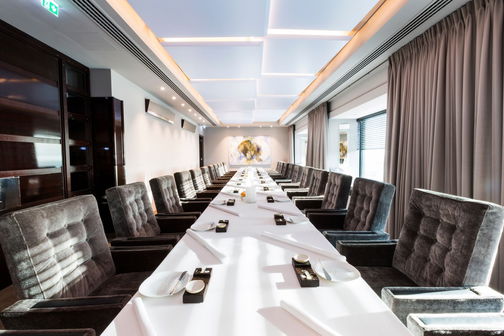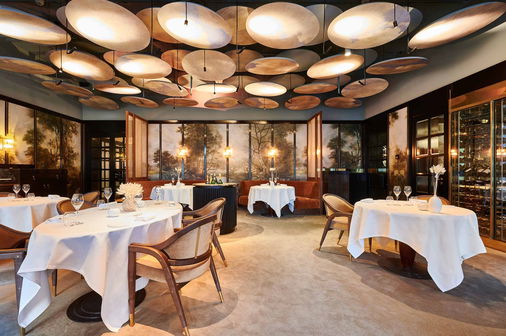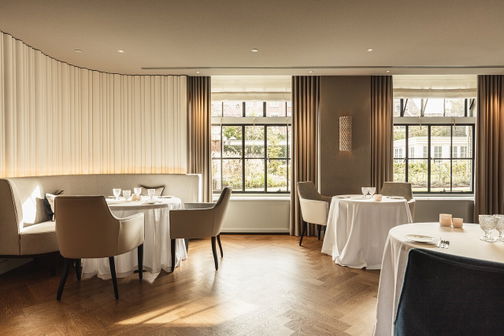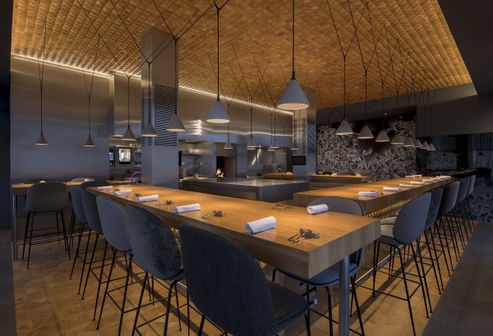


Lars Amsterdam
€€€€ · Modern Cuisine · Coenhaven/Mercuriushaven, Amsterdam
Restaurant in Amsterdam, Netherlands
The Read
European-Asian Tasting Counter
Price
€€€€
Dress
Smart Casual
Why go
Lars Amsterdam holds a 2024 Michelin star and, with a tasting menu that merges classical French technique and Asian flavour references, supported by produce from a 400-square-metre rooftop garden. At €€€€, it is the right booking if a structured, progression-driven tasting menu is your format. Book several weeks ahead: sittings are limited and the restaurant is closed Sunday and Monday.
About Lars Amsterdam
Lars Amsterdam: The Verdict
The assumption most first-time visitors carry to Lars Amsterdam is that it's another Nordic-inflected vegetable restaurant making virtuous food in a converted industrial space. That's not quite right. Lars Scharp's cooking is fundamentally rooted in classical French technique, the restaurant's identity is built on the tension between that rigorous foundation and a sustained interest in Asian flavour profiles. The result is a tasting menu format that rewards repeat visits more than almost any other Michelin-starred room in Amsterdam, which is precisely why this guide is written for someone who has already been once and is deciding whether to return.
At €€€€ positioning, Lars sits at the top end of Amsterdam's dining market, but the comparison that matters is not simply cost. It is whether the tasting menu architecture justifies the spend against alternatives in the same bracket. It does, with some caveats worth understanding before you book.
The Tasting Menu Architecture
What distinguishes Lars's menu progression is the interplay between structural precision and ingredient provocation. According to verified Michelin documentation, the kitchen's hallmark is balance across three axes simultaneously: flavour, temperature, texture. That is a harder technical achievement than it sounds, it is the reason the textural dimension of each course draws consistent attention from diners.
The Green Menu, a vegetable-focused offering built partly around produce from a 400-square-metre rooftop garden 400 metres from the restaurant, gives the menu arc a narrative coherence that purely sourcing-led menus often lack. The vegetables arrive with the kind of technical handling you would expect from a kitchen trained in classical French methods: reductions, emulsions, sauces that carry genuine depth. Documented dishes illustrate the approach clearly. A yellowtail and North Sea shrimp tartare gains structure from a tom kha gai gel and a melon and kaffir lime vinaigrette, delivering a Thai-inflected flavour profile without abandoning European precision. Medium-rare lamb with a miso and walnut crust, scallops, stewed lamb signals how confidently the kitchen merges umami-driven Asian seasoning with the richest French-style proteins. These are not fusion novelties; they are courses that have been thought through from the inside out.
One honest note for returning diners and those with dietary requirements: the vegetarian menu cannot currently be made fully vegan, as eggs and dairy remain integral to several preparations. If that is a constraint, contact the restaurant directly before booking rather than assuming flexibility on arrival. The kitchen's sourcing from its own urban farm is a genuine differentiator, not a marketing claim, but it operates within a framework that still depends on classical dairy and egg technique.
The Room and the Experience
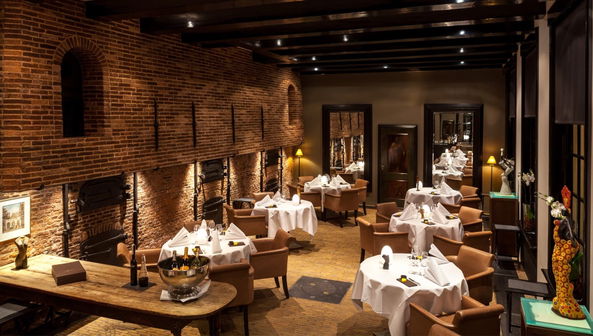
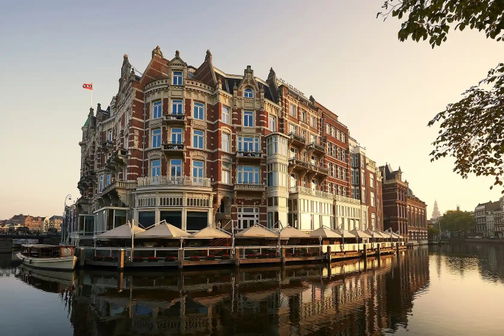
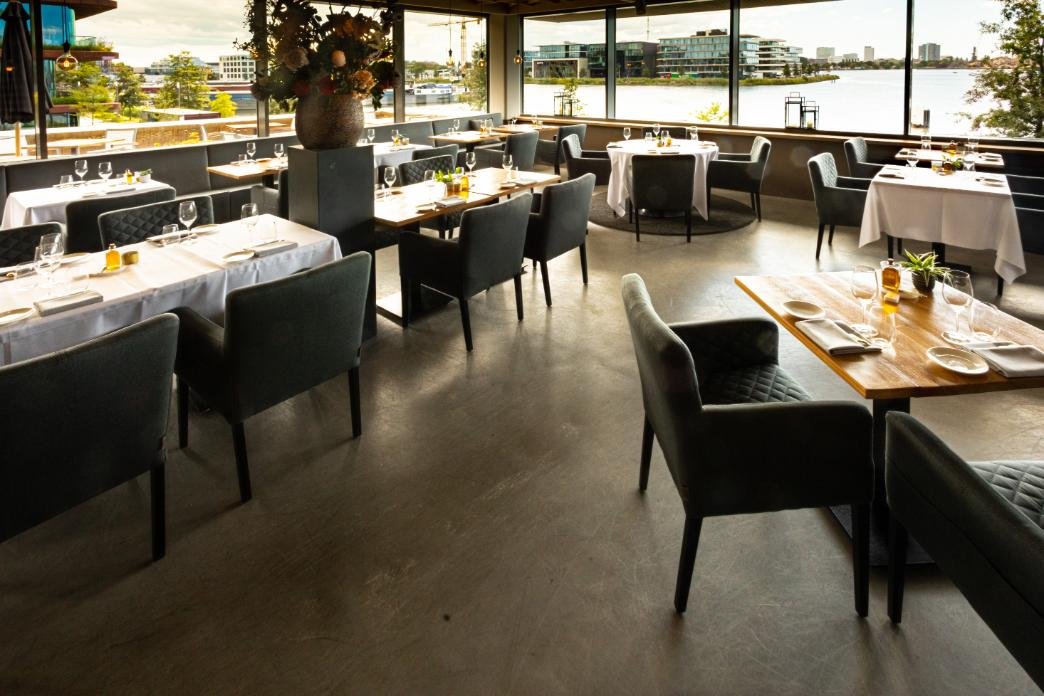
The restaurant occupies a spacious setting at Danzigerkade 179, facing Amsterdam's harbour and the post-industrial development along its western waterfront. A terrace overlooking the water adds a seasonal dimension that changes the experience meaningfully. If you visited in winter, a return visit for a summer lunch service gives you a materially different room feel without a different menu having to justify the trip. Lunch service runs Thursday through Saturday from 12pm to 1:30pm; evening sittings run Tuesday through Saturday from 6pm to 8:30pm. The restaurant is closed Sunday and Monday.
Maître d' Floor Wiggers manages the front of house, the documented experience suggests the service calibration matches the kitchen's ambitions. At this price point, service rhythm matters as much as food quality for the overall evening, the combination of Scharp and Wiggers operating as a defined creative and hospitality partnership gives Lars a structural coherence that many single-chef operations lack.
Booking Lars Amsterdam
Booking difficulty is rated hard. At a restaurant operating with limited sittings across five days per week and a location that draws destination diners from outside Amsterdam, lead time matters. Plan several weeks ahead for dinner; lunch may offer slightly more flexibility but should not be treated as a walk-in option. There is no booking phone number in the public record, so the restaurant's own website is the appropriate channel. Given the limited number of sittings per week, if you have a specific date in mind, move on it early.
How Lars Fits the Amsterdam Michelin Tier
For context on where Lars sits within the Netherlands' broader fine dining geography, the restaurants earning comparable recognition include De Librije in Zwolle, Aan de Poel in Amstelveen, Inter Scaldes in Kruiningen, and De Nieuwe Winkel in Nijmegen. Within Amsterdam itself, the Michelin-starred field includes Restaurant Showw, Restaurant Bougainville, The White Room by Jacob Jan Boerma, and Flore. Lars's distinction within this group is the European-Asian menu architecture and the urban farm sourcing, which gives the tasting format a specificity that several competitors at the same tier lack.
If you are researching the full Amsterdam dining picture, Pearl's full Amsterdam restaurants guide covers the category in depth. For broader trip planning, the Amsterdam hotels guide, bars guide, and experiences guide are available alongside the wineries guide. For fine dining outside Amsterdam in the same country, De Lindenhof in Giethoorn and Tribeca in Heeze are worth the trip. Internationally, Stand in Budapest and De Bokkedoorns in Overveen operate at a comparable tier for those benchmarking across borders.
Pearl's Take
Book Lars Amsterdam if the tasting menu format is your preference and you want classical technique applied to something more adventurous than standard European fine dining. The kitchen's consistency at the €€€€ level is well-documented, the urban farm sourcing is a genuine point of difference, the harbour-facing room adds an environmental quality that most starred restaurants in Amsterdam cannot match. If you have been once and found the menu compelling, a return visit for a different season or a lunch service is a reasonable call. If you have not been, it earns its star without caveats, the booking difficulty means you should not defer the reservation.
FAQ
Is Lars Amsterdam good for solo dining?
- Lars Amsterdam can work for solo dining at the €€€€ price tier, though it is worth confirming counter or bar seating availability when booking, as tasting menu restaurants at this level in Amsterdam vary in how they accommodate single diners. Contact the restaurant directly to clarify your options. If solo dining flexibility matters more than the specific menu, Ron Gastrobar at €€€ operates with a more relaxed format better suited to solo visits.
Can Lars Amsterdam accommodate groups?
- Given the restaurant's limited sittings per week and the tasting menu format, larger groups require early planning and direct communication with the venue. There is no confirmed private dining information in the public record, so contact Lars directly if you are booking for more than four people. Groups wanting greater flexibility in Amsterdam at the €€€€ tier should also consider Ciel Bleu, which operates in a hotel context better set up for event dining.
What should I wear to Lars Amsterdam?
- No dress code is formally documented, but at Michelin one-star level in Amsterdam, smart casual is the working assumption. The room's harbour-facing design reads contemporary rather than formal, so a jacket without a tie is appropriate for dinner. Lunch may be slightly more relaxed. If in doubt, err toward neat rather than dressed down.
Is the tasting menu worth it at Lars Amsterdam?
- Yes, at the €€€€ price point, the tasting menu delivers documented technical precision across flavour, temperature, texture, with a menu architecture that merges classical French technique with Asian flavour references in a way that feels considered rather than arbitrary. If you want a la carte flexibility rather than a fixed menu, Lars is not your venue; try Ron Gastrobar instead.
Is Lars Amsterdam worth the price?
- At €€€€, Lars competes directly with Ciel Bleu and Bolenius in Amsterdam's top tier. The urban farm sourcing, the harbour terrace, the European-Asian menu architecture give Lars a specific identity that justifies the spend if that cooking style appeals to you. If you want more direct modern Dutch cooking at a lower price, Bolenius at €€€€ or De Kas at €€€ are both worth considering.
Is Lars Amsterdam good for a special occasion?
- It is a strong choice for a special occasion dinner, particularly if the occasion calls for something with a clear culinary point of view rather than a generic luxury experience. The documented service partnership between chef and maître d' supports an evening that feels considered end to end. Book dinner rather than lunch for occasion dining; the harbour view at dusk adds to the setting. The booking difficulty means you should plan at least several weeks out for a specific date.
What are alternatives to Lars Amsterdam in Amsterdam?
- At €€€€: Ciel Bleu for a more classically structured fine dining experience with city views from the Okura Hotel; Bolenius for modern Dutch cooking with a local sourcing focus. At €€€: De Kas for organic, garden-to-table cooking in a greenhouse setting at a lower price point; Wils for world cuisine at a more accessible tier. For something creative and easier to book, Ron Gastrobar at €€€ operates with a more flexible format.
Does Lars Amsterdam handle dietary restrictions?
- The Green Menu is vegetable-focused and includes produce from the restaurant's own urban farm, but it cannot currently be made fully vegan: eggs and dairy remain part of the offering. If you require a vegan menu, Lars is not the right choice at present. For other dietary requirements, contact the restaurant directly before booking. Assuming flexibility on arrival at a tasting menu restaurant of this complexity is not advisable.
Planning details
- Hours
- Monday: closed · Tuesday: 6 PM-8:30 PM
- Location
- Danzigerkade 179, 1013 AP Amsterdam, Netherlands
- Website
- larsamsterdam.nl
- Phone
- +31 20 214 9729
The take
The Take
The Vibe
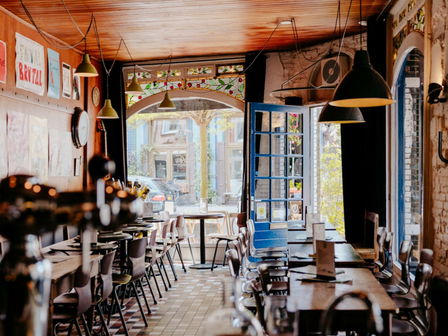
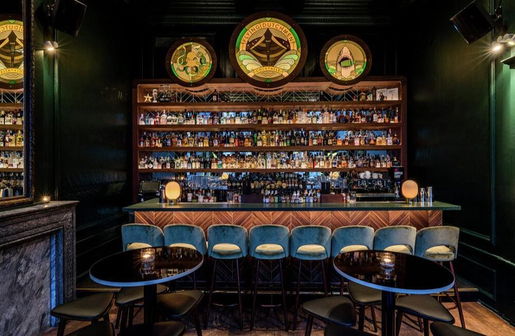
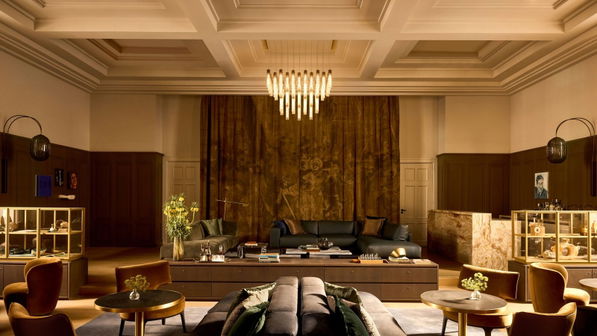
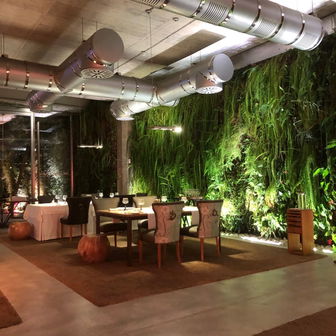
Lars Amsterdam positions itself where the harbour meets the kitchen: repurposed warehouses, visible cranes and a terrace that looks out over the IJ lend the restaurant a distinctly scenic, waterside character. The dining room channels a restrained fine-dining sensibility—French classical foundations balanced by Asian technique—while a 400-square-metre rooftop vegetable garden ties the plates back to a specific urban plot. The result reads as carefully considered rather than theatrical: modern industrial context, thoughtful sourcing and Michelin recognition combine to create a refined, scenically minded dining experience focused on craft and place.
Best For
This is a restaurant that reads best as an evening destination. The writing frames Lars at the €€€€ tier and notes a 2024 Michelin star, so guests arrive expecting a deliberately paced, dinner-focused service and elevated tasting experience. Its intimate, elegant setting and waterside terrace make it a natural choice for special evenings—date nights, celebratory meals or business dinners where food and setting matter equally. The combination of classical French technique and thoughtful, garden-led sourcing rewards diners who come for an unhurried, primarily evening meal.
Ordering Tips
Menus are framed around French classical technique with Asian method and strong use of rooftop-grown produce, so look for dishes that highlight seasonal vegetables and the kitchen’s sourcing model. If harbour scenery matters to you, request terrace seating to combine the view with the meal. Given the Michelin-starred, high-end positioning and the kitchen’s explicit emphasis on local rooftop produce, expect dishes that prioritize provenance and technique over heavy embellishment—select plates that showcase the garden produce and the kitchen’s cross-cultural approach to finishing.
Planning details
Hours
- Monday
- closed
- Tuesday
- 6 PM-8:30 PM
- Wednesday
- 6 PM-8:30 PM
- Thursday
- 12 PM-1:30 PM 6 PM-8:30 PM
- Friday
- 12 PM-1:30 PM 6 PM-8:30 PM
- Saturday
- 12 PM-1:30 PM 6 PM-8:30 PM
- Sunday
- closed
Location
Recognition and awards

Also consider
Also Consider
- Ciel Bleu; €€€€ · Creative, €€€€
- Bolenius; Modern Dutch, Creative, €€€€
- De Kas; €€€ · Organic, €€€
- Wils; €€€ · World Cuisine, €€€
- Ron Gastrobar; €€€ · Creative French, €€€
Restaurant context
At the €€€€ tier in Amsterdam, Lars Amsterdam's closest competitor is Ciel Bleu, which sits on the 23rd floor of the Okura Hotel and offers a more classically structured fine dining experience with panoramic city views. Ciel Bleu is the stronger choice if service formality and a hotel infrastructure (concierge support, accessible location in the Oud-Zuid) matter to your group. Lars has the edge on menu originality and setting character: the harbour-facing room on Danzigerkade reads as more architecturally interesting, the European-Asian tasting menu architecture has a specificity that Ciel Bleu's creative French format does not match. Bolenius at €€€€ offers modern Dutch cooking with a clear local sourcing identity and works if you want a menu rooted in Dutch produce rather than cross-cultural technique. Booking difficulty at Bolenius tends to be slightly more manageable than at Lars.
If the price point is a constraint, two €€€ alternatives are worth serious consideration. De Kas operates in a converted greenhouse with organic, garden-to-table cooking that shares Lars's interest in vegetable-forward menus but at a meaningfully lower spend and with a daytime dining format that changes the experience entirely. For diners who want creative cooking without the tasting menu commitment, Ron Gastrobar at €€€ offers a more flexible format with creative French-influenced cooking in a room that is easier to book and better suited to solo diners or groups who want to eat at their own pace. Wils at €€€ rounds out the mid-tier options with world cuisine in a more relaxed register.
The clearest decision guide: choose Lars if the tasting menu format appeals, you want a distinctive room on the water, the European-Asian cooking direction is what you are specifically seeking. Choose Ciel Bleu if you want a more formal, hotel-anchored experience with easier logistics. Choose De Kas if you want vegetable-focused cooking at a lower price in a setting that is genuinely different. If you are still mapping the full Amsterdam dining picture, Pearl's full Amsterdam restaurants guide covers all tiers in detail.
Around this place
Discover more on Pearl
Unlock the full Lars Amsterdam guide in Pearl, including awards, comparisons, FAQs, planning details, and nearby places.
Compare Lars Amsterdam
| Venue | Cuisine | Price | Awards | Booking Difficulty |
|---|---|---|---|---|
| Lars Amsterdam | €€€€ · Modern Cuisine | €€€€ | We're Smart World Top Restaurants 20252025 Michelin 1 Star2024 Michelin 1 Star | Hard |
| Ciel Bleu | €€€€ · Creative | €€€€ | Star Wine Lists 2026 · #12026 OAD Classical in Europe Ranked · #662026 Wine Spectator Best of Award of Excellence2026 La Liste Top Restaurants2025 OAD Classical in Europe Ranked · #58We're Smart World Top Restaurants 20252025 La Liste Top Restaurants2025 The Best Chef One Knife2025 Michelin 2 Stars | Unknown |
| Bolenius | Modern Dutch, Creative | €€€€ | 2026 OAD Top Restaurants in Europe Recommended2025 OAD Top Restaurants in Europe Ranked · #611We're Smart World Top 100 2025We're Smart World Top Restaurants 20252025 Michelin 1 Star2024 Michelin 1 Star2023 OAD Top New Restaurants in Europe Recommended | Unknown |
| De Kas | €€€ · Organic | €€€ | Star Wine Lists 20262026 OAD Casual in Europe Recommended2025 OAD Casual in Europe Ranked · #378We're Smart World Top Restaurants 2025We're Smart World Top 100 20252025 Michelin 1 Star2024 OAD Casual in Europe Ranked · #2502024 Michelin 1 Star2023 OAD Casual in Europe Highly Recommended | Unknown |
| Wils | €€€ · World Cuisine | €€€ | 2026 OAD Top Restaurants in Europe Recommended2025 OAD Top Restaurants in Europe Ranked · #612We're Smart World Top Restaurants 20252025 Michelin 1 Star2024 Michelin 1 Star | Unknown |
| Ron Gastrobar | €€€ · Creative French | €€€ | 2025 OAD Casual in Europe Ranked · #441We're Smart World Top Restaurants 20252025 Michelin 1 Star2024 OAD Casual in Europe Ranked · #4082024 Michelin 1 Star2023 OAD Casual in Europe Recommended | Unknown |







Key differences to consider before you reserve.
FAQ
Frequently Asked Questions
Is Lars Amsterdam good for solo dining?
Yes, solo diners fit well at a tasting-menu-format restaurant like Lars, where the kitchen sets the pace and there's no pressure to fill conversation. The harbour-facing room at Danzigerkade 179 is spacious enough that a single seat won't feel awkward. Book a Tuesday or Wednesday evening sitting when the room is quieter. At €€€€ pricing, the spend is significant for one, but the Michelin 1-star (2024) credential confirms the kitchen justifies it.
What should I wear to Lars Amsterdam?
The setting is a contemporary harbour-side room, not a classical dining room, so the dress code skews polished rather than formal. Jacket-and-tie is not required, but arriving in casualwear at a Michelin 1-star (2024) venue at €€€€ price points would be out of step with the room. Business casual to dressy works; think of it as the standard for Amsterdam's upper tier of modern cuisine restaurants.
Is the tasting menu worth it at Lars Amsterdam?
Worth it if you want classical French technique applied to something genuinely unconventional; Lars Scharp merges European and Asian flavour profiles in a way that distinguishes the menu from standard Michelin-tier tasting formats. The vegetable-focused 'Green Menu' draws produce from a nearby 400-square-metre rooftop urban farm, which gives it a sourcing story most competitors don't have. If you want à la carte flexibility, Lars is the wrong format entirely; the kitchen controls the progression here.
Is Lars Amsterdam worth the price?
At €€€€ pricing with a Michelin 1-star (2024), Lars sits in the tier where every dish has to land; and verified Michelin documentation confirms the kitchen delivers on balance, texture, flavour complexity across courses. For comparison, Bolenius offers a comparable vegetables-forward ethos at a slightly lower intensity, so if the price is a concern, that's the alternative to weigh. Lars earns its price point if the tasting menu format is something you actively want rather than tolerate.
Is Lars Amsterdam good for a special occasion?
Yes; the combination of a Michelin 1-star kitchen (2024), a harbour terrace, a tasting menu format built for occasions makes Lars a strong call for milestone dinners. The limited weekly sittings (closed Sunday and Monday, Tuesday through Saturday evenings plus Thursday to Saturday lunches) mean you'll need to plan ahead. Book four to six weeks out for weekend evenings. For a higher-end special occasion at a comparable venue, Ciel Bleu offers two Michelin stars and a more formal setting if that register matters.
What are alternatives to Lars Amsterdam in Amsterdam?
Ciel Bleu is the obvious step up; two Michelin stars, Hotel Okura setting, more classical format. Bolenius shares Lars's interest in vegetables and Dutch produce but operates with a lighter, more Nordic feel. De Kas works if the urban-farm sourcing angle at Lars appeals to you; De Kas grows most of its produce on-site in a greenhouse and offers a more casual price point. Ron Gastrobar is the accessible Michelin-adjacent option when you want quality without a full tasting menu commitment. Wils focuses on wood-fire cooking and sits in a similar modern-cuisine bracket.