

Restaurant in Amsterdam, Netherlands
De Blauwe Hollander
100Pearl PointsSolid Dutch cooking near Leidseplein, skip the tourist traps.
About De Blauwe Hollander
De Blauwe Hollander is a mid-range Dutch dining room on Leidsekruisstraat, a short walk from Leidseplein and the Rijksmuseum. It is a practical choice for a first-timer who wants a grounded, non-touristy meal in central Amsterdam without committing to the tasting-menu tier. Booking is easy and the location works well as an anchor for a morning or weekend day out.
A Reliable Dutch Dining Room in the Leidseplein Quarter
If you are choosing between De Blauwe Hollander and one of the tourist-facing cafes surrounding Leidseplein, the choice is easy: De Blauwe Hollander is a more serious proposition. It sits at Leidsekruisstraat 28 in central Amsterdam, close enough to the action that a first-timer will find it without effort, but it carries the kind of considered Dutch identity that the surrounding area largely lacks.
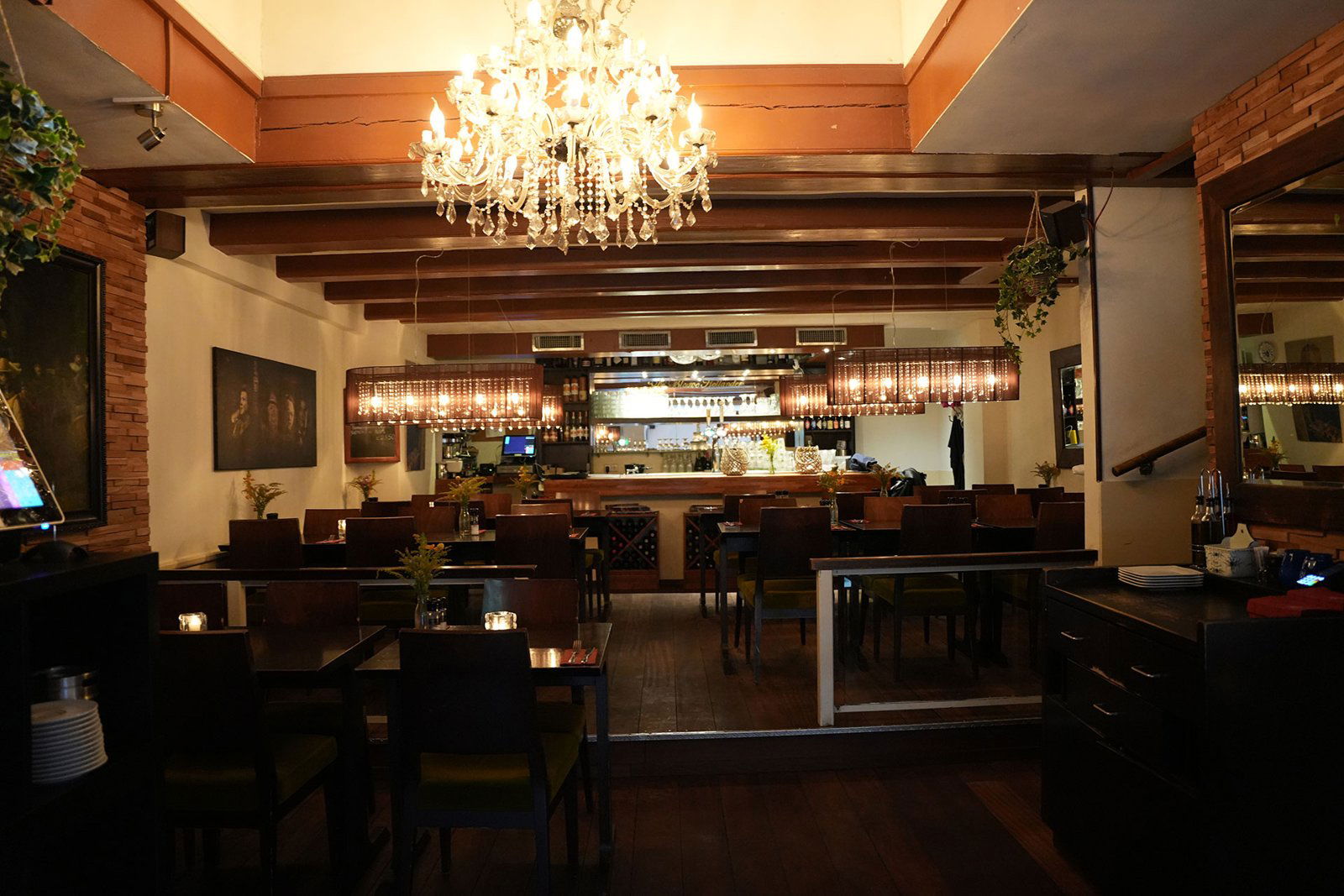
For a first visit, expect a compact interior with a traditional Dutch character — low ceilings, close tables, a spatial intimacy that makes it better suited to groups of two or four than to large parties. The layout communicates clearly: this is a room built for unhurried meals, not fast turnovers. If you want a bigger, airier space, De Kas in a converted greenhouse east of the centre offers a completely different physical experience at a comparable price tier.
For the morning and weekend brunch visitor, De Blauwe Hollander's address is a genuine advantage. You are walking distance from the Rijksmuseum and the Vondelpark, which means it fits logically into a day that starts late and moves slowly. Amsterdam's leading breakfast options tend to cluster in the Jordaan and De Pijp; this part of the city is quieter competition, which makes booking here easier than you might expect for a centrally located room.
On value, the positioning sits in the mid-range for Amsterdam dining — not the splurge tier occupied by Ciel Bleu or Vinkeles, and not a budget catch-all either. For a first-timer who wants a Dutch-feeling meal without committing to a full tasting menu, it is a reasonable call. If the priority is a more ambitious kitchen, Bolenius or Wils both deliver more inventive cooking at the €€€ to €€€€ tier. For a broader view of where De Blauwe Hollander sits in the city's dining options, see our full Amsterdam restaurants guide.
Booking is direct. This is not a room that requires weeks of planning, walk-in availability is likely outside peak tourist season. Plan your wider Amsterdam visit with our Amsterdam hotels guide and Amsterdam bars guide if you want to build out the day around it.
Know Before You Go
- Address: Leidsekruisstraat 28, 1017 RJ Amsterdam
- Neighbourhood: Leidseplein quarter, central Amsterdam
- Booking difficulty: Easy, no extended lead time required
- Leading for: Unhurried meals for two or four; mid-morning or weekend brunch visits
- Nearest major landmarks: Leidseplein, Rijksmuseum, Vondelpark
- Peer comparison: Less formal and less expensive than Flore or Spectrum; more character than the surrounding tourist cafes
Frequently Asked Questions
What should I wear to De Blauwe Hollander?
Casual is fine here. De Blauwe Hollander sits on Leidsekruisstraat, a few steps from Leidseplein, draws a neighbourhood crowd rather than a dress-to-impress one. Jeans and a clean top are entirely appropriate. Leave the blazer at the hotel.
What should a first-timer know about De Blauwe Hollander?
This is a straightforward Dutch dining room, not a concept restaurant. It earns its reputation by doing traditional Dutch food reliably, which makes it a useful anchor in a part of Amsterdam otherwise dominated by tourist-facing cafes. Come expecting honest portions and local cooking, not a tasting-menu format or a wine-focused experience.
Is De Blauwe Hollander good for a special occasion?
Only if the occasion calls for comfort over ceremony. For a birthday dinner or anniversary where atmosphere and ambition matter, Ciel Bleu or Bolenius will serve you better. De Blauwe Hollander is the right call for a relaxed dinner where good Dutch food matters more than a production.
What are alternatives to De Blauwe Hollander in Amsterdam?
For a step up in ambition, Bolenius offers produce-driven Dutch cooking in a polished setting, De Kas is worth considering if you want a greenhouse experience with a seasonal focus. BAK and Wils both appeal to a younger, wine-bar-adjacent crowd. Ciel Bleu at the Hotel Okura is the obvious move if you want a fine-dining occasion with city views.
What should I order at De Blauwe Hollander?
Specific menu details are not confirmed in available data, so ordering blind is a risk. That said, the kitchen's reputation is built around traditional Dutch dishes, so lean toward the classics rather than anything that sounds like a fusion addition. Ask your server what is made in-house that day.
How far ahead should I book De Blauwe Hollander?
Book at least a few days ahead if you are visiting during peak tourist season, particularly July through August and around major Amsterdam events. The Leidseplein area fills up fast, De Blauwe Hollander's positioning as a local alternative means it can be busier than its low-profile exterior suggests. Check availability via their direct website or a local reservation platform.
Location
Leidsekruisstraat 28, 1017 RJ Amsterdam, Netherlands
Compare De Blauwe Hollander
How De Blauwe Hollander Compares in Amsterdam
De Blauwe Hollander sits in the accessible mid-range, which means it is not competing directly with Amsterdam's high-end tasting-menu rooms. Ciel Bleu and Bolenius both operate at the €€€€ tier with more ambitious, technically driven cooking and a correspondingly longer booking window. If a special occasion or a serious food experience is the goal, either of those is the stronger choice. De Blauwe Hollander is the right call when you want a Dutch-feeling room without the commitment of a full tasting menu.
At the €€€ tier, the more interesting comparisons are De Kas, Wils, and BAK. De Kas wins on setting, a converted greenhouse with a garden-to-table ethos that is hard to match anywhere in the city. Wils and BAK both bring more creative, ingredient-focused cooking than a traditional Dutch room. If culinary ambition matters more than location convenience, those three are stronger options. De Blauwe Hollander's advantage is purely logistical: central address, easy booking, no dress expectations.
For visitors who want to explore the wider Dutch fine-dining picture beyond Amsterdam, De Librije in Zwolle and Inter Scaldes in Kruiningen represent the country's top tier. Within the city, Bistro de la Mer is worth considering if classic cuisine in a comparable setting is what you are after. The bottom line: book De Blauwe Hollander when convenience and a no-fuss Dutch meal are the brief; look elsewhere when the cooking itself is the priority.
Save or rate De Blauwe Hollander on Pearl
Keep this venue in your Pearl passport, rate it after you visit, and track it alongside every other place you collect.