

Restaurant in Amsterdam, Netherlands
Cook Kai
100Pearl PointsLow-Waste Jordaan Kitchen
About Cook Kai
Cook Kai sits on a quiet canal-district side street in central Amsterdam, with easy booking availability that makes it accessible when higher-profile tables are full. Sparse public data means direct contact is essential before booking — confirm hours, menu format, wine list scope. For the food and wine explorer, the neighbourhood setting and low booking friction are the clearest arguments in its favour.
Cook Kai, Amsterdam: Quick Take
With pricing details not publicly confirmed in Cook Kai's record, the honest starting point is this: if you are booking a restaurant at Tweede Rozendwarsstraat 3 in Amsterdam's Jordaan-adjacent canal belt, you are choosing a small, intimate address over the grand dining rooms of the city's high-end hotel restaurants. That trade-off suits certain diners well — and for the food and wine explorer who wants depth without formality, this part of Amsterdam consistently delivers it.
The Space
The address places Cook Kai in a narrow residential side street in central Amsterdam, the kind of canal-district setting where rooms are compact by necessity and seating is close enough that atmosphere builds quickly. Small venues in this neighbourhood tend to run 20 to 40 covers at most, which means the kitchen can focus rather than scale. If you are coming from a larger dining context — say, the formal rooms at Ciel Bleu or Spectrum, expect a shift in register: less ceremony, tighter quarters, more reliance on the food and drink to carry the experience.
What to Know About Booking
Booking difficulty is rated easy. In a city where the leading tables at Flore and Vinkeles can require planning weeks in advance, Cook Kai represents a lower-friction option. That accessibility is genuinely useful for travellers whose Amsterdam itinerary comes together late, or for locals looking for a reliable neighbourhood booking rather than a special-occasion sprint.
Wine and Drink
For a venue in this part of Amsterdam, the wine program is the dimension most worth asking about before you book. Amsterdam's stronger independent restaurants, from the farm-focused kitchen at BAK to the produce-led menus at Bistro de la Mer, have increasingly treated the wine list as an extension of the kitchen's sourcing logic rather than an afterthought. Whether Cook Kai follows that model, or takes a more classic list approach, is the question to clarify when you call or email ahead. The pairing philosophy matters here: a short, well-chosen list from a small producer-focused importer adds real value to a compact menu; a generic house list undercuts it.
The Honest Assessment
The data available on Cook Kai is sparse. No published awards, no confirmed price tier, no cuisine type on record. That sparseness can mean a venue is genuinely under-documented, common enough in Amsterdam's smaller neighbourhood restaurants, or it can signal an early-stage or intermittently operating address. Either way, it places Cook Kai in the category of venues worth a direct inquiry rather than a blind booking. Check current operating hours and confirm the menu format before you commit.
For the explorer who wants a city-wide picture before narrowing down, our full Amsterdam restaurants guide covers the breadth of options across price tiers. If you are extending your trip beyond Amsterdam, De Librije in Zwolle and Inter Scaldes in Kruiningen are worth the journey for serious food and wine itineraries. Within the Netherlands, De Nieuwe Winkel in Nijmegen and Aan de Poel in Amstelveen are strong reference points for what the country's independent restaurant scene can deliver at its most focused. For international context, the wine-and-food integration at Le Bernardin in New York City and the communal-table format at Lazy Bear in San Francisco set a useful benchmark for what a program-led dining experience looks like at its most deliberate.
Know Before You Go
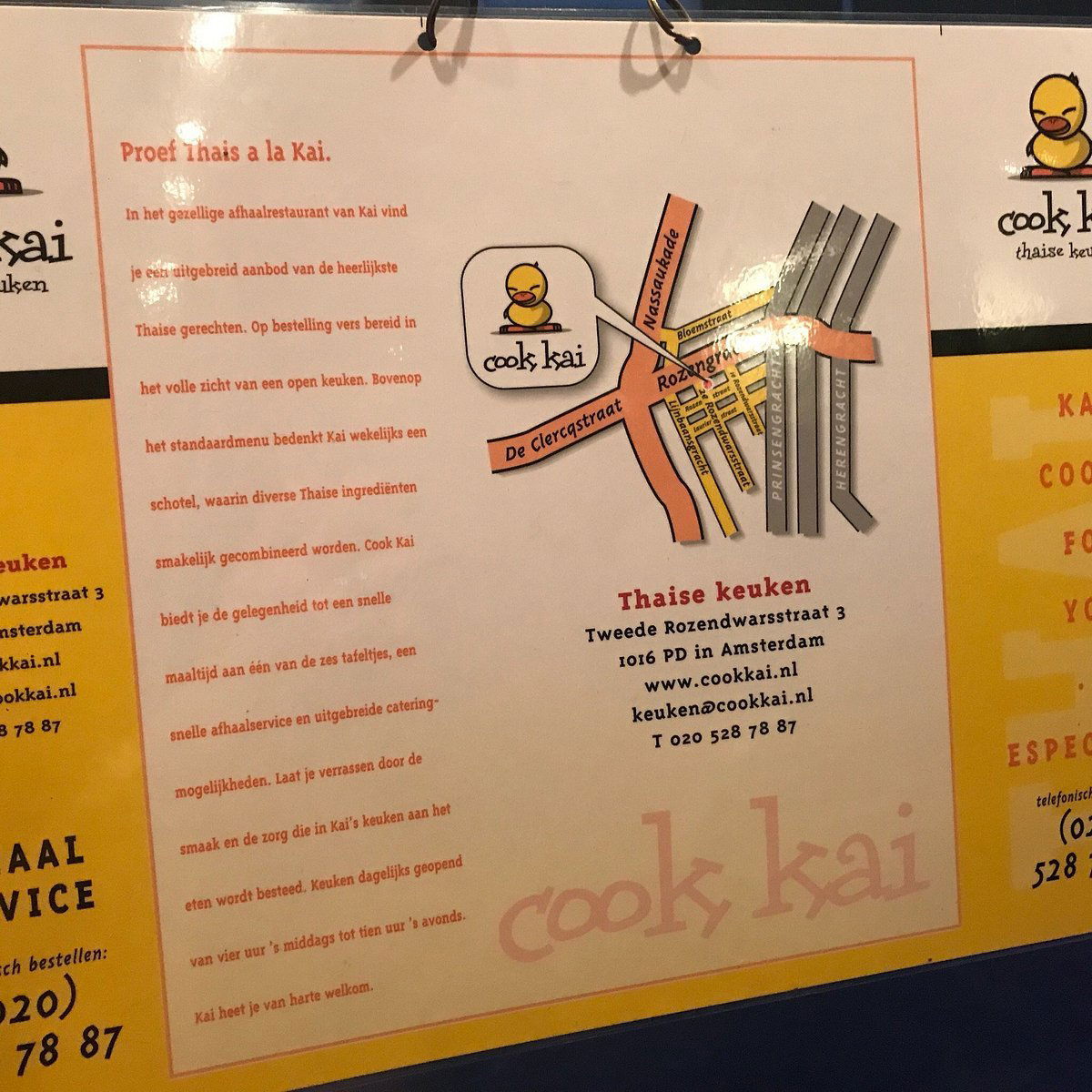
- Address: Tweede Rozendwarsstraat 3, 1016 PD Amsterdam, Netherlands
- Booking difficulty: Easy
- Price range: Not publicly confirmed, contact directly
- Hours: Not confirmed, verify before visiting
- Cuisine type: Not confirmed on record
- Wine program: Ask specifically about list sourcing and pairing options when booking
- Amsterdam guides: Hotels · Bars · Wineries · Experiences
Location
Tweede Rozendwarsstraat 3, 1016 PD Amsterdam, Netherlands
Compare Cook Kai
How It Compares
Against Amsterdam's documented fine-dining tier, Cook Kai is a different proposition. Ciel Bleu (€€€€) and Bolenius (€€€€) both carry Michelin recognition and operate with the kind of structured wine programs and tasting menu architecture that justify their price tier. If you want confirmed credentials and a wine list built around a clear editorial point of view, those two are the safer bets. Cook Kai, with no awards on record and no confirmed price tier, asks for more trust from the diner upfront.
In the €€€ bracket, De Kas has a clear identity, greenhouse setting, organic sourcing, a wine list that follows the kitchen's logic, and is a more coherent booking for the food and wine explorer who wants a wine-and-food pairing narrative from start to finish. Wils and BAK both operate with farm-to-table or produce-led frameworks and have enough of a documented track record to make the decision easier. If Cook Kai falls in the €€€ range, it would need to match the sourcing and wine depth of those addresses to compete on value.
The practical verdict: if you are building a food and wine itinerary in Amsterdam and want a confirmed quantity, book De Kas or BAK at the €€€ level, or go to Ciel Bleu if the budget allows for €€€€. Cook Kai is worth investigating if you are already in the neighbourhood and want an accessible, lower-friction option, but it should be a direct-inquiry booking, not a blind one.
Save or rate Cook Kai on Pearl
Keep this venue in your Pearl passport, rate it after you visit, and track it alongside every other place you collect.