


Malabar Hill
Weligama Bay
Hotel in Weligama Bay, Sri Lanka
 Book with Pearl
The Read
Hilltop Seclusion, Sri Lankan Grain
Why go
Book Malabar Hill for a quiet, design-led Weligama Bay stay where privacy and atmosphere matter more than resort scale. It is strongest for couples and special occasions, while travelers who want a larger coastal resort setup should also compare Cape Weligama before committing.
About Malabar Hill
Malabar Hill is a hotel in Weligama Bay with a smart casual dress code and confirmed recognition from Michelin, La Liste, and Tatler. The safest way to plan a stay is to treat the accolades as quality signals and check the hotel directly for room, service, dining, and arrival details before booking.
For travelers comparing hotels, Malabar Hill can be considered alongside Cape Weligama, Kurulu Bay, PALM Hotel Sri Lanka, and Sola Boutique Hotel. The choice should come down to the latest confirmed information from each property rather than assumptions about facilities, dining, or room categories.
A better choice for travelers prioritizing hotel recognition
The strongest grounded reason to put Malabar Hill on a shortlist is its confirmed recognition: Michelin 1 Key in 2025, La Liste Top Hotels 2026 with 94pts, and a Tatler 2025 listing in Best Hotels Asia-Pacific. Those are meaningful hotel-level signals, but they do not by themselves indicate specific amenities, room layouts, dining formats, or service features.
That makes Malabar Hill a sensible hotel to research carefully for a Weligama Bay stay. Use the accolades as a starting point, then confirm the details that matter for your trip directly with the property, including arrival timing, room choice, meals, transport, and any special requests.
Who should choose it, and who should not
Choose Malabar Hill if you want a Weligama Bay hotel with confirmed premium recognition and you are comfortable confirming the practical details before committing. It is especially important not to assume specifics such as dining style, facilities, room categories, or business-travel conveniences from the accolades alone.
If you are still deciding, compare Malabar Hill with Cape Weligama, Kurulu Bay, PALM Hotel Sri Lanka, and Sola Boutique Hotel, or review other Weligama Bay hotels generically. Keep the comparison focused on current details from each property.
Planning details
- Location
- Palalla - Borala Rd, Weligama
- Website
- malabarhillsrilanka.com
- Phone
- +94 76 934 5747
The take
The Take
The Vibe
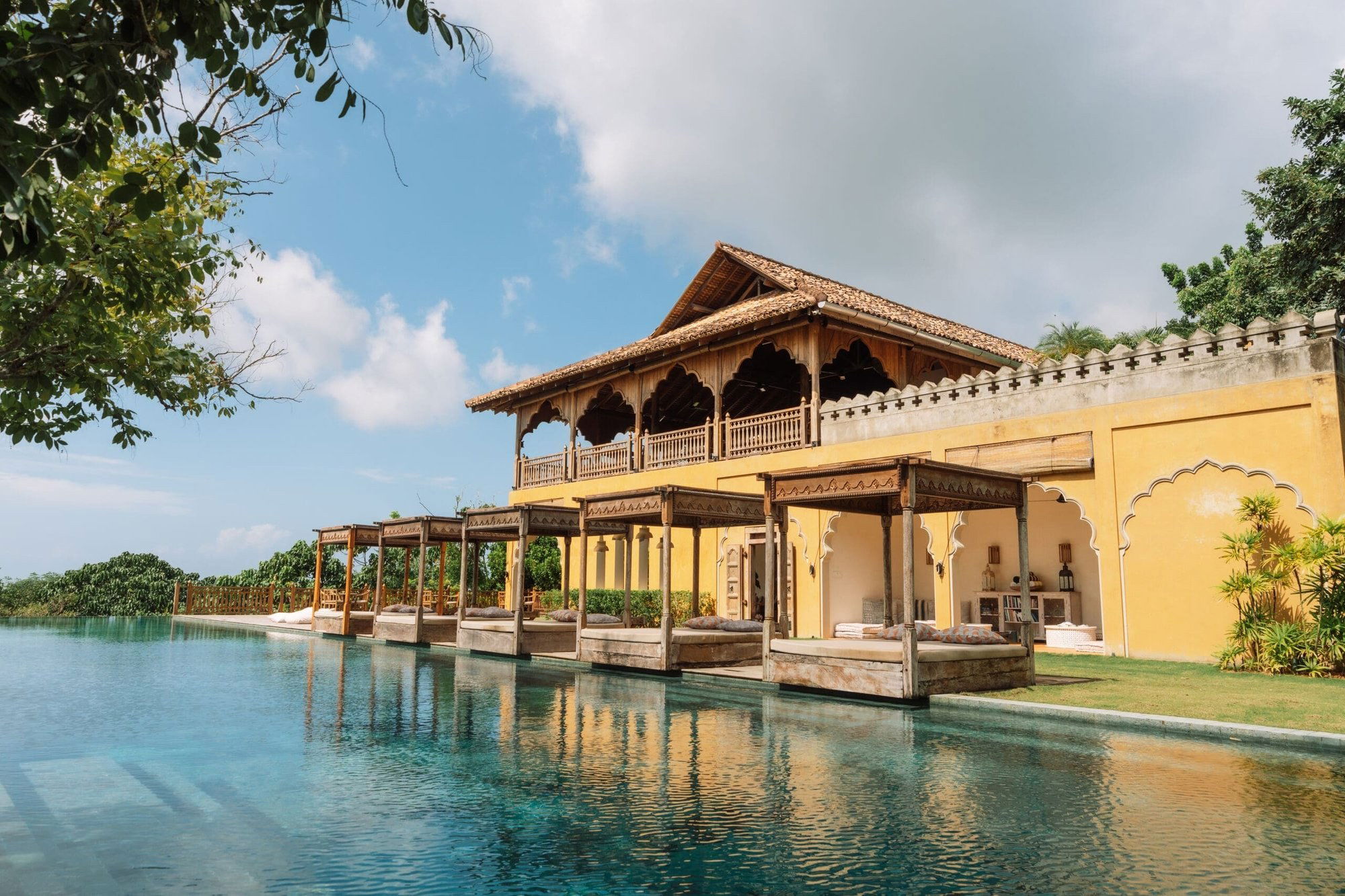
Malabar Hill presents a quietly refined hilltop retreat that reads as both rooted and contemporary. Set on a former cinnamon plantation, the property uses mature canopy, antique furnishings and local craft to communicate a strong sense of place without sacrificing modern comfort. The central Hill House operates as the architectural heart: an open-air pavilion that frames sweeping sightlines across forested slopes and the arc of Weligama Bay. Overall the mood is calm and considered — a boutique composition where materials, light and topography drive the character more than hotel theatrics.
Best For
This is a boutique hideaway well suited to couples and travelers seeking a restorative coastal escape. With just 14 villas and a pavilion-style Hill House, the property favors intimacy and slow days spent on the grounds or at the open-air restaurant and bar. Its hilltop perch above Weligama Bay makes it a strong choice for romantic getaways, honeymoons and weekend escapes where privacy and scenic outlooks are priorities. The restrained design and mature planting also make it a natural fit for wellness-focused stays that emphasize calm and connection to place.
Stay Tips
The Hill House concentrates the shared amenities, so plan to book time there for meals and drinks—its panoramic open-air restaurant and bar are the primary communal outlets. When reserving accommodation, note the villas’ two orientations (forested hillside or bay-facing) and request the aspect that matters most to you. For dining, secure a table at the Hill House to make the most of the hilltop sightlines; the open-air format is calibrated to the local climate and is the venue’s defining social space.
Venue details
Ambiance
Serene and tranquil with lush jungle surroundings, panoramic views, and a laid-back luxurious atmosphere.
Tags
Vibe
Best For
Experience
Amenities
View
About the Stay
- Rooms
- 14
- Check-in
- 15:00
- Check-out
- 11:00
- Property Style
- Contemporary Boutique Resort Inspired by Moorish and Rajasthani Architecture.
- Design Style
- Modern Luxury with Antique Furnishings and Tropical Essence.
Know before you go
Know Before You Go
- Getting there
- Palalla - Borala Rd, Weligama
Planning details
Location
Recognition and awards

Also consider
Also Consider
- Cape Weligama, Notable alternative
- Cape Weligama, Notable alternative
- PALM Hotel Sri Lanka, Notable alternative
- Sola Boutique Hotel, Notable alternative
- Kurulu Bay, Notable alternative
Hotel context
How It Compares
Against Cape Weligama, Malabar Hill is the quieter, more retreat-focused choice. Cape Weligama is the safer pick for travelers who want a larger resort feel and a more obviously coastal stay; Malabar Hill is better for couples who want the hotel itself to feel private and design-led.
PALM Hotel Sri Lanka and Sola Boutique Hotel are more natural cross-shops for travelers watching value and ambiance rather than chasing formal hotel recognition. Choose them if the trip is casual, flexible, or budget-sensitive. Choose Malabar Hill when the stay has to carry a celebration and a harder booking process is acceptable.
Kurulu Bay sits closer to the same slow-stay mindset, but Malabar Hill has the stronger awards signal for guests who want reassurance before booking. If Cape Weligama feels too resort-like and PALM or Sola feel too casual, Malabar Hill is the middle path: more polished than the lighter boutique options, less expansive than the big coastal resort.
Explore Weligama Bay
Around this place
Discover more on Pearl
Unlock the full Malabar Hill guide in Pearl, including awards, comparisons, FAQs, planning details, and nearby places.
Compare Malabar Hill
| Venue | Location | Awards |
|---|---|---|
| Malabar Hill | Weligama Bay | 2026 La Liste Top Hotels2026 Michelin 2 KeysTatler Best Hotels Asia-Pacific 2025Michelin 1 Key 20252025 Michelin 1 Key |
| Cape Weligama | Weligama | 2026 Mr & Mrs Smith Luxury Hotels2026 Relais Chateaux Hotels2026 La Liste Top HotelsConde Nast Gold List 20262026 Michelin 1 KeyTatler Best Hotels Asia-Pacific 2025Michelin 1 Key 20252025 Michelin 1 Key2025 Relais Chateaux Award |
| Cape Weligama | Weligama Bay | 2026 Mr & Mrs Smith Luxury Hotels2026 Relais Chateaux Hotels2026 La Liste Top HotelsConde Nast Gold List 20262026 Michelin 1 KeyTatler Best Hotels Asia-Pacific 2025Michelin 1 Key 20252025 Michelin 1 Key2025 Relais Chateaux Award |
| PALM Hotel Sri Lanka | Ahangama | 2026 La Liste Top Hotels2025 Michelin Selected Hotels |
| Sola Boutique Hotel | Ahangama | No published awards |
| Kurulu Bay | Ahangama | 2026 Michelin 1 Key2025 Michelin 1 Key |




How Malabar Hill Weligama Bay compares with similar nearby venues.
FAQ
Frequently Asked Questions
Is Malabar Hill good for business travel?
It is best to confirm business-travel needs directly with the hotel before booking. The location is Weligama Bay. If you are comparing options, PALM Hotel Sri Lanka may be another property to check.
What is check-in like at Malabar Hill?
Specific check-in details are not available. Confirm arrival times, transfer needs, and any early or late check-in requests directly with the venue's official channels before finalizing plans.
How does Malabar Hill compare to other hotels?
Malabar Hill has confirmed hotel recognition from Michelin, La Liste, and Tatler. For comparison, look at Cape Weligama, Kurulu Bay, Sola Boutique Hotel, and PALM Hotel Sri Lanka, then confirm the current details that matter most to your trip directly with each property.
How is the dining at Malabar Hill?
Specific dining details are not available, so do not assume a cuisine, menu format, meal period, or bar program. Its hotel-level recognition includes Michelin 1 Key (2025), La Liste Top Hotels (2026): 94pts, and Tatler 2025 Best Hotels Asia-Pacific. For meal planning, confirm current dining details directly with the property.