



The Telegraph Hotel
Tbilisi
Hotel in Tbilisi, Georgia
 Book with Pearl
The Read
Soviet-Era Civic Conversion
Why go
The Telegraph Hotel is worth prioritizing if you want a central Rustaveli Avenue base with strong luxury-hotel recognition and are willing to plan ahead. Do not book it for destination dining alone: cuisine, chef, menu format, and pricing are not specified, so treat the restaurant as a convenience and compare Tbilisi dining separately.
About The Telegraph Hotel
Book The Telegraph Hotel if the priority is a Tbilisi hotel with significant recognition. The confirmed signals are Michelin 2 Keys in 2025, Leading Hotels of the World membership in 2025, Prix Versailles World Selection in 2026, and Forbes Recommended recognition in 2026. Beyond these accolades, specific dining, room, price, service, and location details should be confirmed directly before booking.
Choose it for hotel recognition, not dining details
The strongest case for choosing The Telegraph Hotel is its recognition: The hotel has Michelin 2 Keys, Leading Hotels of the World membership, Prix Versailles World Selection recognition, and Forbes Recommended recognition. For a value-seeker, that means the hotel should be judged against those hotel signals rather than against claims about restaurants, amenities, or service style that have not been publicly confirmed.
Dining may not be a primary decision point, as specific cuisine, chef, menu format, or pricing are not detailed. That does not make the hotel a poor choice; it means the restaurant should not be the reason to choose it. Treat any on-site dining details as something to confirm during booking, then use Our full Tbilisi restaurants guide for meals that need to anchor the trip.
Tbilisi base with recognition to compare carefully
The hotel's location is in Tbilisi. If the goal is a hotel with documented recognition, The Telegraph Hotel belongs on the short list. If the trip depends on a particular neighborhood, street, view, room type, restaurant, or price point, confirm those details directly before committing.
For comparison planning, cross-shop The Telegraph Hotel with Moxy Tbilisi, Rooms Hotel Tbilisi, Stamba Hotel, Swissôtel Tbilisi, and The Biltmore Hotel Tbilisi. Travelers who care most about accolades should weigh The Telegraph Hotel's recognition against available facts for those alternatives.
For planning beyond this hotel, use Our full Tbilisi hotels guide, Our full Tbilisi bars guide, Our full Tbilisi wineries guide, and Our full Tbilisi experiences guide.
Planning details
- Location
- 31 Shota Rustaveli Ave, T'bilisi 0108
- Website
- telegraphhotel.com
- Phone
- +995 32 244 31 31
The take
The Take
The Vibe
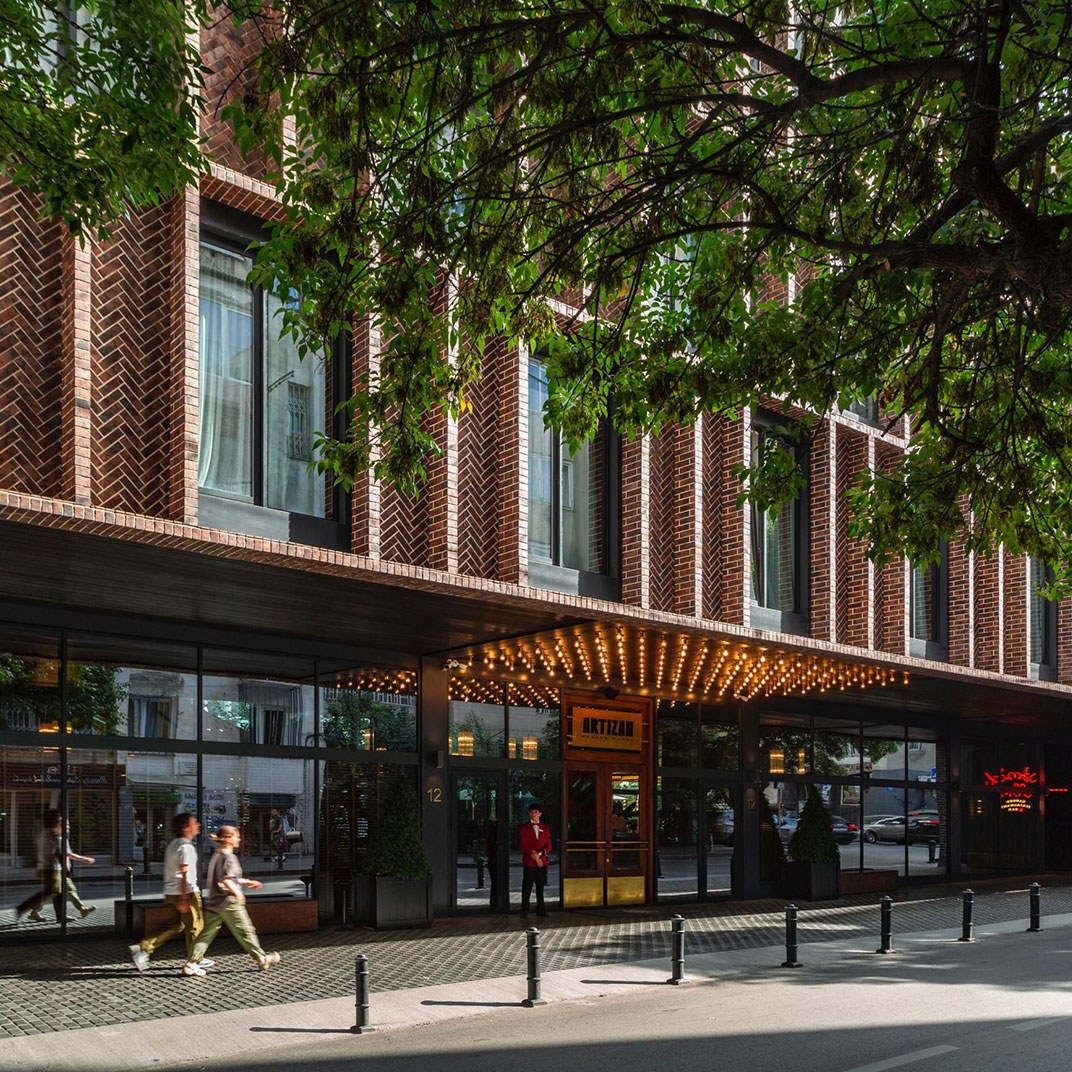
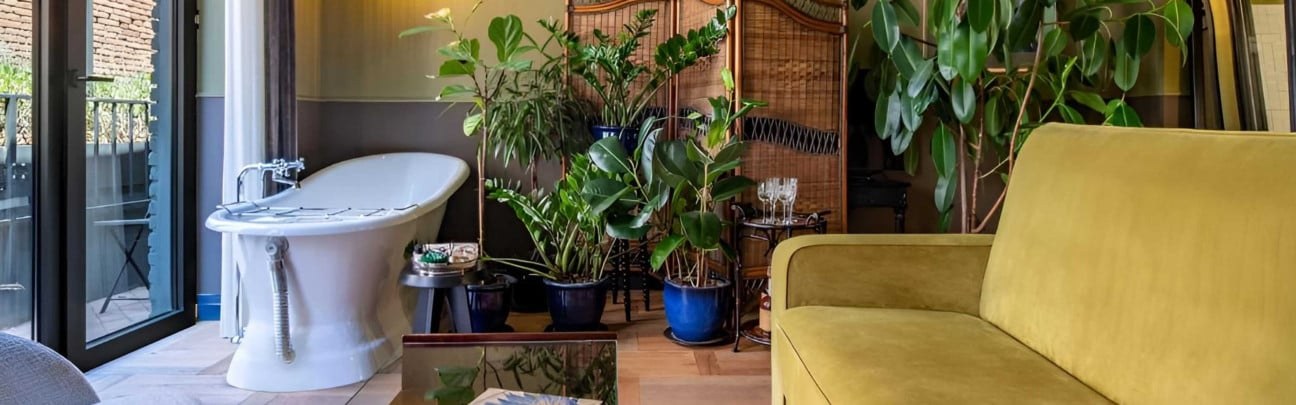
The Telegraph Hotel foregrounds its building as the principal character. Approaching Rustaveli Avenue you first register the weight and geometry of a mid‑20th‑century Soviet communications hub — concrete massing, Brutalist clarity — before you see hotel signage. Inside, much of the original architecture remains: long corridors, geometric logic and restrained classic detailing that let the bones of the structure do the work. The result is a considered, quietly authoritative hotel that reads as heritage conversion rather than stylistic pastiche, appealing to guests who appreciate architectural rigor and subtle, restrained interiors.
Best For
This is a hotel for travelers who value address and architecture as much as amenities. Its placement on Rustaveli Avenue and its mindful adaptive reuse make it a good fit for visitors focused on Tbilisi’s cultural institutions, design‑minded guests and business travelers seeking a centrally located, upper‑mid‑scale property. With 239 rooms and a strong sense of place, it suits those planning a city‑center stay who want to be near museums, theaters and the capital’s ceremonial spine while staying in a building that tells a civic story.
Venue details
Ambiance
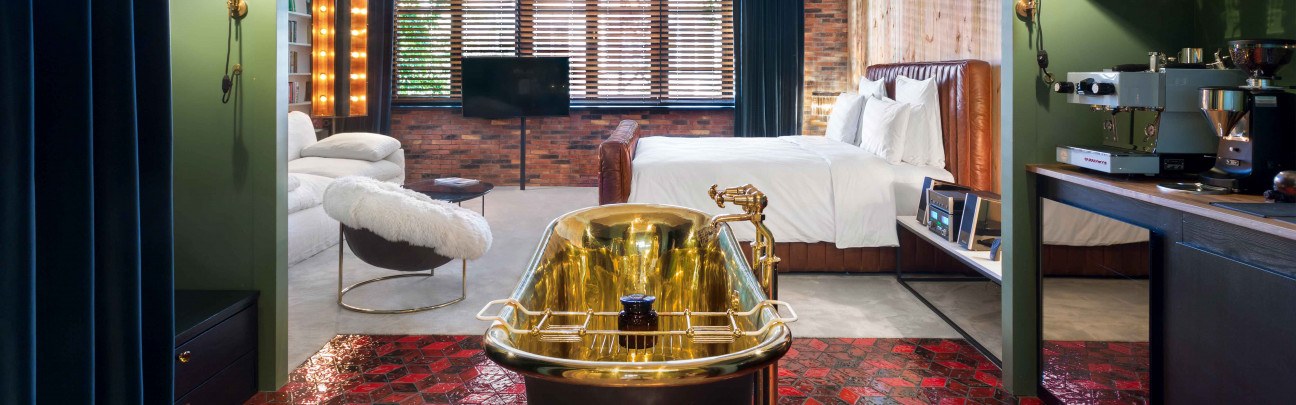
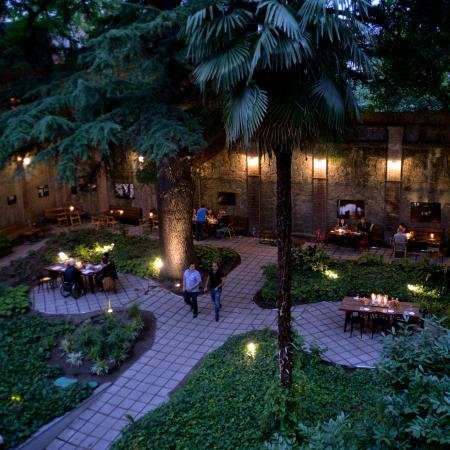
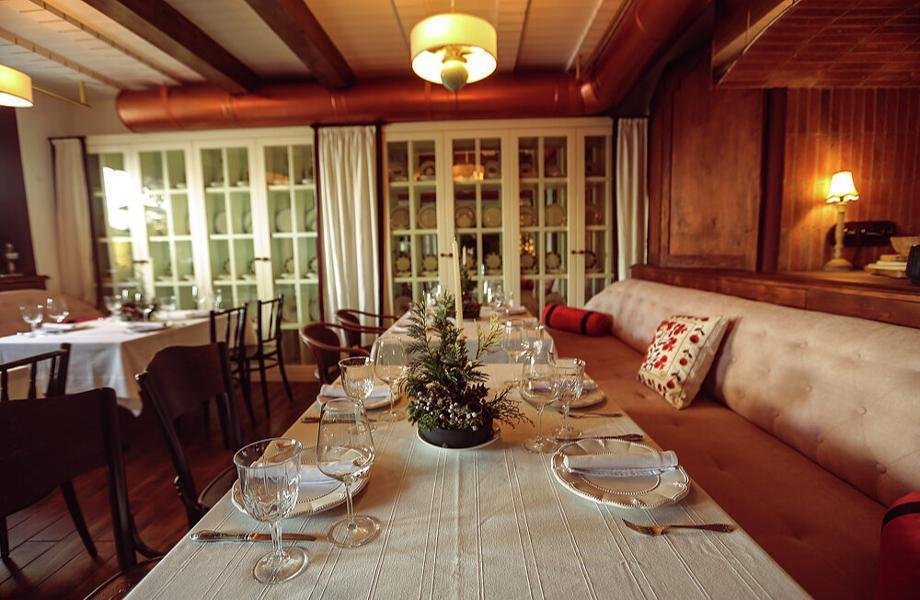
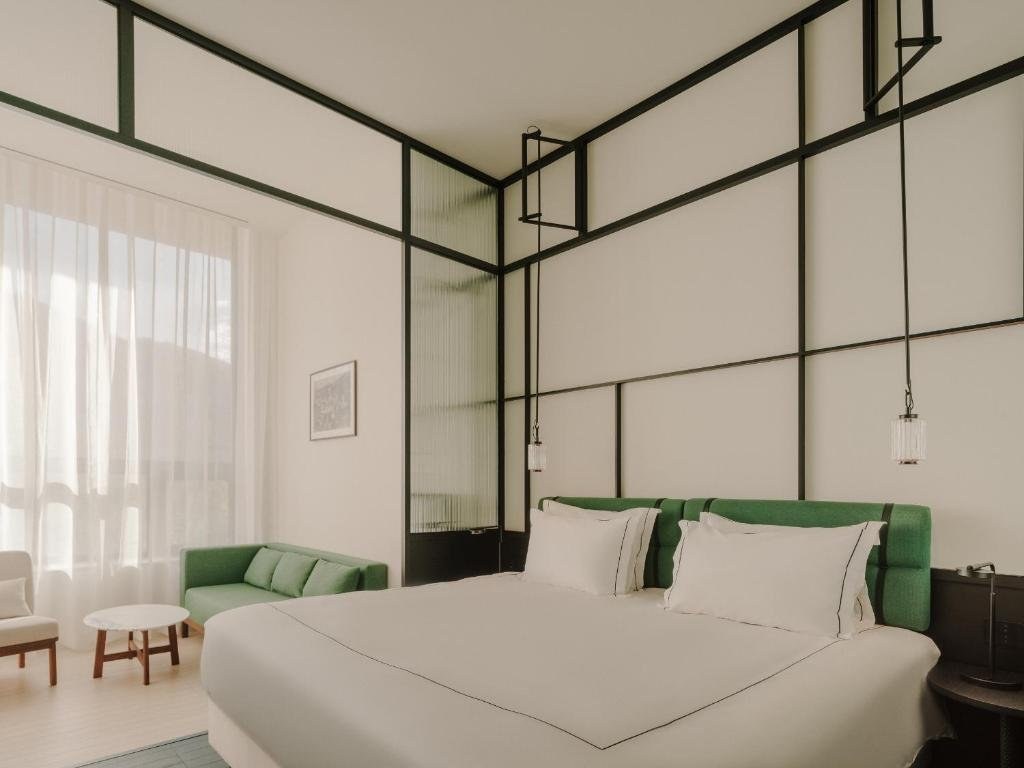
Clean-lined, light-filled interiors with monochrome contrast; deep coffered ceilings in the Grand Café evoke Parisian elegance, while the basement Tatusa Jazz Club features sultry red velvet and gold accents; corridors are low-lit with custom black steel and glass lighting.
Tags
Vibe
Best For
Experience
Amenities
View
Accessibility
About the Stay
- Rooms
- 239
- Check-in
- 15:00
- Check-out
- 11:00
- Property Style
- Contemporary Luxury Housed in a Restored Brutalist Heritage Building That Blends Historic Significance with Modern Design Excellence.
- Design Style
- Minimalist Modernism with Monochrome Palette, Fluted Glass, Blackened Aluminium, and Train Carriage Inspired Spatial Flow; Neri&hu Design Direction Throughout.
Know before you go
Know Before You Go
- Getting there
- 31 Shota Rustaveli Ave, T'bilisi 0108
Planning details
Location
Recognition and awards



Also consider
If you cannot get in
Try Swissôtel Tbilisi first if you want the closest practical substitute for a polished city stay. Choose Stamba Hotel instead if the trip needs stronger design-hotel character and a more social feel.
Hotel context
How it compares in Tbilisi
The Telegraph Hotel is the pick for travelers who want the strongest recognition signal in the central hotel set and are comfortable planning around tight availability. The Biltmore Hotel Tbilisi is the more conventional large-hotel comparison, while Swissôtel Tbilisi is the cleaner cross-shop if the goal is an international-hotel feel with fewer unknowns.
For ambiance, Stamba Hotel and Rooms Hotel Tbilisi are stronger choices for travelers who care about design-hotel energy and social spaces. The Telegraph Hotel is better for a polished, central, higher-recognition stay; Stamba and Rooms are better if the hotel itself needs to feel like part of the Tbilisi scene.
For value, Moxy Tbilisi is the practical alternative when price discipline matters more than formal luxury credentials. If The Telegraph Hotel is pricing far above Swissôtel or The Biltmore on the same dates, the premium makes sense only for guests who specifically value its recognition and Rustaveli Avenue positioning.
Around this place
Discover more on Pearl
Unlock the full The Telegraph Hotel guide in Pearl, including awards, comparisons, FAQs, planning details, and nearby places.
Compare The Telegraph Hotel
| Venue | Location | Awards |
|---|---|---|
| The Telegraph Hotel | Tbilisi | 2026 Forbes RecommendedHotel World Architecture and Design Award · 2026Leading Hotels of the World 2026Michelin 2 Keys 20252025 Michelin 2 Keys |
| The Biltmore Hotel Tbilisi | Tbilisi | No published awards |
| Stamba Hotel | Tbilisi | 2026 Design Hotels Collection2026 Mr & Mrs Smith Luxury Hotels2026 La Liste Top Hotels2025 Michelin 1 Key |
| Rooms Hotel Tbilisi | Tbilisi | 2026 Design Hotels CollectionStar Wine Lists 20262026 Mr & Mrs Smith Luxury Hotels2025 Michelin 1 Key |
| Swissôtel Tbilisi | Tbilisi | No published awards |
| Moxy Tbilisi | Tbilisi | No published awards |




How The Telegraph Hotel Tbilisi compares with similar nearby venues.
FAQ
Frequently Asked Questions
Which room category is best at The Telegraph Hotel?
Specific room-category guidance is not provided. Choose based on the hotel's current room descriptions, availability, and rate differences at the time of booking. The hotel's appeal rests on its recognition, including Michelin 2 Keys in 2025.
How does The Telegraph Hotel compare to other Tbilisi hotels?
Use The Telegraph Hotel as a recognition-led Tbilisi option and compare it with Moxy Tbilisi, Rooms Hotel Tbilisi, Stamba Hotel, Swissôtel Tbilisi, and The Biltmore Hotel Tbilisi. A key distinction for The Telegraph Hotel is its recognition, including Michelin 2 Keys, Leading Hotels of the World membership, Prix Versailles World Selection recognition, and Forbes Recommended recognition.
What is check-in like at The Telegraph Hotel?
How is the dining at The Telegraph Hotel?
Treat dining details as information to confirm directly with the hotel during booking. Specific cuisine type, chef name, menu format, or pricing are not detailed, so the decision to book may rest more on the hotel's overall recognition than on its dining options.
How is the location of The Telegraph Hotel?
The hotel is located in Tbilisi. Specific street, neighborhood, and landmark claims are not provided, so use only the city-level location for planning unless you verify more precise details directly with the hotel.