



Zannier Hotels Bãi San Hô
Sông Cầu
Hotel in Sông Cầu, Vietnam
 Book with Pearl
The Read
Peninsula Vernacular Architecture
Price
$750–1,000per night
Why go
A strong pick for travelers who want a quiet Phú Yên coastal stay rather than a busy resort-town base. Choose it over Anantara Quy Nhon Villas for a more removed feel, but cross-shop Six Senses Ninh Van Bay if brand predictability matters more.
About Zannier Hotels Bãi San Hô
Book this if the goal is a stay in Sông Cầu with a smart-casual dress code. Zannier Hotels Bãi San Hô is strongest on recognition and basic positioning, not on specifics such as cuisine, room count, prices, hours, transfers, or service format.
Zannier Hotels Bãi San Hô has a strong awards profile. It appears on La Liste Top Hotels for 2026 with 92 points, is on the Condé Nast Gold List for 2026, and received Tatler recognition in 2025, including Best Vietnam: Hotel of the Year and Hotel of The Year. Travelers comparing it with Anantara Quy Nhon Villas, An Lam Retreats Ninh Van Bay, or Six Senses Ninh Van Bay should treat those as broader hotel comparisons rather than proof of identical setting, style, or services.
A Sông Cầu hotel with recognition
Details on dining format, chef, price, exact facilities, room count, transfer style, or daily programming are not available. That absence matters because those are often the details that shape the day-to-day experience of a hotel stay, from how guests arrive to how they eat, move around, and spend time on property. Zannier Hotels Bãi San Hô is a recognized hotel in Sông Cầu, with its appeal stemming from its awards record rather than specific claims about restaurants, bars, beach setups, or activity schedules.
Recognition gives a booking more weight than a thin public brief might suggest. The hotel appears on La Liste Top Hotels for 2026 with 92 points, is on the Condé Nast Gold List for 2026, and received Tatler Asia-Pacific and Vietnam hotel recognition in 2025. Taken together, those signals help distinguish the property from a simple name on a destination list. They do not guarantee a specific room experience, but they do place it in a more serious competitive set than an unrecognized hotel listing.
Where it sits against other hotel options
Against Anantara Quy Nhon Villas, compare Zannier Hotels Bãi San Hô as a Sông Cầu option versus a different hotel choice. Against An Lam Retreats Ninh Van Bay and Six Senses Ninh Van Bay, compare it as a different hotel decision rather than assuming the same geography, access, or resort format. This distinction is important because familiar names can make hotels feel interchangeable when they are not. If the trip depends on a specific facility, dining style, loyalty benefit, or transfer arrangement, confirm those details directly before booking.
Pricing, availability patterns, or booking difficulty are not available, so do not assume it is either easy or hard to reserve. Plan around your own travel dates and confirm current terms through official booking channels, especially if the stay depends on a particular room type, package, or arrival plan. For wider planning, compare Zannier Hotels Bãi San Hô with other hotels in Sông Cầu and with other stays in Vietnam.
Planning details
- Location
- Hòa Thạnh, Sông Cầu, Phú Yên
- Website
- zannierhotels.com/baisanho/en
- Phone
- +84 257 3830 000
The take
The Take
The Vibe
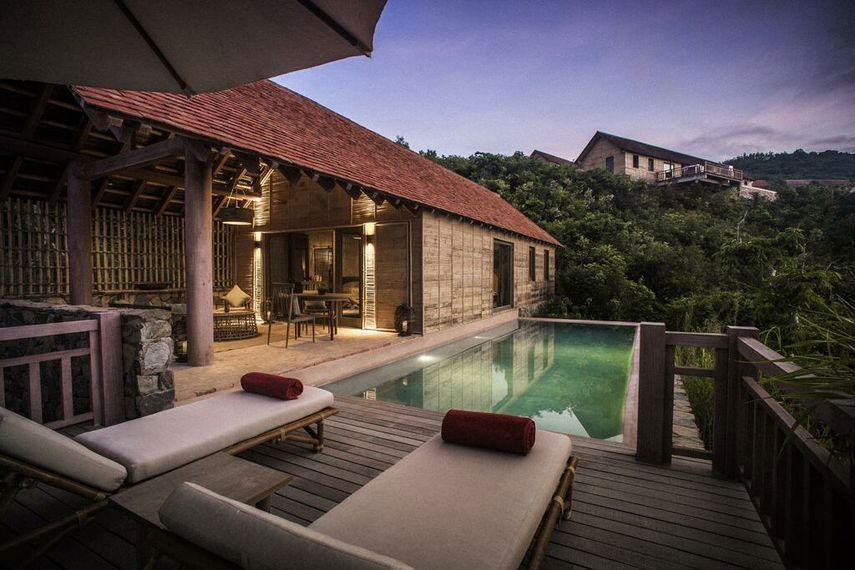
Zannier Hotels Bãi San Hô favors a design language that responds to topography rather than imposing a uniform resort plan. Villas are sited across a peninsula of paddy fields, hilltops and coastal inlets, using traditional Vietnamese techniques and locally sourced materials so buildings feel embedded in the landscape. The property reads less like a single complex and more like a small, carefully composed settlement where the walks between spaces are intentional. Natural ventilation and vernacular construction inform both the aesthetic and the guest experience, producing a tranquil, low-density retreat for travelers who appreciate quiet, considered design.
Best For
This property suits travelers seeking a design-forward, low-density escape—couples on a romantic or honeymoon trip, design-minded guests comparing Vietnam’s boutique resorts, and anyone who values terrain-integrated accommodation over conventional beachfront development. The distributed layout and villa orientation appeal to those who prefer privacy and a slower pace, and the use of vernacular materials makes it a strong choice for visitors interested in architecture rooted in local craft. It also fits groups planning intimate celebrations that favor seclusion and landscape over large, centralized resort amenities.
Venue details
Ambiance
Serene and peaceful with elegant natural lighting, sophisticated design inspired by local Rhade people traditions, and breathtaking ocean and landscape views throughout the property.
Tags
Vibe
Best For
Experience
Amenities
View
About the Stay
- Rooms
- 73
- Check-in
- 15:00
- Check-out
- 11:00
- Property Type
- Boutique hotel
- Property Style
- Luxury Eco Certified Resort with Modern Vernacular Design Rooted in Local Vietnamese Traditions and Cultural Influences, Emphasizing Simplicity and Personal Service.
- Design Style
- Contemporary Rustic Luxury Aesthetic Featuring Locally Inspired Architectural Elements, Natural Materials, and Refined Interiors with Traditional Vietnamese Cultural Touches.
- Breakfast
- Included
- Airport Transfer
- Available
- Pool
- Yes
- Spa
- Yes
- Families
- Welcome
- Cancellation
- Moderate
Know before you go
Know Before You Go
- Getting there
- Hòa Thạnh, Sông Cầu, Phú Yên
Planning details
Location
Recognition and awards


Also consider
Also Consider
- Zannier Bai San Ho, Notable alternative
- Anantara Quy Nhon Villas, Notable alternative
- An Lam Retreats Ninh Van Bay, Notable alternative
- Six Senses Ninh Van Bay, Notable alternative
- Six Senses Ninh Van Bay, Notable alternative
Hotel context
How it compares
Zannier Hotels Bãi San Hô is the choice for travelers prioritizing calm, setting, and a more removed coastal mood in Sông Cầu. Zannier Bai San Ho is the closest like-for-like reference, while Anantara Quy Nhon Villas is better for guests who want a more conventional luxury-resort setup near Quy Nhon.
An Lam Retreats Ninh Van Bay and Six Senses Ninh Van Bay are stronger cross-shops for travelers already looking south toward Ninh Van Bay. Six Senses is the safer pick for brand familiarity and a polished resort expectation; An Lam is the more intimate alternative in that area. For value, the deciding factor is not a listed room rate here, but whether the quieter Phú Yên location is worth giving up easier access to a larger resort cluster.
Booking difficulty is easy, which gives this an advantage over smaller high-demand retreats when travel dates are fixed. If the priority is ambiance and a quieter stay, start here. If the priority is a known luxury-resort formula, compare Anantara Quy Nhon Villas and Six Senses Ninh Van Bay before deciding.
Explore Sông Cầu
Around this place
Discover more on Pearl
Unlock the full Zannier Hotels Bãi San Hô guide in Pearl, including awards, comparisons, FAQs, planning details, and nearby places.
Compare Zannier Hotels Bãi San Hô
| Venue | Location | Awards |
|---|---|---|
| Zannier Hotels Bãi San Hô | Sông Cầu | 2026 La Liste Top HotelsConde Nast Gold List 20262026 Michelin 2 KeysTatler Best Hotels Asia-Pacific 2025Michelin 2 Keys 20252025 Michelin 2 Keys |
| Zannier Bai San Ho | Xuan Canh Commune | No published awards |
| Anantara Quy Nhon Villas | Quy Nhon | 2026 Virtuoso Luxury Hotel Collection2026 La Liste Top Hotels2025 Travel + Leisure 100 Favorite Hotels in the World · #75 |
| An Lam Retreats Ninh Van Bay | Nha Trang | No published awards |
| Six Senses Ninh Van Bay | Nha Trang | No published awards |
| Six Senses Ninh Van Bay | Ninh Hoa | No published awards |



How Zannier Hotels Bãi San Hô compares with similar nearby venues.
FAQ
Frequently Asked Questions
How does Zannier Hotels Bãi San Hô compare to other hotels?
Choose Zannier Hotels Bãi San Hô if you are specifically considering a recognized hotel in Sông Cầu. Compared with Anantara Quy Nhon Villas, it is a different location decision rather than a like-for-like Sông Cầu comparison. The hotel's recognition includes Tatler 2025 honors, La Liste Top Hotels 2026 with 92 points, and the Condé Nast Gold List for 2026.
How is the dining at Zannier Hotels Bãi San Hô?
A cuisine type, chef, menu format, price point, or dining schedule are not specified. Treat dining details as something to confirm directly with Zannier Hotels Bãi San Hô before booking, especially if meals are a major part of the trip.
When is the best time to book Zannier Hotels Bãi San Hô?
Booking difficulty, seasonal availability, or price patterns are not included. If your dates are fixed, check current availability directly with the hotel or your booking channel. Its recognition, including La Liste Top Hotels 2026 and Tatler 2025 honors, is a reason to plan carefully, but not enough to state a specific best booking window.
What is check-in like at Zannier Hotels Bãi San Hô?
The location is Sông Cầu. Check-in procedure, transfer arrangements, or arrival timing are not included, so confirm those details directly with the hotel before travel.