
Hotel in Paris, France
Mandarin Oriental Lutetia, Paris
525ptsLeft Bank Palace Authority



About Mandarin Oriental Lutetia, Paris
Paris has several grand hotels on the Right Bank, but the Left Bank has only one: Mandarin Oriental Lutetia. Opened in 1910 at 45 Boulevard Raspail, the property occupies a structural position in Saint-Germain-des-Prés that no competitor can replicate, and its dining programme, anchored by Brasserie Lutetia, has made the address a genuine neighbourhood institution rather than a hotel annex. La Liste ranked it 96 points in its 2026 Top Hotels list.
The Left Bank's Only Grand Hotel, and What That Actually Means
Paris grand hotel geography divides sharply at the Seine. The Right Bank carries the majority of the city's palace-classified properties: Four Seasons George V, Le Meurice, Hotel Plaza Athénée, Hôtel de Crillon. Cross to the sixth arrondissement and the category thins considerably. Mandarin Oriental Lutetia, at 45 Boulevard Raspail, is not simply the Left Bank's grandest hotel; it is the only grand hotel the Left Bank has. That geographic monopoly shapes everything about who stays here and why the dining rooms consistently fill with a mix that most hotel restaurants cannot replicate.
La Liste placed it at 96 points in its 2026 Leading Hotels ranking, positioning it alongside properties like Cheval Blanc Paris and Le Bristol Paris in the upper tier of Parisian luxury. The credential matters because it reflects something measurable: consistent delivery across accommodation, dining, and service rather than a single exceptional department.
What You Encounter on Arrival
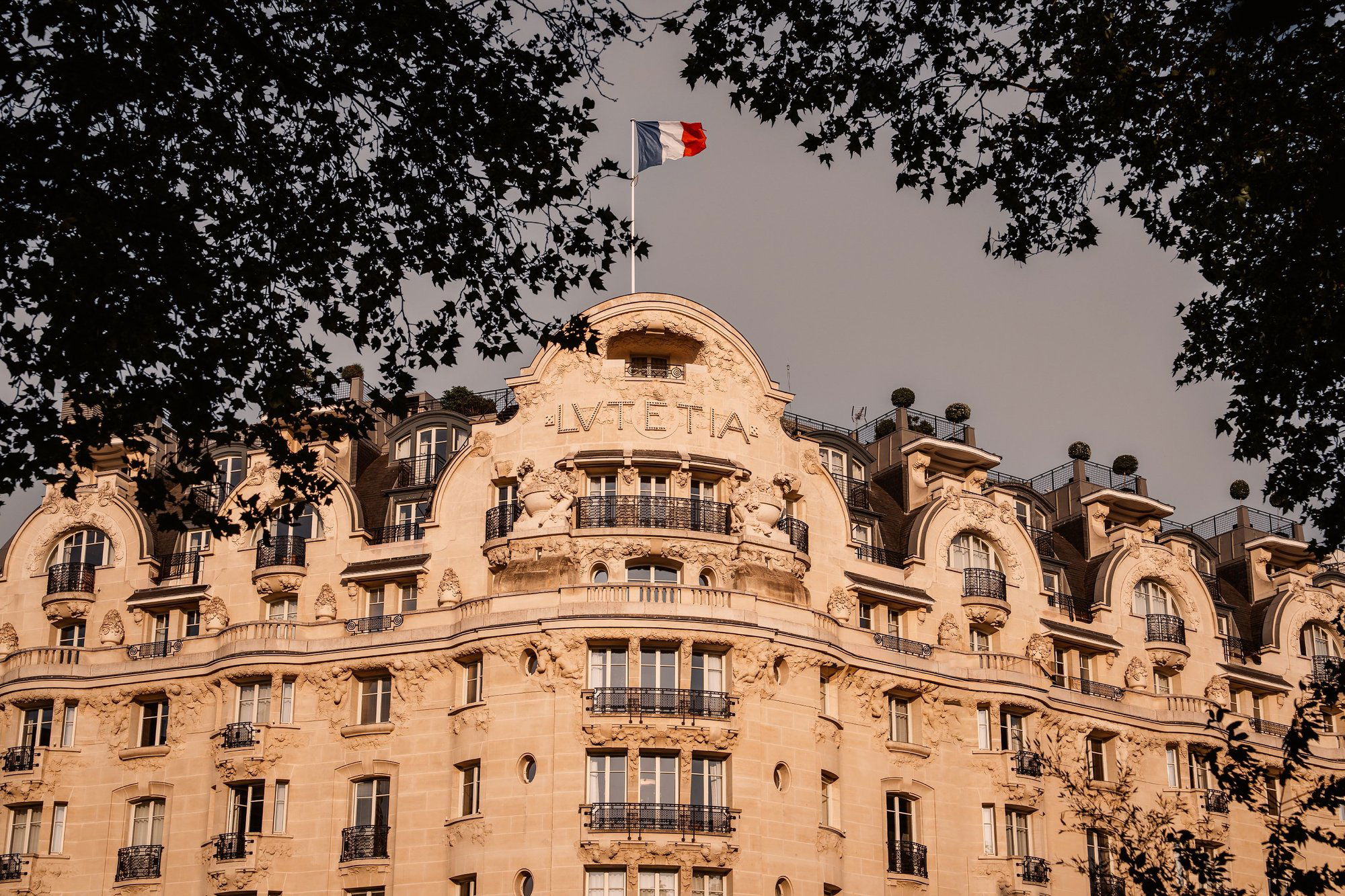
The building itself is the first argument. Opened in 1910, Lutetia was conceived at the precise moment Paris was transitioning from art nouveau to art deco, and the architecture reflects that crossover rather than committing fully to either. The exterior reads as a confident statement from a period when Haussmann's Paris was already established and designers were pushing against it. That tension, between inherited structure and emerging modernism, runs through the interior spaces too.
At the heart of the hotel, the Salon Saint-Germain functions as the primary gathering space, anchored by artist Fabrice Hyber's glass ceiling installation. Natural light refracts through it into a room that holds an expansive library and opens onto a courtyard beyond. It is the kind of civic-feeling interior that a certain category of Left Bank traveller comes specifically for, a place designed for extended presence rather than transit.
The Dining Programme: Where History and Contemporary Cooking Meet
Hotel brasseries across Paris occupy a spectrum from genuine neighbourhood institutions to expensive afterthoughts for guests who cannot be bothered to book elsewhere. Brasserie Lutetia sits firmly at the institutional end. The address has been drawing Parisians since the hotel opened, and the guest book from its earlier decades includes Hemingway, Joyce, Picasso, Matisse, and Josephine Baker among regular visitors. That kind of record does not make a restaurant good in the present tense, but it does establish a baseline expectation that the current team has to meet.
Executive Chef Patrick Charvet's approach works within that expectation rather than against it. The format is a neighbourhood brasserie menu running alongside his contemporary interpretations, which means the classics are there for guests who want them and the more considered cooking is there for those tracking the city's dining conversation. The room itself spreads over two floors with a hidden al fresco patio, a configuration that allows Brasserie Lutetia to serve multiple functions simultaneously: business lunch, neighbourhood dinner, hotel breakfast, late-night drink.
The broader dining infrastructure at Lutetia is worth mapping before arrival. Bar Josephine, fronting Boulevard Raspail, anchors the cocktail programme around a preserved historical fresco, with the head bartender's menu positioned as a contemporary counterpoint to that backdrop. Bar Aristide runs a quieter frequency, dedicated to art and music with a small library attached, which makes it a different proposition from Bar Josephine's more social register. Between the two bars, the hotel offers enough distinct atmosphere options that guests can spend an entire evening without needing to leave the building if they choose not to. That said, Saint-Germain-des-Prés immediately outside has its own dining depth worth exploring, and EP Club's full Paris restaurants guide covers the neighbourhood alongside the broader city.
Accommodation: Suites and the 360-Degree Argument
Paris hotels of this calibre routinely compete on suite credentials, and Lutetia's seven signature suites are individually designed rather than variations on a single template. The two penthouse suites carry private terrace access, with those terraces reaching up to 70 square metres. The 360-degree view over Paris from that height, in a building positioned in the sixth arrondissement rather than clustered among Right Bank towers, is a specific and unreplicable proposition. Guests choosing between Lutetia's penthouse tier and the top-floor offerings at properties like La Réserve Paris are essentially choosing between two different versions of Paris from above.
Wellness: Scale and Specificity
The Akasha Holistic Wellbeing Center occupies 700 square metres and includes a 17-metre swimming pool with natural daylight. For an urban hotel spa, that footprint is substantial. Properties that match this scale in Paris, such as the spa infrastructure at Four Seasons George V, tend to be purpose-built within buildings that were designed or significantly retrofitted to accommodate them. Lutetia's spa represents a meaningful investment in a building over a century old.
Where Lutetia Sits in the Paris Hotel Market
Comparing Lutetia against Right Bank palace hotels involves a category mismatch. The more precise peer set is properties that combine genuine heritage, a curated room count, serious dining, and a specific neighbourhood identity. Against that definition, the field narrows. Cheval Blanc Paris competes on contemporary design and a strong F&B; identity with Plénitude at its anchor. Le Bristol leads on consistent service reputation and Epicure's three Michelin stars. Lutetia's differentiator is geographic position and the specific cultural weight of the Left Bank address, which attracts a guest profile oriented toward literature, philosophy, and the arts rather than finance and fashion.
Travellers considering France more broadly will find the country's hotel landscape spreads well beyond Paris. Properties like Hotel Du Cap-Eden-Roc in Cap d'Antibes, Les Sources de Caudalie in Bordeaux, Domaine Les Crayères in Reims, and Baumanière Les Baux-de-Provence each anchor a distinct regional food and wine tradition. For the Riviera, The Maybourne Riviera and La Réserve Ramatuelle occupy the design-led luxury tier. In Provence, La Bastide de Gordes and Villa La Coste offer a different scale entirely. For alpine travel, Cheval Blanc Courchevel and Four Seasons Megève lead the mountain tier. And for a truly singular French experience outside Paris, Airelles Château de Versailles offers overnight stays within the Versailles estate itself.
Know Before You Go
| Address | 45 Boulevard Raspail, 75006 Paris |
|---|---|
| Neighbourhood | Saint-Germain-des-Prés, 6th arrondissement |
| Recognition | La Liste Leading Hotels 2026: 96 points |
| Dining | Brasserie Lutetia, Salon Saint-Germain, Bar Josephine, Bar Aristide |
| Wellness | Akasha Holistic Wellbeing Center, 700 sqm, 17m pool |
| Suites | 7 signature suites including 2 penthouses with terraces up to 70 sqm |
| Events | 700 sqm banqueting space, Salon Cristal ballroom for up to 300 guests |
| Booking | Book directly through Mandarin Oriental's global reservations or a preferred travel adviser for rate and suite availability |
Frequently Asked Questions
- What room category do guests prefer at Mandarin Oriental Lutetia, Paris?
- The seven individually designed signature suites, particularly the two penthouse suites, represent the most sought-after accommodation at Lutetia. Those penthouse suites offer private terrace access, with terraces reaching up to 70 square metres, and deliver a 360-degree view of Paris that reflects the hotel's unique position on the Left Bank. For guests seeking a less refined but still characterful experience, the standard rooms carry the building's art nouveau-to-art deco architectural detail throughout. La Liste's 2026 score of 96 points applies to the property's overall delivery, which the suite tier anchors.
- What should I know about Mandarin Oriental Lutetia, Paris before I go?
- Lutetia's position in Saint-Germain-des-Prés places it in a neighbourhood that functions differently from the Right Bank luxury corridor. The sixth arrondissement's dining, gallery, and bookshop infrastructure is immediately walkable, and the hotel's own Brasserie Lutetia operates as a genuine neighbourhood address rather than a captive hotel restaurant, which means the room fills with locals as well as guests. The building dates to 1910 and carries a verified history connecting it to figures including Hemingway, Picasso, and Matisse as regular visitors. Arriving without a dinner reservation at the Brasserie during peak Paris seasons is a risk worth avoiding.
- What's the leading way to book Mandarin Oriental Lutetia, Paris?
- Direct booking through Mandarin Oriental's reservations system or a preferred travel adviser typically provides the most reliable access to suite availability and any applicable loyalty or rate benefits. For the penthouse suites specifically, lead time matters: demand for the two top-floor rooms with private terraces reflects the hotel's position as the Left Bank's only grand hotel at this tier. La Liste's 96-point ranking in 2026 places Lutetia in a competitive booking environment similar to Le Bristol Paris and Cheval Blanc Paris, where availability at the leading room categories moves quickly around key Paris dates.
- What makes dining at Brasserie Lutetia different from other hotel restaurants in Paris?
- Brasserie Lutetia's distinction within the Paris hotel dining scene comes from its dual role: it has operated as a neighbourhood brasserie institution since 1910 while also serving as the hotel's primary restaurant. Executive Chef Patrick Charvet maintains the classic brasserie format alongside contemporary interpretations, meaning the address draws Left Bank regulars who have no particular interest in the hotel itself. The room spans two floors with a separate al fresco patio, and the historical record of the address, with Hemingway, Picasso, and Matisse among documented regulars, gives it a cultural weight that most hotel restaurants built in the last two decades cannot acquire.
Recognized By


More hotels in Paris
- 42 Av. Gabriel42 Av. Gabriel sits in one of Paris's most competitive hotel corridors, steps from the Champs-Élysées gardens in the 8th arrondissement. Full pricing and awards data are not yet confirmed, so book direct and verify upgrade eligibility at reservation. For verified alternatives nearby, see Le Bristol Paris, Hôtel de Crillon, or La Réserve Paris.
- Auberge FloraAuberge Flora is a boutique hotel in Paris's 11th arrondissement, offering a neighbourhood-embedded alternative to the palace-district properties at a lower price point. It books easily, sits close to the Marais and Bastille, and suits travellers who want a design-forward base rather than full concierge service. A practical choice if location flexibility and value matter more than brand prestige.
Related editorial
- Best Fine Dining Restaurants in ParisFrom three-Michelin-star icons to the next generation of Parisian chefs pushing boundaries, these are the restaurants that define fine dining in the world's culinary capital.
- Best Luxury Hotels in RomeFrom rooftop terraces overlooking ancient ruins to Michelin-starred hotel dining, these are the luxury hotels that make Rome unforgettable.
- Best Cocktail Bars in KyotoFrom sleek lounges to hidden speakeasies, Kyoto's cocktail scene blends Japanese precision with global influence in ways you won't find anywhere else.
Save or rate Mandarin Oriental Lutetia, Paris on Pearl
Keep this venue in your Pearl passport, rate it after you visit, and track it alongside every other place you collect.