
Hotel in Paris, France
Hôtel du Louvre
250ptsLandmark-Axis Positioning

About Hôtel du Louvre
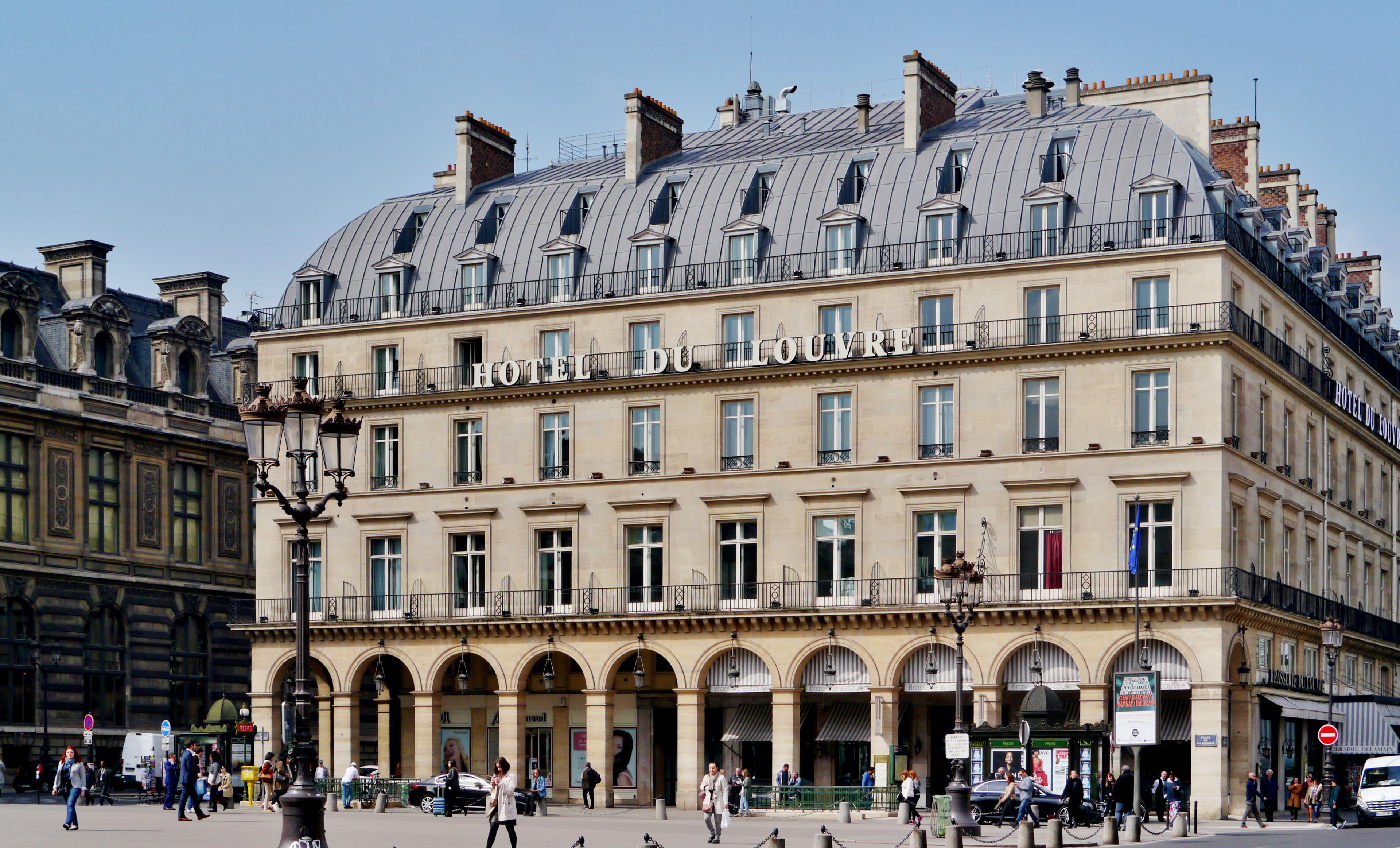
At Place André Malraux, Hôtel du Louvre occupies one of central Paris's most culturally loaded addresses, with the Musée du Louvre, Palais Royal, Comédie-Française, and Palais Garnier all within walking distance. The 164-room property, including 57 suites, holds a Google rating of 4.6 from over 1,000 reviews. For those who want the 1st arrondissement at the centre of their Paris itinerary, this is a considered choice.
Where the 1st Arrondissement Concentrates Its Weight
Place André Malraux sits at a junction that Paris seems to have arranged deliberately. Stand on its pavement and you are simultaneously within sight of the Louvre's Richelieu wing to the east, the Palais Royal gardens to the north, and the Comédie-Française's colonnaded facade directly ahead. The Palais Garnier, home of the Paris Opéra, is a ten-minute walk northeast. Hotels in this corridor compete not on proximity to one landmark but on proximity to all of them at once, which is a different and more demanding proposition. Hôtel du Louvre holds that address at Place André Malraux, 75001, and the location functions less like a selling point than a geographical fact that structures every guest's stay.
For context, the 1st arrondissement's luxury hotel tier has historically split between two approaches: the grand Palace-designated properties along Rue de Rivoli and the Seine, and a smaller cohort of heritage hotels whose value is rooted in cultural adjacency rather than ballroom scale. Le Meurice, Cheval Blanc Paris, and Hôtel de Crillon represent the Palace bracket, where room rates, restaurant ambition, and spa investment are calibrated at an international ultra-luxury tier. Hôtel du Louvre operates in the latter cohort, where the argument is made through geography and editorial detail rather than acreage.
The Architecture of a View
Inside, the hotel's orientation toward its surroundings is literal. The two elevators serving the guest floors are labelled by the view they serve: one side faces the Louvre, the other faces the Opéra. This is not decorative whimsy but a practical acknowledgment that the views themselves are the primary amenity. Most of the 164 rooms, which include 57 suites and one signature suite, overlook either of those landmarks; a smaller number face a courtyard. The suites feature floor-to-ceiling windows and what the property describes as show-stopping vistas, with fabrics and finishes calibrated to the scale of what's outside.
The Pissarro Suite draws its reference from Camille Pissarro, the Impressionist painter who produced a documented series of canvases depicting the Boulevard Montmartre and surrounding Paris streetscapes from refined hotel windows in the 1890s. The suite spans 690 square feet, with wood flooring, a marble bathroom, and views that place the guest inside a recognisable tradition of looking at this city from above its streets. It is a specific and traceable lineage, not a vague aspiration to art-world association.
All rooms are soundproofed, an engineering decision that matters in this particular pocket of the city, where tourist footfall along the Rue de Rivoli axis is among the densest in Paris. The same logic applies to the restaurant terrace, which uses glass walls to reduce ambient noise from the street. Practical considerations of this kind are what separate a hotel that has thought carefully about its location from one that simply occupies it. Rooms also include complimentary Wi-Fi, minibar, and a safe sized to accommodate a laptop.
Scent, Space, and the Details That Accumulate
European luxury hotels increasingly commission site-specific olfactory programs as a way of anchoring guest memory to a property. At Hôtel du Louvre, independent perfumer Pierre Guillaume created a signature scent for the public spaces, built around red mandarin essence and violet leaves. Guillaume works outside the mainstream fragrance industry and has a documented reputation for compositional precision. The choice to use an independent perfumer rather than a luxury house name signals an editorial preference for specialist craft over brand association, a distinction that recurs in how the hotel positions itself relative to its neighbourhood.
The fitness centre, located on the mezzanine level and open around the clock, was renovated with current equipment. Twenty-four-hour gym access is a practical detail that matters to guests arriving across time zones or keeping irregular schedules in a city where dinner rarely starts before eight. The eight meeting spaces range from 204 to 1,474 square feet and are designed around named historical figures connected to the hotel's past: Victor Hugo and Jules Verne among them. This is the kind of institutional memory that distinguishes a hotel with documented history from one that deploys heritage as decoration.
The Neighbourhood as Infrastructure
The case for staying in the 1st arrondissement rather than, say, the 7th or the 8th, is essentially a case about walking radius. From Place André Malraux, a guest reaches the Louvre's main entrance in under five minutes on foot, the Palais Royal gardens in three, and the Seine's Right Bank quays in roughly ten. The Marais, with its concentration of contemporary galleries, archived Jewish quarter architecture, and dense restaurant options, is accessible without a Metro ride. This matters because Paris rewards those who move through it on foot at human speed, and a hotel that positions a guest at the axis of multiple districts rather than deep inside one is offering a different kind of mobility.
For those planning around the arts specifically, the Comédie-Française stages productions year-round within eyeline of the hotel, and the Palais Garnier's opera and ballet season runs from September through July. Checking performance schedules before booking dates is a practical step that turns proximity into actual use. Our full Paris guide covers the broader dining and cultural scene across the city's arrondissements.
Where It Sits Among Paris's Hotel Options
Guests evaluating Hôtel du Louvre against the Palace tier should understand what they are trading. Properties like Four Seasons George V, Hotel Plaza Athénée, or La Réserve Paris offer multi-Michelin dining, spa depth, and room counts that support a full resort-style stay. Le Bristol Paris and Airelles Château de Versailles occupy the end of the spectrum where the hotel experience itself is the programme. Hôtel du Louvre's proposition is different: the hotel provides a well-executed base, and the programme is Paris.
For those whose travel priorities extend beyond the capital, France's wider hotel offering includes properties that argue through landscape and cuisine rather than urban density. Domaine Les Crayères in Reims combines Champagne-country positioning with serious restaurant ambition. Les Sources de Caudalie in Bordeaux is built around wine country access in a way that makes the vineyard the amenity. Baumanière Les Baux-de-Provence, La Bastide de Gordes, Villa La Coste, and La Réserve Ramatuelle represent Provence's premium range. The Riviera tier runs from Hotel Du Cap-Eden-Roc in Cap d'Antibes to The Maybourne Riviera. For mountain stays, Cheval Blanc Courchevel and Four Seasons Megève set the standard in the Alps. Royal Champagne Hotel and Spa in Champillon, Hôtel and Spa du Castellet, and Airelles Saint-Tropez fill out the range for those building a longer French itinerary.
Hôtel du Louvre holds a Google rating of 4.6 from more than 1,000 reviews, a data point that reflects consistent execution across a high-volume guest profile rather than the narrower feedback loops that collect around smaller, allocation-driven properties.
Planning Your Stay
The hotel is at Place André Malraux, 75001 Paris, walkable from the Palais Royal-Musée du Louvre Métro station (lines 1 and 7). For guests arriving by Eurostar, Gare du Nord is approximately 25 minutes by Métro. The 24-hour fitness centre and soundproofed rooms make the property functional for business travellers and those crossing time zones. The eight meeting spaces, ranging in size and themed around historical figures connected to the property, accommodate groups from small briefings to mid-sized corporate sessions. Booking direct or through a travel specialist is advisable for suite requests, particularly the Pissarro Suite, given its documented demand and the specificity of its Louvre-facing view.
Frequently Asked Questions
Which room offers the leading experience at Hôtel du Louvre?
The Pissarro Suite is the property's most documented choice for guests who prioritise views and spatial scale. At 690 square feet, with wood flooring, a marble bathroom, and floor-to-ceiling windows overlooking the Louvre, it draws its identity from a traceable art-historical reference: Camille Pissarro's Impressionist paintings of Paris streetscapes from refined hotel windows. Suites on the Opéra-facing side offer a different but equally specific orientation. For guests who want a quieter option, the courtyard-facing rooms trade the landmark view for reduced street presence. The elevator labelling system (Louvre or Opéra) is a practical guide to which side of the building a given room occupies.
What should I know about Hôtel du Louvre before I go?
Address at Place André Malraux puts the Louvre, Palais Royal, Comédie-Française, and Palais Garnier all within a short walk. All rooms are soundproofed, which is a meaningful feature given the pedestrian and tourist density in this part of the 1st arrondissement. The hotel carries a Google rating of 4.6 across more than 1,000 reviews. The fitness centre runs 24 hours, the restaurant terrace uses glass walls for noise management, and the eight meeting spaces cover a range of group sizes. Pierre Guillaume's signature scent, built on red mandarin and violet leaves, runs through the public areas. The hotel is not a Palace-category property, so guests expecting the restaurant investment or spa depth of Le Meurice or Cheval Blanc Paris should calibrate expectations accordingly. What it offers is a well-positioned, thoughtfully detailed base in one of the city's most culturally dense addresses, alongside international alternatives like Aman Venice, Aman New York, or The Fifth Avenue Hotel for those building a broader travel programme.
Recognized By
More hotels in Paris
- 42 Av. Gabriel42 Av. Gabriel sits in one of Paris's most competitive hotel corridors, steps from the Champs-Élysées gardens in the 8th arrondissement. Full pricing and awards data are not yet confirmed, so book direct and verify upgrade eligibility at reservation. For verified alternatives nearby, see Le Bristol Paris, Hôtel de Crillon, or La Réserve Paris.
- Auberge FloraAuberge Flora is a boutique hotel in Paris's 11th arrondissement, offering a neighbourhood-embedded alternative to the palace-district properties at a lower price point. It books easily, sits close to the Marais and Bastille, and suits travellers who want a design-forward base rather than full concierge service. A practical choice if location flexibility and value matter more than brand prestige.
Related editorial
- Best Fine Dining Restaurants in ParisFrom three-Michelin-star icons to the next generation of Parisian chefs pushing boundaries, these are the restaurants that define fine dining in the world's culinary capital.
- Best Luxury Hotels in RomeFrom rooftop terraces overlooking ancient ruins to Michelin-starred hotel dining, these are the luxury hotels that make Rome unforgettable.
- Best Cocktail Bars in KyotoFrom sleek lounges to hidden speakeasies, Kyoto's cocktail scene blends Japanese precision with global influence in ways you won't find anywhere else.
Save or rate Hôtel du Louvre on Pearl
Keep this venue in your Pearl passport, rate it after you visit, and track it alongside every other place you collect.