Hotel in Natal, Brazil
Aventora Resort Baía Formosa, Minor Reserve Collection
150Pearl PointsCoastal Resort Base

About Aventora Resort Baía Formosa, Minor Reserve Collection
A coastal resort entry for Natal readers who care about setting first: Aventora Resort Baía Formosa, Minor Reserve Collection points toward the quieter design-led side of Brazil’s northeast hotel circuit. With no published database detail on rating, price, awards, rooms, or booking channels, it is best treated as a setting-led prospect to verify directly before planning around it.
Where the coast sets the brief
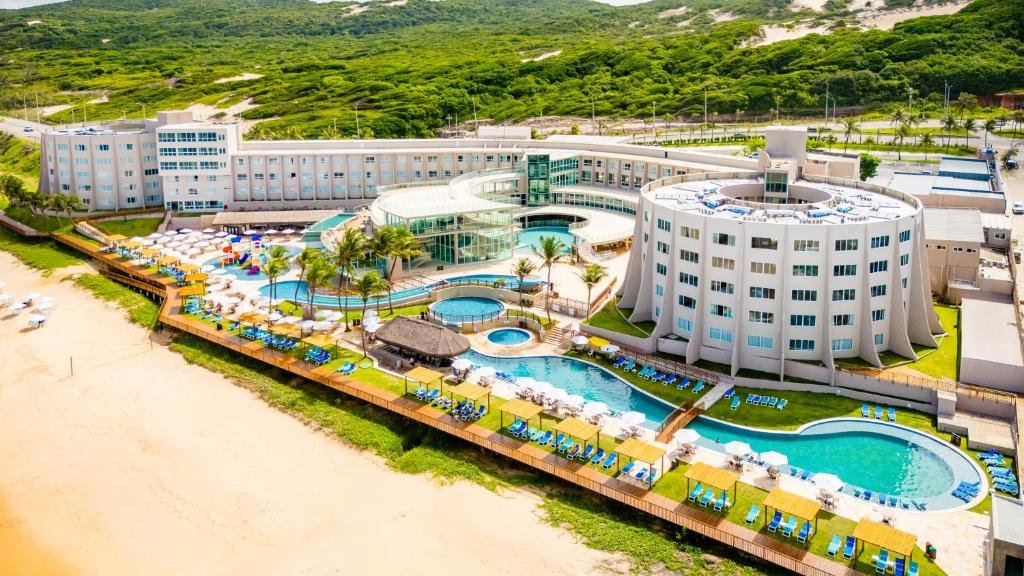
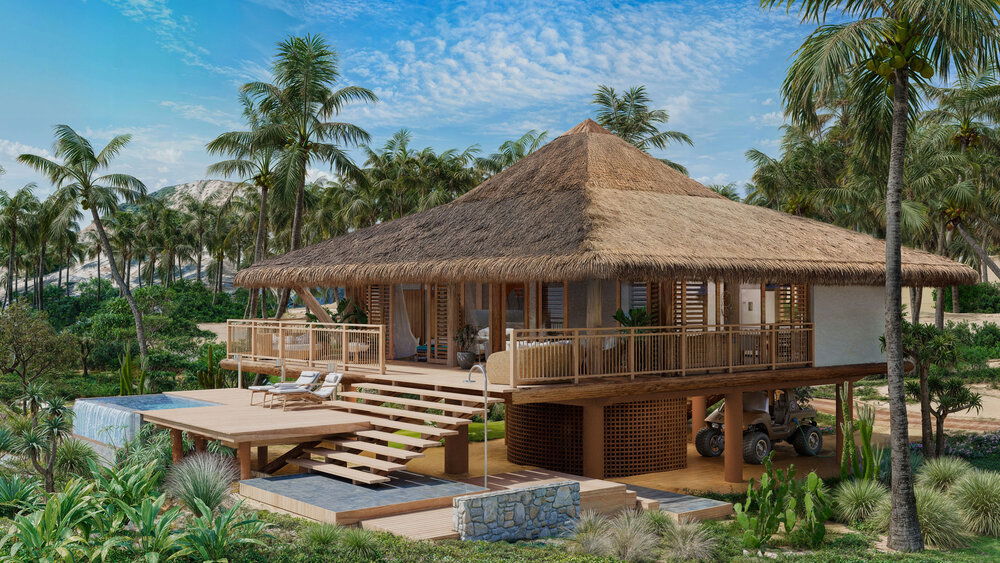
Approaching a hotel on Brazil’s northeast coast is rarely a neutral experience. The architecture has to answer wind, salt, glare, humidity, and the long horizontal line of the Atlantic before it can make any claim about luxury. Around Natal, that means a different hotel language from the urban grand hotels of São Paulo or Rio de Janeiro: less emphasis on lobby theatre, more pressure on shade, airflow, low-rise massing, and the choreography between room, pool, path, dune, and sea.
Aventora Resort Baía Formosa, Minor Reserve Collection belongs to that coastal conversation rather than the classic city-palace tradition. The useful reading is category context. In this part of Brazil, a resort succeeds or fails by how seriously it treats place: the building should not fight the coastline, the service model should not pretend it is in a financial district, and the food and leisure program should acknowledge that the day is shaped by sun, tide, and wind.
Natal’s hotel scene sits between several Brazilian hospitality identities. There is the metropolitan polish represented by Rosewood São Paulo in São Paulo, the ceremonial beachfront heritage of Copacabana Palace, A Belmond Hotel, Rio de Janeiro in Rio de Janeiro, and the destination-lodge logic seen at Hotel das Cataratas, A Belmond Hotel, Iguassu Falls in Iguassu Falls. A coastal Natal-area resort has to compete on a quieter axis: access to beach rhythm, spatial ease, and the degree to which design feels adapted rather than imported.
Design, not decoration, is the real test
Brazilian resort design has matured beyond a simple tropical vocabulary of timber, stone, and linen. The stronger properties use those materials because they solve practical problems, not because they photograph well. Deep eaves cut glare. Cross-ventilation matters when sea air is part of the experience. Courtyards and shaded thresholds help guests move between heat and rest. Pools need to be placed with wind in mind. Restaurants in coastal climates need generous cover without severing the view. These are design decisions first, aesthetic choices second.
That is the lens through which Aventora Resort Baía Formosa, Minor Reserve Collection should be judged. No architect or design studio is identified, so any claim about authorship would be guesswork. What can be said with confidence is that the Minor Reserve Collection name positions the property within a branded hospitality tier rather than the independent pousada tradition. That matters. Branded resorts often bring systems, distribution, and service consistency; independent coastal houses can bring sharper local character and fewer layers of standardisation. The stronger coastal hotel sits somewhere between those poles: operationally reliable, physically specific.
Brazil gives plenty of comparison points. Zorah Beach Hotel in Trairi and Rancho do Peixe in Jericoacoara show how Ceará’s wind coast has shaped a looser, sand-underfoot hotel idiom. Txai Resort Itacaré in Itacaré works from Bahia’s forest-and-beach grammar, while Pousada Do Toque in Sao Miguel Dos Milagres belongs to the smaller-scale Alagoas school of coastal retreat. Natal’s challenge is different again: the dunes, Atlantic exposure, and northeastern light ask for restraint. Too much polish can feel sealed off from the coast; too little infrastructure can feel underbuilt for a resort stay.
Natal, Baía Formosa, and the resort question
Natal is often reduced to sun-and-sand shorthand, but the better way to read it is as a gateway to a larger coastal region. The city gives access to beaches, dunes, seafood restaurants, buggy routes, and a tourism economy built around the Atlantic edge of Rio Grande do Norte. Baía Formosa, by name and regional association, points south of the city’s central hotel strip toward a quieter coastal frame. Because the record does not include an address or coordinates, no distance from Natal, airport, beach, or landmark should be assumed. That absence is not trivial; in coastal Brazil, transfer time can shape the entire stay.
For planning, the first question is not whether the property has a grand lobby or a photogenic pool. It is whether the location suits the trip. A guest using Natal as a base for restaurants, bars, and city movement needs a different hotel from a guest who wants to stay near the beach and make fewer transfers. Readers comparing the wider scene can start with Our full Natal hotels guide, then cross-check dining through Our full Natal restaurants guide and drinks through Our full Natal bars guide. For travellers building a broader itinerary, Our full Natal experiences guide and Our full Natal wineries guide help separate city-based time from regional excursions.
The absence of published data on awards, price, website, phone, and rating should push the traveller toward verification rather than assumption. In premium travel, uncertainty is a practical detail. It affects cancellation terms, room category selection, airport transfer arrangements, restaurant access, and the expected level of service. This is especially relevant for newer or less documented resort entries, where online fragments can lag behind operating reality.
How it compares within Brazil's hotel map
Brazil’s luxury hotel geography is fragmented in a productive way. The country does not offer a single model of high-end hospitality. In São Paulo, hotels compete on design capital, restaurants, art collections, and business-travel fluency. In Rio, beachfront history and social theatre carry weight. In Bahia and the northeast, the stronger properties are judged by how they handle climate, landscape, and informality without losing precision. In the Amazon and Pantanal, lodges are valued for access, guiding, conservation context, and logistical competence.
That makes a Natal-area resort a different proposition from Fera Palace Hotel in Salvador or Hotel Fasano Salvador in Salvador Bahia, where urban heritage and city dining sit close to the hotel experience. It also differs from Cristalino Lodge in Alta Floresta and Caiman, Pantanal in Miranda, where the destination is often inseparable from guided nature programming. The coastal resort has to deliver a slower discipline: shade at the right hour, rooms that do not overheat, service that understands wet swimsuits and sandy feet, and food that does not feel detached from the region.
The Minor Reserve Collection tag is the available trust signal here, but it is not a substitute for hard operating data. In editorial terms, that places the property in a watch-and-verify category rather than a fully documented benchmark. The name carries brand context; the planning decision still depends on confirmed room type, rate, access, facilities, and date-specific conditions.
Food, drink, and the missing evidence
Resort dining in northeast Brazil has a clear opportunity: seafood, fruit, cassava, coconut, regional sweets, and grilled preparations can give a hotel kitchen a strong local base without theatrical reinvention. The problem is that many resort restaurants blur into international hotel cooking, especially when menus try to satisfy every guest at every hour. A property near Natal should be assessed on whether its food program acknowledges the region or defaults to generic resort grammar.
No cuisine type, chef, restaurant name, signature dishes, bar program, wine list, breakfast format, room service detail, or operating hours are listed. That means no dish should be named and no sensory claim should be made. The correct editorial stance is caution: ask for current menus before treating the hotel as a dining destination. If the stay is food-led, pair the hotel decision with independent restaurant research rather than assuming the resort will carry every meal. For a wider city read, Our full Natal restaurants guide is the more useful planning tool, while Our full Natal bars guide helps determine whether evenings should be kept on property or built around the city.
Room categories and the architecture of staying put
The question of a signature room is often where resort marketing becomes least useful. Ocean view, pool access, villa, suite, bungalow: these labels matter only when attached to orientation, privacy, shade, noise, and the walk between room and beach. A room that faces the wrong wind can be less pleasant than a smaller one with better shelter. A private pool can be dead space if it sits in full sun at the wrong time of day. A balcony is valuable only if it is designed to be used, not merely listed.
No room categories are available for Aventora Resort Baía Formosa, Minor Reserve Collection. There is no confirmed signature room, suite count, room size, view classification, or price range. The practical move is to request a current room plan and ask direct questions: orientation, distance to main facilities, whether outdoor areas are shaded, how privacy works between neighbouring units, and whether any room category has access issues for guests with mobility concerns. This is not fussiness. In a coastal resort, the room’s physical position can matter as much as its square meterage.
Travellers comparing design-led stays across Brazil can look at Ilha de Toque Toque Eco Hotel in Sao Sebastiao, Etnia Casa Hotel in Trancoso, Botanique Hotel Experience in Campos do Jordão, and Campo Bahia in Santo Andre to see how scale, privacy, and setting shift across regions. Internationally, urban and alpine grand-hotel logic at The Fifth Avenue Hotel in New York City, Hôtel de Paris Monte-Carlo in Monte Carlo, and Badrutt's Palace Hotel in St. Moritz shows the contrast: those hotels operate through ceremony and address; a Brazilian coastal resort is judged by immersion, climate handling, and ease.
Planning notes before committing
Before planning around this property, verify the essentials directly through a confirmed booking channel. The record lists no website, phone number, address, price range, awards, opening hours, restaurant details, dress code, or room count. That makes advance confirmation the sensible default, especially for peak holiday periods in Brazil, school breaks, long weekends, and the high-sun months when coastal demand rises. Ask for current rates in writing, transfer guidance from Natal, cancellation terms, check-in and check-out times, restaurant availability, and whether construction or phased openings affect any facilities.
Travellers building a Brazil hotel route should also compare duplicate or similarly named regional entries carefully. For Iguaçu, for example, EP Club carries both Hotel das Cataratas, A Belmond Hotel, Iguassu Falls in Iguazu Falls and the Iguassu Falls listing, a reminder that spelling, city labels, and regional naming can complicate search. The same discipline applies around Natal and Baía Formosa: confirm the exact property, exact location, and exact terms before paying.
Location
Natal, Brazil
Explore Natal
Save or rate Aventora Resort Baía Formosa, Minor Reserve Collection on Pearl
Keep this venue in your Pearl passport, rate it after you visit, and track it alongside every other place you collect.