Hotel in Mooloolaba, Australia
Avani Mooloolaba Beach Hotel
150Pearl PointsLow-Rise Coastal Base

About Avani Mooloolaba Beach Hotel
<strong>Avani Mooloolaba Beach Hotel</strong> belongs to the <strong>Sunshine Coast</strong>’s practical beach-hotel category, where location and ease matter more than grand resort theatre. With limited database detail on rooms, pricing, dining, or awards, the reliable read is architectural and contextual: this is a Mooloolaba address to assess through <strong>coastal</strong> access, apartment-style expectations, and the town’s relaxed seafront rhythm.
Coastal architecture before resort theatre
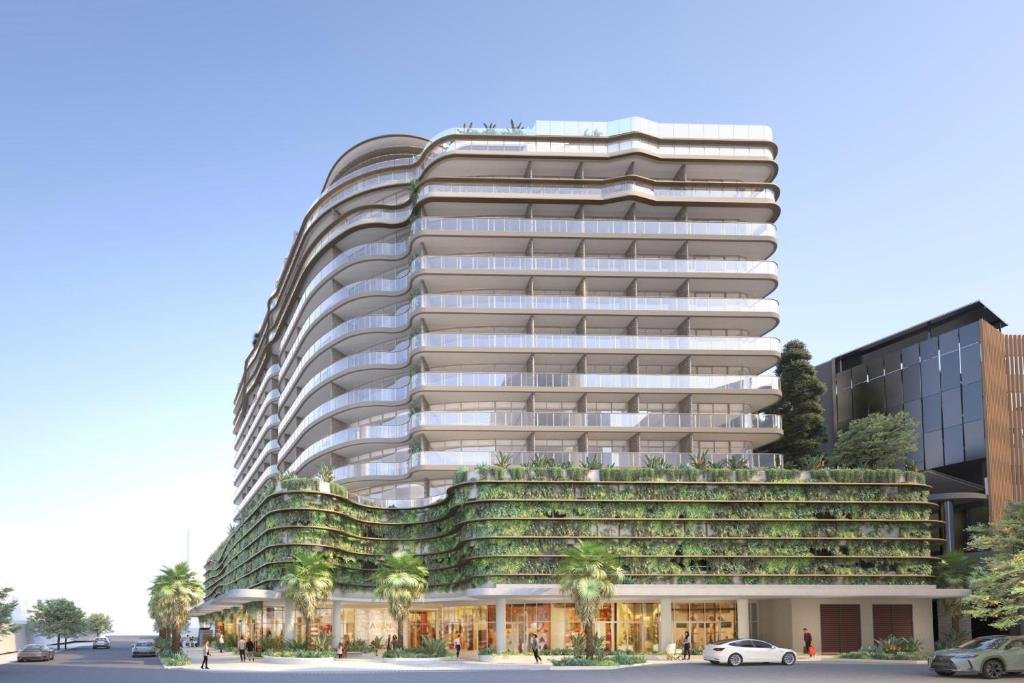
Mooloolaba announces itself through light, salt air, and a low-rise holiday rhythm rather than ceremonial hotel arrival. The built environment along this part of the Sunshine Coast is shaped by beach access, balcony culture, and the practical needs of travellers who spend much of the day outside the room. In that context, Avani Mooloolaba Beach Hotel should be read less as a grand destination resort and more as part of a coastal accommodation tradition: compact urban beach hotels and apartment-style stays designed around proximity, daylight, and ease of movement.
The useful question here is not whether the property competes with capital-city palace hotels. It sits in Mooloolaba, Australia, a seaside town whose accommodation logic differs from Sydney, Melbourne, or Hobart. Coastal Queensland hotels tend to trade on the relationship between room, street, beach, and casual dining. Architecture in this category is rarely about marble procession or heritage drama; it is about how quickly a guest can move from private space to the waterfront, how much natural light the building admits, and whether the interiors support a longer, slower stay.
That distinction matters because the database record for Avani Mooloolaba Beach Hotel does not list a star rating, awards, price range, room category, restaurant, chef, address, or booking policy. A credible assessment therefore has to avoid invented detail. The safe conclusion is contextual: this is a Mooloolaba hotel entry whose value is likely judged against Sunshine Coast beach accommodation rather than against the city luxury set represented by Capella Sydney in Sydney, The Tasman in Hobart, or Melbourne Place in Melbourne.
How Mooloolaba changes the hotel brief
Mooloolaba is not a resort island and not a dense business district. Its appeal lies in a walkable beach-town format, where visitors move between sand, casual restaurants, apartments, surf retail, and marina-adjacent leisure without needing a formal itinerary. Hotels in this setting are measured by a different yardstick from CBD addresses: convenience, self-sufficiency, balcony time, and the ability to reset between beach sessions carry more weight than lobby theatre.
This is why design language matters. A beach hotel that understands its location does not need to perform tropical excess. It needs shaded transitions, durable finishes, intuitive circulation, and rooms that acknowledge the climate. The strongest coastal properties in Australia often come from restraint: pale surfaces, cross-breeze, outdoor edges, and layouts that accept wet towels, early starts, and informal dining. Without verified room data, it would be careless to assign those exact features to Avani Mooloolaba Beach Hotel, but the category itself sets the criteria by which the property should be assessed.
The peer comparison also shifts by geography. Brisbane’s urban resort conversation is well represented by The Calile in Brisbane, where pool-club aesthetics and inner-city hospitality define the stay. The Gold Coast has a different grammar again, from the resort scale of JW Marriott Gold Coast Resort & Spa in Surfers Paradise to the lifestyle-hotel positioning of Mondrian Gold Coast in Gold Coast and the casino-resort polish of The Darling at The Star Gold Coast in Broadbeach. Mooloolaba is quieter in scale, and that changes what good design has to do.
The design read: practical coast, not trophy hotel
Australian hotel design has split into several clear strands. There are heritage conversions, such as sandstone and institutional buildings reworked for high-end travel; art-led hotels that use collection and colour as identity; remote lodges where landscape is the main architectural event; and beach-town properties where the building succeeds when it disappears into the day. Avani Mooloolaba Beach Hotel belongs to the last conversation by location, even though the database does not provide enough verified information to make claims about architects, materials, or interiors.
That restraint is a strength for the reader. It prevents the common mistake of treating every hotel as a design object with a grand philosophy. On the Sunshine Coast, the more useful lens is functional design: orientation, storage, natural light, cooling, privacy, and how public spaces connect to the surrounding town. Travellers comparing Mooloolaba with Noosa, Caloundra, or the Gold Coast should ask whether they want a self-contained beach base, a resort compound, or a dining-led urban break. The answer will shape whether this hotel category makes sense.
For a broader Australian design spectrum, compare the beach-town brief with the art-hotel model at Art Series - The Watson in Adelaide, The Olsen Melbourne - Art Series in South Yarra, and The Larwill Studio Melbourne - Art Series in Parkville. Those properties make art and neighbourhood identity part of the accommodation proposition. A Mooloolaba beach hotel has a narrower, more weather-dependent task: give the traveller a base that works before and after the beach.
Food, drinking, and the neighbourhood decision
The venue record does not list a restaurant, cuisine type, chef, bar, or signature dining program, so dining should not be invented into the hotel story. In Mooloolaba, that absence is not automatically a weakness. Many beach-town stays are built around external dining, with guests moving between cafes, casual seafood, surf-club formats, and marina-side restaurants rather than treating the hotel as the centre of every meal.
That makes the neighbourhood more important than the room-service promise. A hotel in Mooloolaba works well for travellers who prefer to use the town as the dining room, particularly when plans are shaped by beach hours rather than formal reservations. For restaurant planning beyond the hotel itself, Our full Mooloolaba restaurants guide is the more useful companion, because the Sunshine Coast dining decision usually depends on timing, transport, and whether the night calls for casual coastal eating or a more deliberate booking.
The comparison with remote Australian retreats is instructive. At properties such as Southern Ocean Lodge in Kingscote, Emirates One&Only Wolgan Valley in Wolgan Valley, El Questro Homestead in Durack, and Piermont Retreat in Dolphin Sands, food and lodging often form a closed circuit because the setting is remote. Mooloolaba is the opposite: the town supplies the texture, and the hotel’s role is to keep the stay frictionless.
Who should book this style of stay
The Mooloolaba hotel brief suits travellers who value beach access, casual structure, and a less formal coastal base. It is a sensible fit for guests who plan to spend daylight hours outdoors, eat around town, and treat the room as a private reset point rather than the main event. It is less suited to travellers seeking a verified luxury credential, because the available record lists no awards, star rating, price range, or formal hospitality classification.
That distinction is not minor. Award and rating data change how a hotel should be judged. A property with Michelin Keys, Forbes ratings, or a documented design-award history enters a different peer set from a beach hotel with no listed recognition in the record. Since Avani Mooloolaba Beach Hotel has no awards data supplied here, the editorially responsible position is to judge it through location and category rather than status.
Travellers who want design-led Australian stays can compare several alternatives by mood and setting: Osborn House in Bundanoon for country-house atmosphere, Bondi Beach House in Bondi Beach for an urban beach address, Empire Spa Retreat in Yallingup for a Western Australian retreat format, Lilianfels Blue Mountains in Blue Mountains for mountain-hotel tradition, and Eden Health Retreat in Currumbin Valley for wellness-led seclusion. Those comparisons clarify what Mooloolaba offers: coastal ease without needing the full resort apparatus.
Planning notes before you commit
Because the database record does not include an address, phone number, website, booking method, hours, room inventory, dress code, or price range, practical planning should start with direct verification before payment. Confirm the exact location in Mooloolaba, room type, cancellation rules, parking arrangements, beach access, lift access if mobility matters, and any resort-style facilities that are material to the stay. In a beach town, the practical details carry real weight: a room that works for a couple on a weekend may not suit a family staying for a week, and a good rate may lose appeal if parking, view, or check-in logistics do not match the trip.
Seasonality also affects the read. The Sunshine Coast moves differently during school holidays, long weekends, summer beach periods, and quieter shoulder months. Without verified pricing in the record, no claim can be made about rate patterns at this property, but travellers should expect coastal demand to track weather, holidays, and event calendars. Booking earlier is the safer approach when the trip depends on specific dates rather than flexible timing.
For readers mapping a wider hotel itinerary, the contrast with city and international references is useful. 57 Hotel in Surry Hills and Harbour Rocks Hotel in The Rocks answer urban Sydney needs; The Fifth Avenue Hotel in New York City, Badrutt's Palace Hotel in St. Moritz, and Hôtel de Paris Monte-Carlo in Monte Carlo belong to a grand-hotel tradition where history, service ritual, and formal public rooms are central. Mooloolaba asks for a lighter framework: beach first, hotel second, town close at hand.
FAQ
What's the vibe at Avani Mooloolaba Beach Hotel?
The reliable read is relaxed coastal rather than formal resort, because the only confirmed anchors are the hotel name and its location in Mooloolaba, Australia. The record lists no awards, price range, or star rating, so the vibe should be judged through the town’s beach-holiday setting rather than luxury credentials.
What's the signature room at Avani Mooloolaba Beach Hotel?
No signature room category is listed in the database record. Before booking, confirm room type, outlook, bedding, kitchen or kitchenette details, balcony access, and cancellation terms directly through the hotel or booking platform.
What's the standout thing about Avani Mooloolaba Beach Hotel?
The standout anchor is the Mooloolaba setting. With no awards, price tier, chef, restaurant, or star rating supplied in the record, the hotel is better evaluated as a Sunshine Coast beach base than as a credential-driven luxury property.
Is Avani Mooloolaba Beach Hotel a good base for exploring Mooloolaba restaurants?
Yes, if the trip is built around eating out in Mooloolaba rather than relying on a hotel dining program. The database record does not list an in-house cuisine type or chef, so restaurant planning should focus on the surrounding town and confirmed external bookings.
Location
Mooloolaba, Australia
Explore Mooloolaba
Save or rate Avani Mooloolaba Beach Hotel on Pearl
Keep this venue in your Pearl passport, rate it after you visit, and track it alongside every other place you collect.