
Elewana Elsa's Kopje
Meru National Park
Hotel in Meru National Park, Kenya
 Book with Pearl
The Read
Kopje-Integrated Safari Architecture
Why go
Elewana Elsa's Kopje is worth shortlisting if Meru National Park is the reason for the trip and the stay is safari-led rather than business-hotel-led. Its La Liste Top Hotels 2026 score gives it a credible external signal, but the smarter decision is fit: choose it for a remote Meru base, not for conventional corporate convenience.
About Elewana Elsa's Kopje
Elewana Elsa's Kopje is a venue in Meru National Park. The dress code is smart casual, and the property is listed in La Liste Top Hotels (2026) with 90pts. Against alternatives such as Borana Lodge, Sirai House, Saruni Samburu, and Sasaab, the decision should start with whether Meru National Park is the right setting for the trip.
This guide focuses on the essentials: Meru National Park as the setting, with practical details to be confirmed directly with the property before booking. Treat Elewana Elsa's Kopje as a Meru National Park choice first, then compare any remaining practical questions directly with the property before booking.
Book it for Meru National Park
The clearest reason to consider Elewana Elsa's Kopje is its Meru National Park location. If the trip is being planned around that park, it belongs on the shortlist. If the itinerary is centered elsewhere, compare the geography carefully before choosing a lodge by name alone.
For travelers comparing premium stays, do not treat this as interchangeable with venues in other destinations. If the trip is part of a wider itinerary, cross-check options such as Borana Lodge before locking the route.
Who should choose this over the obvious safari peers
Choose Elewana Elsa's Kopje if Meru National Park is the deciding factor. Consider Borana Lodge, Sirai House, Saruni Samburu, or Sasaab only if one of those venues is a better fit for the route and the stay you are planning. The smart booking logic is geographic first, lodge second.
The La Liste Top Hotels (2026) 90pts recognition gives Elewana Elsa's Kopje a useful external signal, but it should not override fit. A recognized lodge in the wrong location can still be the wrong booking. For broader trip planning around the park, confirm any specific services directly with the venue.
Planning details
- Location
- Elsa's kopje, National park, Meru
- Website
- elewanacollection.com/elsa-s-kopje-meru/at-a-glance
- Phone
- +254730127000
The take
The Take
The Vibe
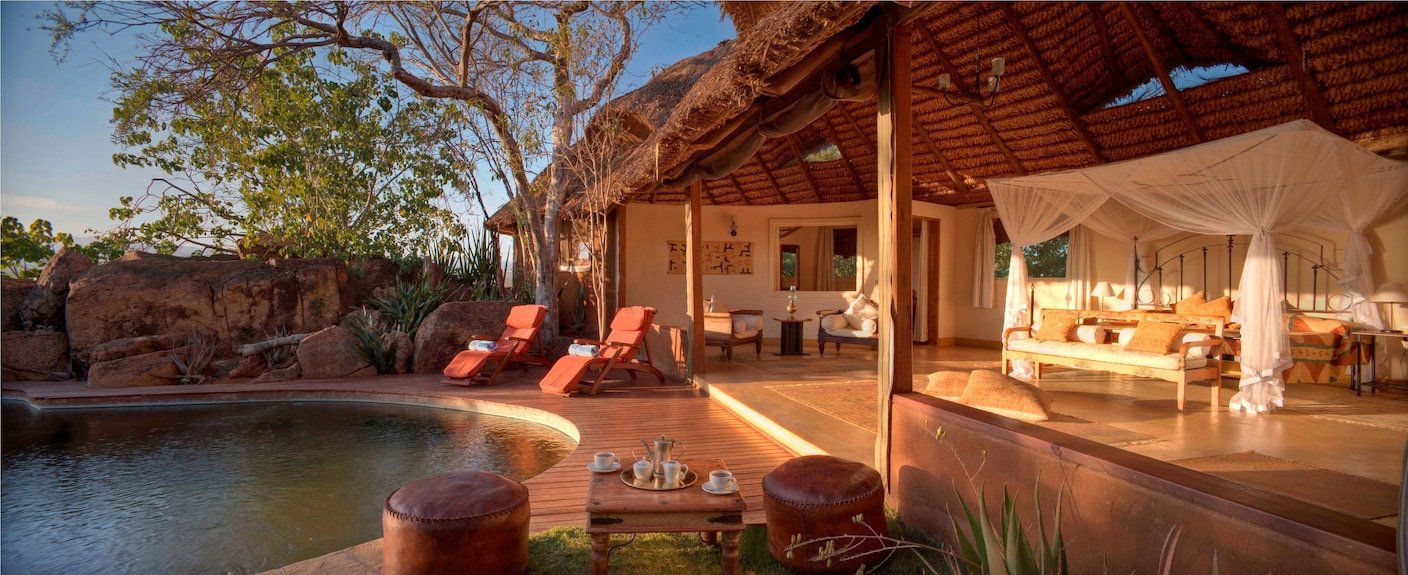
Elewana Elsa's Kopje presents itself as an architectural answer to its site: low-thatc h e d cottages and curved stone walls that seem to have been hewn from the kopje itself. The prose of the description emphasizes light — the late, filtered quality that sets Meru apart — and how structures are arranged across the granite outcrop to maximize that effect. The overall mood is quietly assertive, marrying a rugged, material honesty with a refined, intentional design language. Travelers experience a lodge that reads as both of the landscape and deeply considered, delivering an intimate, rustic elegance rather than a transplanted safari archetype.
Best For
Elsa's Kopje is best for travelers seeking a quietly luxurious, romantic safari experience and for guests who value architecture and landscape in equal measure. The property suits honeymooners, couples on romantic getaways and anniversaries — occasions already associated with the lodge — and it also appeals to photographers and landscape-minded visitors drawn to Meru’s distinctive light and the kopje’s panoramic vantage points. The design-forward cottages and secluded siting make it less about bustling camp life and more about private moments, long vistas and immersive encounters with the park’s terrain and foliage.
Venue details
Ambiance
Unashamedly romantic with beautifully styled cottages sculpted into rocks, spacious verandas overlooking vast African plains, infinity pool, and magical bush dinners under starlit skies.
Tags
Vibe
Best For
Experience
Amenities
View
About the Stay
- Rooms
- 6
- Property Style
- Historic Safari Lodge Sculpted Into a Kopje with Born Free Legacy.
- Design Style
- Rustic Elegant, Rock Integrated Cottages with Thatched Ceilings and Expansive Verandas.
Know before you go
Know Before You Go
- Getting there
- Elsa's kopje, National park, Meru
Planning details
Location
Elsa's kopje, National park, Meru · Directions
Recognition and awards

Also consider
If you cannot make Meru work
Look at Borana Lodge if the group can shift toward Laikipia without hurting the itinerary. For a Samburu-focused trip, Sasaab is the cleaner alternative to consider before changing the trip around a Meru booking.
Hotel context
How it compares in the Kenya safari set
Elewana Elsa's Kopje makes the most sense when Meru National Park is the non-negotiable. Borana Lodge is the cleaner cross-shop for travelers leaning toward Laikipia, while Sirai House is the one to consider when the group wants a more private-house feel rather than a classic lodge decision. If the trip is work-adjacent, the main question is not which name sounds stronger, but which region makes the itinerary less fragile.
For Samburu-focused travel, Saruni Samburu and Sasaab are more logical than forcing a Meru stay into the plan. Elewana Elsa's Kopje is easier to justify for repeat Kenya travelers or guests who specifically want Meru; first-timers with limited days should compare region, transfers, and lodge style before deciding.
On value, there is no useful public price signal here, so judge by trip purpose. Book Elewana Elsa's Kopje for park-specific access and a quieter Meru-led itinerary. Cross-shop Borana Lodge for Laikipia, Sirai House for private-group ambiance, and Saruni Samburu or Sasaab when Samburu is the core destination.
Explore Meru National Park
Around this place
Discover more on Pearl
Unlock the full Elewana Elsa's Kopje guide in Pearl, including awards, comparisons, FAQs, planning details, and nearby places.
Compare Elewana Elsa's Kopje
| Venue | Location | Awards |
|---|---|---|
| Elewana Elsa's Kopje | Meru National Park | 2026 La Liste Top Hotels |
| Borana Lodge | Nanyuki | 100 Most Incredible Hotels in the World · 2026 |
| Sirai House | Nanyuki | 100 Most Incredible Hotels in the World · 2026World Travel Awards 2025 |
| Borana Lodge | Laikipia | 100 Most Incredible Hotels in the World · 2026 |
| Saruni Samburu | Samburu | No published awards |
| Sasaab | Samburu | 2026 La Liste Top Hotels |


How Elewana Elsa's Kopje Meru: Verdict compares with similar nearby venues.
FAQ
Frequently Asked Questions
Which room category is best at Elewana Elsa's Kopje?
Do loyalty programs work at Elewana Elsa's Kopje?
The confirmed signals are the Meru National Park location, smart casual dress code, and La Liste Top Hotels (2026) 90pts recognition.
Is Elewana Elsa's Kopje good for business travel?
How is the pool and spa at Elewana Elsa's Kopje?
How is the dining at Elewana Elsa's Kopje?
The dress code is smart casual, and the property has La Liste Top Hotels (2026) 90pts recognition; for menus, service times, and dietary needs, check directly with the venue.