
Hotel in Mérida, Mexico
Hotel Sevilla
300ptsRestored Colonial Architecture


About Hotel Sevilla
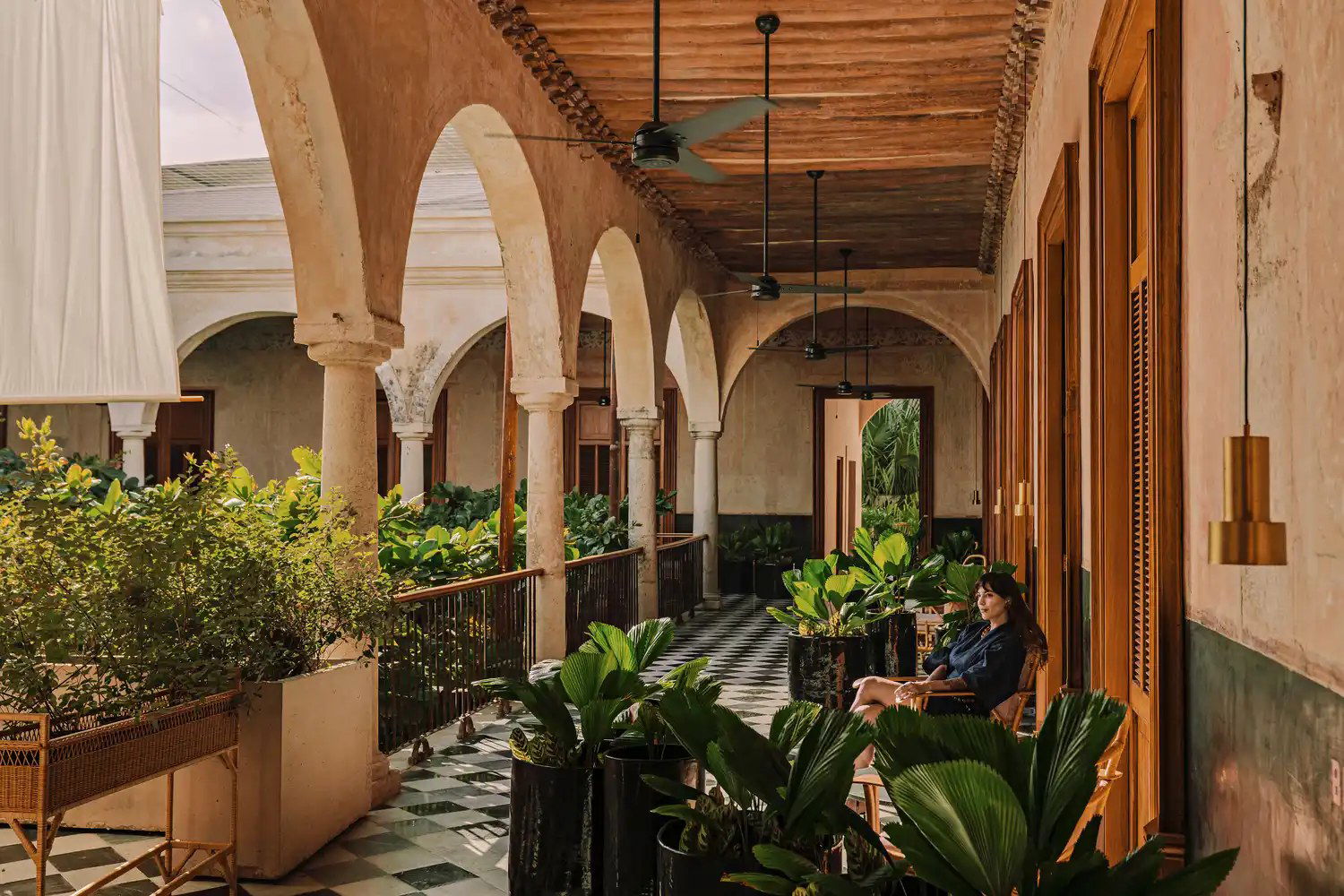
Hotel Sevilla occupies a restored 19th-century colonial building on 62nd Street in central Mérida, where the Yucatán's hacienda-era architecture has been reinterpreted around generous proportions, natural light, and intimate garden courtyards. For travellers seeking a base that reads as a historical document rather than a lifestyle product, it sits within a small category of Mérida properties that use original structure as the primary design statement.
The Colonial House as Design Argument
Mérida's centro histórico contains one of the densest concentrations of 19th-century colonial architecture in southern Mexico, a legacy of the henequen boom that made Yucatán's elite among the wealthiest in the country during the late 1800s. The great houses they built along Paseo de Montejo and the city's grid streets followed a recognisable spatial logic: thick limestone walls, shaded portales, central patios open to the sky, and rooms arranged around light rather than against it. That logic did not emerge from aesthetic preference alone; it was a practical response to subtropical heat. Hotel Sevilla, at 62nd Street 511, operates within that tradition, using a restored property from that period as the architectural foundation for a contemporary hotel experience.
What the colonial house typology offers that modern construction rarely replicates is depth of atmosphere through proportion. Rooms built to accommodate 19th-century social life tend toward high ceilings and generous openings, and when that scale is preserved rather than subdivided, the spatial effect is immediate. The approach at Hotel Sevilla treats old and new as complementary rather than competing registers, a design philosophy increasingly common among Mérida's boutique conversions but one that demands careful calibration to avoid either sterile preservation or superficial theme-park historicism.
Light, Patios, and the Spatial Grammar of the Yucatán
The defining feature of Yucatecan colonial domestic architecture is its relationship to the interior garden. In the traditional casa de patios format, the house turns away from the street and organises itself inward, with the patio serving as the functional and social core. Hotel Sevilla's design acknowledges this grammar directly, with gardens and poolside gathering areas framed by the building's original structure. This is not incidental landscaping; the patio is the architectural argument made physical.
Natural light in these buildings travels differently than in purpose-built hotels. Thick exterior walls create shadow and coolness at the perimeter while the open courtyard floods the centre with direct sun, producing a gradient of light and temperature that changes through the day. Preserving that effect requires restraint in the renovation: interventions that close off courtyards or introduce heavy glazing tend to neutralise the very quality that makes colonial structures worth restoring. The approach here, which allows light to define the interior rather than fight it, places Hotel Sevilla within a broader movement among Mérida's heritage properties toward architecture that works with its original logic rather than overwriting it.
For context on how this approach compares across Mexican heritage hotel conversions, properties such as Casa de Sierra Nevada, A Belmond Hotel, San Miguel de Allende in San Miguel de Allende and Casa Antonieta in Oaxaca City represent the same broad category of colonial restoration positioned for contemporary travellers, each working with distinct regional architectural traditions.
Where Hotel Sevilla Sits in Mérida's Accommodation Tier
Mérida's boutique hotel sector has grown considerably over the past decade as the city attracted a wave of international and domestic visitors drawn by its food scene, cultural programming, and relative accessibility from North American cities via direct flights. The accommodation category now spans a wide range, from budget colonial conversions to design-forward properties with full-service amenities. Hotel Sevilla occupies the heritage-focused middle of that spectrum, positioned around architectural character rather than resort-scale facilities.
At the higher end of Mérida's boutique tier, Rosas & Xocolate represents a property where colonial architecture is paired with a more curated design intervention and chocolate-centred food programming. Chablé Yucatán operates at the luxury hacienda end of the category, with spa facilities and a different spatial scale altogether. Hotel Sevilla's proposition sits closer to the architectural experience itself as the primary offering, without the programmatic additions that define those properties.
For travellers comparing Mérida against other Mexican destinations at a similar boutique-heritage price positioning, the wider context includes Casa Polanco in Mexico City, Hotel Demetria in Guadalajara, and at the coastal end of the spectrum, Hotel Esencia in Tulum. Each represents a different regional expression of the small-scale heritage hotel format. Our full Mérida restaurants guide covers the food scene surrounding properties like this one in detail.
Mérida's Centro as a Base
The 62nd Street address places Hotel Sevilla within walking distance of Mérida's principal civic and commercial core. The city's grid centres on the Plaza Grande, flanked by the Cathedral of Mérida (begun in 1561, making it one of the oldest in the Americas) and the Palacio Municipal. The surrounding streets carry a concentration of markets, menus tracking Yucatecan cuisine's distinctive pantry of achiote, habanero, and sour orange, and cultural venues including the Teatro Peón Contreras, a Belle Époque structure from 1908. This density of walkable points of interest makes the centro the most practical base for first-time visitors to the city.
Mérida's climate divides roughly into a dry season running from November through March and a hotter, wetter period from May through September. The months of November to February represent the most comfortable window for pedestrian exploration, when daytime temperatures sit below 30°C and the colonial architecture's thermal mass works in the visitor's favour rather than against it. The patio and garden spaces that define properties like Hotel Sevilla are most effectively used during these months.
Planning a Stay
Hotel Sevilla is located at 62nd Street 511, Mérida 97000, Mexico. Phone and website details are not currently listed in our database; prospective guests should verify current booking channels and rates directly through the property or a trusted booking platform. Given the seasonal demand patterns in Mérida's centro, particularly around the December to February high season and the city's cultural festival calendar, advance planning is advisable for this period. The property's colonial restoration context makes it a logical fit for travellers whose primary interest is architecture and urban culture rather than beach-adjacent amenities.
For those building a broader Mexico itinerary that moves between colonial cities and coastal properties, the range of options reviewed by EP Club includes Maroma in Riviera Maya, Etéreo, Auberge Resorts Collection in Punta Maroma, Four Seasons Resort Punta Mita, One&Only Mandarina in Riviera Nayarit, Las Ventanas al Paraíso, A Rosewood Resort in San José del Cabo, and Montage Los Cabos in Cabo San Lucas, among others.
Frequently Asked Questions
How would you describe the overall feel of Hotel Sevilla?
The atmosphere is defined by the original colonial architecture rather than by contemporary design additions. Thick limestone walls, interior gardens, and high-ceilinged rooms create a sense of spatial generosity that newer construction in Mérida rarely replicates. If the city's 19th-century built heritage is part of your reason for visiting, that context is present throughout the property.
What is the signature room at Hotel Sevilla?
Specific room configurations and categories are not currently documented in our database, so a definitive answer on the standout accommodation type is not possible here. In colonial properties of this format, rooms that face the interior patio and benefit directly from the garden framing tend to deliver the strongest architectural experience. Confirming room-facing options at the time of booking is worth doing directly with the property.
What is Hotel Sevilla known for?
Hotel Sevilla is positioned around its restored 19th-century colonial building in Mérida's centro histórico, a neighbourhood where the Yucatán's henequen-era domestic architecture survives at scale. The property's emphasis on generous proportions, natural light, and intimate garden and poolside spaces places it within the heritage-focused segment of Mérida's boutique accommodation category.
Do they take walk-ins at Hotel Sevilla?
Walk-in availability depends on occupancy, and Mérida's centro properties tend to run at higher capacity during the November to February dry season and around the city's festival periods. Phone and website details for Hotel Sevilla are not currently listed in our database, so verifying current policy and availability requires contacting the property directly through a booking platform or by visiting the address at 62nd Street 511.
Is Hotel Sevilla a practical base for visiting Mérida's archaeological sites?
The centro location on 62nd Street places the hotel within the city's main transport network, from which day trips to Chichén Itzá (roughly two hours by road) and Uxmal (about an hour south) are routinely organised. Mérida functions as the principal gateway city for Yucatán's archaeological circuit, and centrally located properties like Hotel Sevilla reduce transit time compared to staying outside the city core. Guided excursions are widely available through local operators.
Recognized By


Similar venues by awards
Related editorial
- Best Fine Dining Restaurants in ParisFrom three-Michelin-star icons to the next generation of Parisian chefs pushing boundaries, these are the restaurants that define fine dining in the world's culinary capital.
- Best Luxury Hotels in RomeFrom rooftop terraces overlooking ancient ruins to Michelin-starred hotel dining, these are the luxury hotels that make Rome unforgettable.
- Best Cocktail Bars in KyotoFrom sleek lounges to hidden speakeasies, Kyoto's cocktail scene blends Japanese precision with global influence in ways you won't find anywhere else.
Save or rate Hotel Sevilla on Pearl
Keep this venue in your Pearl passport, rate it after you visit, and track it alongside every other place you collect.